

Politics
India teams up with French firm to build fighter jet engines at home

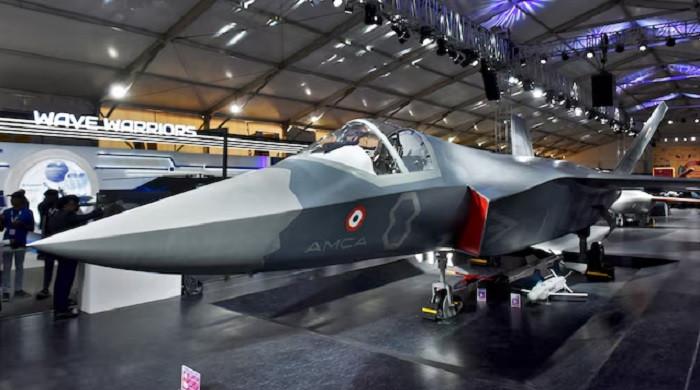

India is working with a French company to develop and manufacture fighter jet engines in the country, New Delhi’s defence minister said.
Defence Minister Rajnath Singh in May approved the prototype of a 5th-generation Advanced Medium Combat Aircraft (AMCA), calling it a “significant push towards enhancing India’s indigenous defence capabilities”.
Singh, in a speech at a conference in New Delhi on Friday, gave more details about developing fighter jet aircraft engines in the country.
“We are moving forward to manufacture aircraft engines in India itself,” Singh said, in comments broadcast by Indian media.
“We are collaborating with a French company to start engine production in India.”
Singh did not name the company, but Indian media widely reported the company to be Safran, which has been working in India for decades in the aviation and defence sectors.
There was no immediate confirmation.
India, one of the world´s largest arms importers, has made the modernisation of its forces a top priority and has made repeated pushes to boost local arms production.
The world´s most populous nation has deepened defence cooperation with Western countries in recent years, including the Quad alliance with the United States, Japan and Australia.
India signed in April a multi-billion-dollar deal to purchase 26 Rafale fighter jets from France´s Dassault Aviation.
It would join 36 Rafale fighters already acquired, and replace the Russian MiG-29K jets.
Singh has also promised at least $100 billion in fresh domestic military hardware contracts by 2033 to spur local arms production.
This decade, India has opened an expansive new helicopter factory, launched its first domestically made aircraft carrier, warships and submarines, and conducted a successful long-range hypersonic missile test.
New Delhi eyes threats from multiple nations, especially Pakistan. India was engaged with its neighbour in a four-day conflict in May, their worst standoff since 1999.
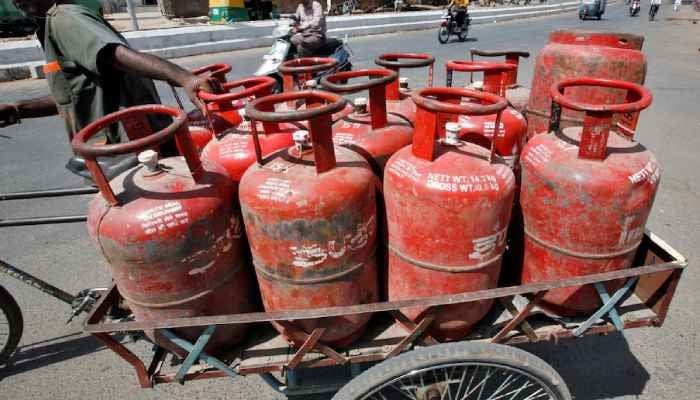
Indian police this week seized 414 cooking‑gas canisters hidden in a graveyard in Hyderabad city and arrested those involved in trying to sell them on the black market amid shortages due to the Iran war, a government official said on Thursday.
Authorities have stepped up raids to curb hoarding of liquefied petroleum gas canisters after the US-Israeli war against Iran disrupted shipping, causing supply shortages. India, the world’s No 2 LPG importer, meets about 60% of its demand through overseas purchases, mostly from the Middle East.
“Just yesterday, around 2,600 raids were carried out and about 700 cylinders were seized,” Sujata Sharma, a senior official in the Ministry of Petroleum and Natural Gas, told a regular briefing on the Middle East crisis.
“In addition, around 400 cylinders were recently found at one location inside a graveyard in Hyderabad. Ten people have been detained there, and the distributor involved has been suspended,” she said.
Police said the accused had been selling both commercial and domestic canisters from the graveyard at nearly three times the current market price. A commercial canister that costs about 2,100 Indian rupees ($22) had been sold for as much as 6,000 rupees.
The total value of the seized canisters and some vehicles used by the accused was nearly 2.2 million rupees, police said. Reuters could not immediately contact the accused or their representatives.
“The supply of natural gas to domestic consumers is 100% assured,” Sharma said. “With regard to LPG supply, prices have remained stable despite international volatility, and there has been no increase in the price of domestic LPG cylinders.”
To ease the pressure on LPG supplies, India has been promoting the use of alternatives such as kerosene, coal and biogas, while accelerating the rollout of piped natural gas for households.
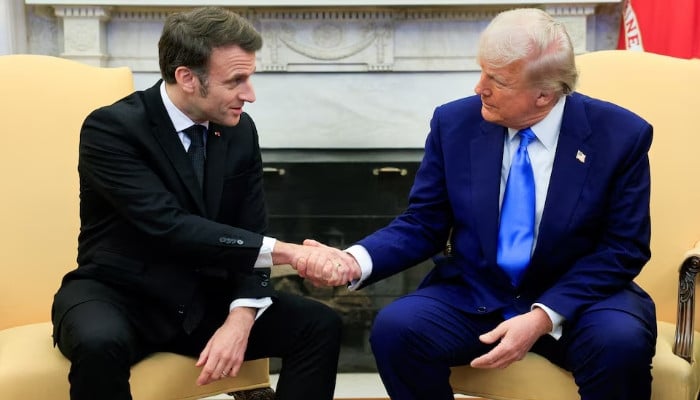
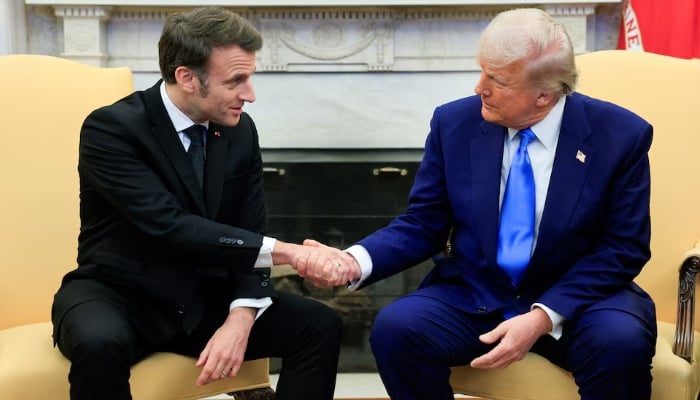
WASHINGTON: US President Donald Trump made fun of the French president and his wife during a private lunch Wednesday, as he lambasted Nato allies for not joining the war against Iran that has roiled the Middle East.
“We didn’t need them, but I asked anyway,” Trump told a private lunch in a video posted briefly on the White House YouTube channel before access was blocked.
“I call up France, Macron — whose wife treats him extremely badly. Still recovering from the right to the jaw,” Trump said.
He was referring to a May 2025 news video that appeared to show Brigitte Macron shoving the French president’s face on a trip to Vietnam, which Macron later rejected as part of a disinformation campaign.
“And I said, ‘Emmanuel, we’d love to have some help in the Gulf even though we’re setting records on knocking out bad people and knocking out ballistic missiles. We’d love to have some help. If you could, could you please send ships immediately,'” Trump continued.
He then mimics a French accent to give Macron’s alleged answer: “‘No no no, we cannot do that, Donald. We can do that after the war is won,'” he said.
“I said, ‘No no, I don’t need after the war is won Emmanuel,'” Trump said.
“So I learned about Nato — Nato won’t be there if we ever have the big one, you know what I mean by the big one,” Trump said, without elaborating.
He also branded Nato a “paper tiger,” the latest salvo by Trump and his top officials against the transatlantic alliance since he returned to the White House last year.
On Tuesday, Secretary of State Marco Rubio said the United States “is going to have to reexamine” its relationship with Nato once the war against Iran has concluded.
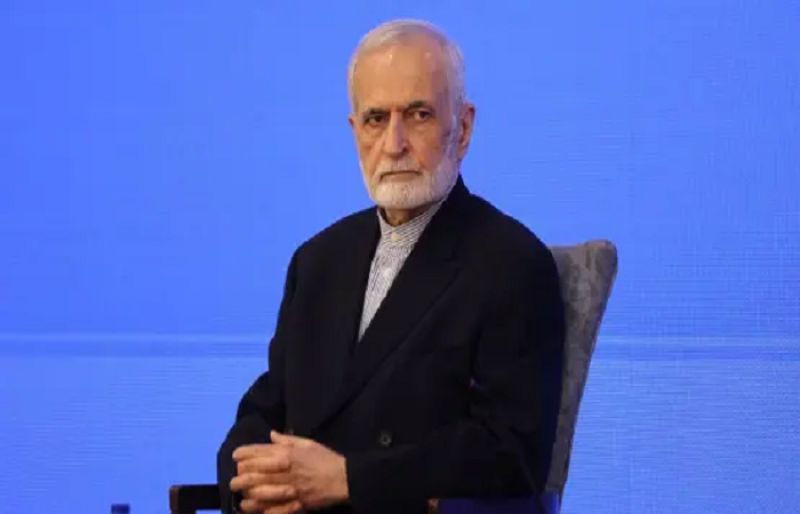
Former Iranian foreign minister Kamal Kharazi was seriously wounded in a strike that also claimed the life of his wife, Iranian media reported.
Still an adviser to the government, Kharazi had given an interview to CNN a few weeks ago.
According to the newspapers Shargh, Etemad and Ham Mihan, his home in Tehran was targeted on Wednesday in a US-Israeli strike.
He was badly injured and hospitalised following the attack, the outlets said.
Kharazi had served as foreign minister from 1997 to 2005 under reformist ex-president Mohammad Khatami.


Roberto De Zerbi sorry to Tottenham fans for Greenwood remarks

Regional sports networks are faltering even as ratings soar

India’s textile sector to gain from petrochemical duty easing

-

 Fashion1 week ago
Ho Chi Minh City bizs adjust production plans, seek new supply chains
-

 Fashion1 week ago
India’s Gen Z to drive half of fashion market by 2030: Reedseer
-

 Entertainment1 week ago
Andrew holds breath as King Charles plans bombshell move amid probe
-

 Fashion1 week ago
Japan’s apparel imports rise 22.9% to $2 bn in February 2026
-
 Business6 days ago
How do you spot a fake online review?
-
 Business1 week ago
Co-op boss quits after ‘toxic culture’ claims reported by BBC
-

 Entertainment6 days ago
Lee Sang-bo dies at 45: Funeral details revealed
-
 Fashion1 week ago
High logistics costs burden several Indian regions: Report