

Fashion
Indian government unveils new interventions to boost MSME exports

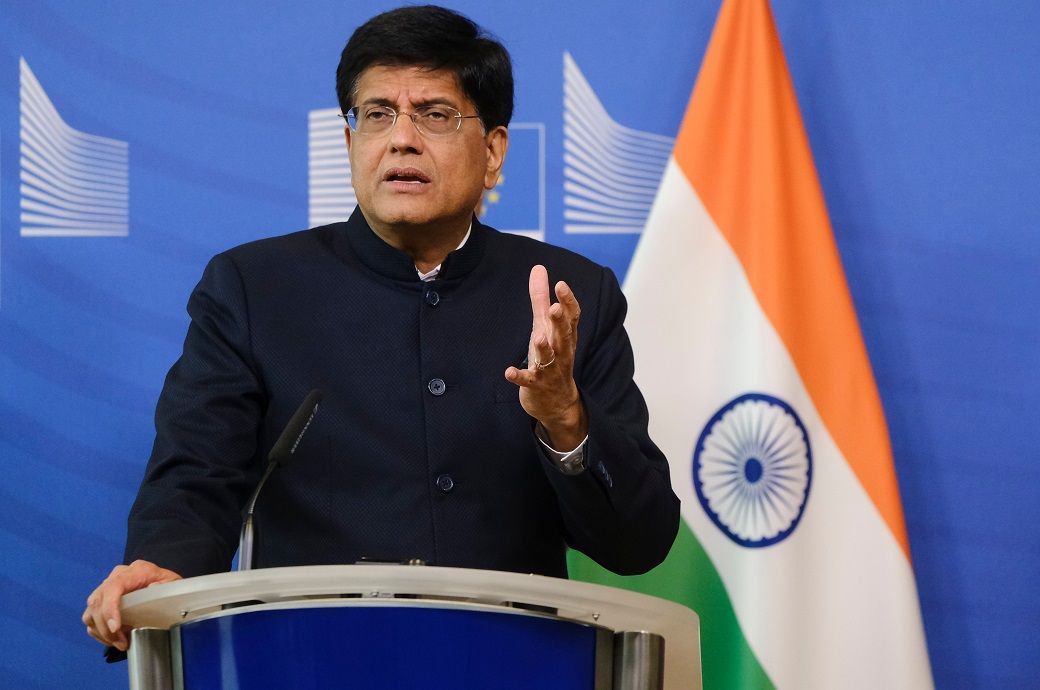
The new measures aim to address structural constraints faced by MSME exporters, including high cost of capital, limited access to trade finance, compliance burdens, logistics disadvantages and barriers to new market entry. Goyal said India recorded double-digit merchandise export growth in the first half of February, underscoring strong industry momentum.
Union Minister Piyush Goyal has launched seven new interventions under the Export Promotion Mission to boost MSME exports, taking 10 of 11 schemes operational.
The measures offer interest subvention, credit guarantees, logistics and compliance support, and overseas warehousing assistance.
Industry bodies welcomed the initiative aimed at lowering costs and expanding global market access for exporters.
The interventions are divided under two pillars: Niryat Protsahan, focused on financial enablers, and Niryat Disha, which strengthens the export ecosystem, the Ministry of Commerce and Industry said in a press release.
Under Niryat Protsahan, the government introduced support for export factoring with 2.75 per cent interest subvention and assistance capped at ₹50 lakh per MSME annually. Structured credit facilities for e-commerce exporters include a Direct E-Commerce Credit Facility of up to ₹50 lakh with 90 per cent guarantee cover, and an Overseas Inventory Credit Facility of up to ₹5 crore with 75 per cent guarantee coverage, along with interest subvention capped at ₹15 lakh per applicant annually. A third measure supports exporters entering new or high-risk markets through shared-risk and credit instruments.
Under Niryat Disha, Trade Regulations, Accreditation and Compliance Enablement (TRACE) will reimburse 60 to 75 per cent of eligible testing, inspection and certification costs, up to ₹25 lakh annually per Importer Exporter Code (IEC), to ease compliance. Facilitating Logistics, Overseas Warehousing and Fulfilment (FLOW) will provide up to 30 per cent of approved project costs for overseas warehousing and fulfilment infrastructure for up to three years. Logistics Interventions for Freight and Transport (LIFT) will reimburse up to 30 per cent of freight costs, capped at ₹20 lakh per IEC per year, for exporters in low export-intensity districts. Integrated Support for Trade Intelligence and Facilitation (INSIGHT) will offer up to 50 per cent project support for trade intelligence systems and district-level facilitation, with up to 100 per cent support for government-backed proposals.
Three other schemes for market access support, interest subvention for pre- and post-shipment credit, and collateral support are already operational. The mission is implemented by the Department of Commerce in co-ordination with key ministries, financial institutions and export bodies.
Industry associations and export promotion councils welcomed the move, expressing support for effective implementation to strengthen India’s position as a competitive global export hub.
Fibre2Fashion News Desk (CG)










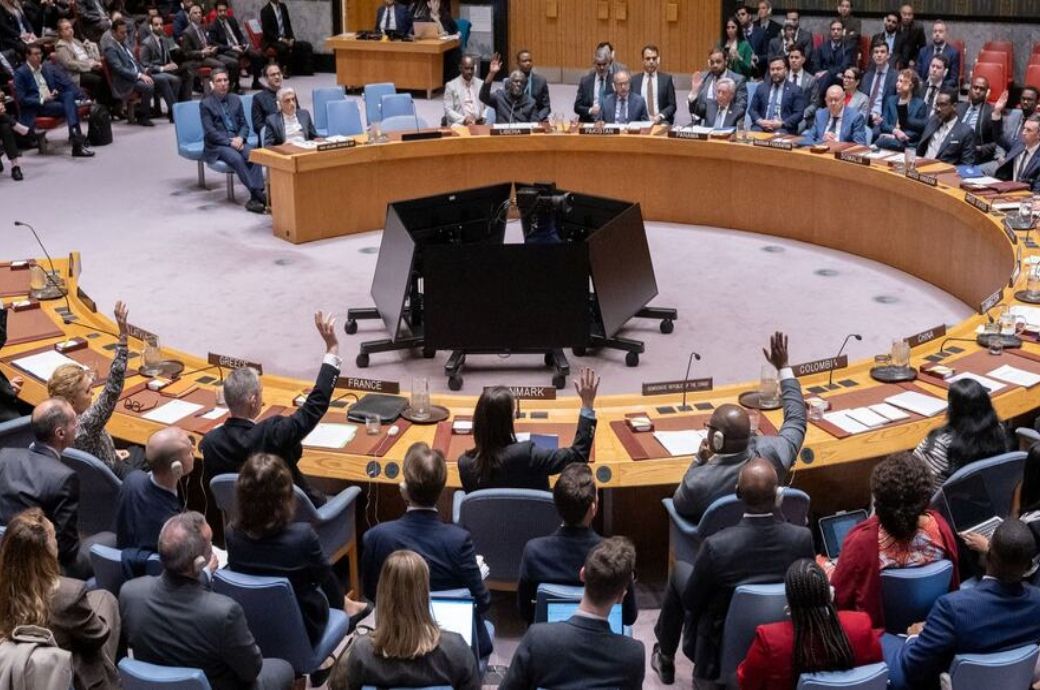
The vote followed multiple rounds of negotiations.
The UN Security Council has rejected a draft resolution submitted by several Gulf states that would have strongly encouraged countries to coordinate defensive efforts and deter attempts to interfere with navigation through the Strait of Hormuz.
By a vote of 11 in favour to two against (China, Russia), with two abstentions, a draft resolution submitted by several Gulf states could not be adopted.
Abdullatif bin Rashid Alzayani, Minister for Foreign Affairs of Bahrain and Council President for April, presided over the meeting. “We [member states of the Gulf Cooperation Council] declare loudly and unequivocally before this Council, which is charged with the maintenance of international peace and security, that [Iran] has no right to close this waterway to international navigation,” he said.
He cautioned that if the Council permits the Strait of Hormuz to remain closed today, “such a scenario would inevitably be replicated in other straits and waterways, thereby transforming the world into a jungle where force, arrogance and hegemony prevail”.
However, by a vote of 11 in favour to two against (China, Russia), with two abstentions (Colombia, Pakistan), the draft resolution could not be adopted.
The Chinese representative said that the proposed draft “failed to capture the root causes and the full picture of the conflict in a comprehensive and balanced manner”. Noting that it contained one-sided condemnations, he stressed that “this war should never have happened” and called on the United States and Israel to cease what he described as illegal military actions.
He also called on Iran to stop its attacks and noted that his delegation is currently working alongside Moscow on an alternative resolution to address the situation, according to a UN press release.
Beijing and Moscow announced plans to introduce an alternative text soon. “Our draft will be concise, equitable and balanced,” said the Russian representative.
“The objective of this draft is obvious,” stated Iran’s representative, as it seeks to “punish the victim for defending its sovereignty and vital national interests in the Persian Gulf and the Strait of Hormuz while providing political and legal cover for further unlawful acts by the aggressors”.
Fibre2Fashion News Desk (DS)
ETI is a composite index for payroll employment. When it increases, employment is likely to grow as well, and vice versa.
The Conference Board employment trends index for the US declined to 105.72 in March, from an upwardly revised 105.84 in February.
Job seekers continue to face a challenging market, according to economist Mitchell Barnes.
The share of consumers who report ‘jobs are hard to get’ climbed to 21.5 per cent in March and reflects a 5-percentage point rise YoY.
“Job seekers continue to face a challenging market,” said Mitchell Barnes, economist at the US think tank, said in a release. “This is evident in the ETI as several components moderated in March. Overall, the US economy has remained surprisingly resilient, but rising geopolitical uncertainty may contribute to ongoing employer hesitancy to add more workers.”
The share of consumers who report ‘jobs are hard to get’—an ETI component from the Consumer Confidence Survey—climbed to 21.5 per cent in March and reflects a 5-percentage point (pp) rise year on year (YoY).
The share of small firms reporting that jobs are ‘not able to be filled right now’ declined by 1 pp in March to reach 32 per cent.
Fibre2Fashion News Desk (DS)


Transfer rumors, news: Liverpool, Real Madrid work on mega midfield swap deal

Apparel imports in France rise to $26.6 bn in 2025
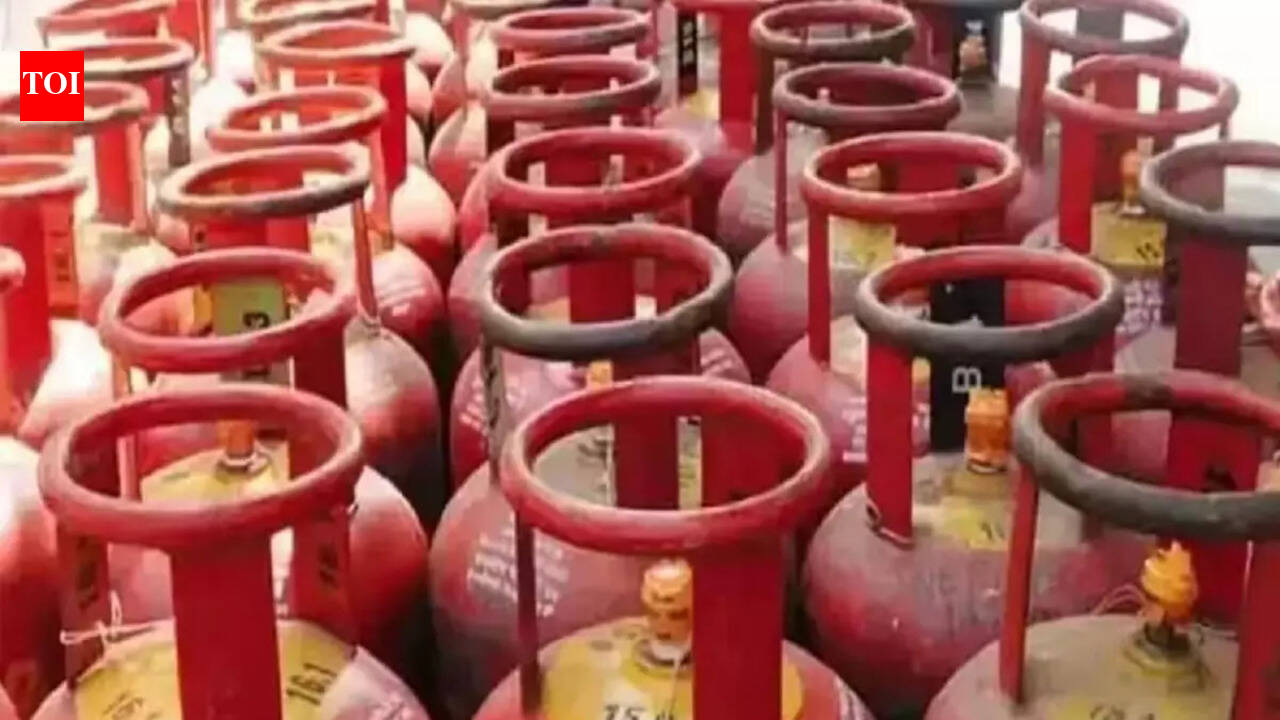
‘Ships continuously coming even amid blockage’: Centre assures 100% energy supplies across the country – The Times of India

-
Uncategorized7 days ago
[CinePlex360] Please moderate: “Trump signals p
-
 Business7 days ago
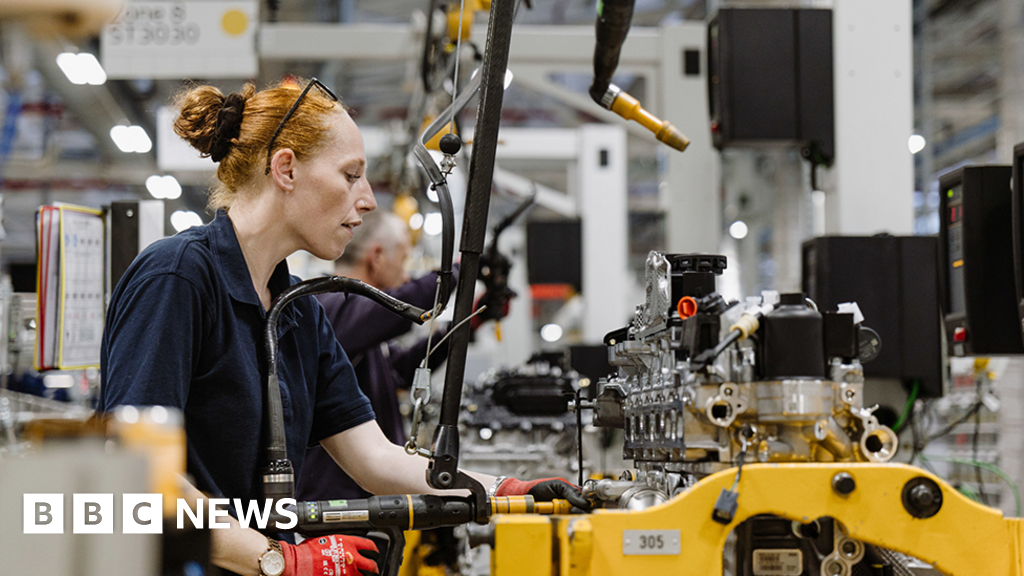
Jaguar Land Rover sees sales recover after cyber attack
-

 Entertainment6 days ago
Joe Jonas shares candid glimpse into parenthood with Sophie Turner
-

 Tech6 days ago
Our Favorite iPad Is $50 Off
-
 Fashion1 week ago
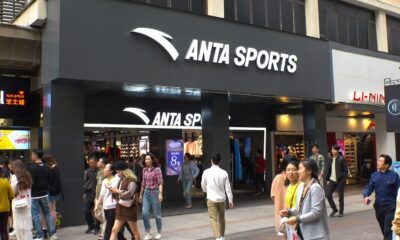
China’s Anta Sports posts record $11.62 bn revenue in 2025
-

 Politics6 days ago
Iran can sustain Strait of Hormuz closure for years, will cut US military logistics: Official
-

 Sports5 days ago
UConn Final Four run could trigger a $50M furniture giveaway for Massachusetts-based Jordan’s Furniture
-
 Business6 days ago
Video: Why Is the Labor Market Stuck?