

Business
India’s $5 Trillion Economy Push Explained: Why Modi Govt Wants To Merge 12 Banks Into 4 Mega ‘World-Class’ Lending Giants

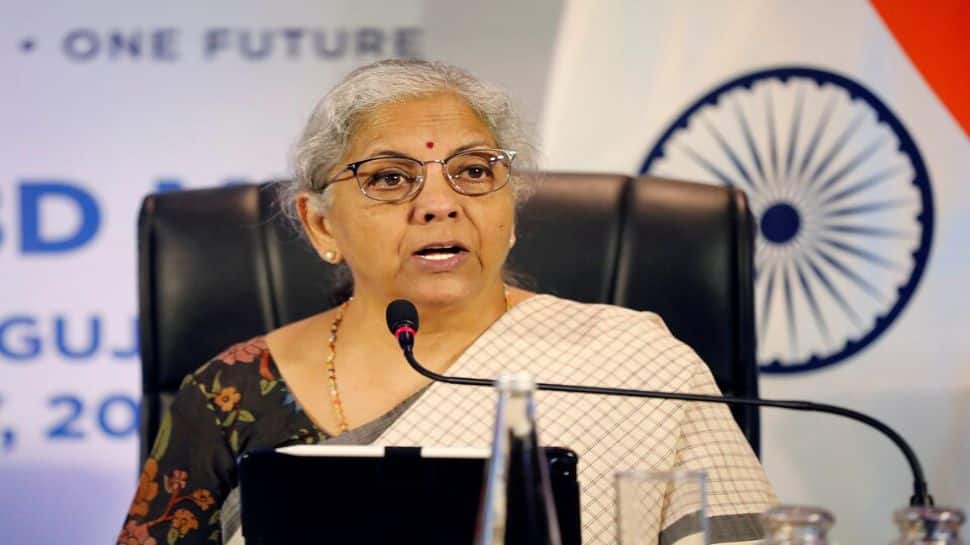
India’s Public Sector Banks Merger: The Centre is mulling over consolidating public-sector banks, and officials involved in the process say the long-term plan could eventually bring down the number of state-owned lenders from 12 to possibly just 4. The goal is to build a banking system that is large enough in scale, has deeper capital strength and is prepared to meet the credit needs of a fast-growing economy.
The minister explained that bigger banks are better equipped to support large-scale lending and long-term projects. “The country’s economy is moving rapidly toward the $5 trillion mark. The government is active in building bigger banks that can meet rising requirements,” she said.
Why India Wants Larger Banks
Sitharaman recently confirmed that the government and the Reserve Bank of India have already begun detailed conversations on another round of mergers. She said the focus is on creating “world-class” banks that can support India’s expanding industries, rising infrastructure investments and overall credit demand.
She clarified that this is not only about merging institutions. The government and RBI are working on strengthening the entire banking ecosystem so that banks grow naturally and operate in a stable environment.
According to her, the core aim is to build stronger, more efficient and globally competitive banks that can help sustain India’s growth momentum.
At present, the country has a total of 12 public sector banks: the State Bank of India (SBI), the Punjab National Bank (PNB), the Bank of Baroda, the Canara Bank, the Union Bank of India, the Bank of India, the Indian Bank, the Central Bank of India, the Indian Overseas Bank (IOB) and the UCO Bank.
What Happens To Employees After Merger?
Whenever bank mergers are discussed, employees become anxious. A merger does not only combine balance sheets; it also brings together different work cultures, internal systems and employee expectations.
In the 1990s and early 2000s, several mergers caused discomfort among staff, including dissatisfaction over new roles, delayed promotions and uncertainty about reporting structures. Some officers who were promoted before mergers found their seniority diluted afterward, which created further frustration.
The finance minister addressed the concerns, saying that the government and the RBI are working together on the merger plan. She stressed that earlier rounds of consolidation had been successful. She added that the country now needs large, global-quality banks “where every customer issue can be resolved”. The focus, she said, is firmly on building world-class institutions.
‘No Layoffs, No Branch Closures’
She made one point unambiguous: no employee will lose their job due to the upcoming merger phase. She said that mergers are part of a natural process of strengthening banks, and this will not affect job security.
She also assured that no branches will be closed and no bank will be shut down as part of the consolidation exercise.
India last carried out a major consolidation drive in 2019-20, reducing the number of public-sector banks from 21 to 12. That round improved the financial health of many lenders.
With the government preparing for the next phase, the goal is clear. India wants large and reliable banks that can support a rapidly growing economy and meet the needs of a country expanding faster than ever.



From the UK, flights have also been cancelled for many Middle East destinations, including all flights to Israel and Bahrain, three-quarters of the day’s scheduled flights to the United Arab Emirates, and more than two-thirds (69%) of flights to Qatar.
Business
IIP sees 4.8% YoY growth in January; manufacturing & electricity support rise – The Times of India
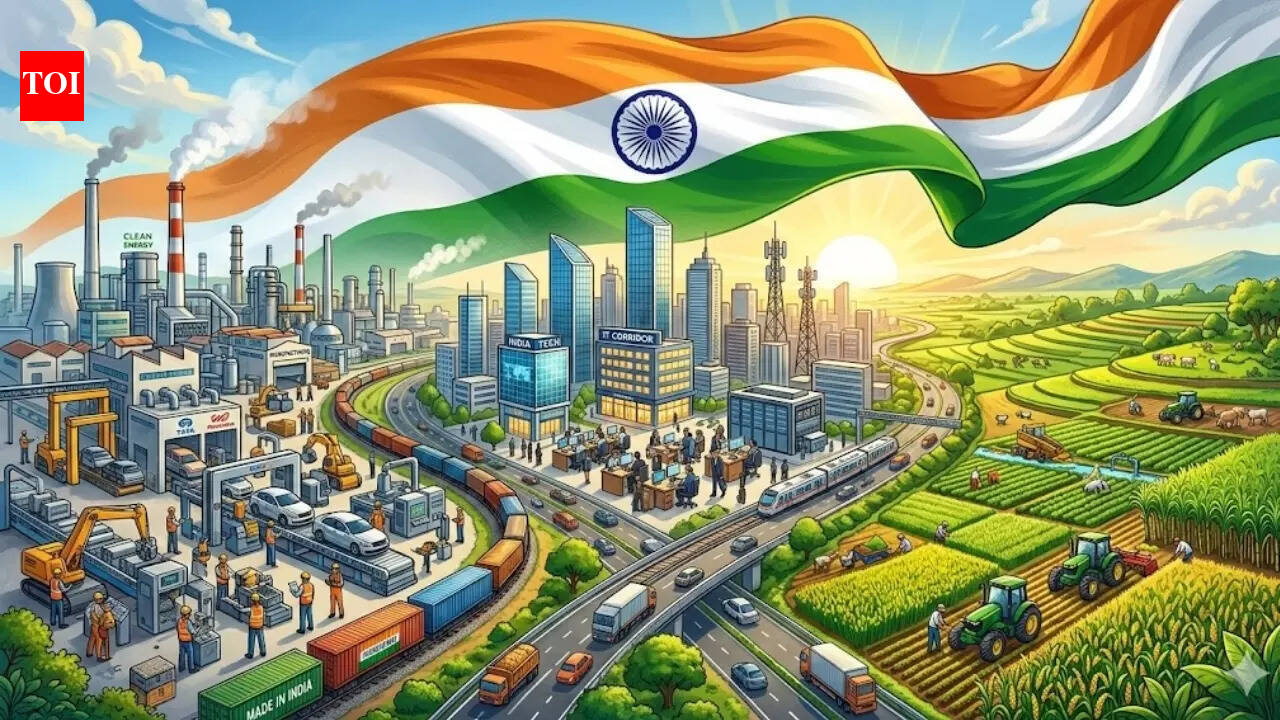
India’s Index of Industrial Production saw a 4.8% increase year-on-year in January 2026, according to the Ministry of Statistics & Programme Implementation. The rise in industrial output was largely driven by a 4.8 per cent expansion in manufacturing and a 5.1 per cent improvement in electricity generation. Mining activity also supported overall growth, registering a 4.3 per cent uptick during the month.Estimates placed IIP at 169.4 for January 2026, compared with 161.6 in January 2025. This follows a stronger reading in December 2025, when industrial production had grown by 7.8 per cent. For January 2026, the sector-specific indices stood at 157.2 for mining, 167.2 for manufacturing and 212.1 for electricity.Within manufacturing, 14 of the 23 industry groups at the NIC two-digit level posted year-on-year gains in January. The strongest contributors were manufacture of basic metals, which rose 13.2 per cent; manufacture of motor vehicles, trailers and semi-trailers, up 10.9 per cent; and manufacture of other non-metallic mineral products, which increased 9.9 per cent. Growth in basic metals was supported by items such as flat products of alloy steel, MS slabs, and hot-rolled coils and sheets of mild steel.The automobile category advanced on the back of higher output of auto components and spare parts, commercial vehicles, and bus and minibus bodies or chassis. In the non-metallic mineral products segment, cement of all types, cement clinkers and stone chips were key contributors.According to use-based classification, output of primary goods grew 3.1 per cent, capital goods rose 4.3 per cent and intermediate goods increased 6 per cent compared with January 2025. Infrastructure and construction goods recorded the sharpest rise at 13.7 per cent, while consumer durables expanded 6.3 per cent. In contrast, consumer non-durables declined by 2.7 per cent. The ministry identified infrastructure and construction goods, intermediate goods and primary goods as the leading drivers of growth under this classification.

There might also be a more direct impact on food. “Some elements of crude oil are used in fertiliser, and so there could be a cost implication in terms of food prices,” Benjamin Goodwin, partner at banking advisory firm PRISM Strategic Intelligence told the BBC.


US’ Old Navy launches little navy, a new newborn essentials collection

Super-rich pay up to $350,000 for private jet evacuations as Middle East conflict escalates

5 key takeaways from Pete Hegseth’s Pentagon press conference on Iran-US war

-

 Politics1 week ago
Pakistan carries out precision strikes on seven militant hideouts in Afghanistan
-

 Tech1 week ago
These Cheap Noise-Cancelling Sony Headphones Are Even Cheaper Right Now
-

 Sports1 week ago
Kansas’ Darryn Peterson misses most of 2nd half with cramping
-

 Entertainment1 week ago
Viral monkey Punch makes IKEA toy global sensation: Here’s what it costs
-
Sports1 week ago
Mike Eruzione and the ‘Miracle on Ice’ team are looking for some company
-
 Business6 days ago
Households set for lower energy bills amid price cap shake-up
-
 Entertainment1 week ago
Talking minerals and megawatts
-
 Business6 days ago
Lucid widely misses earnings expectations, forecasts continued EV growth in 2026