

Fashion
India’s exports to US drop, to non-US markets expand in Sep: Crisil

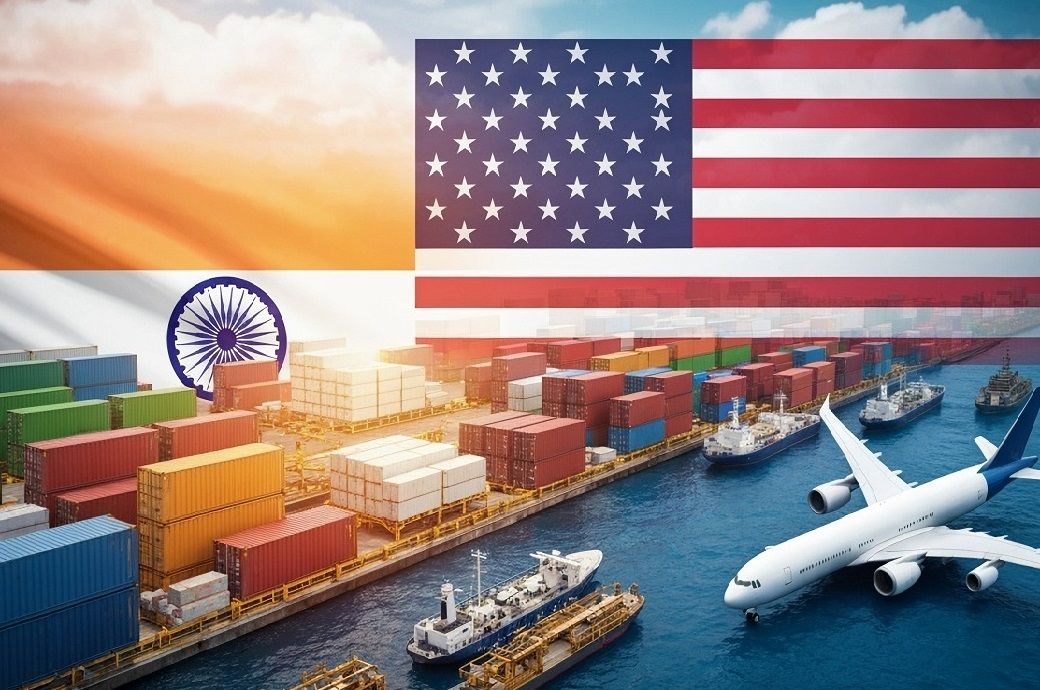
The decline followed the Trump administration’s decision to impose a 50-per cent tariff on Indian goods, effective from August 27. Without the frontloading of shipments ahead of the US tariff hike, the fall would have been sharper, it noted.
India’s merchandise exports to the US contracted by 11.9 per cent YoY in September, after recording a 7-per cent YoY growth in August, while exports to non-US markets expanded by 10.9 per cent YoY in the month, accelerating from a 6.6-per cent YoY growth in August, Crisil recently said.
RMG exports contracted—from a YoY drop of 2.6 per cent in August to a decrease of 10.1 per cent YoY in September.
The country’s overall merchandise exports rose by 6.7 per cent YoY to reach $36.4 billion in September, demonstrating resilience despite global economic headwinds and the additional US tariffs. Exports rose for the third straight month, following a similar pace in August.
Exports of organic and inorganic chemicals weakened—from a YoY growth of 3.8 per cent YoY in August to to a YoY growth of 1.8 per cent in September.
Exports of readymade garments contracted—from a YoY drop of 2.6 per cent in August to a decrease of 10.1 per cent YoY in September. Within this category, exports of cotton yarn contracted by 11.7 per cent YoY in the month compared to a contraction of 2.3 per cent in August, and those of man-made yarn contracted by 2.3 per cent YoY compared to a 3.1-per cent drop in August.
The country’s merchandise exports are facing headwinds from US tariff hikes and a broader slowdown in global growth, Crisil cautioned in a note.
Crisil expects India’s current account deficit (CAD) to remain within manageable limits, backed by strong services exports, steady remittance inflows and easing crude oil prices. The CAD will be around 1 per cent of gross domestic product (GDP) in this fiscal, up from 0.6 per cent in the previous, it projected.
Fibre2Fashion News Desk (DS)










According to the informal agreement, there will be a new handling fee for each item entering the EU from non-EU countries and sent directly to EU consumers, to cover the extra cost of handling an ever-increasing number of individual parcels.
This will be paid by the same entity responsible for paying other customs charges for the same parcel, to avoid shifting the cost to consumers.
The European Parliament and European Council have reached a deal on a major reform of the EU Customs Code to address problems relating to e-commerce, safety of goods and efficiency.
A new handling fee will be charged for each item entering the EU from non-EU nations and sent directly to EU consumers.
The European Commission will establish the level of the fee and reassess it every two years.
The European Commission will establish the level of the fee and reassess it every two years. Member states will start collecting it as soon as the necessary information technology (IT) system becomes operational, and in any case no later than November 1, this year.
Under the new rules, sellers and platforms that facilitate distance sales of goods from non-EU countries directly to EU customers will be treated as importers. This will oblige them to provide customs authorities with all the necessary data, pay or guarantee any charges, and make sure that the goods comply with EU laws, an official release said.
These companies must be established in the EU or be represented by an EU-based entity having either authorised economic operator (AEO) or trusted trader status. This should prevent the use of shell companies.
To incentivise bulk shipments that are easier for customs authorities to check, non-EU country sellers and platforms are encouraged to operate warehouses in the EU. Their intra-EU client shipments would benefit from a lower handling fee, provided their goods were imported in collective packaging and large enough quantities to make customs checks more efficient.
Companies that repeatedly ignore EU rules could be punished with a fine of at least 1 per cent (and up to 6 per cent) of the total value of goods imported into the EU in the previous 12 months.
Additionally, customs authorities may suspend, revoke, or annul their trusted trader or AEO status and flag them as high-risk operators.
Import-export companies that follow the rules and agree to cooperate transparently with the customs authorities may benefit from a simplified ‘trust and check’ regime. This would initially require them to go through thorough vetting and grant customs authorities access to their electronic systems.
In exchange, their shipments would be checked less frequently and they would have more flexibility regarding the payment of duties and fees.
The current AEO qualification will remain in place to keep customs status accessible to smaller economic operators.
The reform also establishes a new customs data hub to be managed by the new EU Customs Authority (EUCA). It will be available for optional use by 2031 and mandatory by 2034.
The data hub will replace at least 111 software systems currently used by customs.
The provisional agreement needs to be officially approved by Parliament in plenary as well as by the EU Council, before it will become law.
Fibre2Fashion News Desk (DS)
This was driven by an 8.36-per cent YoY decline in import volume and a 7.76-per cent YoY decrease in average unit prices.
The EU’s apparel imports fell by 15.48 per cent YoY in January to €7.03 billion, according to Eurostat.
Bangladesh’s apparel exports to the EU fell to €1.43 billion in January—a 25.25-per cent drop in value.
China remained the top exporter of apparel to the EU (€2.22 billion), but still saw a 6.9-per cent decline YoY in value.
India, Pakistan, Vietnam and Cambodia also remained in negative territory.
Bangladesh’s apparel exports to the bloc fell to €1.43 billion in January—a sharp 25.25-per cent drop in value. It saw a 17.49-per cent YoY decrease in the quantity of goods shipped, coupled with a 9.41 per cent drop in the unit price per kilogram.
China remained the top exporter of apparel to the EU (€2.22 billion), but still saw a 6.9-per cent decline YoY in value. Its unit prices dropped by 8.01 per cent YoY, while its export volume grew a bit by 1.21 per cent YoY.
Turkey faced a severe hit with a 29.12-per cent YoY decrease in apparel export value to the EU in the month, totaling €619.98 million.
Other countries like India, Pakistan, Vietnam and Cambodia remained in negative territory, reflecting a broad-based slowdown in the European fashion retail market.
Fibre2Fashion News Desk (DS)
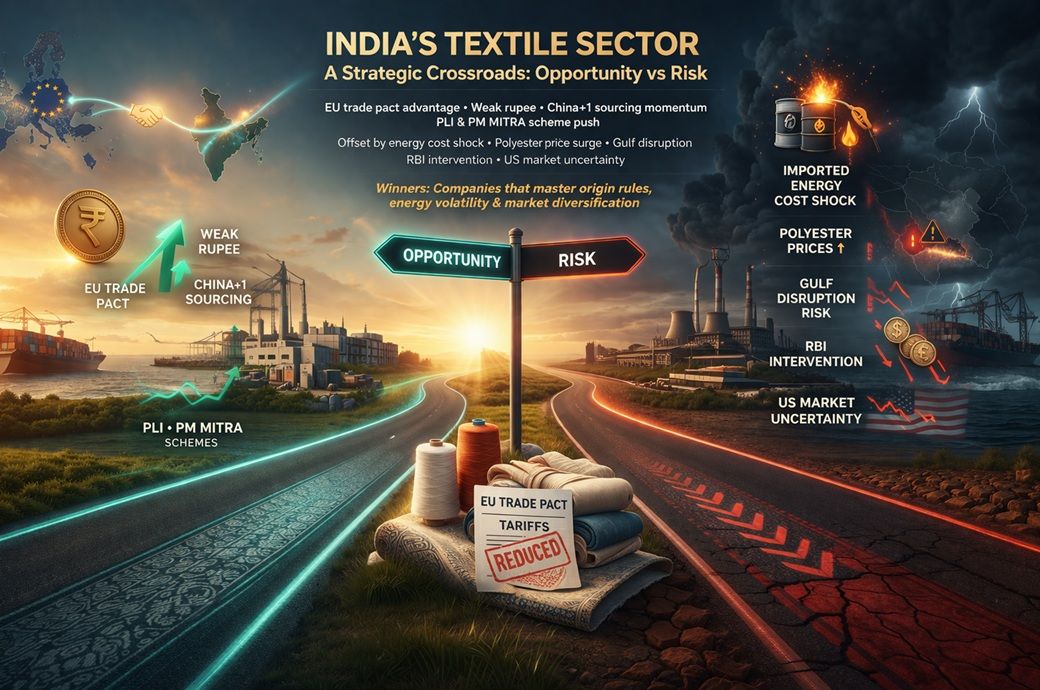
India’s textile outlook is turning structurally complex.
The EU pact targets ~99.5 per cent trade coverage with phased duty relief, while rupee weakness supports exports.
However, crude volatility, >80 per cent import energy dependence, polyester cost inflation and US market softness (≈28 per cent share) are fragmenting performance, reinforcing a shift towards cotton-led, EU-focused exporters.
Source link


Men’s March Madness 2026: Ranking the remaining eight teams

Russia sells reserve gold for first time in 25 years to fund Ukraine war deficit: Report – The Times of India

John Mayer, Kat Stickler part ways after ‘serious’ relationship

-
 Business1 week ago
Flipkart group CFO to leave co amid IPO plans – The Times of India
-
 Business1 week ago
Video: The Effects of High Oil Prices
-

 Fashion1 week ago
China’s textile & apparel exports surge 17% to $50 bn in Jan-Feb 2026
-

 Sports1 week ago
Rating Adidas’ 2026 World Cup away shirts: Argentina, Spain, Mexico and more
-

 Sports1 week ago
American Conference Commissioner Tim Pernetti thanks Trump for Army-Navy game executive order
-
Tech1 week ago
The Corsair 4000D RS PC Case Keeps Your System Cool
-

 Tech1 week ago
Gamers Hate Nvidia’s DLSS 5. Developers Aren’t Crazy About It, Either
-

 Tech1 week ago
‘Uncanny Valley’: Nvidia’s ‘Super Bowl of AI,’ Tesla Disappoints, and Meta’s VR Metaverse ‘Shutdown’