

Business
Indias GDP Likely To Grow At 7.5-7.8% In FY26: Report

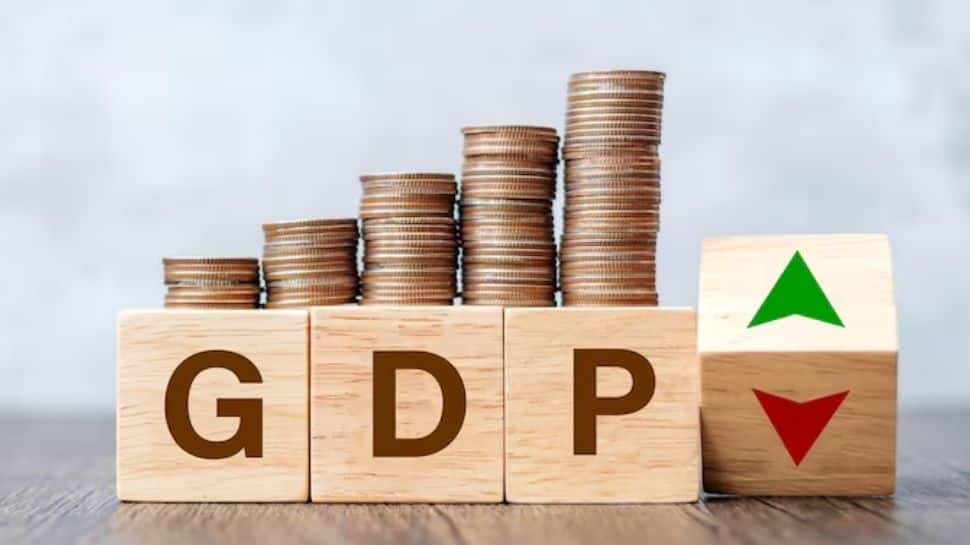
New Delhi: India’s GDP will likely expand 7.5-7.8 per cent in the current fiscal (FY26), driven by festive demand and robust services activity, a report said on Wednesday. The report from Deloitte India, however, noted that the growth could moderate to 6.6–6.9 per cent in FY27 because of a high base and lingering global uncertainties.
The business consultancy noted that real GDP grew 8 per cent in the first half of 2025–26 (April–September), underscoring the economy’s resilience amid trade disruptions, policy shifts in advanced economies and volatile capital flows.
“India’s resilience is no accident. It stems from sustained pro-growth policies,” Deloitte India, Economist, Rumki Majumdar said. “With demand-side levers largely addressed, policy focus in 2026 will shift toward supply-side reforms, focusing on MSMEs, and developing tier-2 and tier-3 cities as new engines of growth,” Majumdar added.
Though external risks remain elevated, their full impact may not materialise in FY26, Majumdar said, adding that the India-US trade deal is likely to conclude by the end of this fiscal, which should revive foreign investment and stabilise the currency. The report credited the decisive policy moves in 2025 including tax exemptions, policy rate cuts and GST rationalisation, driving the growth by shoring up domestic demand and supporting the recovery.
Favourable inflation trends added buoyancy, while trade recalibration through multiple FTAs strengthened exports, the report said. The business consultancy highlighted a strategic pivot in trade policy, with India signing agreements with the UK, New Zealand and Oman, operationalising the EFTA deal and initiating negotiations with Israel.
“These partnerships unlock manufacturing opportunities and expand India’s services footprint beyond the US, while reinforcing investor confidence and paving the way for increased FDI, which remains critical for financing infrastructure and industrial expansion,” Majumdar said.
Another recent report from a fund house cited 8.2 per cent GDP growth in Q2FY26, a sharp rebound in industrial output and stable GST collections as the positives of domestic fundamentals. Softer crude prices, easing global rates and policy support through tax and GST cuts are expected to further support consumption and investment, the fund house predicted.











From the UK, flights have also been cancelled for many Middle East destinations, including all flights to Israel and Bahrain, three-quarters of the day’s scheduled flights to the United Arab Emirates, and more than two-thirds (69%) of flights to Qatar.
Business
IIP sees 4.8% YoY growth in January; manufacturing & electricity support rise – The Times of India

India’s Index of Industrial Production saw a 4.8% increase year-on-year in January 2026, according to the Ministry of Statistics & Programme Implementation. The rise in industrial output was largely driven by a 4.8 per cent expansion in manufacturing and a 5.1 per cent improvement in electricity generation. Mining activity also supported overall growth, registering a 4.3 per cent uptick during the month.Estimates placed IIP at 169.4 for January 2026, compared with 161.6 in January 2025. This follows a stronger reading in December 2025, when industrial production had grown by 7.8 per cent. For January 2026, the sector-specific indices stood at 157.2 for mining, 167.2 for manufacturing and 212.1 for electricity.Within manufacturing, 14 of the 23 industry groups at the NIC two-digit level posted year-on-year gains in January. The strongest contributors were manufacture of basic metals, which rose 13.2 per cent; manufacture of motor vehicles, trailers and semi-trailers, up 10.9 per cent; and manufacture of other non-metallic mineral products, which increased 9.9 per cent. Growth in basic metals was supported by items such as flat products of alloy steel, MS slabs, and hot-rolled coils and sheets of mild steel.The automobile category advanced on the back of higher output of auto components and spare parts, commercial vehicles, and bus and minibus bodies or chassis. In the non-metallic mineral products segment, cement of all types, cement clinkers and stone chips were key contributors.According to use-based classification, output of primary goods grew 3.1 per cent, capital goods rose 4.3 per cent and intermediate goods increased 6 per cent compared with January 2025. Infrastructure and construction goods recorded the sharpest rise at 13.7 per cent, while consumer durables expanded 6.3 per cent. In contrast, consumer non-durables declined by 2.7 per cent. The ministry identified infrastructure and construction goods, intermediate goods and primary goods as the leading drivers of growth under this classification.

There might also be a more direct impact on food. “Some elements of crude oil are used in fertiliser, and so there could be a cost implication in terms of food prices,” Benjamin Goodwin, partner at banking advisory firm PRISM Strategic Intelligence told the BBC.


US’ Old Navy launches little navy, a new newborn essentials collection

Charles Barkley scolds sports fans for getting wrapped up in Olympic hockey frenzy
Limited flights leave UAE while disruption continues amid Iran strikes

-

 Politics1 week ago
Pakistan carries out precision strikes on seven militant hideouts in Afghanistan
-

 Tech1 week ago
These Cheap Noise-Cancelling Sony Headphones Are Even Cheaper Right Now
-

 Entertainment1 week ago
Viral monkey Punch makes IKEA toy global sensation: Here’s what it costs
-

 Sports1 week ago
Kansas’ Darryn Peterson misses most of 2nd half with cramping
-
Sports1 week ago
Mike Eruzione and the ‘Miracle on Ice’ team are looking for some company
-
 Business6 days ago
Households set for lower energy bills amid price cap shake-up
-

 Politics1 week ago
Trump says he will raise US global tariff rate from 10% to 15%, following court ruling
-

 Entertainment1 week ago
Talking minerals and megawatts