

Fashion
India’s PDS Q3 revenue up 2% as margins remain under pressure

The gross profit for the quarter grew 13 per cent to ₹720 crore, up from ₹637 crore a year earlier, indicating improved product mix and operating discipline. However, EBITDA rose 11 per cent to ₹109 crore from ₹96 crore, while profit after tax (PAT) declined 18 per cent to ₹37 crore compared to ₹45 crore in Q3 FY25.
PDS Limited has reported GMV growth of 6 per cent to ₹4,660 crore (~$513.78 million) in Q3 FY26 and revenue increased by 2 per cent, while PAT fell 18 per cent.
For 9M FY26, GMV rose 7 per cent to ₹14,760 crore (~$1.63 billion), though EBITDA and PAT declined.
The company improved working capital, cut net debt sharply, and expects gains from new trade agreements and tariff reductions.
For the nine months (9M) period, GMV increased 7 per cent YoY to ₹14,760 crore (~$1.63 billion). Revenue from operations rose 6 per cent to ₹9,591 crore, compared to ₹9,052 crore in 9M FY25, PDS Limited said in a press release.
The gross profit for 9M stood at ₹1,982 crore, up 8 per cent from ₹1,830 crore in the same period last fiscal. However, EBITDA declined 16 per cent to ₹263 crore from ₹312 crore, while PAT fell 35 per cent to ₹106 crore from ₹162 crore in 9M FY25, reflecting margin pressures and a challenging global retail environment.
PDS reported significant improvements in working capital efficiency, with net working capital days reducing from approximately 17 days to around 7 days over the past nine months. The company generated ₹644 crore in operating cash flow during the nine-month period.
As a result of stronger cash generation and disciplined capital management, net debt reduced sharply from ₹374 crore in March 2025 to ₹70 crore as of December 2025, strengthening the company’s balance sheet and financial flexibility.
The company expects to benefit from recently signed trade agreements, including the EU-India trade deal and the UK free trade agreement, as well as US tariff reductions applicable to India operations, particularly Knit Gallery, and Bangladesh. These developments are anticipated to enhance sourcing competitiveness and support future growth.
With improved working capital metrics, lower leverage and steady GMV expansion, PDS is positioning itself to navigate global demand volatility while capitalising on emerging trade and tariff advantages.
Commenting on the results, Pallak Seth, executive vice chairman, said, “The global apparel landscape continues to be shaped by evolving trade dynamics, sourcing realignments and shifting customer priorities. Demand trends are exhibiting gradual and uneven stabilisation across key markets, with customer buying behaviour remaining cautious. Benefits from the EU trade agreement, UK FTA and reduced US tariffs on India & Bangladesh are expected to unfold progressively, the acquisition of Knit Gallery & our diversified sourcing operations position us well to capture these opportunities.”
Sanjay Jain, group CEO, said, “In a period marked by external volatility, we remain focused on strengthening operational effectiveness across the organisation. We have undertaken strategic actions to optimise costs at both the platform and business levels, reinforcing our commitment to building a resilient and cost-efficient PDS. By concentrating on high-impact areas and streamlining underperforming verticals, we are enabling sustainable growth while building a stronger, future-ready organisation focused on enhancing long-term profitability.”
Fibre2Fashion News Desk (SG)











The vote followed multiple rounds of negotiations.
The UN Security Council has rejected a draft resolution submitted by several Gulf states that would have strongly encouraged countries to coordinate defensive efforts and deter attempts to interfere with navigation through the Strait of Hormuz.
By a vote of 11 in favour to two against (China, Russia), with two abstentions, a draft resolution submitted by several Gulf states could not be adopted.
Abdullatif bin Rashid Alzayani, Minister for Foreign Affairs of Bahrain and Council President for April, presided over the meeting. “We [member states of the Gulf Cooperation Council] declare loudly and unequivocally before this Council, which is charged with the maintenance of international peace and security, that [Iran] has no right to close this waterway to international navigation,” he said.
He cautioned that if the Council permits the Strait of Hormuz to remain closed today, “such a scenario would inevitably be replicated in other straits and waterways, thereby transforming the world into a jungle where force, arrogance and hegemony prevail”.
However, by a vote of 11 in favour to two against (China, Russia), with two abstentions (Colombia, Pakistan), the draft resolution could not be adopted.
The Chinese representative said that the proposed draft “failed to capture the root causes and the full picture of the conflict in a comprehensive and balanced manner”. Noting that it contained one-sided condemnations, he stressed that “this war should never have happened” and called on the United States and Israel to cease what he described as illegal military actions.
He also called on Iran to stop its attacks and noted that his delegation is currently working alongside Moscow on an alternative resolution to address the situation, according to a UN press release.
Beijing and Moscow announced plans to introduce an alternative text soon. “Our draft will be concise, equitable and balanced,” said the Russian representative.
“The objective of this draft is obvious,” stated Iran’s representative, as it seeks to “punish the victim for defending its sovereignty and vital national interests in the Persian Gulf and the Strait of Hormuz while providing political and legal cover for further unlawful acts by the aggressors”.
Fibre2Fashion News Desk (DS)
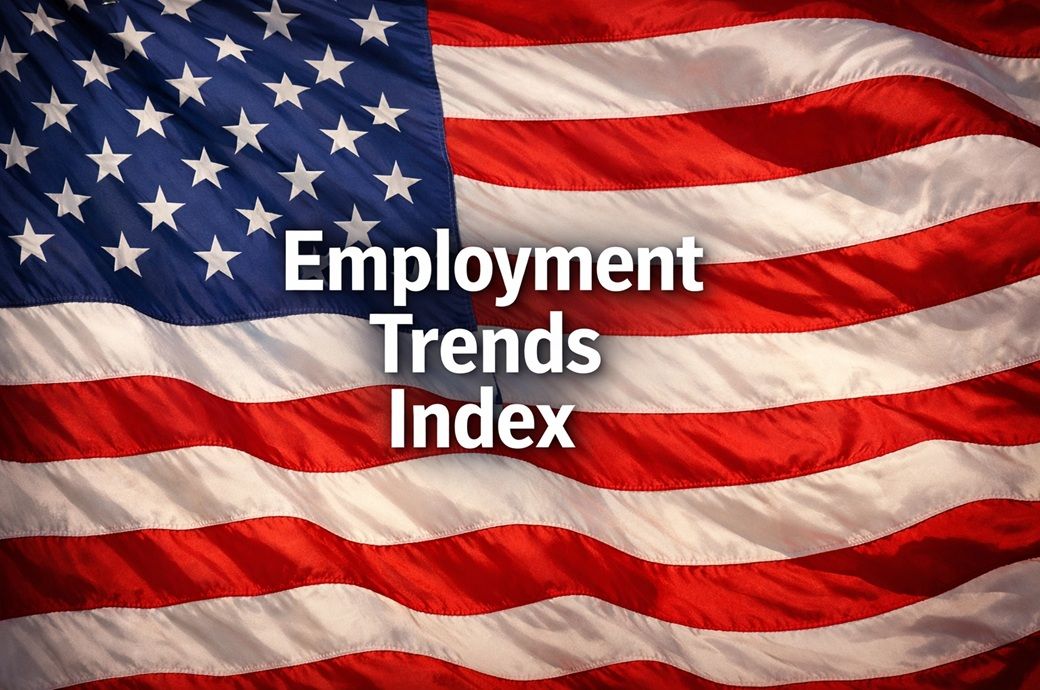
ETI is a composite index for payroll employment. When it increases, employment is likely to grow as well, and vice versa.
The Conference Board employment trends index for the US declined to 105.72 in March, from an upwardly revised 105.84 in February.
Job seekers continue to face a challenging market, according to economist Mitchell Barnes.
The share of consumers who report ‘jobs are hard to get’ climbed to 21.5 per cent in March and reflects a 5-percentage point rise YoY.
“Job seekers continue to face a challenging market,” said Mitchell Barnes, economist at the US think tank, said in a release. “This is evident in the ETI as several components moderated in March. Overall, the US economy has remained surprisingly resilient, but rising geopolitical uncertainty may contribute to ongoing employer hesitancy to add more workers.”
The share of consumers who report ‘jobs are hard to get’—an ETI component from the Consumer Confidence Survey—climbed to 21.5 per cent in March and reflects a 5-percentage point (pp) rise year on year (YoY).
The share of small firms reporting that jobs are ‘not able to be filled right now’ declined by 1 pp in March to reach 32 per cent.
Fibre2Fashion News Desk (DS)


Transfer rumors, news: Liverpool, Real Madrid work on mega midfield swap deal

Apparel imports in France rise to $26.6 bn in 2025

‘Ships continuously coming even amid blockage’: Centre assures 100% energy supplies across the country – The Times of India

-
Uncategorized7 days ago
[CinePlex360] Please moderate: “Trump signals p
-
 Business7 days ago
Jaguar Land Rover sees sales recover after cyber attack
-

 Entertainment6 days ago
Joe Jonas shares candid glimpse into parenthood with Sophie Turner
-

 Tech6 days ago
Our Favorite iPad Is $50 Off
-
 Fashion1 week ago
China’s Anta Sports posts record $11.62 bn revenue in 2025
-

 Politics6 days ago
Iran can sustain Strait of Hormuz closure for years, will cut US military logistics: Official
-

 Sports5 days ago
UConn Final Four run could trigger a $50M furniture giveaway for Massachusetts-based Jordan’s Furniture
-
 Business6 days ago
Video: Why Is the Labor Market Stuck?