

Politics
Indonesia turns down ear-splitting ‘haram’ street parties

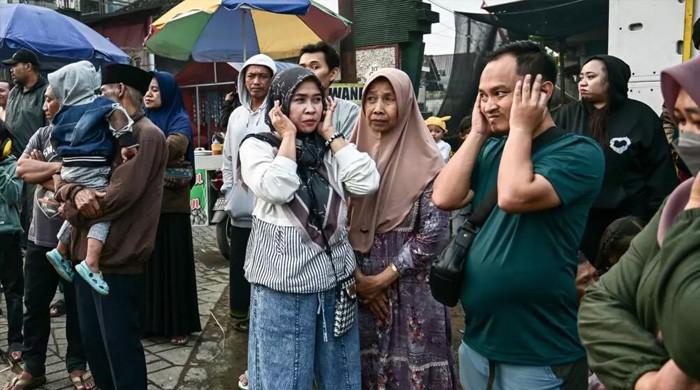
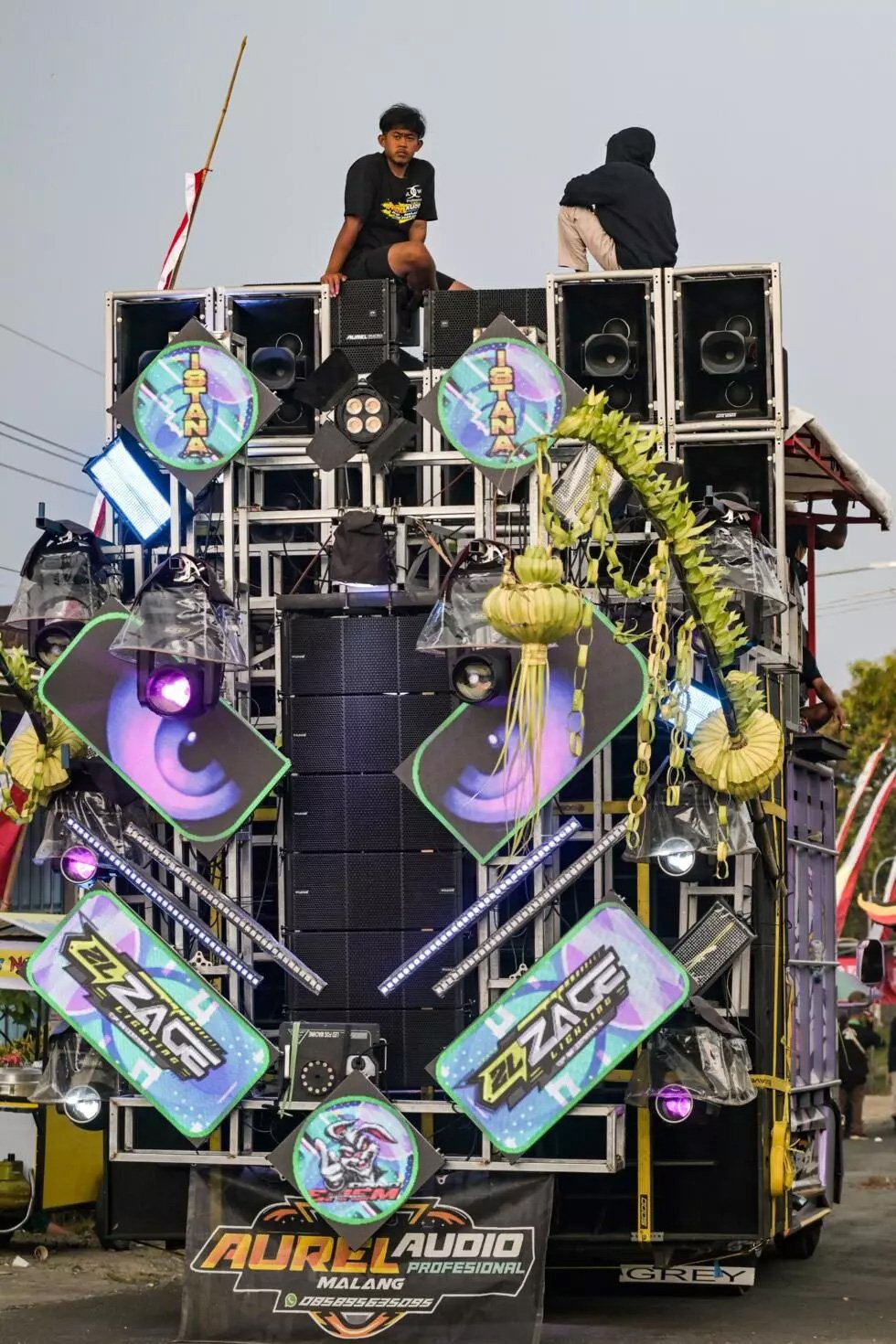
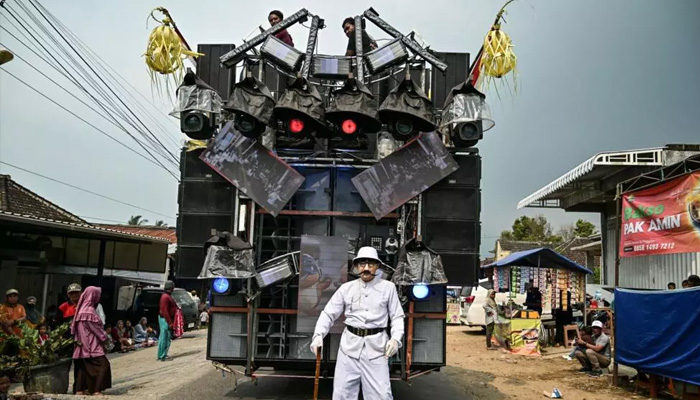
People in an Indonesian village watched as a tower of loudspeakers mounted on a truck rumbled through their usually serene home, blasting a thumping bass loud enough to crack windows.
Loudspeaker towers are commonplace on Indonesia’s main island of Java, blaring a repetitive mix of electronic tunes and traditional folk music at street parties, but they have drawn the ire of local authorities and calm-seeking neighbours.
The loudspeaker stacks have proven so disruptive that officials this month have restricted their use while religious bodies have declared excessive and damaging sound from them to be “haram”, or forbidden under Islamic law.
“The sound is booming from 1pm to 3am. They play loud music and drink alcohol,” Ahmad Suliyat, a resident of Ngantru village in East Java province, told AFP.
“It’s really disturbing.”
Indonesians in East Java have shared videos on social media of cracked walls, falling roof tiles and damaged stores caused by the noise impact known as “sound horeg”, which loosely means to move or vibrate in Javanese.
The online backlash forced authorities in East Java to issue an order this month limiting noise levels and specifying the times and locations loudspeakers can be used.
“It was made for health and security reasons. The noise level must be regulated so it will not disturb the public peace and order,” East Java governor Khofifah Indar Parawansa told AFP.
Hearing problems
Ear-splitting noise has been shown to have adverse health consequences, including a higher risk of heart conditions for those exposed.
And Indonesia’s loudspeaker towers, popular for little more than a decade in the world’s most populous Muslim nation, have had dire consequences for some who attend the deafening street gatherings.
A woman died this month after allegedly suffering cardiac arrest caused by loudspeaker towers at a carnival she attended, local media reported, while there has been an increase in hearing problems among those attending the events.
The East Java government has capped sound system levels at 120 decibels, while mobile units used in parades or protests are limited to 85 decibels.
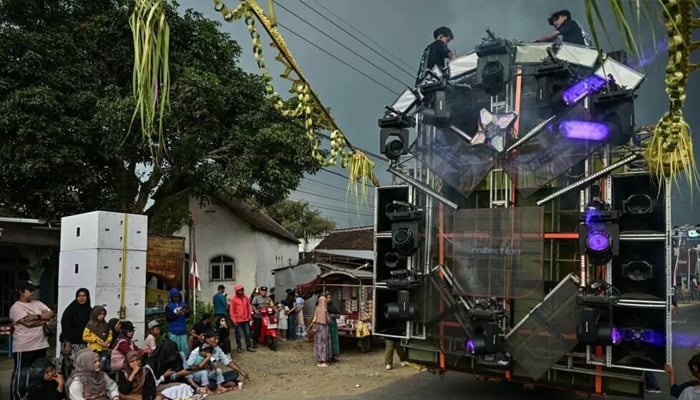
Mobile units are also banned from being used near schools, hospitals, ambulances and places of worship that are in session.
In July, a local Islamic council issued a religious edict that said excessive sound at parties that is capable of causing damage is forbidden by religion.
“The use of a sound system excessively, especially during a wedding convoy, or any other events that cause noise, disturb road users, or make people neglect worshipping, is haram,” read the fatwa.
Locals typically rent the speaker towers for weddings, circumcisions and Independence Day events — all celebrations that can last until dawn.
Some like Daini, who goes by one name like many Indonesians, believe the loudspeakers are a local tradition that should be kept.
She glanced at her cracked window, held together by duct tape, as music blared from the truck in Ngantru.
“The glass cracked during a sound horeg event last year. But that’s OK, people here like loud events,” said the 61-year-old.
Lax enforcement
But loudspeakers have continued blasting above the new limits, due to lax enforcement by local authorities.
After the rules were issued, an AFP journalist heard loudspeaker towers blaring music at an East Javan event as authorities watched on.
The World Health Organisation says sound at 85 decibels and above can cause hearing damage over time, and anything above 120 decibels can cause immediate harm.
Some Indonesians posted screenshots online of apps registering loudspeaker sound levels as high as 130 decibels.
Operators of loudspeaker towers argue they are responding to demand that generates revenue for local businesses.
“I believe most people who dislike sound horeg are not from here,” said David Stevan Laksamana, a 40-year-old loudspeaker rental owner in Malang.
“In Malang alone, it employed tens of thousands of people. This business is helping the economy.”
Others who cannot stand the disruptive street parties fear reporting them, with some loudspeaker tower owners reportedly parking outside complainants’ houses to blare music for hours.
“I never complain to the village head,” said Ahmad.
“I just keep quiet. I’m afraid of intimidation if I say anything.”
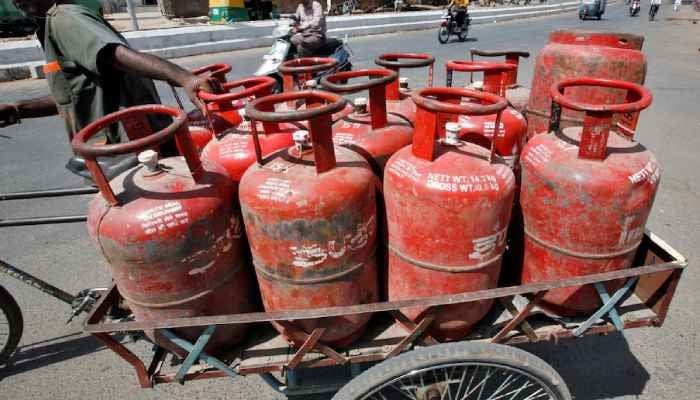
Indian police this week seized 414 cooking‑gas canisters hidden in a graveyard in Hyderabad city and arrested those involved in trying to sell them on the black market amid shortages due to the Iran war, a government official said on Thursday.
Authorities have stepped up raids to curb hoarding of liquefied petroleum gas canisters after the US-Israeli war against Iran disrupted shipping, causing supply shortages. India, the world’s No 2 LPG importer, meets about 60% of its demand through overseas purchases, mostly from the Middle East.
“Just yesterday, around 2,600 raids were carried out and about 700 cylinders were seized,” Sujata Sharma, a senior official in the Ministry of Petroleum and Natural Gas, told a regular briefing on the Middle East crisis.
“In addition, around 400 cylinders were recently found at one location inside a graveyard in Hyderabad. Ten people have been detained there, and the distributor involved has been suspended,” she said.
Police said the accused had been selling both commercial and domestic canisters from the graveyard at nearly three times the current market price. A commercial canister that costs about 2,100 Indian rupees ($22) had been sold for as much as 6,000 rupees.
The total value of the seized canisters and some vehicles used by the accused was nearly 2.2 million rupees, police said. Reuters could not immediately contact the accused or their representatives.
“The supply of natural gas to domestic consumers is 100% assured,” Sharma said. “With regard to LPG supply, prices have remained stable despite international volatility, and there has been no increase in the price of domestic LPG cylinders.”
To ease the pressure on LPG supplies, India has been promoting the use of alternatives such as kerosene, coal and biogas, while accelerating the rollout of piped natural gas for households.
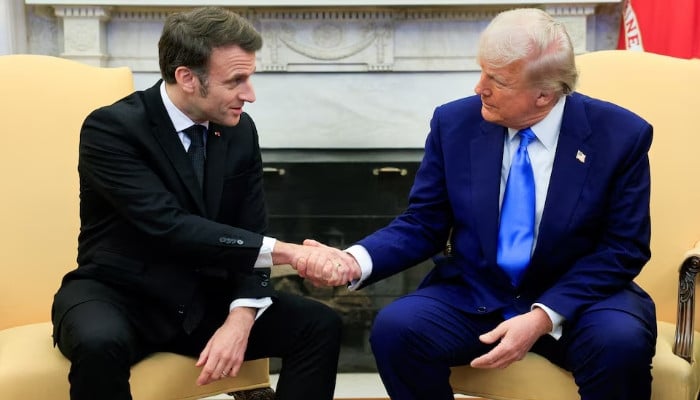
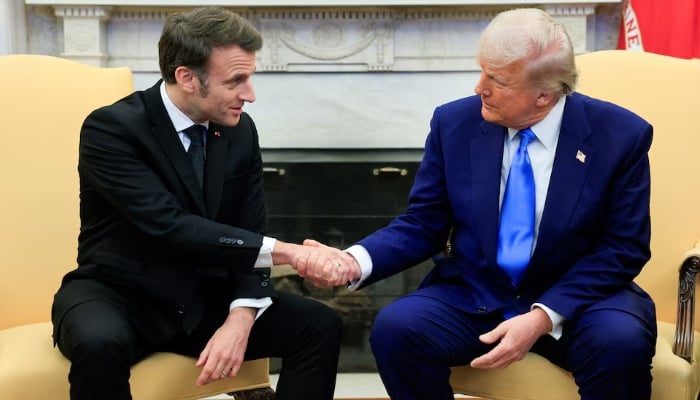
WASHINGTON: US President Donald Trump made fun of the French president and his wife during a private lunch Wednesday, as he lambasted Nato allies for not joining the war against Iran that has roiled the Middle East.
“We didn’t need them, but I asked anyway,” Trump told a private lunch in a video posted briefly on the White House YouTube channel before access was blocked.
“I call up France, Macron — whose wife treats him extremely badly. Still recovering from the right to the jaw,” Trump said.
He was referring to a May 2025 news video that appeared to show Brigitte Macron shoving the French president’s face on a trip to Vietnam, which Macron later rejected as part of a disinformation campaign.
“And I said, ‘Emmanuel, we’d love to have some help in the Gulf even though we’re setting records on knocking out bad people and knocking out ballistic missiles. We’d love to have some help. If you could, could you please send ships immediately,'” Trump continued.
He then mimics a French accent to give Macron’s alleged answer: “‘No no no, we cannot do that, Donald. We can do that after the war is won,'” he said.
“I said, ‘No no, I don’t need after the war is won Emmanuel,'” Trump said.
“So I learned about Nato — Nato won’t be there if we ever have the big one, you know what I mean by the big one,” Trump said, without elaborating.
He also branded Nato a “paper tiger,” the latest salvo by Trump and his top officials against the transatlantic alliance since he returned to the White House last year.
On Tuesday, Secretary of State Marco Rubio said the United States “is going to have to reexamine” its relationship with Nato once the war against Iran has concluded.
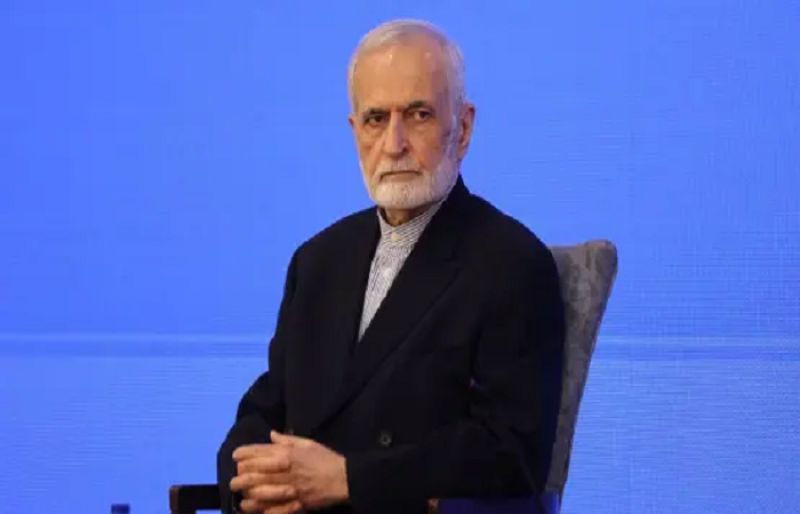
Former Iranian foreign minister Kamal Kharazi was seriously wounded in a strike that also claimed the life of his wife, Iranian media reported.
Still an adviser to the government, Kharazi had given an interview to CNN a few weeks ago.
According to the newspapers Shargh, Etemad and Ham Mihan, his home in Tehran was targeted on Wednesday in a US-Israeli strike.
He was badly injured and hospitalised following the attack, the outlets said.
Kharazi had served as foreign minister from 1997 to 2005 under reformist ex-president Mohammad Khatami.


The Google Pixel 10 Is $150 Off

Michigan’s ‘Fab Five’ to reunite on Final Four alternate broadcast

Jamie Bell and others join new series

-

 Fashion1 week ago
Ho Chi Minh City bizs adjust production plans, seek new supply chains
-

 Fashion1 week ago
Japan’s apparel imports rise 22.9% to $2 bn in February 2026
-

 Fashion1 week ago
India’s Gen Z to drive half of fashion market by 2030: Reedseer
-

 Entertainment1 week ago
Andrew holds breath as King Charles plans bombshell move amid probe
-
 Business6 days ago
How do you spot a fake online review?
-
 Business1 week ago
Co-op boss quits after ‘toxic culture’ claims reported by BBC
-

 Entertainment6 days ago
Lee Sang-bo dies at 45: Funeral details revealed
-

 Sports6 days ago
Illinois defense gets tough, ousts Houston to reach Elite Eight