Richard Corbridge has spent his digital leadership career turning smart ideas into production services. After working for some of the UK’s biggest private and public sector organisations, including the NHS, Boots, and the Department for Work and Pensions (DWP), Corbridge embraced a fresh challenge in 2024, when he became CIO at property specialist Segro.
Corbridge says the role provides a great education, even for an experienced executive like him. “Taking this role felt like a good chance to learn more,” he says. “The opportunity across the industry, and specifically at Segro, is huge because it is a place that has almost been proud of not adopting too much technology.”
The position also gave Corbridge the chance to work alongside Paul Dunne, Segro’s managing director for operations, digital and customer, whom he’d worked with at Boots. Corbridge was director of innovation and then CIO for the high street chemist between 2019 and 2023, before spending almost two years as chief digital information officer at DWP. He joined Segro in November 2024.
“The property industry is a relationships industry; it’s a people industry,” he says, talking about what he found when he joined the firm. “What this role is testing, probably more than ever before, is my experience of getting to the business language, getting to value first, and making sure that you’re telling the stories in a way that isn’t technology-led.”
Embracing challenges
Corbridge recognises that moving between sectors and organisations affects your digital leadership approach.
“It was something I was mindful of when I left the NHS for Boots,” he says. “Peers, mentors, colleagues and coaches would say the private sector is going to be a lot faster, a lot more ruthless, and would involve a lot more watch-your-back type scenarios, but that didn’t come to bear in reality.”
“Creating efficiency through technology either creates profit for a private organisation or creates efficiency and puts money back in the bank for a public sector organisation”
Richard Corbridge, Segro
Corbridge says organisations differ in strategies and structures, but some important consistencies also allow successful CIOs to move seamlessly between sectors.
“One of the things you learn is that creating efficiency through technology either creates profit for a private organisation or creates efficiency and puts money back in the bank for a public sector organisation,” he says.
“And if efficiency and growth are the two watchwords for digital leaders, then you can apply the principles to what you’re trying to do, whether it’s about making profit for shareholders and looking after customers, or you’re ensuring taxpayers’ money is spent wisely and achieving the goals you want to do.”
Reflecting on the initiatives he’s overseen during his career, Corbridge says he enjoyed taking his healthcare project experience and its focus on making wise bets to the private sector in his role at Boots, where he worked with around 600 IT professionals. He also enjoyed returning to the public sector and applying his experience of fast-paced change at Boots to DWP, where he worked with 5,500 colleagues.
“Now at Segro, I’ve got 35 people working for me, but in an estate of assets across nine countries, a very large amount of money in the organisation itself, and enormous value,” he says. “So, there are different priorities, but, interestingly, the themes within those priorities probably remain relatively similar from a CIO point of view.”
Leading change
Crucially, transformation – which Corbridge describes as creating change and delivering value – is part of his remit at Segro, which he suggests is a wise approach. It’s certainly a change from his previous role at DWP, where Corbridge worked with a director general of transformation who was separate from the digital department.
“At Segro, making a difference with technology, and working with our business to make a difference, is under my ownership,” he says. “After 12 months in this role, my team is making a difference because of how we’re using technology, both from a business and a value completion point of view.”
Corbridge says the general direction of travel for transformation at Segro involves three buckets that will hold his team’s priorities through 2026: implementing new technology alongside trusted partners to simplify complex business processes; making the most of enterprise data assets; and joining up point solutions to deliver business benefits.
“We’re trying not to end up just doing AI [artificial intelligence] for its own sake, and we’re looking at the orchestration that we could do with different technology solutions,” he says, referring to the systems and services that will enable transformation.
“Sometimes that may well be agentic AI, but sometimes it might just involve putting the data in the right place at the right time so people can have it.”
For example, Corbridge refers to his vision of a workbench, which would give the firm’s asset managers access to the information and insights they need to offer customers new opportunities to look after their buildings in the most effective manner and to help the company make the most from its existing client portfolio.
“That approach feels quite different from what some of our peers are doing, where they’re looking at big ERP [enterprise resource planning] replacement or deployment programmes,” he says.
“We took the decision not to do that and to go process by process. It’s about how we simplify the process, get the most out of it, and then bring technology to bear on that process, joining it up as an orchestration layer, instead of having lots of point solutions.”
Making progress
Corbridge addresses each of his transformation aims in turn. First, simplifying complex business processes. For this aim, partners IBM and HCL will play a crucial role.
“We [will] sit down with our two most forward-possible partners to see what they’ve done on a test and learn basis,” he says. “At the start of January, they began with three processes each, reviewed the inherent complexity of those processes, and will now make some technology simplification recommendations.”
Corbridge says this process will help his organisation understand how its technology partners can help reduce complexity, as well as potential timelines, costs and long-term value generation. Deadlines were kept purposefully tight to test the partners, and the results look promising: “I’d go as far as to say that I’ve not seen anything like it in all the different partners that I’ve worked with.”
Open Box Software is another important supplier. This integration specialist manages Segro’s MRI property management system, which Corbridge describes as the company’s operational backbone. He’s working with Open Box to reduce complexity and increase simplicity, and is impressed with the output: “We truly have partners, not vendors.”
When it comes to the second aim of ensuring data supports accurate decisions, Corbridge says his director of data and AI will focus on two important objectives through 2026: establishing strong data governance to guarantee reliability, and getting accurate insights to key people for timely decision-making.
“Getting those elements right sets us up to move faster,” he says.
Finally, Corbridge refers to the aim of joining up point solutions to create business benefits. Here, he points to Sama, which is the Segro asset management app. This bespoke solution has been built by the company over the past two years. The technology team continues to roll out new monthly releases, functionalities and integrations to back-end systems.
“This approach means we can capture data once, store it once, and let others have access to that data,” he says. “Seeing something that has been built specifically for Segro is really exciting because it delivers how our business wants to work and we can deal with the subtle differences that are needed locally in Germany, Czechia, or Poland, without having to standardise everything.”
Adopting technology
In combination, Corbridge says those three transformational aims comprise his digital plan for Segro. He says it’s important to stress that the organisation has a plan instead of a digital strategy.
I want us to be seen as an organisation that is adopting technology, and it’s not a distraction to how we work with customers, where our assets are, or what our value is, but that it’s actually adding to that effort Richard Corbridge, Segro
“I don’t want to sit and write another digital strategy next year because everything’s moving so fast,” he says. “I want to get in there and get some delivery and value released to our business so that we can build excitement and deliver against people’s expectations. So, we’re going to focus on delivery and value this year against those priorities, knowing that, when we get to the end of the year, I want to be able to set the vision for 2027 and 2028 for where we’re going to get to.”
Two years from now, Corbridge expects the firm’s core MRI system will create value by delivering data to people around the organisation. The aim here will be to focus on standardisation and simplification by exploiting Open Box’s orchestration capabilities. He wants to ensure the top 20 tech-enabled processes across Segro are as simple as possible, supported by technology, with data captured once and shared where required.
Corbridge says the rise of consumerisation means people across the organisation have a much greater awareness of technology’s power. Everyone has a smartphone, and many people are using generative AI tools such as ChatGPT at home, never mind at work. This technological exploration means non-IT people will increasingly find their own solutions to business challenges. Corbridge wants to work with the business to hone the best of these ideas.
“Most importantly, I want us to be seen as an organisation that is adopting technology, and it’s not a distraction to how we work with customers, where our assets are, or what our value is, but that it’s actually adding to that effort. And that means a lot to me. We want to provide a clear view of what technology can actually do for this industry,” he says.
“There’s been a whole plethora of commentaries recently with experts saying, ‘At last, the property industry is starting to recruit CIOs. At last, the property industry is starting to adopt digital and technology.’ I want Segro to be synonymous with that march of difference.”
Zoë Schiffer: Wait, is the Pentagon Pizza thing a joke about the pizza predicting the war?
Makena Kelly: Yeah.
Zoë Schiffer: Oh, my God.
Makena Kelly: Because they had these Pentagon pizza trackers up. When I returned the second night, yes, I came back the second night. Everything was working for the most part. There were still some screens that were turned off, but I never saw any actual Bloomberg terminals. There were some monitory Bloomberg type terminal things that it looked like Polymarket had developed themselves, but the real $50,000 Bloomberg terminal was nowhere to be found. And yeah, the second night, again, it was mostly people looking to gawk at the event, except I did find a couple of people who placed some bets on platforms like Polymarket and Kalshi. One was named William, and he said he was a member of the military, wouldn’t give me his full name. And he last year got involved in this for the first time by putting in, I think, all of his tax return into Oklahoma City sports betting.
Makena Kelly, archival audio:So, you used Kalshi?
William, archival audio:Yes.
Makena Kelly, archival audio:When did you first start using the service?
William, archival audio:Probably when I got my tax return back.
Makena Kelly, archival audio:OK.
William, archival audio:So, I filed my taxes pretty early and I was like, “Oh, sweet. I got my tax return. What am I going to do with it?” So, I was like, “I’m going to just put it on Kalshi.”
Makena Kelly: He said that he goes up and down 100 dollars, but he hasn’t made any major winnings. Some of the stuff that we’ve heard. Some people making crazy insider bets making millions and millions of dollars. This is just a guy who was interested in this and just plays it for fun, it sounds like.
Brian Barrett: Kate, what do you see when you see a pop-up like this and Polymarket trying to—is it an attempt to legitimize itself to just a marketing stunt? And how does it tie into what you’re seeing with these companies anyway, that there’s the explosive growth that they’ve got trying to reach out to so many people and getting so many people hooked on what they’re offering?
Kate Knibbs: I mean, this particular event definitely seems like a very bald effort to woo DC-based journalists, if nothing else. One thing that Makena said sort of encapsulates what’s going on right now, the thing about the guys in the Palantir hoodies. So, I think it was the same week that this bar opened. Polymarket announced a partnership with Palantir and Palantir is helping them protect the integrity of their sports market. So, Palantir is going to be basically attempting to help Polymarket catch insider traders and market manipulators in all the sports games, which is kind of wild. I actually asked Polymarket last week whether they had any other deals with Palantir when I was trying to get them to say anything about whether they were investigating the Iran bets that have been raising a lot of eyebrows. And they said that Palantir was only helping them with sports, which I thought was freaking weird. And it speaks to how they’re rapidly expanding, but doing so in this really messy ad hoc way that doesn’t really make a lot of sense. Because I was like, “If you’re going to get Palantir involved, why wouldn’t you have them do this geopolitical stuff instead of March Madness?” Yeah, wild, wild times.
The biggest advantage to a Pixel over other Android smartphones is that you get the latest features from Google as soon as they’re available, often before other brands implement them. There are special camera modes that let you stitch together multiple group shots, or help you improve the angle and lighting with helpful tips. You’ll also find novel features like real-time translations and spam call screening, and Google even figured out how to let you AirDrop files with iOS users.
All of that functionality is powered by some of the better hardware you can find in an Android phone. The Pixel 10 sports a 6.3-inch OLED display with a 120Hz refresh rate for gaming and smoother scrolling. The Tensor G5 is a step up from the 10a’s Tensor G4 chip, and sports 12 GB of memory for better performance. They even support Qi2 wireless charging, making them compatible with existing MagSafe accessories.
While the Pixel 10a will satisfy most folks, the Pixel 10 offers a variety of upgrades over the more basic model, most of which pertain to the cameras and image processing. The rear camera has a proper 5X optical zoom, letting you nail those nature shots without scaring the wildlife, and the front camera sports auto-focus, which will make your big group selfies less of a headache. Oddly, the battery is actually a bit smaller in the Pixel 10, but neither disappointed us when it came to longevity.
If you’re sold on the Pixel 10, I spotted the discounted $649 price point for the 128 GB model in both Obsidian and Lemongrass, or $749 in Indigo. If you need more storage, the Obsidian and Frost colors were both marked down to $749 for the upgraded 256 GB version. If you’re wondering what other Android smartphones we like, make sure to check out our in-depth guide with picks from Google, Samsung, and OnePlus.
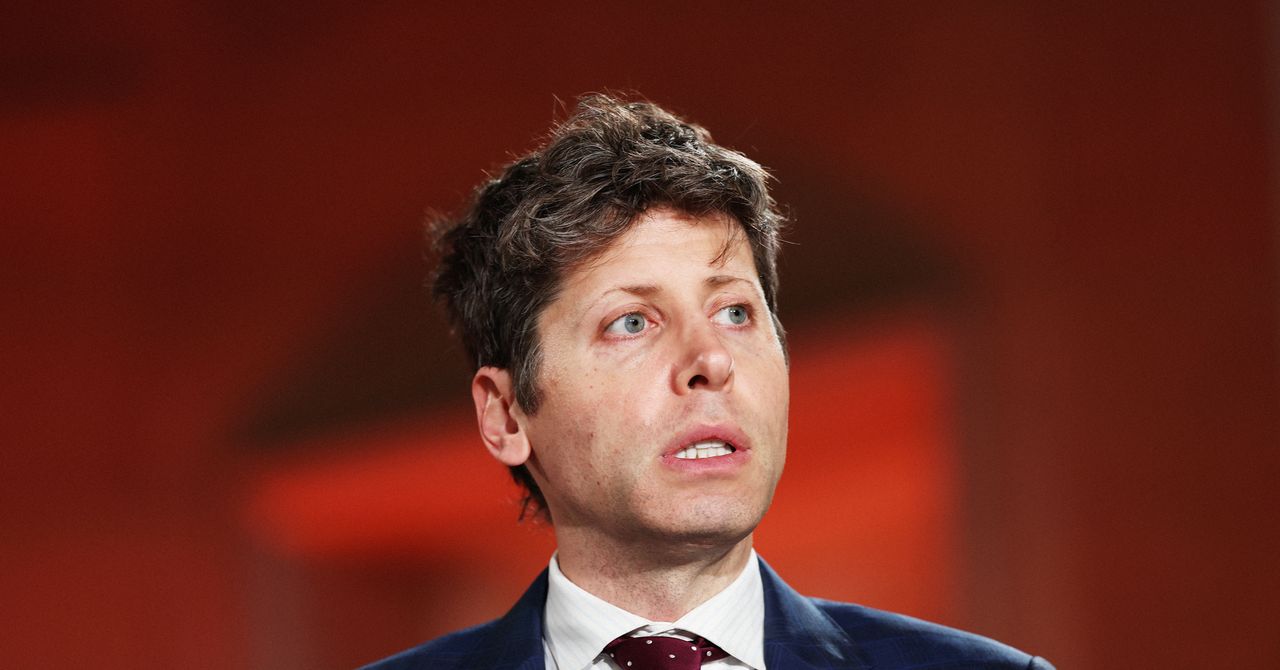
OpenAI announced Thursday that it had acquired the online business talk show TBPN for an undisclosed sum. The move comes as OpenAI struggles with its public image, which has taken a significant hit in recent months.
Since launching in 2024, TBPN has risen in popularity among Silicon Valley circles by offering a daily live stream about the technology industry that’s seen as more tech-friendly than traditional outlets. The show’s two hosts, John Coogan and Jordi Hays, offer real-time commentary on breaking news, cycle through viral social media posts, and interview executives from companies including Meta, Salesforce, Palantir and OpenAI. It’s become especially popular among OpenAI staff and other AI researchers, many of whom are addicted to the social media platform X.
It’s hard to understand how a media startup fits into OpenAI’s core businesses selling ChatGPT, Codex, and a new super app the company is developing to consumers and enterprises. Last month, OpenAI’s CEO of Applications, Fidji Simo, told staff in an all hands meeting that the company needed to cancel its side projects and refocus around its core businesses.
In a memo to staff announcing the acquisition, Simo said the typical communications playbook does not apply to OpenAI. “We’re not a typical company,” she said in the memo, which was also published as a blog. “We’re driving a really big technological shift. And with the mission of bringing AGI to the world comes a responsibility to help create a space for a real, constructive conversation about the changes AI creates—with builders and people using the technology at the center.”
TBPN is a small business compared to OpenAI. The media firm says it generated $5 million in ad revenue last year, and was on track to make more than $30 million in revenue in 2026, according to the The Wall Street Journal. The show reportedly reaches around 70,000 viewers per episode across a variety of platforms. A source close to OpenAI says the company doesn’t expect TBPN to contribute financially to the business, though it will help with OpenAI’s communications strategy.
OpenAI has fallen under increased public scrutiny in recent months. After the company signed a deal with the Department of Defense in February, Anthropic’s Claude surged in downloads and claimed the top spot among Apple’s free apps. OpenAI’s leaders are also dealing with a growing QuitGPT movement which is made up of people who vow to never use OpenAI’s products. OpenAI President Greg Brockman cited AI’s popularity issues as a core reason for his increased political spending.
The acquisition makes OpenAI the latest Silicon Valley player to try owning and operating a news business. In recent decades, there have been several notable examples of technology leaders purchasing media firms, including Jeff Bezos buying The Washington Post, Marc Benioff buying Time Magazine, and Robinhood buying the newsletter company MarketSnacks. In each case, the acquisitions raised immediate questions about whether the outlets would remain truly independent. In her memo, Simo told staff that TBPN will retain editorial independence.
“TBPN is my favorite tech show. We want them to keep that going and for them to do what they do so well,” said OpenAI CEO Sam Altman in a post on X. “I don’t expect them to go any easier on us, [and I] am sure I’ll do my part to help enable that with occasional stupid decisions.”
OpenAI said TBPN will continue to “run their programming, choose their guests, and make their own editorial decisions,” according to Simo’s memo The company also said that TBPN will report directly to OpenAI’s VP of global affairs, Chris Lehane. WIRED previously reported how an economic research team under Lehane had struggled to report on AI’s negative impacts on the economy.













 Fashion1 week ago
 Fashion1 week ago
 Fashion1 week ago
 Entertainment1 week ago

 Entertainment6 days ago
 Entertainment1 week ago