

Politics
Iran conflict pushes oil prices higher as stocks slip, dollar strengthens

- Traders rapidly reduce Fed rate cut wagers for year.
- All major US stock indexes log daily and weekly declines.
- US dollar continues its climb amid crisis.
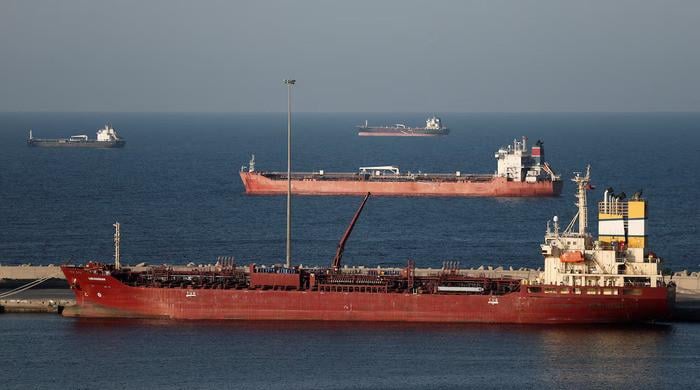
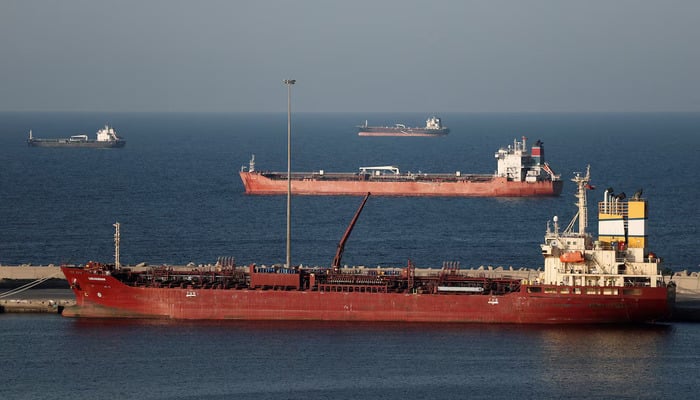
Stocks fell and the US dollar strengthened on Friday as uncertainty over the Iran war continued to disrupt energy supplies, heightening concerns over fuel prices and interest rates.
The price of oil crossed $100 per barrel even as an Indian tanker sailed out of the Strait of Hormuz and the US put forth measures to try to ease supply concerns.
All three major US stock indexes logged daily and weekly declines. The Dow Jones Industrial Average finished Friday down 0.25%, the S&P 500 fell 0.6% and the Nasdaq Composite dropped 0.9%.
European shares extended their declines as well, with Europe’s STOXX 600 down 0.5% on Friday. MSCI’s gauge of stocks across the globe fell 0.9%.
The dollar has become the safe haven of choice during the tumult, putting most other currencies under pressure. The US currency gained for the second consecutive week, up 0.8% on the day against a basket of currencies .
Oil price driving market
President Donald Trump said the US was going to be hitting Iran “very hard over the next week,” shortly after issuing a partial 30-day waiver for purchases of sanctioned Russian oil, hoping to ease prices.
Front-month WTI crude futures settled at $98.71 per barrel, up 3.11%. Brent rose 2.67% to $103.14, settling above $100 per barrel for the first time since August 2022.
Traders are trying to predict how long the disruption to oil supplies will last.
“Headlines are coming at the market like water from a fire hose, which is impacting the price of oil, and consequently, financial markets,” said Mitch Reznick, group head of fixed income at Federated Hermes.
With Iran stepping up attacks across the Middle East as its new Supreme Leader Mojtaba Khamenei vowed to keep the Strait of Hormuz shipping lane closed, investors are bracing for a prolonged conflict and higher oil prices.
The spectre of rising inflation has led markets to rapidly reprice what they expect from central banks this year, with traders now anticipating just 20 basis points of easing from the Federal Reserve compared to 50 bps of cuts priced in last month.
Two-year Treasury yields, which typically move in step with Fed interest rate expectations, hit a six-month high on Thursday.
Elsewhere, the Personal Consumption Expenditures index, the Federal Reserve’s preferred inflation gauge, rose 0.3% in January on a monthly basis, in line with economists’ estimates.
At the same time, US economic growth slowed more sharply than initially thought in the fourth quarter amid downward revisions to consumer spending and business investment, government data showed on Friday.
“With markets laser-focused on oil prices and geopolitics, today’s numbers may mostly fly under the radar,” Ellen Zentner, chief economic strategist for Morgan Stanley Wealth Management, said in an email.
“Despite signs of economic softening, more sticky inflation data simply strengthens the idea that the Fed will remain on the sidelines.”
Shifting rates outlook
Interest rate futures that had been priced for two quarter-point cuts by the end of the year before the conflict began are now barely pricing in one.
For US government bond trading on Friday, the two-year note yield fell 3.3 bps to 3.73% after hitting its highest level since August 22 on Thursday. US 10-year notes ticked up to 4.283%.
Investor focus will switch to a slate of policy meetings next week, with the Fed, the Bank of Japan, the European Central Bank and the Bank of England all due to meet, with most expected to keep rates unchanged.
In currencies, the euro fell 0.8% to $1.1417, while the yen hit its weakest since July 2024 at 159.66 per US dollar on Friday as Japan warned it was ready to take action to protect against yen declines.
Analysts said the bar for intervention is higher this time around, as any action now could prove futile in the face of relentless dollar buying.
Gold was 1.27% lower at $5,014 per ounce on Friday, capping a drop on the week.
- US targets 10 officials linked to Iran’s IRGC.
- Mojtaba likely injured, not seen publicly since strikes.
- Iran denies US terrorism allegations, calls them baseless.
The United States is offering a reward of up to $10 million for information about senior Iranian military and intelligence officials, including its new Supreme Leader, Ayatollah Mojtaba Khamenei.
The reward targets 10 officials associated with Iran’s Islamic Revolutionary Guard Corps (IRGC), according to the State Department website.
The military force, created after Iran’s 1979 Islamic Revolution, is loyal to the supreme leader and tasked with protecting the clerical establishment.
Mojtaba recently succeeded his father, Ali Khamenei, as Iran’s supreme leader after the elder Khamenei was killed along with several other top Iranian officials in joint US and Israeli strikes that began on February 28.
The younger Khamenei, believed to have been injured in the strikes, hasn’t been seen publicly since, although he released his first statement on Thursday.
In addition to the supreme leader, the US is seeking information about Iran’s security chief Ali Larijani, Intelligence Minister Esmail Khatib, Interior Minister Eskandar Momeni and two officials in Khamenei’s office.
Larijani appeared on Friday in videos verified by Reuters alongside President Masoud Pezeshkian and Foreign Minister Abbas Araqchi attending a rally in Tehran, despite an assertion by US Defence Secretary Pete Hegseth that Iran’s leadership was “cowering” underground.
The reward website also lists four other officials, including the IRGC commander and secretary of the defence council, but doesn’t include their names or photos.
“These individuals command and direct various elements of the IRGC, which plans, organises, and executes terrorism around the world,” the State Department said.
The Revolutionary Guards could not be immediately reached for comment on Friday, the weekly day of rest in Iran. Iran’s mission to the United Nations in New York didn’t immediately respond to a request for comment.
The US has designated the IRGC as a foreign terrorist organisation, accusing it of being responsible for attacks that have killed US citizens. Washington has also accused Iran of orchestrating assassination plots against President Donald Trump and other US officials in retaliation for the killing of Iranian military commander Qassem Soleimani in 2020.
Iran denies being a sponsor of terrorism. Iranian officials routinely dismiss US terrorism allegations as baseless political attacks, arguing Washington raises such claims to justify pressure campaigns or sanctions.
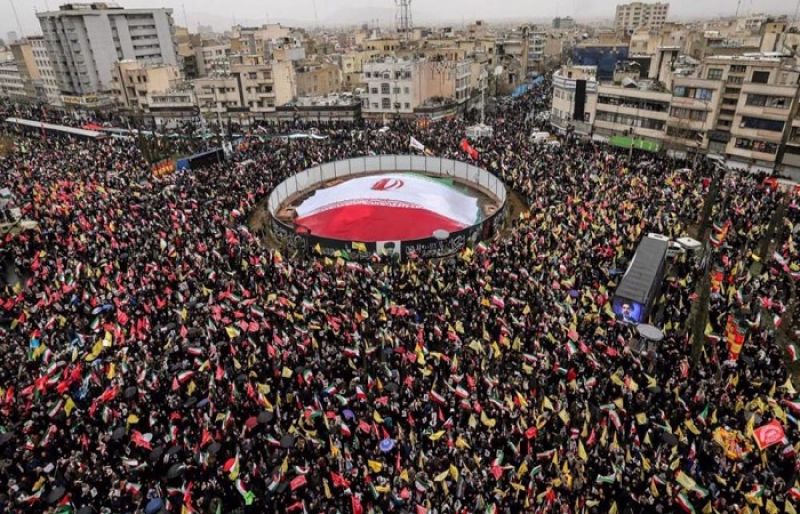

The event, which takes place on the last Friday of the holy month of Ramadan, is commemorated through mass rallies that saw citizens from all walks of life gathering in major cities, including Tehran, to demonstrate their unwavering support for Palestinians.
This year’s International Quds Day is particularly poignant, occurring amid the ongoing military aggression by the United States and Israel against Iran.
The attacks, which have lasted for over two weeks, have claimed over 1,300 Iranian lives and left more than 10,000 injured, with a significant number of casualties being women, children, and students.
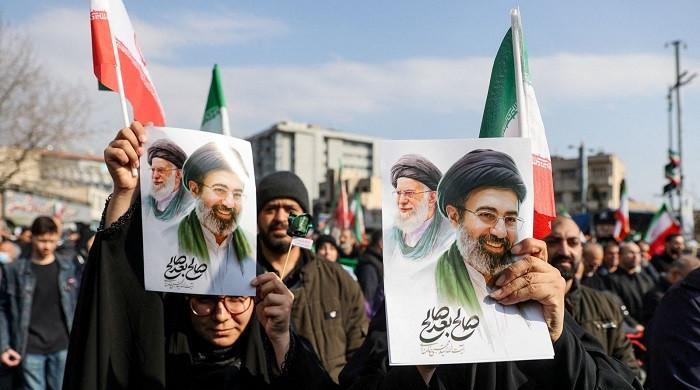
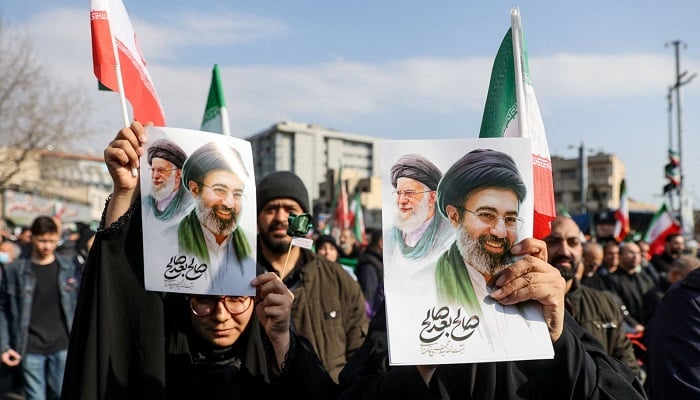
In response, Iranians have rallied in vast numbers, holding Iranian and Palestinian flags, and displaying images of Ayatollah Seyyed Mojtaba Khamenei, the newly elected leader of the Islamic Revolution.
In Tehran’s Enqelab Square, participants chanted “God is Great” in response to explosions that were heard during the rally amid US and Israeli airstrikes which have targeted schools, hospitals, police stations, and historical landmarks.
The atmosphere of defiance and solidarity was palpable, with people pledging their loyalty to the late founder of the Islamic Republic, Imam Khomeini, and his vision for the liberation of Palestine.
A notable feature of this year’s events has been the demonstrators’ allegiance to Ayatollah Seyyed Mojtaba Khamenei. Many rally participants carried his images, signaling their support for his leadership and commitment to the ideals of the revolution.
Some participants even signed petitions and gathered in groups to affirm their loyalty to him
Top officials attended the rallies, with President Masoud Pezeshkian seen walking alone on the street, without any security escort.
Speaking at the rally in Tehran, Supreme National Security Council Secretary Ali Larijani stated that US President Donald Trump “does not understand” the resolve of the Iranian people.
“The Iranian people are a determined and capable nation, and the more pressure Trump applies, the stronger our will becomes,” Larijani said.
Responding to a question about Israeli attacks on Quds Day participants, Larijani said that such actions are driven by “fear and desperation,” adding that the Israeli regime’s aggression demonstrates its weakening position.
In a statement issued by the Islamic Development Coordination Council, the significance of this year’s Quds Day was noted.
“The security equations of the region and the world have changed with the power of resistance,” the statement declared.
It further described how “the Middle East, once envisioned by enemies as a space for expansion, has transformed into a ‘resistant Middle East.’
The statement called for continued unity, saying: “We are resolute in our commitment to the ideals of Imam Khomeini and the martyred leader Ayatollah Khamenei. We will stand by our leaders until the last drop of our blood.”
It also condemned US and Israeli actions, calling them “clear war crimes” that must be addressed by international bodies.
President Masoud Pezeshkian, in a post on social media, urged Iranians to disappoint the country’s enemies through massive participation in the Quds Day marches.
Speaker of the Iranian Parliament Mohammad-Baqer Qalibaf emphasized that this historic occasion has turned into a nightmare for the “fake and child-killing Zionist regime.”
The significance of this year’s International Quds Day rallies is further underscored by the ongoing US-Israeli aggression against Iran, which began two weeks ago.
The violent campaign has sparked outrage among Iranians and bolstered their resolve to defend the Palestinian cause.
Ayatollah Khamenei, in his first public message on Thursday, called for participation in Quds Day events, describing them as a unifying force for people worldwide.
Reports from across Iran reveal that the participation in this year’s Quds Day is more widespread and determined than ever.
The mass rallies, which are also taking place in over 900 cities and dozens of towns and villages, are a clear statement of defiance against the external forces that seek to weaken Iran and its allies in the region.
Even in adverse weather conditions—heavy snow and rain and cold temperatures—Iranians are flooding the streets to voice their unwavering support for Palestine under Israeli and US military aggression.
The central rally in Tehran, which began at multiple points across the capital and converged at the University of Tehran, featured Qur’an recitations, speeches, and chanting of slogans condemning US and Israeli atrocities in Gaza and other Palestinian territories.
International Quds Day was first proposed by Imam Khomeini in 1979, who designated the last Friday of Ramadan as a day of global solidarity with the Palestinian people.
The initiative is aimed at preventing the Palestinian cause from being forgotten amid other global issues.
Over the years, Quds Day has become a symbol of resistance against the occupation of Palestinian territories by Israel, with rallies held in numerous countries worldwide, including across West Asia, North Africa, and in Western nations like the US, the UK, France, and Germany.
Iran’s mass participation this year carries particular significance, occurring amidst a campaign of terrorism by the US and Israel against Iran, aimed at stifling the only beacon of hope for the world’s oppressed peoples and resistance movements.
The brutal attacks on Iran, including bombings that have targeted civilian infrastructure, schools, and hospitals, have served to deepen the public’s resolve to confront the Zionist regime and its supporters.
The Quds Day rallies in Iran are not only a display of political opposition but also of national unity. From north to south, east to west, the Iranian people have united across ethnic and religious lines to voice their anger at the US-Israeli war of terrorism.
In cities such as Ahvaz, Shiraz, and Mashhad, participants from diverse backgrounds, including Shia, Sunni, and ethnic minorities, have gathered in solidarity with Palestinians. They are joined by Iranians who are mourning the recent slaughter of their loved ones in the Israeli-US airstrikes.
The rallies also carry a personal dimension for many Iranians, particularly in light of the recent bombing of a girls’ school in the town of Minab, which resulted in the deaths of 175 students and teachers.
The spirit of Quds Day transcends national borders, with similar events taking place across the globe.
In countries like Lebanon, Iraq, Syria, Yemen, and Pakistan, hundreds of thousands of people have joined in rallies to demonstrate their support for Palestine and denounce Israeli aggression.
Even in Western capitals, where political pressures often limit public demonstrations, Muslims and activists have gathered to show their solidarity with Palestinians.
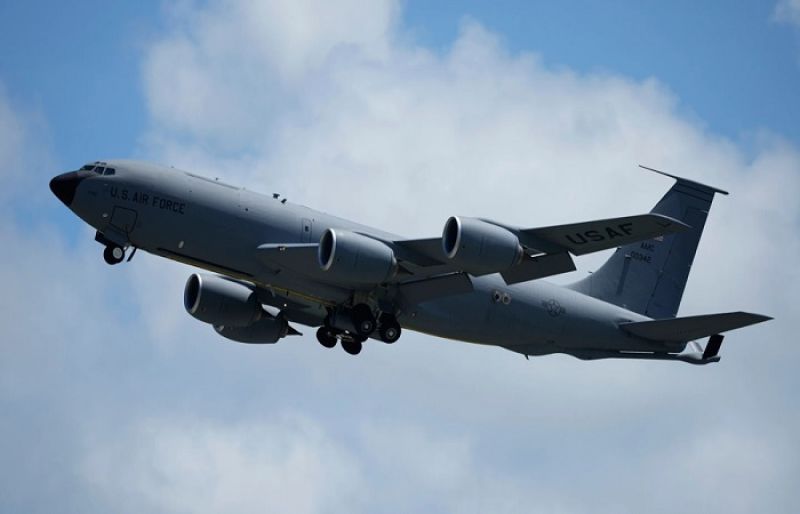

All six crew members of a US Air Force refueling aircraft have been confirmed killed after it was shot down by resistance groups in western Iraq on Thursday.
US Central Command (CENTCOM) confirmed the deaths in a post on the social media platform X on Friday, hours after it reported that the KC-135 refueling aircraft had gone down in western Iraq.
It said at the time that four of the six crew members on board were killed.
CENTCOM also claimed that “the loss of the aircraft was not due to hostile fire or friendly fire.”
The aircraft, however, was targeted and struck by a missile fired by the Resistance Front in western Iraq, according to a statement issued by the Khatam al-Anbiya Central Headquarters of Iran on Thursday night.
In a separate statement, Iran’s Islamic Revolutionary Guard Corps (IRGC) said that the aircraft was intercepted and destroyed while it was in the middle of a refueling mission for an “aggressor fighter jet.”
The incident has brought the number of US troops killed, as per the Pentagon data, to at least 13 since the US and the Israeli regime launched an unprovoked war against Iran on February 28.
Ever since, Iraqi resistance groups have been carrying out daily attacks on US assets in Iraq and across the region.
The KC-135 is at least the fourth known US military aircraft lost during the war with Iran.
At least three F-15 aircraft were also shot down over Kuwait.
Many observers see the latest incident as a major blow to the US military.
They argue that by targeting the refueling aircraft, the Resistance Front has struck the logistical backbone of US aerial operations, proving that American air superiority is no longer unchallenged in the region.


DeSL signs strategic deal with TSG to boost textile digital ecosystem

Katie Price says ‘manifesting works’ as she celebrates love with Lee Andrews

Vivid Seats Promo Codes and Deals: Select Customers Get 10% Off

-
 Politics7 days ago
India let Iran warship dock the day US sank another off Sri Lanka, say officials
-

 Sports1 week ago
Pakistan set for FIH Pro League debut | The Express Tribune
-
 Business7 days ago
Restaurant group changes name after bid to buys pubs across the UK
-

 Entertainment7 days ago
Harry Styles kicks off new era with ‘One Night Only’ comeback show
-

 Sports1 week ago
Winners and losers of the 2026 NHL trade deadline
-
 Business1 week ago
Home heating oil: ‘Most of my pension has gone on home heating oil’
-
 Business2 days ago
Stock market crash today (March 12, 2026): Nifty50 opens below 23,600; BSE Sensex down over 900 points on continuing US-Iran war – The Times of India
-

 Entertainment1 week ago
Kanye ‘Ye’ West trips during trial: ‘Is he asleep?’