

Business
Iran oil returns: India set to receive first cargo in 5 years, tanker heads to Gujarat – The Times of India


India is set to receive its first shipment of Iranian crude oil since 2019, with a tanker carrying 600,000 barrels of oil en route to Gujarat following a temporary sanctions waiver by the US, according to PTI.Ship-tracking data indicates that the vessel Ping Shun is headed towards Vadinar port, marking a potential revival of Indo-Iran oil trade after nearly five years.“The Indo-Iranian oil trade has flickered back to life. Following the US administration’s decision to grant a 30-day window for Iranian oil “on the water” due to regional conflict, the vessel Ping Shun is now en route to Vadinar (in Gujarat) with 600,000 barrels of crude. This is the first such delivery since May 2019 and comes at a critical time for Indian refiners facing tightening inventories,” said Sumit Ritolia, Lead Research Analyst, Refining and Modelling at Kpler.The development follows Washington’s decision earlier this month to allow a 30-day window for the purchase of Iranian oil already at sea, aimed at easing global oil prices amid the ongoing US-Israel conflict with Iran. The window is set to expire on April 19.While the buyer of the cargo remains unidentified, Vadinar houses a 20 million tonnes per annum refinery operated by Rosneft-backed Nayara Energy and also serves as a landing point for crude supplies to inland refineries such as BPCL’s Bina unit.India’s oil ministry has so far maintained that any decision to resume imports from Iran will depend on techno-commercial viability.Before sanctions were tightened in 2018, India was among the largest buyers of Iranian crude, importing both Iran Light and Iran Heavy grades due to refinery compatibility and favourable pricing terms.Imports ceased in May 2019 after US sanctions were reimposed, with India shifting to alternative suppliers including the Middle East and the US. At its peak, Iranian crude accounted for 11.5 per cent of India’s total imports.India had imported about 518,000 barrels per day (bpd) of Iranian oil in 2018, which declined to 268,000 bpd between January and May 2019 during a sanctions waiver period before dropping to zero thereafter.“The Aframax Ping Shun (IMO 9231901) loaded with Iranian crude oil from Kharg Island in early March has emerged as the first vessel observed signalling a destination of Vadinar, India since May 2019, following sanction reimposition on Iranian oil by the first Trump administration,” Ritolia said.The tanker is estimated to have loaded around 600,000 barrels from Kharg Island around March 4 and is expected to reach Vadinar on April 4.An estimated 95 million barrels of Iranian oil are currently stored on vessels at sea, of which around 51 million barrels could be supplied to India, while the rest may be directed to China and Southeast Asian markets.However, payment mechanisms remain uncertain as Iran continues to be excluded from the SWIFT global banking system, complicating international transactions.Earlier, payments were routed in euros through Turkish banks, but that channel is no longer available following renewed sanctions restrictions.Iran was first disconnected from SWIFT in 2012 due to EU sanctions over its nuclear programme, with further disruptions in 2018 after the US reimposed sanctions, limiting its ability to receive payments and access foreign currency reserves.
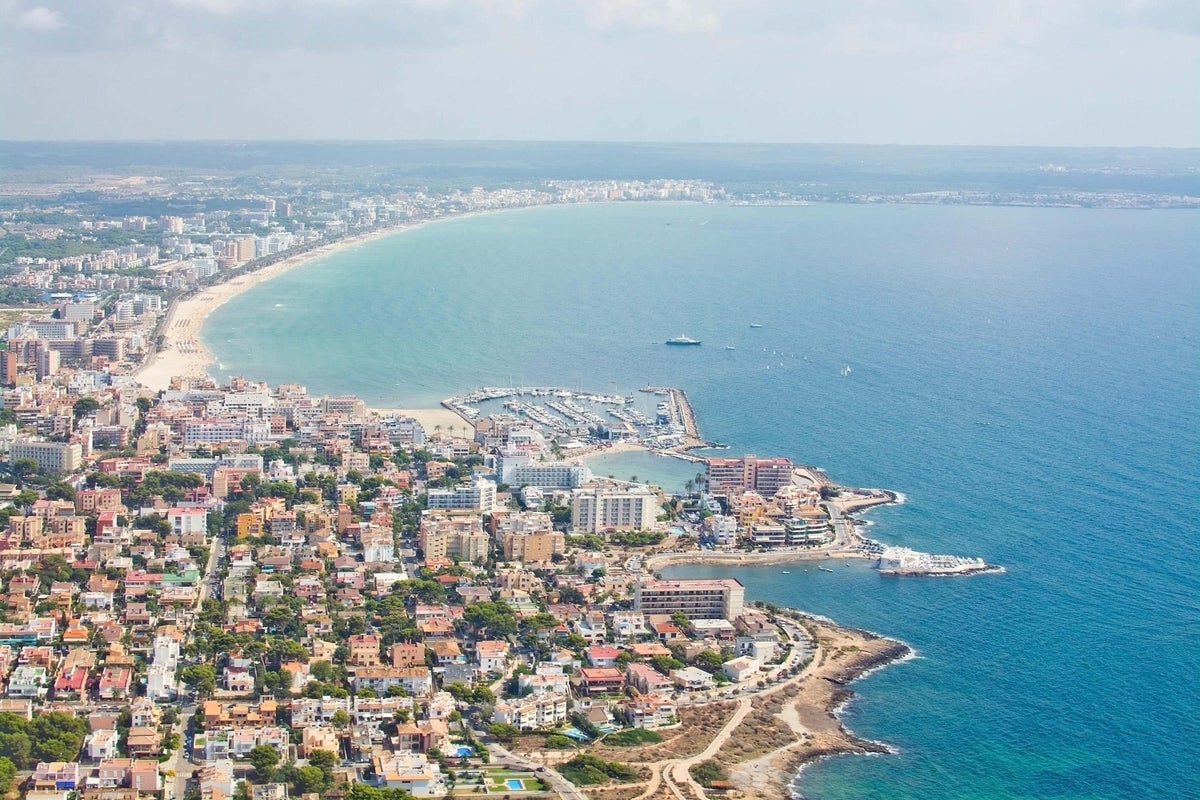
Travel agent Lastminute.com said war in the Middle East has impacted some 17,000 bookings, while holidaymakers are shifting towards alternative destinations like the Canary Islands and Sardinia.
The website, which offers holiday packages to destinations including Dubai and Abu Dhabi, said it was having to “adapt quickly” to travellers changing their preferences in light of the conflict.
The US-Israeli war with Iran, which escalated at the end of February, led to disruption and cancellations of some flights to Gulf states including the United Arab Emirates, Saudi Arabia and Qatar.
The airspace closures, coupled with consumer sentiment when it comes to travel taking a hit, affected approximately 17,000 bookings, Lastminute revealed.
It said the total volume of affected travel around the region is currently the equivalent of about a day and a half of its normal daily operations.
Despite the conflict influencing where and when people choose to book trips, the “overall intent to travel remains high”, according to Lastminute.
Consumers have been seeking reassurance and flexibility, and early booking patters indicate a shift in the preferences of travellers.
It noted increased demand toward alternative destinations such as Spanish archipelagos the Canary and Balearic Islands, Italian islands Sicily and Sardinia, and other European city breaks.
Lastminute’s chief executive Alessandro Petazzi said: “We continue to closely monitor the evolving situation in the Middle East, with supporting our customers remaining our top priority.
“At the same time, Lastminute.com’s flexible, pan-European model enables us to adapt quickly as travel patterns evolve, with demand naturally rebalancing across destinations.”
The Netherlands-based company reported a 15% jump in revenues to 361 million euro (£315 million) for the 2025 financial year, compared with the year before.
Adjusted earnings before tax and other costs increased by a third to 55 million euro (48 million).
The company said it was remaining “vigilant” against the geopolitical situation in the Middle East, but added that it was sticking to forecasts of a roughly 10% increase in revenues and profits in the year ahead.

Oven Pride household goods group McBride has revealed “temporary” price hikes to cover increased costs from the Iran war and warned it was seeing the first signs of supply shortages caused by the conflict.
The group, which makes branded and white label household and cleaning products for the likes of Tesco and Sainsbury’s, said until now it had only seen a small impact from higher haulage costs due to fuel price rises, but said “these conditions have now started to change”.
It said the “most heavily impacted” chemical and packaging suppliers are pushing through price increases as they face rising costs for petrochemical-derived feedstocks and higher energy costs in chemical and packaging production.
“The first signs of possible shortages in supply chains around the world are beginning to emerge,” it added.
McBride said its costs are increasing this month and will rise further due to the war, and is set to lift prices to offset the hit.
“The group has already informed all customers about temporary price adjustments, or surcharges to current pricing, to recover these higher, beyond our control, cost impacts from the Middle East conflict,” McBride said.
The warnings come amid mounting worries over the impact of the conflict on supply and costs, having sent oil prices surging above 100 US dollars a barrel and causing widespread disruption to global shipping.
Supermarkets met with Chancellor Rachel Reeves and Energy Secretary Ed Miliband at No 11 on Wednesday to look at issues caused by the war and agreed to explore together how to ease the cost-of-living impact for consumers.
McBride’s comments came in an update as it also announced a £34.5 million deal to buy Eurotab – a French-based specialist in cleaning tablets, such as for dishwashers.

Tiger Woods of Jupiter Links Golf Club looks on before the match against the Los Angeles Golf Club at SoFi Center in Palm Beach Gardens, Florida, March 24, 2026.
Adam Glanzman | TGL Golf | Getty Images
Tiger Woods’ future in professional golf remains unclear as he seeks treatment after a rollover car crash last week.
Woods was arrested for a DUI after the accident in Jupiter Island, Florida, his second rollover in five years, and said in a statement on X that he would be stepping back from golf “to return to a healthier stronger, and more focused place.”
Woods did not provide a timeline for his return, only that he would be stepping away for a “period of time.”
On Wednesday, the PGA of America announced that Woods will no longer serve as captain of the 2027 U.S. Ryder Cup Team.
“We support his decision,” the PGA of America said in a statement on X. “We commend Tiger for prioritizing his long-term health and deeply respect the courage it takes to make such a personal decision.”
The latest developments leave Woods at least temporarily at the fringes of the sport that made him a household name. The golf community has rallied around the sport’s biggest star as he vows to “focus on his health,” and the PGA Tour said in a statement that Woods has the organization’s full support.
“Tiger Woods is a legend of our sport whose impact extends far beyond his achievements on the course. But above all else, Tiger is a person, and our focus is on his health and well‑being,” the tour said.
Off the course, Woods has been serving as chairman of the PGA Tour’s Future Competition Committee since August. That group has been responsible for creating a vision for the future of professional golf.
A PGA Tour spokesperson said that Woods will return to that role when he is ready to do so.
Golf Channel analyst and former tour pro Brandel Chamblee suggested it could be time for Woods to consider retirement following his latest accident. Woods, 50, has been recovering from various injuries sustained in his car crash in 2021.
“Why would he need to play golf anymore?” Chamblee asked Friday on the Golf Channel’s “Golf Central.” “I think he should probably ask himself that. Consider not playing golf anymore.”
Until Friday’s accident, Woods held onto hope that he would compete in the upcoming Masters Tournament this month.
Augusta National Golf Club Chairman Fred Ridley confirmed this week that Woods would not play.
“Although Tiger will not be joining us in person next week, his presence will be felt here in Augusta,” Ridley said. “Augusta National Golf Club and the Masters Tournament fully support Tiger Woods as he focuses on his well-being.”
TGR, Woods’ education foundation, said it remains committed to serving its students and communities.
“Our thoughts are with our founder as he takes the time needed to focus on his health,” its CEO Hrag Hamalian said in a statement.
Woods’ apparel brand, Sun Day Red, also voiced its support this week.
“He is not just our partner, he is our friend. We are here for him and we remain focused on the work we are building together,” the company said in a post on the Meta-owned Threads platform.
TGL, the indoor golf league founded by Woods and Rory McIlroy, declined to comment about Woods’ hiatus and potential return.
Woods made his first TGL playing appearance of the season for the Jupiter Links team last week in front of a notable audience. ESPN said nearly 1 million viewers tuned in to watch Woods’ return, making it the largest audience this season.


15 Design-Forward DIY Tools Worth Upgrading to This Year

England’s Brook, Bethell warned after New Zealand nightclub incident

Italy’s soccer chief told to quit after latest World Cup failure

-

 Politics1 week ago
Afghanistan announces release of detained US citizen
-

 Sports1 week ago
Broadcast industry CEO says consolidation is ‘essential’ to compete for NFL soaring media rights prices
-

 Entertainment1 week ago
UN warns migratory freshwater fish numbers are spiralling
-

 Tech1 week ago
Can a Home Appliance Fix the Problem of Soft-Plastic Waste?
-
 Business1 week ago
Property Play: Home flippers see smallest profits since the Great Recession, real estate data firm says
-
 Business1 week ago
Gold prices soar in Pakistan – SUCH TV
-
 Business1 week ago
More women are entering wealth management, but few are in advisory roles, study finds
-

 Fashion1 week ago
ICE cotton slips on weaker crude, profit booking