

Politics
Iran vows reciprocal action after Australia expels envoy

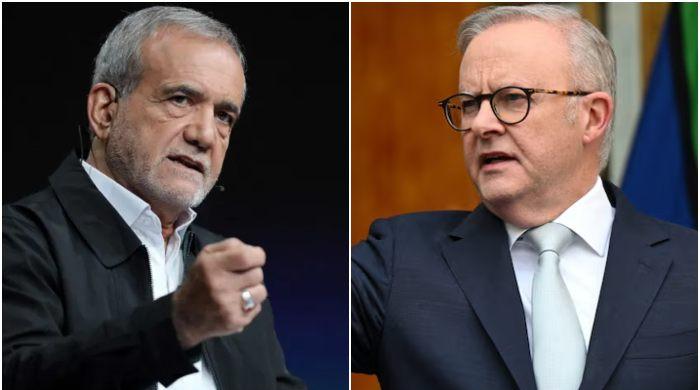
- Iran behind arson attacks on kosher cafe, synagogue: Australian PM.
- Iran’s Ambassador Ahmad Sadeghi declared “persona non grata”.
- Tehran’s envoy, three officials given seven days to leave country.
TEHRAN/SYDNEY: Iran has vowed reciprocal action after Australia expelled its ambassador over accusations that Tehran was behind antisemitic arson attacks in Sydney and Melbourne.
“The accusation that has been made is absolutely rejected,” said foreign ministry spokesman Esmaeil Baqaei during a weekly press conference, adding that “any inappropriate and unjustified action on a diplomatic level will have a reciprocal reaction”.
Australian Prime Minister Anthony Albanese said earlier that Iran was behind the torching of a kosher cafe in Sydney’s Bondi suburb in October 2024, and directed a major arson attack on the Adass Israel Synagogue in Melbourne in December of the same year.
No injuries were reported in the two attacks.
Australia declared Iranian ambassador Ahmad Sadeghi “persona non grata” and ordered him and three other officials to leave the country within seven days.
It also withdrew its own ambassador to Iran and suspended operations at its embassy in Tehran, which opened in 1968.
Baqaei said the measures appeared to be “influenced by internal developments” in Australia, including recent protests against Israel’s war in Gaza.
“It seems that this action is taken in order to compensate for the limited criticism the Australian side has directed at the Zionist regime [Israel],” he added.
‘Dangerous acts of aggression’
Iran’s reaction comes in response of Australian PM’s allegations saying that Tehran was behind two arson attacks.
PM Albanese said the Australian Security Intelligence Organisation (ASIO) had gathered credible intelligence that Iran had directed at least two attacks.
“These were extraordinary and dangerous acts of aggression orchestrated by a foreign nation on Australian soil,” Albanese told a press briefing. “They were attempts to undermine social cohesion and sow discord in our community.”
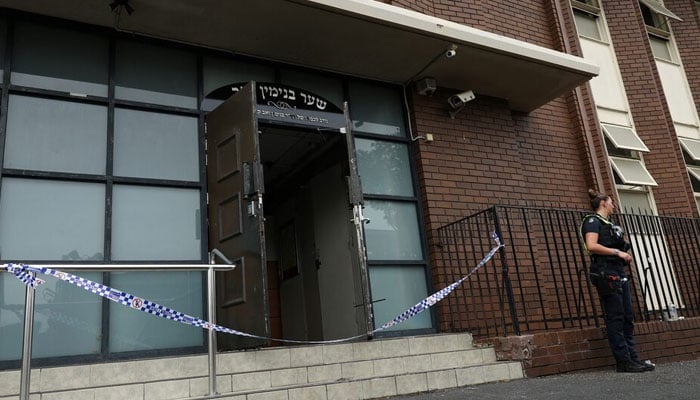
Iran had sought to “disguise its involvement” in last year’s attacks on a kosher restaurant in Sydney and the Adass Israel Synagogue in Melbourne, Albanese said. No injuries were reported in the attacks.
Iran’s embassy in Canberra did not immediately respond to a request for comment.
Australia’s security agency said it was likely that Iran had directed further attacks, Albanese said, adding that Australia has suspended operations at its Tehran embassy and all its diplomats were safe in a third country.
The government will designate Tehran’s Islamic Revolutionary Guard Corps (IRGC) as a terrorist organisation, Albanese added.
Foreign Minister Penny Wong said Ambassador Sadeghi and three Iranian officials had seven days to leave, in Australia’s first expulsion of an envoy since World War II.
“Iran’s actions are completely unacceptable,” she told the briefing.
The IRGC was directing people in Australia to undertake crimes, said Mike Burgess, director general of the security agency.
“They’re just using cut-outs, including people who are criminals and members of organised crime gangs to do their bidding or direct their bidding,” he added.
Israel’s embassy in Australia welcomed the action against its major rival Iran.
“Iran’s regime is not only a threat to Jews or Israel, it endangers the entire free world, including Australia,” it said in a statement on X.
The two countries fought a 12-day air war in June, after Israel launched attacks on Iran’s nuclear facilities.
Iran’s actions were an attack on Australia’s sovereignty, said Daniel Aghian, president of the Executive Council of Australian Jewry (ECAJ), an umbrella group of more than 200 organisations.
“These were attacks that deliberately targeted Jewish Australians, destroyed a sacred house of worship, caused millions of dollars of damage, and terrified our community,” he said on Tuesday.
Two men charged
Two men have been charged over the December attack that set ablaze the synagogue, built in the 1960s by Holocaust survivors in the suburb of Ripponlea.
Last week, police in the southeastern state of Victoria said they were examining electronic devices seized in a search of the home of one of the men, who is set to appear in court on Wednesday.
Police say three people broke into the synagogue and set the fire.
Fire gutted the kosher restaurant in Bondi, Lewis Continental Kitchen. The media said the man arrested in January over that attack had links to a well-known Australian motorcycle gang. He denied the charges in court and was freed on bail.
The Australian Iranian Community Organisation welcomed the expulsion and the move to declare the IRGC as a terrorist group.
“We are really happy to see them go,” its president, Siamak Ghahreman, told the Australian Broadcasting Corporation in an interview.
About 90,000 Iranian-born people live in Australia.
Ties between Israel and Australia have been strained since Canberra’s centre-left government decided to recognise a Palestinian state on August 11.
The move came after tens of thousands marched across Sydney’s Harbour Bridge, calling for peace and aid deliveries to Gaza, where Israel began an offensive nearly two years ago after the Hamas’s attack.
Palestinian authorities say the conflict has killed more than 62,000 people in Gaza, while humanitarian groups say Israel’s blockade has caused a food shortage that is leading to widespread starvation.
On Sunday, thousands joined nationwide pro-Palestinian protests prompting the ECAJ to warn they were leading to an “unsafe environment”.
Some Jewish organisations in Australia have supported the rallies, however.
Rights groups have flagged a worldwide rise in antisemitism, Islamophobia and anti-Arab bias during the war.
Australian civil society group, the Islamophobia Register, recorded a 500% rise in Islamophobic incidents in workplaces, universities and the media since October 2023, with 1,500 incidents reported.
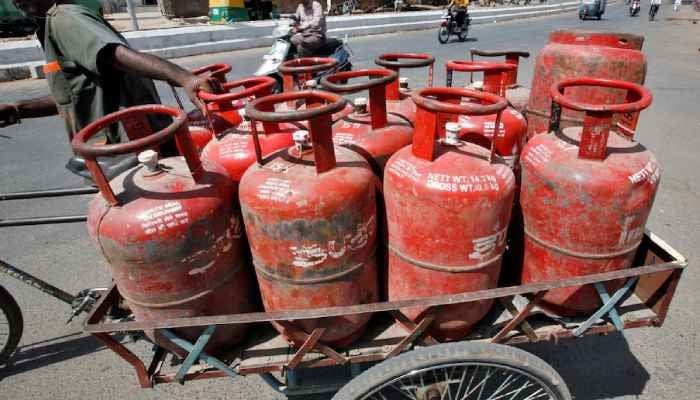
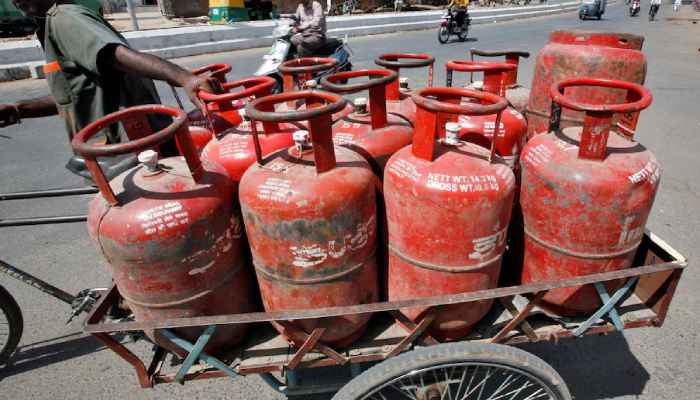
Indian police this week seized 414 cooking‑gas canisters hidden in a graveyard in Hyderabad city and arrested those involved in trying to sell them on the black market amid shortages due to the Iran war, a government official said on Thursday.
Authorities have stepped up raids to curb hoarding of liquefied petroleum gas canisters after the US-Israeli war against Iran disrupted shipping, causing supply shortages. India, the world’s No 2 LPG importer, meets about 60% of its demand through overseas purchases, mostly from the Middle East.
“Just yesterday, around 2,600 raids were carried out and about 700 cylinders were seized,” Sujata Sharma, a senior official in the Ministry of Petroleum and Natural Gas, told a regular briefing on the Middle East crisis.
“In addition, around 400 cylinders were recently found at one location inside a graveyard in Hyderabad. Ten people have been detained there, and the distributor involved has been suspended,” she said.
Police said the accused had been selling both commercial and domestic canisters from the graveyard at nearly three times the current market price. A commercial canister that costs about 2,100 Indian rupees ($22) had been sold for as much as 6,000 rupees.
The total value of the seized canisters and some vehicles used by the accused was nearly 2.2 million rupees, police said. Reuters could not immediately contact the accused or their representatives.
“The supply of natural gas to domestic consumers is 100% assured,” Sharma said. “With regard to LPG supply, prices have remained stable despite international volatility, and there has been no increase in the price of domestic LPG cylinders.”
To ease the pressure on LPG supplies, India has been promoting the use of alternatives such as kerosene, coal and biogas, while accelerating the rollout of piped natural gas for households.
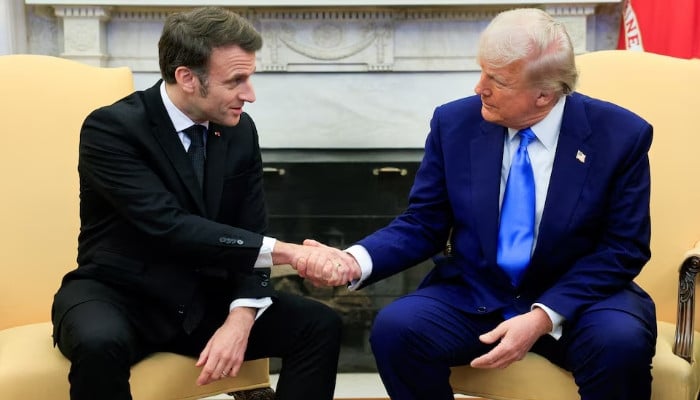
WASHINGTON: US President Donald Trump made fun of the French president and his wife during a private lunch Wednesday, as he lambasted Nato allies for not joining the war against Iran that has roiled the Middle East.
“We didn’t need them, but I asked anyway,” Trump told a private lunch in a video posted briefly on the White House YouTube channel before access was blocked.
“I call up France, Macron — whose wife treats him extremely badly. Still recovering from the right to the jaw,” Trump said.
He was referring to a May 2025 news video that appeared to show Brigitte Macron shoving the French president’s face on a trip to Vietnam, which Macron later rejected as part of a disinformation campaign.
“And I said, ‘Emmanuel, we’d love to have some help in the Gulf even though we’re setting records on knocking out bad people and knocking out ballistic missiles. We’d love to have some help. If you could, could you please send ships immediately,'” Trump continued.
He then mimics a French accent to give Macron’s alleged answer: “‘No no no, we cannot do that, Donald. We can do that after the war is won,'” he said.
“I said, ‘No no, I don’t need after the war is won Emmanuel,'” Trump said.
“So I learned about Nato — Nato won’t be there if we ever have the big one, you know what I mean by the big one,” Trump said, without elaborating.
He also branded Nato a “paper tiger,” the latest salvo by Trump and his top officials against the transatlantic alliance since he returned to the White House last year.
On Tuesday, Secretary of State Marco Rubio said the United States “is going to have to reexamine” its relationship with Nato once the war against Iran has concluded.
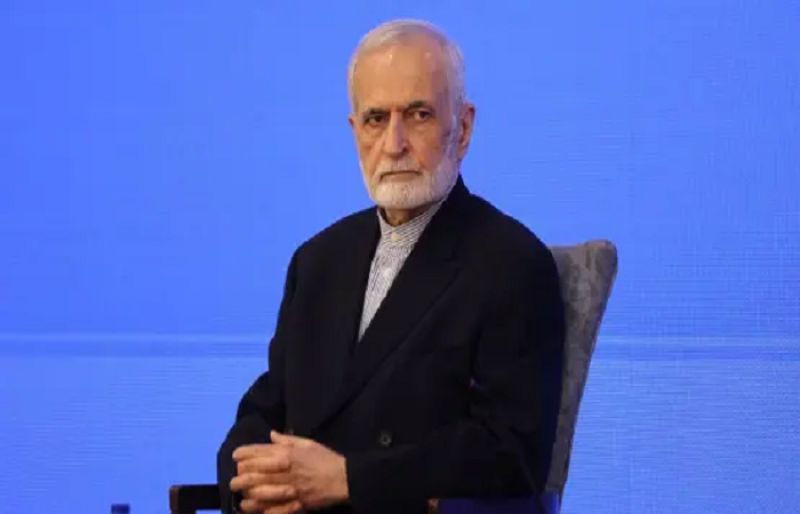
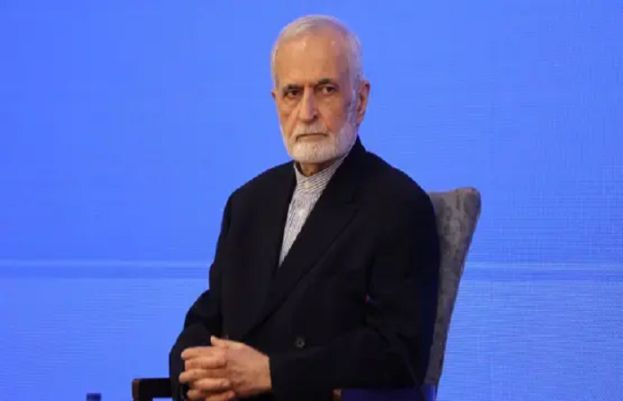
Former Iranian foreign minister Kamal Kharazi was seriously wounded in a strike that also claimed the life of his wife, Iranian media reported.
Still an adviser to the government, Kharazi had given an interview to CNN a few weeks ago.
According to the newspapers Shargh, Etemad and Ham Mihan, his home in Tehran was targeted on Wednesday in a US-Israeli strike.
He was badly injured and hospitalised following the attack, the outlets said.
Kharazi had served as foreign minister from 1997 to 2005 under reformist ex-president Mohammad Khatami.


Lightering vessel ops disrupted in Bangladesh amid fuel shortage

Judge dismisses Blake Lively’s sexual harassment claims against Justin Baldoni
Judge rules against Blake Lively’s major claim on Justin Baldoni

-
 Fashion1 week ago
Ho Chi Minh City bizs adjust production plans, seek new supply chains
-

 Entertainment7 days ago
Lee Sang-bo dies at 45: Funeral details revealed
-

 Fashion1 week ago
Japan’s apparel imports rise 22.9% to $2 bn in February 2026
-

 Fashion1 week ago
India’s Gen Z to drive half of fashion market by 2030: Reedseer
-
 Entertainment1 week ago
Andrew holds breath as King Charles plans bombshell move amid probe
-
 Business7 days ago
How do you spot a fake online review?
-

 Sports7 days ago
Illinois defense gets tough, ousts Houston to reach Elite Eight
-

 Fashion7 days ago
China rolls out tariff cuts on Congo imports from April 1