Politics
Iran wants ‘serious review’ of Gulf ties, denies role in Saudi oil attacks

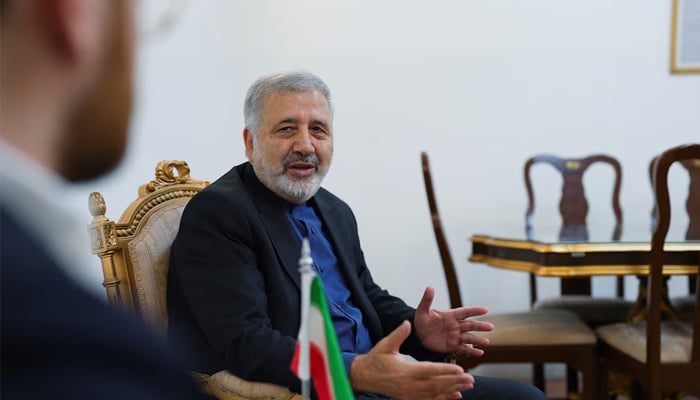
- Iran wants “serious review” of Gulf ties, says ambassador to Riyadh.
- Alireza Enayati did not say who had carried out attacks in Kingdom.
- “Iran was only attacking US and Israeli targets and interests.”
RIYADH: Iran’s relations with Gulf states will require a “serious review” in light of the US-Israeli war on Iran, limiting the power of external actors so the region can become prosperous, Tehran’s ambassador to Saudi Arabia told Reuters on Sunday.
Asked if he was concerned that relations would be harmed by the war, Ambassador Alireza Enayati said: “It’s a valid question, and the answer may be simple. We are neighbours and we cannot do without each other; we will need a serious review.”
“What the region has witnessed over the past five decades is the result of an exclusionary approach [within the region] and an excessive reliance on external powers,” he said in a written response to questions, calling for deeper ties between the Gulf Cooperation Council’s six members, along with Iraq and Iran.
Gulf Arab states have faced more than 2,000 missile and drone attacks since the outbreak of the war on February 28, with targets including US diplomatic missions and military bases but also critical Gulf oil infrastructure, ports, airports, and hotels.
The United Arab Emirates, which normalised relations with Iran’s arch-foe Israel in 2020, has faced the brunt of the attacks. But all Gulf Arab states have been impacted, and all have condemned Iran.
Behind the scenes, analysts and regional sources say there is also growing frustration at the US, long their security guarantor, at dragging them into a war they did not endorse but for which they are paying a hefty price.
In Saudi Arabia, attacks have been concentrated on the eastern region where most of the kingdom’s oil is produced, as well as the Prince Sultan Airbase hosting US forces east of Riyadh, and the Diplomatic Quarter on the Saudi capital’s western edge, according to Saudi defense ministry statements.
Saudi Arabia and Iran re-established full diplomatic relations in 2023 after years of enmity.
Iran ‘not responsible’ for attacks on Saudi oil sector
Enayati denied that Iran was responsible for the attacks on Saudi Arabia’s oil infrastructure, including the Ras Tanura refinery on the east coast and dozens of attempted drone attacks on the Shaybah oil field in the desert near the UAE border.
“Iran is not the party responsible for these attacks, and if Iran had carried them out, it would have announced it,” he said. He did not say who had carried out the attacks.
Saudi Defense Ministry statements have not assigned blame for individual incidents. Enayati said Iran was only attacking US and Israeli targets and interests.
Enayati said he personally was in ongoing contact with Saudi officials, with relations “progressing naturally” in many areas. He highlighted Saudi cooperation regarding the departure of Iranians who were in the kingdom for religious pilgrimage and the provision of medical assistance to others.
He said Tehran was in contact with Riyadh regarding Saudi Arabia’s publicly stated position that its land, sea and air would not be used to attack Iran, without elaborating on the discussions.
His message to Gulf states was that the war “has been imposed on us and the region.”
To resolve the conflict, the US and Israel must halt their attacks and regional countries should not be involved, while international guarantees must be secured to prevent their recurrence, he said.
“Only then can we focus on building a prosperous region,” he said.