

Fashion
Iran war-related fuel crisis hits Bangladesh garment exporters hard

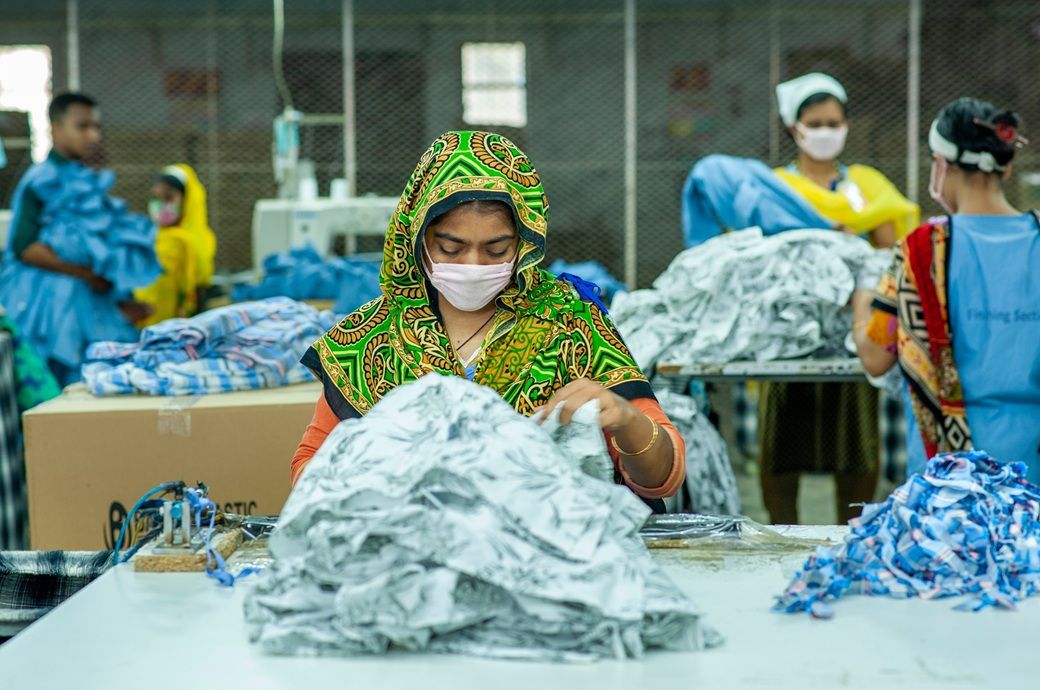
Bangladesh’s vulnerability to global energy volatility is striking. Reports indicate that nearly half of its total energy supply was import-dependent as recently as 2023. This reliance has since intensified, with imported fuel now reportedly meeting roughly two-thirds of its power needs, even as much of this fuel snakes its way through the strategically sensitive Strait of Hormuz, making the country acutely vulnerable to disruptions triggered by the conflict.
Bangladesh’s heavy reliance on imported fuel has left it highly exposed to disruptions from the Iran conflict, amid reports of fuel shortages disrupting production and transportation.
Economists reportedly cautioned that a slowdown in industrial production could trigger a chain reaction, resulting in job losses and reduced export earnings.
And, as might be expected, industries in Bangladesh are showing signs of strain, if reports are to be believed.
Fuel shortages and supply delays have become relentless operational hurdles. Extended power outages, sometimes lasting several hours, bring machines to a halt, and with insufficient fuel for backup generators, factories have no fallback to keep production running.
Nowhere perhaps is this more consequential than in the apparel sector, the backbone of Bangladesh’s economy. Accounting for more than 80 per cent of export earnings and over a tenth of GDP, the industry is not just a commercial enterprise; it is a national pillar supporting millions of jobs and sustaining key foreign exchange reserves.
Interacting earlier with the media, a senior official of the Bangladesh Garment Manufacturers and Exporters Association (BGMEA) reportedly noted that power outages have surged to as much as five hours a day since the conflict began, while diesel shortages have rendered backup generators increasingly unreliable.
“The ongoing crisis is clearly disrupting garment industry operations,” a senior representative of another garment manufacturers’ body claimed, adding that many factory owners were struggling to secure adequate fuel to run generators and move goods on schedule, while production in numerous factories was interrupted because fuel deliveries were delayed or were insufficient.
The shortage is not only slowing production but is also putting the entire supply chain under pressure. In many cases, workers cannot be deployed consistently because production lines cannot operate at full capacity, while limited fuel for transportation is making it difficult to get finished goods to the ports for export.
On the other hand, rising fuel prices are becoming increasingly difficult to manage, inflating operational costs and squeezing already thin profit margins in a fiercely competitive apparel market, even as the country’s fossil fuel import bill is projected to surge significantly, adding strain at the macroeconomic level.
Meanwhile, economists have reportedly warned that a slowdown in industrial production could set off a chain reaction, leading to job losses, declining export revenues, and far-reaching consequences for the overall economy.
In a country where the apparel sector is deeply intertwined with social and economic stability, such disruptions carry the risk of broader systemic stress.
The crisis, therefore, is not merely about energy; it is about safeguarding economic momentum and social cohesion. As such, calls for decisive policy intervention are growing louder, even as experts emphasised that managing demand is as critical as securing supply.
Prioritising fuel allocation for key industries like apparel could help cushion the immediate blow, while temporary curbs on non-essential energy use may create breathing room, they argued, while underscoring the urgency of long-term structural reforms, diversifying energy sources, investing in renewables, and improving fuel management systems to reduce exposure to external shocks.
Fibre2Fashion News Desk (DR)










Despite Bangladesh meeting all three criteria for LDC graduation, significant risks, including the loss of trade preferences, fiscal and financial vulnerabilities, and fragile institutional coordination, persist, said the report.
Domestic and global crises have undermined Bangladesh’s LDC graduation preparation, a UN assessment found.
It perceived the Iran conflict to be an additional threat.
Despite Bangladesh meeting all criteria for graduation, significant risks persist, it said.
A tough political transition and prolonged macroeconomic crisis have dented socio-economic gains, intensifying transition risks.
The Graduation Readiness Assessment report, prepared by an expert panel of the UN Office of the High Representative for Least Developed Countries, Landlocked Developing Countries and Small Island Developing States (UN-OHRLLS), calls for urgent reforms, stronger implementation capacity, adequate policy space and a whole-of-society approach to ensure a smooth and sustainable transition.
Shocks the country faced between 2017 and 2026 include continued exposure to climate vulnerability; the Rohingya crisis; a prolonged macroeconomic downturn predating the regime change; the COVID-19 pandemic’s impact; political turmoil and transition; the Russia-Ukraine war; inflation; and balance of payments pressures.
“Transition away from reliance on international support measures (ISMs) deserves to be viewed as a complex and carefully managed adjustment, requiring sustained policy attention and international support, institutional capacity, and risk mitigation to ensure that development gains are preserved and further consolidated in the post-graduation period. Smooth transition is key,” the report said.
A tough political transition and prolonged macroeconomic crisis have dented socio-economic gains, intensifying Bangladesh’s LDC transition risks, it noted.
Surging import costs for fossil fuels creates severe operational constraints with gas supply shortages worsened by the Middle East conflict, it said.
Bangladesh’s preparedness for the loss of trade-related international support measures remains weak, with nearly three-fourths of exports dependent on LDC-specific duty-free access, the report noted.
Preparedness for the European Union (EU) market, the largest destination, remains the weakest. Inadequate preparation for the post-LDC phase, with no preferential EU market access for apparel, comes just as the recently concluded EU-India and EU-Vietnam FTAs are set to intensify competitive pressure.
The country is also unprepared for the loss of World Trade Organization policy flexibilities, particularly around export subsidies and Trade-Related Aspects of Intellectual Property Rights obligations, which will require stronger intellectual property protection and enforcement capacity.
Domestic readiness to offset preference erosion through lower logistics costs, improved compliance, energy reliability, and export diversification remains inadequate, according to the UN report.
Amid ongoing macroeconomic turmoil, Bangladesh’s vulnerabilities, including reliance on external support, a lack of diversification and exposure to shocks, could become more pronounced, it added.
Fibre2Fashion News Desk (DS)

Regional inflation is projected to rise to 3.6 per cent in 2026 and 3.4 per cent in 2027.
Economic growth in developing Asia and the Pacific is projected to slow to 5.1 per cent in 2026-27 from 5.4 per cent, amid Middle East conflict and trade uncertainty.
Inflation may rise to 3.6 per cent in 2026. Prolonged conflict remains a key risk.
China’s growth will ease, while India stays resilient.
Pacific economies face sharper slowdown, though domestic demand and AI-led sectors offer support.
The projections are based on assumptions finalised on March 10, under exceptionally high uncertainty, and reflect an early stabilisation scenario for the Middle East conflict. However, subsequent developments indicate a higher likelihood of prolonged disruptions.
Despite these challenges, the region enters this challenging and uncertain global environment from a position of strength, with robust domestic demand, steady labour markets, and higher public infrastructure spending underpinning resilience, ADB said in its Asian Development Outlook (ADO) April 2026 released today.
“A prolonged conflict in the Middle East is the single biggest risk to the region’s outlook, as it could lead to persistently high energy and food prices and tighter financial conditions,” said ADB chief economist Albert Park. “With renewed trade policy uncertainty posing additional risks, it is essential that governments implement sound macroeconomic policies to sustain growth and contain inflation, with targeted support measures to protect vulnerable households.”
ADO April 2026 includes a section that assesses the impact of the conflict on economies in the region under alternative scenarios. A prolonged and escalated conflict in the Middle East could affect economic activity via several channels, including heightened price pressures, shipping disruptions, and financial volatility.
Most economies in developing Asia and the Pacific will see their growth outlook worsen this year and in 2027, despite resilient private consumption and solid demand for artificial intelligence-related goods. China’s growth is projected to decline to 4.6 per cent this year and 4.5 per cent next year, from 5 per cent last year, with continued property market weakness and slower export expansion expected to weigh on activity.
In India, growth is forecast to ease to 6.9 per cent this year from 7.6 per cent last year, before rising to 7.3 per cent next year, underpinned by resilient domestic consumption. Economies in the Pacific are expected to experience the sharpest slowdown, from 4.2 per cent growth in 2025 to 3.4 per cent in 2026 and 3.2 per cent in 2027.
Oil prices are projected to stay elevated in the near term but would gradually stabilise if geopolitical tensions eased.
Fibre2Fashion News Desk (SG)
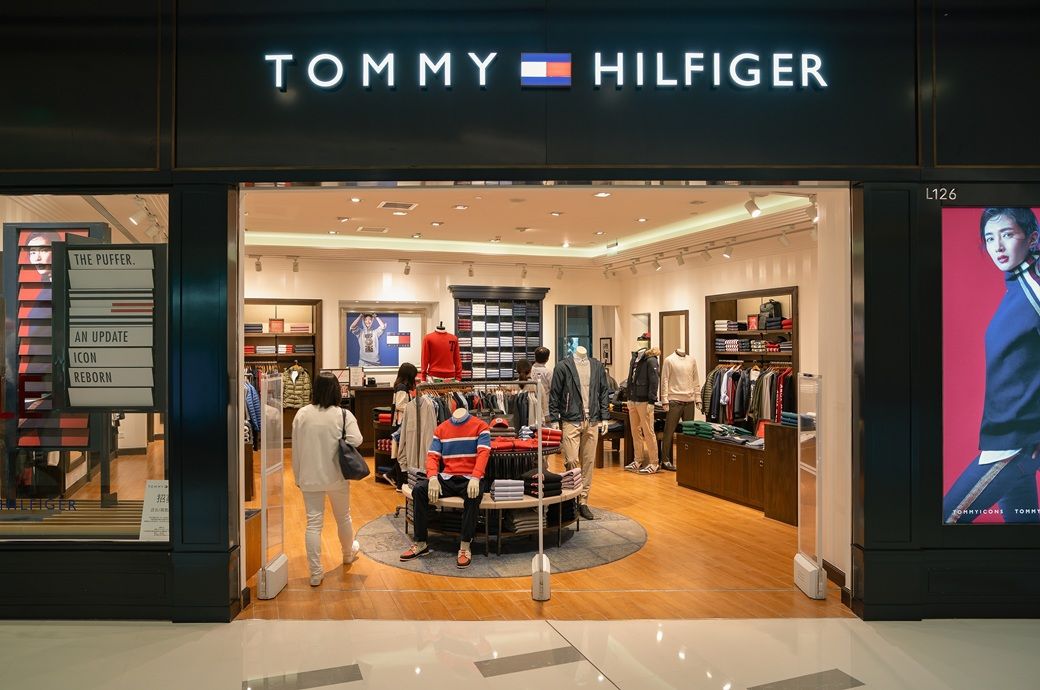
For 2026, PVH projects revenue to increase slightly, with non-GAAP operating margins projected to remain stable at around 8.8 per cent. However, the outlook incorporates a significant tariff burden, estimated to reduce EBIT by approximately $195 million, alongside continued mitigation efforts. Non-GAAP EPS is projected in the range of $11.8 to $12.1, supported partly by favourable currency movements.
PVH is expecting pressure on core profitability from tariff headwinds despite modest 2025 growth.
For 2026, it guides slight revenue growth and stable margins, though tariffs may cut EBIT by $195 million.
Q4 was strong, with revenue up 6 per cent and margins improving.
2025 revenue rose 3 per cent, while non-GAAP EPS beat guidance but lagged earlier projections.
Melissa Stone, interim chief financial officer, PVH Corp, said, “As we look towards 2026, we expect to deliver operating margins consistent with 2025, including modest gross margin expansion, despite the inclusion of a full year of tariffs, and strong expansion on an underlying basis.”
Strong Q4 performance lifts margins despite tariff impact
Meanwhile, in Q4 2025 ended February 1, 2026, revenue rose 6 per cent to $2.5 billion, beating expectations, while non-GAAP EPS reached $3.82, well above guidance. Operating margin for the quarter improved to 10 per cent on a non-GAAP basis, despite a 170 basis point tariff impact, reflecting improved cost discipline and operational execution.
Stefan Larsson, CEO at PVH Corp, commented, “We delivered a strong fourth quarter and finish to the year, driven by the strength of our two iconic global brands, Calvin Klein and Tommy Hilfiger, and the continued disciplined execution of our PVH+ Plan. In the fourth quarter, we beat our guidance across revenue, operating margin and EPS on a non-GAAP basis.”
Region-wise, the Americas and Europe, Middle East and Africa (EMEA) recorded growth in Q4, supported by wholesale strength and brand initiatives, while Asia-Pacific (APAC) declined due to softer demand and timing impacts related to the Lunar New Year. Direct-to-consumer (DTC) performance remained mixed, with modest gains offset by weakness in physical retail, while digital commerce continued to show gradual improvement.
The company reported full-year 2025 revenue of $8.95 billion, marking a 3 per cent increase year on year (YoY). However, on a constant currency basis, revenue rose less than 1 per cent, reflecting muted underlying demand across key markets, PVH said in a press release.
On the earnings front, PVH posted GAAP earnings per share (EPS) of $0.52, sharply lower than the prior year due to one-off items including impairment charges. On a non-GAAP basis, EPS stood at $11.4, exceeding revised guidance of $10.85 to $11, though falling short of earlier projections issued in 2024.
Fibre2Fashion News Desk (SG)


Domestic, global crises dent Bangladesh’s LDC graduation readiness: UN

Iran war-related fuel crisis hits Bangladesh garment exporters hard

Trump greeted at UFC 327 in first sporting event appearance since start of Iran war

-

 Entertainment1 week ago
Joe Jonas shares candid glimpse into parenthood with Sophie Turner
-

 Tech1 week ago
Our Favorite iPad Is $50 Off
-

 Sports1 week ago
UConn Final Four run could trigger a $50M furniture giveaway for Massachusetts-based Jordan’s Furniture
-

 Fashion5 days ago
India’s exports face reset as EU links trade to carbon metrics: EY
-

 Entertainment1 week ago
Blake Lively reacts to harassment claims dismissal against Justin Baldoni
-
 Business1 week ago
Video: Why Is the Labor Market Stuck?
-
 Politics1 week ago
Iran can sustain Strait of Hormuz closure for years, will cut US military logistics: Official
-

 Entertainment1 week ago
Barbie Ferreira reveals where she stands with ‘Euphoria’ girls after exit