

Politics
Iran’s top security official, Ali Larijani, martyred in American-Israeli aggression

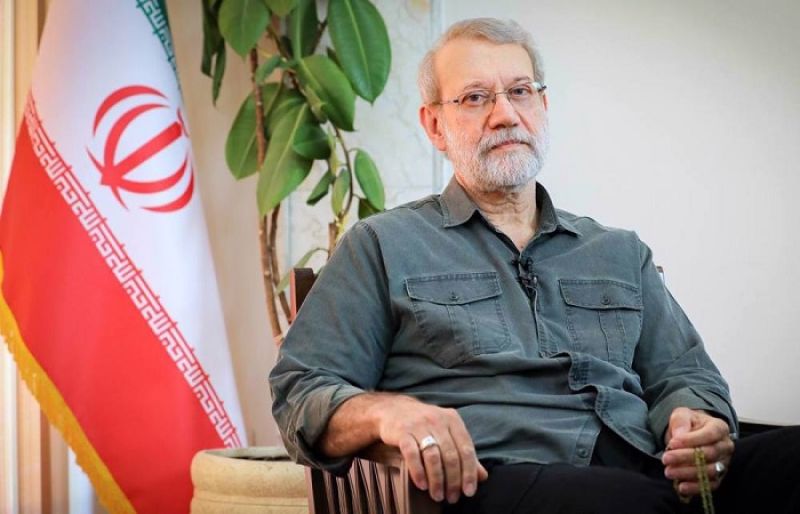

The secretary of Iran’s Supreme National Security Council (SNSC) has ascended to martyrdom in the ongoing American-Israeli aggression against the Islamic Republic.
In a statement issued late Tuesday, the Supreme National Security Council (SNSC) Secretariat announced the martyrdom of Dr. Ali Larijani alongside his son, Mortaza Larijani; the SNSC deputy for security, Alireza Bayat; and a number of their bodyguards.
The statement described martyrdom as Dr. Larijani’s “long-held dream,” attained following a lifelong struggle aimed at the advancement of the country and its Islamic Revolution.
It noted the martyred top security official’s sustained endeavor “up until the very final moments of his blessed life” towards securing the nation’s interests, as well as his consistent counsel for the people and their authorities to maintain unity in the face of hostile measures against the country.
The Secretariat added that the martyrdom would further steel the resolve of the nation and its officials to persist in elevating the Islamic Republic’s stance.
Dr. Larijani also served as a member of Iran’s Expediency Council and a senior advisor to the martyred Leader of the Islamic Revolution, Ayatollah Seyyed Ali Khamenei.
He previously served as Speaker of the Islamic Consultative Assembly (Majlis) for 12 years before being succeeded by Mohammad-Baqer Qalibaf.
Throughout his long and successful political career, he also contested presidential elections and served as head of the national broadcaster, the Islamic Republic of Iran Broadcasting (IRIB).
The unprovoked and illegal aggression against the country began on February 28 with the assassination of the Leader of the Islamic Revolution, Ayatollah Seyyed Ali Khamenei, as well as some top-ranking military commanders.
In retaliation, Iranian armed forces have carried out 60 waves of successful and decisive retaliatory strikes so far against sensitive and strategic American and Israeli targets throughout the region.
Iran has vowed to sustain the reprisal until the enemies’ “complete defeat.”
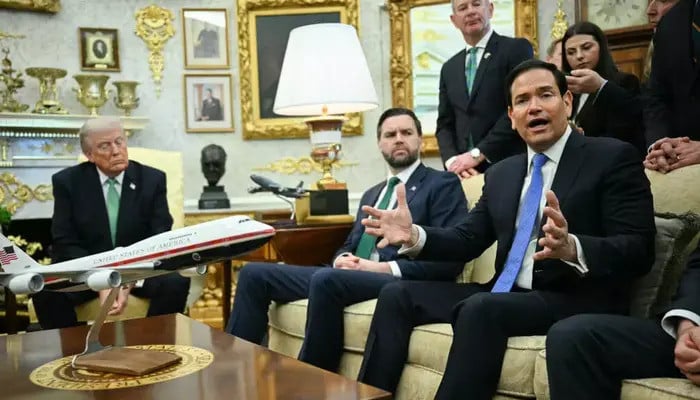
Cuba’s leader on Tuesday said the US would face “unbreakable resistance” if it tries to take over the impoverished island nation, as communist authorities scrambled to fix a nationwide electricity blackout.
Cuba’s government is under increasingly crushing pressure, with Washington enforcing an oil blockade and openly stating it wants to end the nearly seven-decade-old US standoff with the one-party communist state.
US Secretary of State Marco Rubio said Cuba’s decision announced this week to let exiles invest and own businesses did not go far enough to allow free-market reforms that the Trump administration demands.
“What they announced yesterday is not dramatic enough. It’s not going to fix it. So they’ve got some big decisions to make,” Rubio, a Cuban-American and vociferous critic of the country’s ruling party, told reporters at the White House.
President Donald Trump, who has heaped pressure on Cuba’s communist government, said Monday he would “take” Cuba, adding: “We’ll be doing something with Cuba very soon.”
But his Cuban counterpart Miguel Diaz-Canel was defiant in the face of Washington’s threats.
“Faced with the worst-case scenario, Cuba has one guarantee: any external aggressor will encounter an unbreakable resistance,” he wrote in a statement on X.
Cuba is open to broad talks with Washington and allowing more investment, but it will not discuss changing its political system, an envoy told AFP on Tuesday.
Tanieris Dieguez, Cuba’s deputy chief of mission in Washington, said the two neighboring countries “have a lot of things to put on the table” but that neither should ask the other to change its government.
“Nothing related with our political system, nothing with our political model — our constitutional model — is part of the negotiations, and never will it be part of that,” she said.
“The only thing that Cuba asks for any conversation is respect to our sovereignty and to our right to self-determination.”
The New York Times, quoting unnamed US officials, said the Trump administration has called for Cuba to sack Diaz-Canel, who is seen as resistant to change.
Rubio denied the report late Tuesday, writing on X that the article was “fake” and was among media reports that relied on “charlatans and liars claiming to be in the know” as sources.
‘Taking Cuba’
A total electricity breakdown Monday underscored the parlous state of Cuba’s economy.
The country lost Venezuela as its chief regional ally and oil supplier this January after a US military operation toppled Venezuela’s socialist leader Nicolas Maduro.
Power was restored to two-thirds of the country early Tuesday, including to 45% of the capital Havana, home to 1.7 million people.
“What we fear all the time is that the blackout will drag on and we will lose the little bit that we have in the fridge, because everything is so expensive,” said Olga Suarez, a 64-year-old retiree.
“Otherwise we are used to it because here almost all the time you go to bed and wake up without electricity,” she told AFP.
Adding another scare, a 5.8-magnitude earthquake struck off Cuba’s coast early Tuesday. There were no immediate reports of casualties or damage.
Cuba’s ageing electricity generation system is in shambles, with daily power outages of up to 20 hours the norm in parts of the island, which lacks the fuel needed to generate power.
But since Maduro’s January 3 ousting, the island’s economy has been further hammered by a de facto US oil blockade.
No oil has been imported to Cuba since January 9, hitting the power sector while also forcing airlines to curtail flights to the island, a blow to its all-important tourism sector.
And Trump is explicitly saying he wants the Cuban government to fall.
“You know, all my life I’ve been hearing about the United States and Cuba. When will the United States do it?” Trump told reporters Monday.
“I do believe I’ll be… having the honor of taking Cuba,” Trump said.
“Whether I free it, take it — think I could do anything I want with it, you want to know the truth. They’re a very weakened nation right now.”
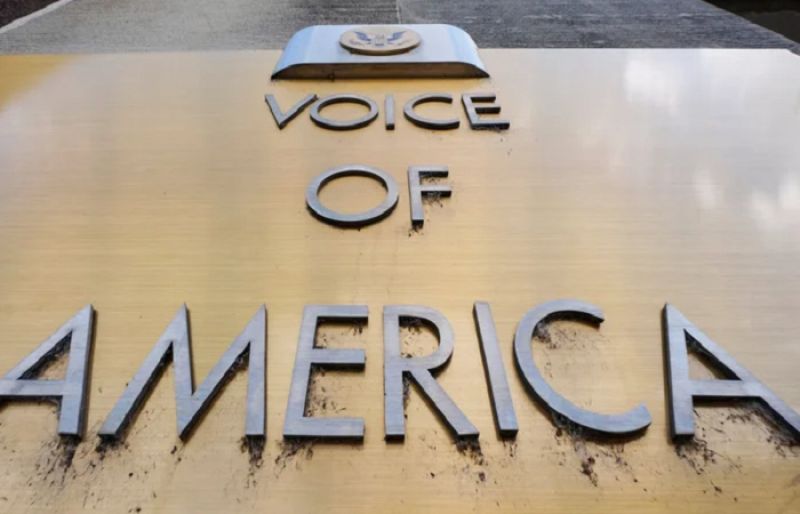

A US federal judge on Tuesday ordered the Trump administration to bring more than 1,000 Voice of America employees back to work and resume broadcasts by the government-funded media outlet.
District Judge Royce Lamberth’s order comes 10 days after he ruled that President Donald Trump’s pick to oversee mass layoffs at VOA was unlawfully appointed, rendering the job cuts invalid.
Kari Lake, a former TV anchor, slashed jobs and funding after she was appointed by Trump to head the US Agency for Global Media (USAGM), which runs VOA, Radio Free Europe, Radio Free Asia and other stations.
Lamberth, an appointee of Republican president Ronald Reagan, ordered the reinstatement by March 23 of 1,042 VOA employees who have been on paid administrative leave for the past year.
The judge also ordered USAGM to come up with a plan by next week to resume international broadcasts.
VOA was created in the wake of World War II as a key instrument of American soft power worldwide.
Trump frequently attacks media outlets and denounced the editorial firewall at VOA that prevents the government from intervening in its coverage.
Three VOA employees who filed a lawsuit seeking to reverse Lake’s moves welcomed the judge’s ruling.
“We are eager to begin repairing the damage Kari Lake has inflicted on our agency and our colleagues, to return to our congressional mandate, and to rebuild the trust of the global audience we have been unable to serve for the past year,” they said in a statement.
The Trump administration has said it plans to appeal the judge’s previous ruling that Lake’s appointment was unlawful.
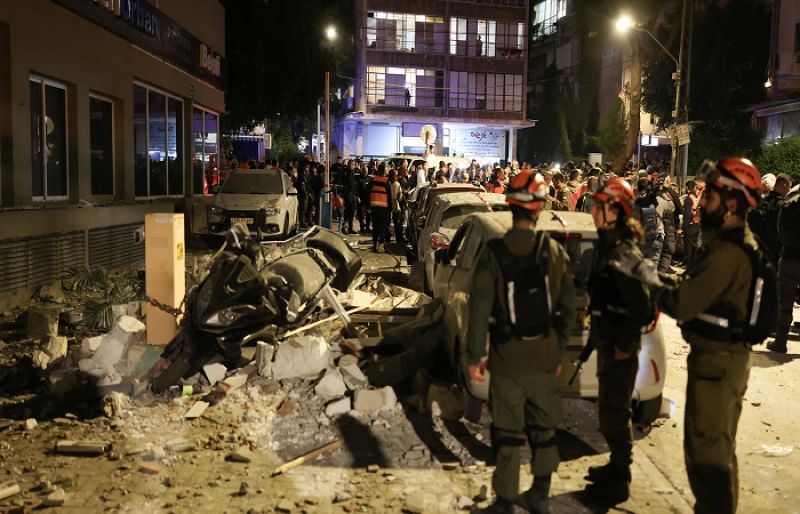

Israel has said that Iran has repeatedly used cluster warheads, which disperse into multiple smaller explosives mid-air and spread over a wide area, making them difficult to intercept.
The attack on densely populated Tel Aviv overnight on Tuesday killed two people, bringing the death toll in Israel from the war to at least 14.
In Iran, a projectile hit an area near the Bushehr nuclear power plant on Tuesday evening, however it caused no damage or injuries, Iran told the International Atomic Energy Agency.
IAEA chief Rafael Grossi reiterated his call for maximum restraint during the conflict to avoid the risk of a nuclear accident.
Israel and the US have said preventing Iran from developing a nuclear weapons programme was one of the goals of the attacks they launched more than two weeks ago, which killed the country’s supreme leader and many other top officials.
The Iranian government on Tuesday confirmed the killing of Larijani, the most senior figure targeted since the US-Israeli war’s first day, when an Israeli strike killed Iran’s Supreme Leader Ayatollah Ali Khamenei.
Iran’s Supreme National Security Council, which Larijani led as secretary, said Larijani’s son and his deputy, Alireza Bayat, were also killed in an Israeli attack on Monday night.
The targeted killings took place as the US.Israeli war, on Iran shows no signs of de-escalation.
Iran’s new supreme leader, Mojtaba Khamenei, has rejected proposals conveyed to Iran’s Foreign Ministry for “reducing tensions or ceasefire with the United States,” according to a senior Iranian official who asked not to be identified.
Khamenei, attending his first foreign-policy meeting since his appointment, said it was not “the right time for peace until the United States and Israel are brought to their knees, accept defeat, and pay compensation,” according to the official.
The official did not clarify whether the younger Khamenei, who has not yet appeared in photos or on TV since being named last week to replace his slain father, had attended the meeting in person or remotely.
TRUMP SAYS HELP FROM ALLIES TO SECURE STRAIT NOT NEEDED
US-based Iran human rights group HRANA said on Monday that an estimated 3,000-plus people have been killed in Iran since the US-Israeli attacks began at the end of February.
Iranian attacks have killed people in Iraq and across the Gulf states, as well as Israel.
More than 900 people have died since Israel began attacks on Lebanon on March 2, the Lebanese Health Ministry said on Tuesday.
The Strait of Hormuz, a transit point for a fifth of the global oil trade, remains largely closed as Iran threatens to attack tankers linked to the US and Israel.
Oil prices have soared
U.S. President Donald Trump has repeatedly castigated allied countries in recent days for their cool response to his requests for military help to restore the passage of oil tankers through the strait.
Most U.S. allies in the North Atlantic Treaty Organization have told Trump they don’t want to get involved in the conflict, he said on Tuesday, describing their position as “a very foolish mistake.”
“Because of the fact that we have had such Military Success, we no longer ‘need,’ or desire, the NATO Countries’ assistance — WE NEVER DID!” Trump wrote on social media, also singling out Japan, Australia and South Korea.
European Union foreign policy chief Kaja Kallas said in an interview that nobody was ready to risk the lives of their people in protecting the strait.
“We have to find diplomatic ways to keep this open so that we don’t have a food crisis, fertilizers crisis, energy crisis as well,” Kallas said.
The U.S. has given shifting rationales for joining Israel to attack Iran and struggled to explain the legal basis for starting a new war, underscored by the Tuesday resignation of the head of the US National Counterterrorism Center, Joseph Kent.
Kent wrote in his resignation letter to Trump that Iran “posed no imminent threat to our nation.”
US TARGETS IRAN COASTLINE
Iran has responded to the Israeli-US attacks with wide-ranging strikes on its Gulf neighbours, some of which host US bases.
Gulf Arab states have faced more than 2,000 missile and drone attacks on US diplomatic missions and military bases as well as oil infrastructure, ports, airports, ships and residential and commercial buildings, and most of them aimed at the United Arab Emirates.
Saudi Arabia will host a consultative meeting of foreign ministers from a number of Arab and Islamic countries in Riyadh on Wednesday evening to discuss ways to support regional security and stability, the kingdom’s foreign ministry said.
The United States military said on Tuesday it had targeted sites along Iran’s coastline near the Strait of Hormuz because Iranian anti-ship missiles posed a risk to international shipping there.
Oil prices rose about 3% on Tuesday as Iran renewed its strikes on oil facilities in the United Arab Emirates, and are up around 45% since the start of the war on February 28, raising concerns of a renewed spike in global inflation.
The World Food Programme said tens of millions of people will face acute hunger if the war continues through June.
Global airlines sounded the alarm on Tuesday over soaring jet fuel prices, warning of hundreds of millions of extra costs, higher fares and cuts to some routes.
Global aviation has been thrown into turmoil, with flights cancelled, rescheduled or rerouted as most Middle East airspace remains closed amid fears of missile and drone attacks.

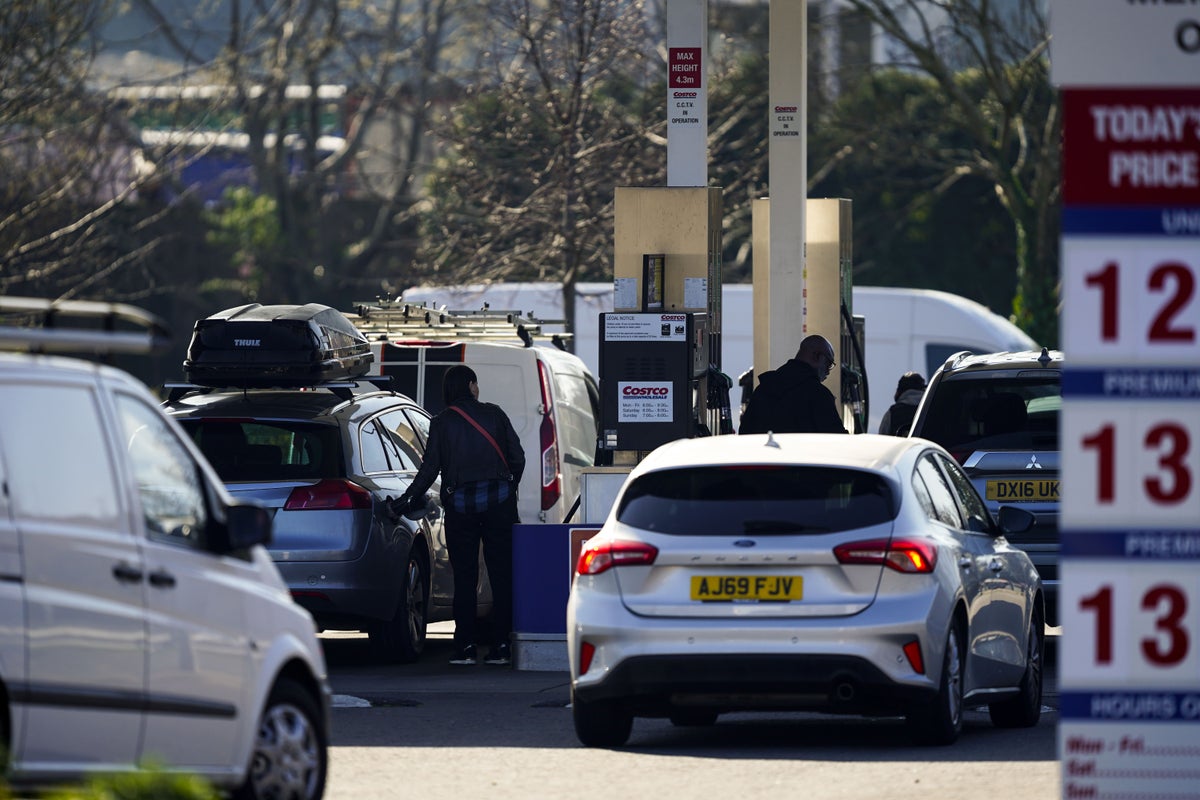
Tories set to force vote on scrapping fuel duty increase

CAI revises India’s 2025-26 cotton output upward to 320.5 lakh bales

Behind the band The Last Dinner Party's soaring success

Stock market crash today (March 12, 2026): Nifty50 opens below 23,600; BSE Sensex down over 900 points on continuing US-Iran war – The Times of India

Intertextile Shanghai 2026: Fringe events spotlight market trends

What time will NASA’s 600 kg satellite crash to Earth today— 14 years after launch?

-
Business6 days ago
Stock market crash today (March 12, 2026): Nifty50 opens below 23,600; BSE Sensex down over 900 points on continuing US-Iran war – The Times of India
-
 Fashion1 week ago
Intertextile Shanghai 2026: Fringe events spotlight market trends
-
 Entertainment1 week ago
What time will NASA’s 600 kg satellite crash to Earth today— 14 years after launch?
-

 Fashion1 week ago
German brand Adidas posts 13% revenue growth in 2025
-

 Tech1 week ago
Meta Developed 4 New Chips to Power Its AI and Recommendation Systems
-

 Fashion1 week ago
UK’s Topshop unveils Tolu Coker capsule collection
-
 Business1 week ago
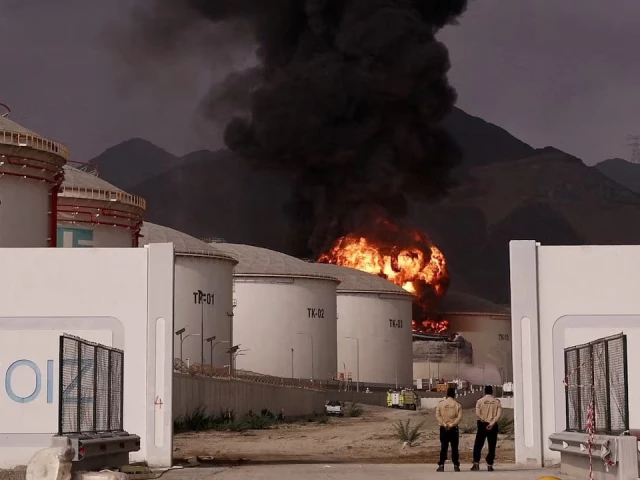
US ignites Iran war, but Gulf Arab states pay the price | The Express Tribune
-

 Fashion1 week ago
India’s textile recycling market may reach $3.5 bn by 2030: Report