

Business
Is Zerodha Set To End Free Equity Delivery? Nikhil Kamath Flags Revenue Pressure


Last Updated:
Nithin Kamath hints Zerodha may start charging brokerage for equity delivery trades amid regulatory changes and revenue decline.

Weekly Options Ban Could Hit Revenues, Zerodha Mulls Charging Delivery Brokerage
Zerodha co-founder Nithin Kamath in his latest blog has hinted that the online brokerage platform may implement brokerage charges for equity delivery trades from customers, which are currently non-chargeable, to ensure the sustainability of the business. “We would be forced to start charging brokerage for equity delivery trades to make the business tenable,” Kamath said in the blog upon the regulator’s evaluation on whether to stop weekly options completely.
Zerodha will see another revenue hit if the regulator stops weekly options completely. Kamath said that the options business might be at further risk, with the regulators evaluation whether to stop weekly options.
On the question of what would we do if weekly options were removed, I suppose we’ll see another hit to our revenues in the short-term, Kamath explained the rationale behind the move.
The Securities and Exchange Board of India (Sebi) in the past few years has taken several measures to restrict the galloping futures and options trading business across the country, leading to major losses to traders. According to a previous Sebi study, 93% F&O traders are in loss, marking a substantial trap for small investors to lose their hard-earned money in the pretext of speculative trading.
Kamath had earlier stated that the platform’s broking revenue fell 40% in 2025 due to combined factors, including the STT increase on options, then the removal of exchange transaction charge rebates, and a reduction in weekly expiries. In addition to this, there was a significant decline in market activity, he said, adding that our (Zerodha) revenues and profits suffered a decline.
Moreover, Kamath said, new account openings were lower due to the overall market activity.
“Our overall share of NSE’s active client list has trended down. A person trading once a year is considered active by NSE. I don’t pay much attention to this data because brokers are constantly gaming this by pestering customers to trade via notifications and dark patterns. By triggering people to trade, you not only generate turnover but also move up the list,” Kamath added in the post.
On the question of what would we do if weekly options were removed, I suppose we’ll see another hit to our revenues in the short-term.Having said that, when you’re building a business for the long term, focusing on quarterly or even annual growth is a poor metric. The more you… pic.twitter.com/ZAx2ih7sxg
— Nithin Kamath (@Nithin0dha) October 1, 2025
To allay the fear of customers, Kamath ensured that Zerodha is financially stable with a net worth of Rs 13,000 crore, substantially higher than its competitors.
“Our net worth as a percentage of client funds we handle is unprecedented—more than 50% on any given day. We have zero debt on the books, and as we are fully privately held, we have more skin in the game than any other broker in India,” Kamath added in the post.

Varun Yadav is a Sub Editor at News18 Business Digital. He writes articles on markets, personal finance, technology, and more. He completed his post-graduation diploma in English Journalism from the Indian Inst…Read More
Varun Yadav is a Sub Editor at News18 Business Digital. He writes articles on markets, personal finance, technology, and more. He completed his post-graduation diploma in English Journalism from the Indian Inst… Read More
October 04, 2025, 15:00 IST
Read More

The Indian government has proposed the Income-tax Rules 2026, making PAN cards mandatory for select high-value transactions. Replacing the 1962 rules, these changes aim to simplify and bring transparency to the tax system. After considering suggestions, the rules are expected to be finalized and implemented by April 1, 2026.
Here’s a detailed look about how PAN cards are used in various financial transactions.
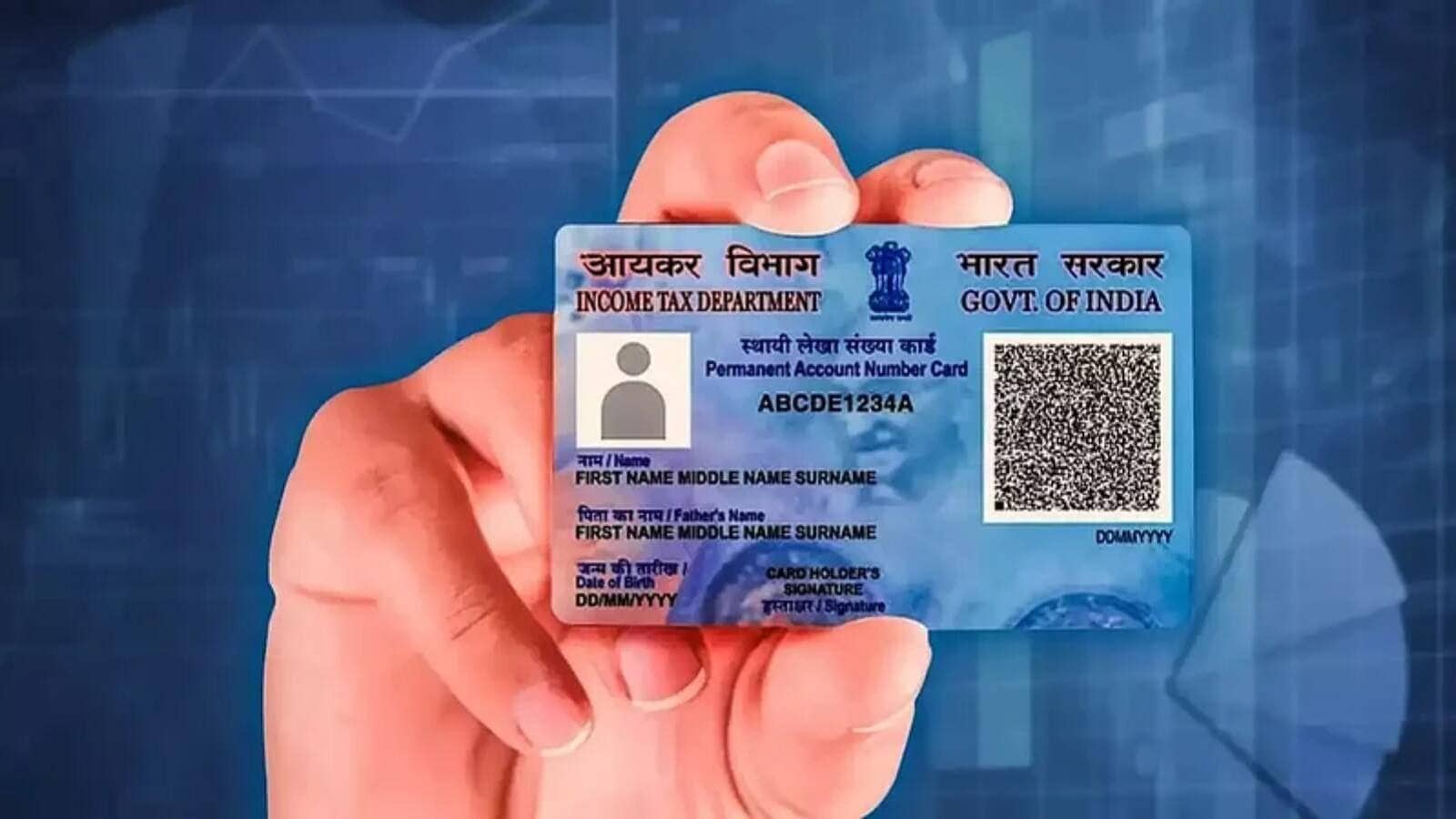
Immovable Property Transactions: PAN will be required for property transactions exceeding Rs 20 lakh, which is up from Rs 10 lakh. It will include purchase, sale, gift, or joint development agreements.

Motor Vehicles Purchase: PAN is now required for motor vehicle purchases exceeding Rs 5 lakh, including two-wheelers that have been exempted so far. Additionally, those who buy premium bikes or expensive cars will need to quote PAN. Meanwhile, tractors are still excluded.

Cash Deposits And Withdrawals: PAN will be required for aggregate cash deposits or withdrawals exceeding Rs 10 lakh in a financial year. As per the existing rules, it is required for cash deposits of more than Rs 50,000 in a day at a bank or post office.

Hotel And Restaurant Payments: It will be required for cash payments exceeding Rs 1 lakh, which is up from Rs 50,000.
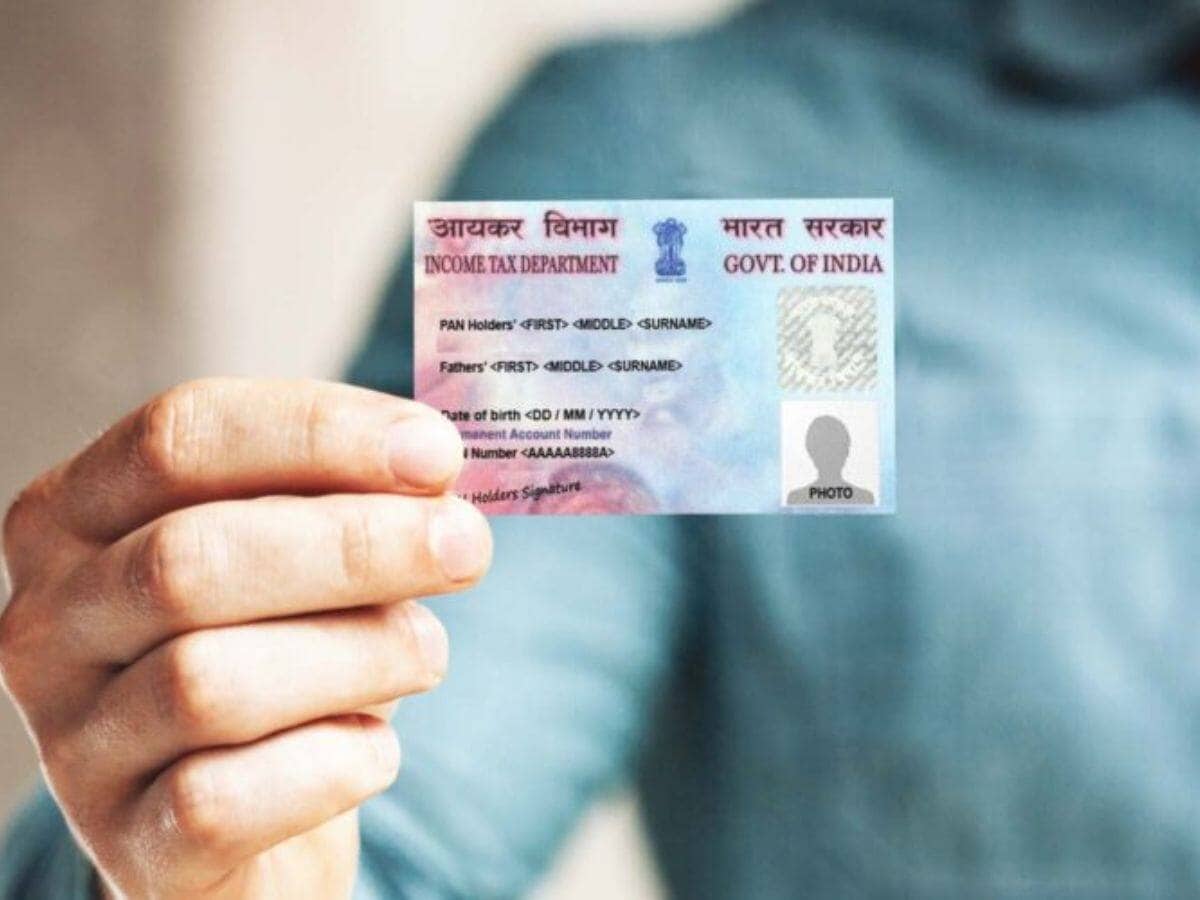
Insurances: PAN will be required to initiate account-based relationship with insurance companies, irrespective of the premium account.
Business
Himadri Speciality Starts Commercial Operations Of 70,000 TPA Carbon Black Line; Details Here

Last Updated:
With the brownfield expansion, the company’s total carbon black capacity has risen to 2,50,000 TPA.


Shares of Himadri Speciality Chemical were trading 0.70% higher at Rs 491.5 apiece on the NSE on Wednesday.
Himadri Speciality Chemical Ltd has commenced commercial operations of its newly commissioned 70,000 tonnes per annum (TPA) speciality carbon black line at its Mahistikry manufacturing facility in Hooghly, West Bengal, the company said on Tuesday (February 24).
With the brownfield expansion, the company’s total carbon black capacity has risen to 2,50,000 TPA. Of this, 1,30,000 TPA comprises speciality carbon black capacity at the Mahistikry site, making it the world’s largest single-location speciality carbon black manufacturing facility.
The expansion bolsters Himadri’s speciality portfolio and strengthens its ability to cater to high-value, performance-driven applications across plastics, inks, paints, coatings and other niche segments.
According to the company, the project integrates advanced process technologies, modern quality control systems, energy-efficient operations and scalable infrastructure to ensure consistent production of premium grades for global customers.
Anurag Choudhary, CMD and CEO, Himadri Speciality Chemical Ltd, said, “The commencement of commercial operations of our 70,000 MTPA (metric tonnes per annum) speciality carbon black line at Mahistikry marks the beginning of the next phase of growth in our advanced carbon materials journey. With this expansion, Mahistikry becomes the world’s largest single-location Speciality Carbon Black facility, with a capacity of 1,30,000 MTPA. This positions us strongly to capture rising global demand in premium, application-specific segments such as plastics, inks, paints, coatings, and other specialised industries.”
He added, “The newly-commissioned capacity is expected to contribute meaningfully to revenue growth and strengthen the Company’s margin profile over the medium term. As global demand continues to shift toward high-performance, customised carbon solutions, Himadri’s enhanced scale provides competitive advantages through operational efficiencies, supply reliability, faster market responsiveness, and improved product innovation capabilities.”
Shares of Himadri Speciality Chemical were trading 0.70% higher at Rs 491.5 apiece on the NSE on Wednesday.
 Click here to add News18 as your preferred news source on Google.
Check JEE Mains Result 2026 Link Here
February 25, 2026, 11:25 IST
Read More

Last Updated:
Angel One sets Feb 26 as record date for 1:10 stock split. Shareholders will get 10 shares for each held.
Angel One Stock Split 2026
Angel One Stock Split Record Date: Domestic brokerage firm Angel One has fixed February 26 as the record date for its previously approved 1:10 stock split, moving ahead with a proposal cleared by its Board last month.
The company had earlier informed stock exchanges on Jan. 15 that its Board of Directors approved the sub-division of equity shares in a 1:10 ratio.
Board Approval For Share Sub-Division
Under the approved proposal, each fully paid-up equity share with a face value of Rs 10 will be split into 10 fully paid-up equity shares with a face value of Re 1 each.
In its Jan. 15 stock exchange filing, the company stated that the Board had approved the sub-division of one existing equity share of face value Rs 10, fully paid-up, into 10 equity shares of face value Re 1 each, fully paid-up. The move is aimed at increasing the number of outstanding shares and improving liquidity in the counter.
Stock splits typically make shares more affordable for retail investors by reducing the market price per share, although the overall market capitalization of the company remains unchanged.
Feb 26 Fixed As Record Date
In a subsequent filing dated Feb. 18, Angel One confirmed that its executive committee has fixed Thursday, Feb. 26, as the record date to determine eligible shareholders for the stock split.
The record date serves as the cut-off to identify shareholders who will be entitled to receive the additional shares. Investors holding the stock on or before Feb. 26 will qualify for the sub-division benefit.
What The Stock Split Means For Investors
Shareholders will receive 10 equity shares for every one share currently held. While the face value per share will reduce from Rs 10 to Re 1, the total value of an investor’s holdings will remain unchanged, as the split does not alter ownership percentage or overall wealth.
Angel One Q3 FY26: Profit Dips Amid Higher Costs
For the quarter ended Dec. 31, 2025, Angel One reported a 4.5% year-on-year decline in consolidated profit after tax to Rs 269 crore, compared with Rs 281.5 crore in the same quarter last year.
However, total income rose 5.8% to Rs 1,338 crore from Rs 1,264 crore in Q3 FY25. Total expenses increased to Rs 964.2 crore from Rs 876.5 crore, primarily due to higher employee benefit costs, elevated ESOP expenses, and increased operating expenditure.
Click here to add News18 as your preferred news source on Google.
Check JEE Mains Result 2026 Link Here
February 25, 2026, 07:20 IST
Read More

Income Tax Draft Rules 2026: Key Changes On How And When Pan Card Will Be Required?

Trump clears DPA funds for US textile sector, NCTO welcomes move

Chris Hemsworth shares reason of relocating to Australia from L.A

-

 Entertainment1 week ago
Queen Camilla reveals her sister’s connection to Princess Diana
-

 Tech1 week ago
Rakuten Mobile proposal selected for Jaxa space strategy | Computer Weekly
-

 Politics1 week ago
Ramadan moon sighted in Saudi Arabia, other Gulf countries
-

 Entertainment1 week ago
Robert Duvall, known for his roles in "The Godfather" and "Apocalypse Now," dies at 95
-

 Politics1 week ago
Tarique Rahman Takes Oath as Bangladesh’s Prime Minister Following Decisive BNP Triumph
-
 Business1 week ago
Tax Saving FD: This Simple Investment Can Help You Earn And Save More
-

 Tech1 week ago
Businesses may be caught by government proposals to restrict VPN use | Computer Weekly
-

 Sports1 week ago
Usman Tariq backs Babar and Shaheen ahead of do-or-die Namibia clash