

Business
ITAT Mumbai Verdict: Engineer Cleared In Rs 69 Lakh Unexplained Income Case

Last Updated:
The ITAT’s ruling highlighted complications faced by taxpayers in high-value financial transactions after an engineer argued against an Assessing Officer.
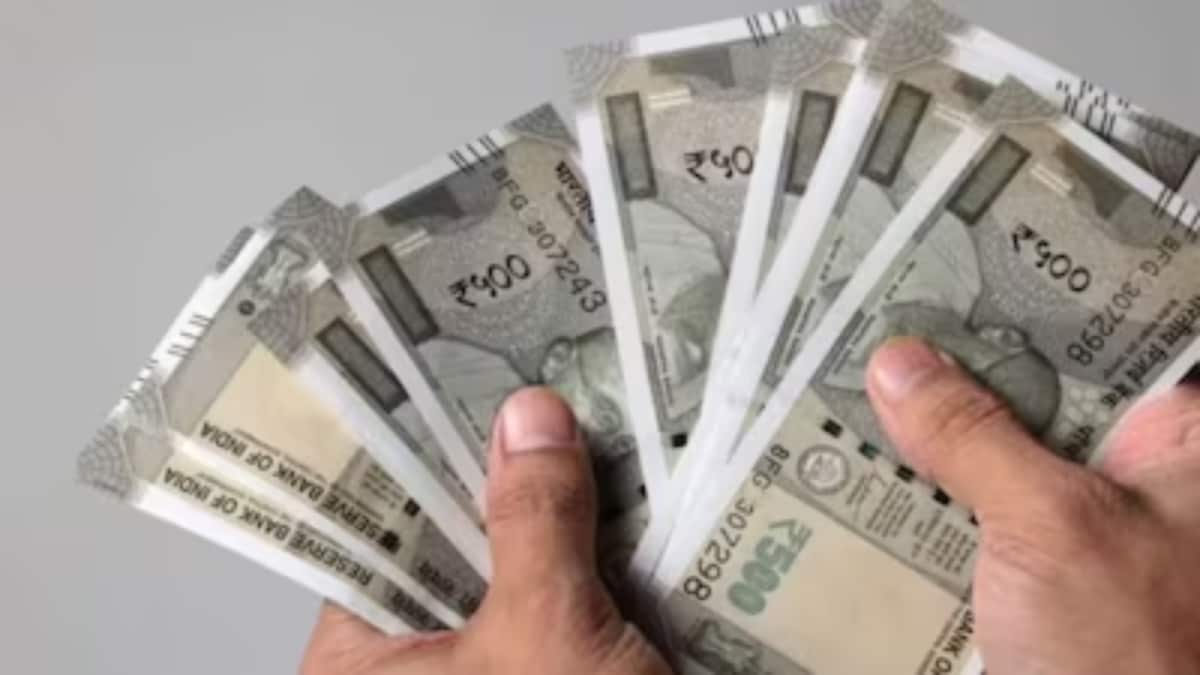
The taxpayer reported investments worth Rs 69 lakh. (representative image)
The Income Tax Appellate Tribunal (ITAT) in Mumbai recently deleted a major addition made by the tax authorities against an Indian engineer. The bone of contention was the engineer’s alleged under-reporting of income while making substantial financial investments.
The verdict by the authorities underpinned the increasing tax complications faced in high-value financial transactions. With their order, ITAT Mumbai not only brought to an end the six-year-long stand-off and provided the taxpayer relief, but also shed light on the digital monitoring tools currently deployed by the Income Tax Department.
Tax Advisory Platform Explains The Case
Tax Buddy, a tax advisory platform, provided a detailed insight into the case at hand via a social media post. The case concerned an engineer who reportedly declared only minimal income in his Income Tax Returns but was found to have purchased a residential flat worth Rs 39 lakh and made fixed deposits worth Rs 30 lakh. It took his total investments to Rs 69 lakh.
An Indian engineer showed minimal income in India
but bought a ₹39L flat and made ₹30L FDs (₹69L total).
Tax officer taxed it as unexplained income; 6 yrs later ITAT Mumbai deleted it
Here’s how the Tax Dept tracks 8 such transactions through the SFT system:
In response, the Assessing Officer (AO) classified the sum as unexplained income as per Section 69 of the Income Tax Act. The Assessing Officer also raised a tax demand against the engineer. While the AO concluded that the declared income doesn’t justify the scale of investments made, the taxpayer argued that their funds came from past savings, family support and verifiable banking channels. The argument unsurprisingly didn’t satisfy the AO. The additions were upheld in earlier stages of appeal before the matter finally reached the ITAT Mumbai.
How The Decision Went In The Taxpayer’s Favour
Despite facing objections, the taxpayer ultimately won the dispute after the Tribunal felt that the AO had not adequately considered the explanations and supporting documents issued by the engineer. In their order, the ITAT mentioned that the source of the funds had been reasonably demonstrated and that the additions couldn’t be sustained on mere assumptions under unexplained income provisions. The Tribunal also emphasised the importance of fair evaluation of cases in which investments stretch over several years and are made through non-taxable flows.
The case reinforced how financial compliance is increasingly data-driven. The Income Tax Department’s surveillance capabilities have only grown rapidly in the last decade through the Statement of Financial Transactions (SFT) system. Integrated with PAN, AIS and several reporting entities, this mechanism allows the department to automatically identify unusual or disproportionate financial activities.
The SFT system monitors transactions based on eight different categories, including cash deposits in savings accounts, cash in current accounts, credit card bills, property purchases or sales of Rs 30 Lakh or more, fixed Deposits of Rs 10 lakh or more and other investment transactions. But even as the system increases transparency, the engineer’s case reminds us why it is equally important for legitimate taxpayers to receive fair and balanced assessments by authorities.

A team of writers and reporters decodes vast terms of personal finance and making money matters simpler for you. From latest initial public offerings (IPOs) in the market to best investment options, we cover al…Read More
A team of writers and reporters decodes vast terms of personal finance and making money matters simpler for you. From latest initial public offerings (IPOs) in the market to best investment options, we cover al… Read More
November 15, 2025, 16:59 IST
Read More
Business
Middle East conflict may hit India’s exports beyond region if prolonged, says government – The Times of India
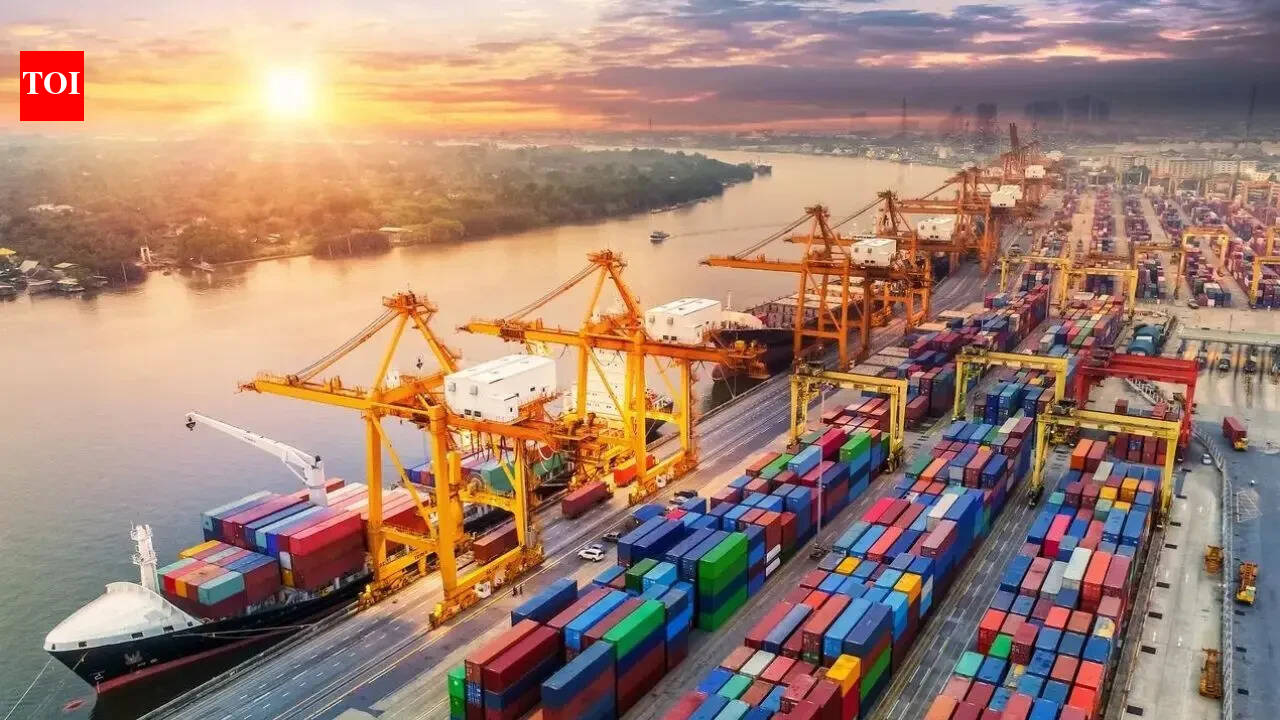
A prolonged conflict in Middle East could begin to hurt India’s exports not just to the region but also to other global markets, as disrupted supply chains ripple outward, commerce secretary Rajesh Agrawal said on Saturday, He also urged the pharmaceutical industry to reduce dependence on imported raw materials and build more resilient export and import linkages.Speaking on the sidelines of ‘Chintan Shivir – Scaling Up Pharma Exports’ in Hyderabad, Agrawal said the government has already seen an impact on both imports and exports over the past month because of the Middle East crisis, with energy imports and regional trade flows under pressure.
“Middle East is also an important market. Around 12-13 per cent of our exports go to the region. So, that will directly get impacted. And if it goes on for long, maybe our exports to other parts of the world will also get impacted as some of the value chains will rotate back. We are cognizant of it,” Agrawal told reporters, as per news agency PTI.He said the exact impact of the conflict on India’s trade would become clearer in the next couple of weeks, but indicated that both exports and imports could see some decline.“And I assume, it will not only be a one-way traffic, in terms of export going down, but it will also be imports having some downfall,” he said.Agrawal cautioned that even if the war ends soon, the disruption may linger for months or even years, depending on the extent of damage to supply chains and infrastructure.“So, at this juncture, it will be very difficult to take a very long-term view on it,” he said.He said the Centre is trying to ensure that supply chains face the minimum possible disruption, while acknowledging that some trade numbers may soften in the near term.
Pharma sector already feeling supply pressure
The commerce secretary said the pharmaceutical sector has already seen some impact in the availability of key intermediates and solvents because supply chains are getting affected by the regional crisis.Agrawal said all arms of the government are working to prioritise limited LPG supply and are attempting to ease the situation by diversifying imports and sourcing from alternative suppliers.“So, as we are able to resolve that overall supply, we will try to alleviate some of the pain in every sector. The Pharma sector will be one of the priority sectors,” he said.He added that the government and industry are jointly working on ways to make supply chains more resilient.
Call for self-reliance in APIs, bulk drugs and intermediates
At the same event, Agrawal asked the pharmaceutical industry to use the current geopolitical uncertainty as a trigger to reduce dependence on critical imported inputs and strengthen domestic capacity.Addressing industry stakeholders in Hyderabad, he stressed “the importance of ensuring greater self-reliance by meeting 80-90 per cent (or higher) of domestic pharmaceutical requirements through indigenous production, while reducing critical import dependencies in APIs, bulk drugs, and intermediates”.He also emphasised the “importance of insulating import supply chains in a geopolitically fragmented world, where availability may be important”.Agrawal called for a broader strategic repositioning of India as a global hub for quality, affordable pharmaceuticals, saying that quality would remain the decisive factor in healthcare. He urged the sector to build a stronger quality ecosystem to enhance global trust and align with emerging areas such as biologics and biosimilars.He also encouraged the industry to shift from a volume-driven to a value-driven model, with greater focus on innovation and new patents, while maintaining India’s strength in generics.
Exports remain on positive path despite uncertainty
Despite the geopolitical overhang, Agrawal said India’s exports in the last financial year were expected to remain on a positive trajectory.The broader pharmaceutical export picture remains resilient. India’s pharma exports stood at $30.47 billion in 2024-25, up 9.4 per cent over the previous year.During April–February 2025-26, pharma exports reached $28.29 billion, registering growth of over 5 per cent compared with the corresponding period of the previous year.India remains the third-largest producer of pharmaceuticals globally by volume and 14th by value, underscoring both the sector’s scale and the stakes involved in insulating it from external shocks.
Business
‘India solidly through global shocks’: EAM Jaishankar calls for ‘hedge, de-risk, diversify’ strategy amid Iran war – The Times of India
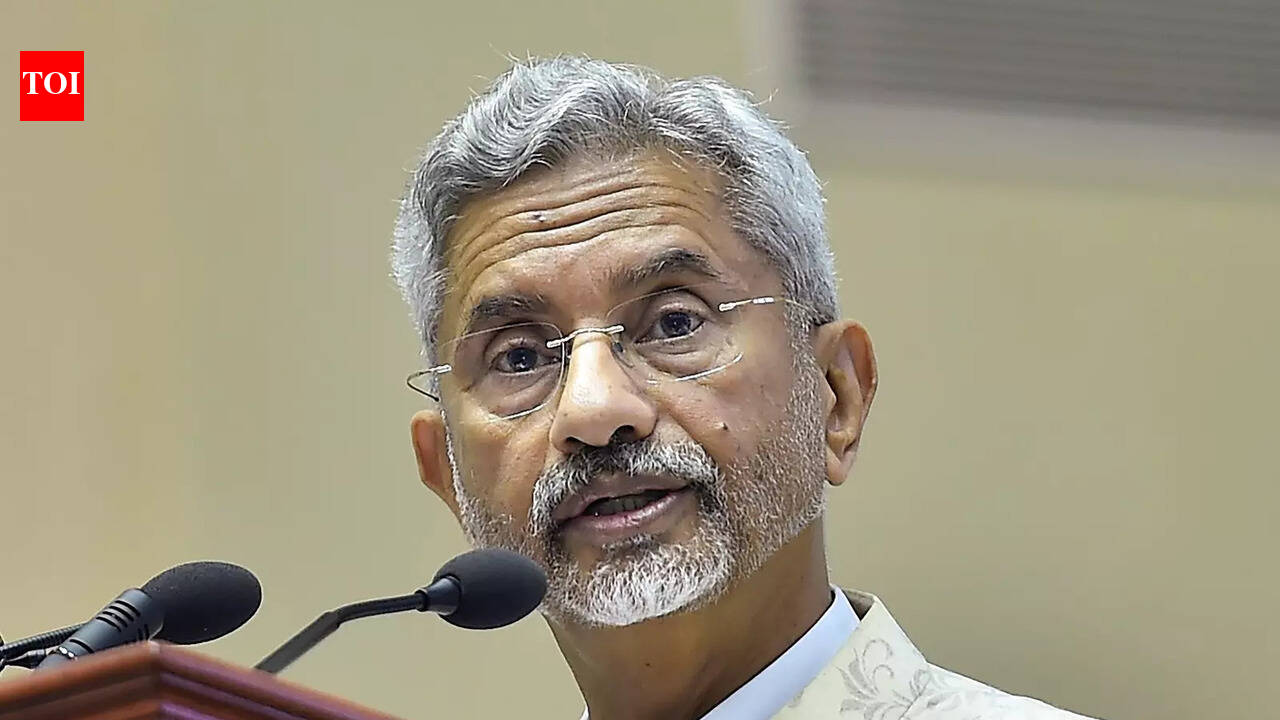
External affairs minister S Jaishankar on Saturday said that India has “solidly come through” a the ongoing turbulent geopolitical situation amid the Middle East conflict and the Russia-Ukraine war, adding that the country has been “managing domestic and external challenges successfully.”Speaking at the 15th Annual Convocation Ceremony of IIM Raipur, he said countries today must focus on “hedging, de-risking and diversifying” as the global order changes rapidly.
He said the world is going through a “structural” shift, adding, “The global order is changing before our very eyes with visible shifts in the relative power and influence of countries. The politics of some societies find it difficult to come to terms with these changes.”Jaishankar also said, “New developments in technology, in energy, military capabilities, in connectivity and in resources have encouraged risk-taking in an increasingly competitive environment. Everything today is being leveraged, if not actually weaponised. The world is then confronted with the prospect of securing itself in an increasingly volatile and unpredictable environment. This has necessitated the need to hedge, de-risk and diversify.”He said India has reasons for optimism compared to many other countries. “There is an optimism in our society that is lacking in many other parts of the world,” he said, adding that India is now among the top five economies and has handled recent global shocks well.He further stated, “No one can dispute that the multiple global shocks that have recently tested our resilience, and that India has come through that solidly. We have managed both domestic and external challenges fairly successfully.”The minister said building national capabilities is key for India’s goal of Viksit Bharat 2047. He also praised “inclusive growth, representative politics, and decisive leadership.”He said, “Building national capabilities has become more critical in the light of the global trends that I have mentioned… We must endeavour to build and secure within our control as many capacities as we can.”On foreign policy, Jaishankar said India is focusing on expanding market access, securing resources and technology, and supporting Indians abroad, while promoting “Brand India.”“Our foreign policy is today focused on expanding market access for Indian producers. It is also focused on helping to secure resources, technologies and essential goods. It looks after Indians… And it promotes Brand India,” he said.These remarks come at a time when the Middle East tensions that began on February 28 with US-Israel strikes on Iran have stretched beyond the 1 month mark. The crisis has since intensified with Iran’s chokehold over the strategically crucial Strait of Hormuz, sending ripples to oil baskets across the globe.
Business
Govt assures IMF of timely power tariff hikes, agrees to subsidy cap under $7bn EFF – SUCH TV

Pakistan has assured the International Monetary Fund (IMF) of implementing timely electricity tariff adjustments and capping power subsidies at Rs830 billion in the upcoming budget to sustain energy sector viability amid global market shocks.
The new baseline tariff will be implemented from January 15, 2027, under the structural benchmark agreed with the IMF under the $7 billion Extended Fund Facility (EFF).
The privatisation of power distribution companies — including Iesco, Gepco and Fesco — has been delayed once again and is expected to be finalised by early 2027.
The government is working closely with the Privatisation Commission to assess the viability of privatising two targeted Gencos (Nandipur and Guddu).
The government is committed to the IMF to apply the recently adopted net billing regulation to new consumers to better balance solar and grid demand, in line with international practice. These steps will help prevent the recurrence of the monster of the circular debt.
“It has been anticipated that with allocated subsidy and the timely tariff adjustments, it will minimise Circular Debt (CD) flow target of Rs300 billion and remain committed to reducing gross CD flow to zero by FY31,” top official sources confirmed to The News here on Friday.
Pakistan, according to the official, assured the IMF of achieving energy sector viability to maintain macroeconomic stability.
For this purpose, the government shared with the IMF in writing for timely tariff increases that recover costs and the re-emergence of circular debt.
The execution of timely adjustments in tariffs is necessary in the context of recent shocks to global energy markets to ensure the sector’s viability and broader macroeconomic stability.
The government has established the Integrated Energy Plan (IEP) targeted for completion by April 2027 in a bid to make better-informed decisions on supply and demand across the energy sector value chain.
According to the government’s strategy, it is aimed at incorporating the CD Management Plan to be adopted by the cabinet by the end of July 2026.
This upcoming CDMP will ensure timely electricity tariff adjustments consistent with cost recovery that remain progressive, and increases are introduced, balanced across consumer categories.
This includes Nepra’s continued timely notifications of quarterly tariff adjustments (QTAs) and automatic monthly fuel charge adjustments (FCAs), as well as the full implementation of the January 2027 annual rebasing by January 15, 2027.
Following the implementation of the CD stock reduction operation in FY26 and recognising ongoing improvements in operational efficiency and performance, the FY27 budget will include a subsidy limited to Rs830 billion.
The subsidy will cover (i) the projected tariff differential for Discos and KE; (ii) current and arrears payments of Fata; (iii) agricultural tubewells; and (iv) CD stock payments to counterbalance anticipated CD flow, which continues to be targeted at a lower level following the CD stock operation.
The settlement with several IPPs, with whom penalty payments on arrears were to be waived as part of the broader CD stock reduction operation, remains incomplete, with CD continuing to accumulate as a result. The government will finalise arrangements with all IPPs by the end of June 2026.
The government will try to resolve a dispute with KE, currently under litigation, which has resulted in significant nonpayment and arrears by the end of December 2026.
The government will continue to move forward with its fundamental cost-reducing power sector reforms, including private sector participation in Disco management to improve performance, efficiency, and governance, and address power sector CD drivers, helping to mitigate the need for higher tariffs.
The government is moving forward with the private sector participation process for second batch of Discos, i.e. Hesco and Sepco, for which conditions precedent – in line with World Bank recommendations and including outstanding subsidy claims; outstanding balances with the government, other Discos, and other entities; and other balance sheet issues – will be completed by the end of December 2026 as structural benchmark under the IMF programme.
For improving the transmission system, the appointment of a CEO to the Independent System and Market Operator is underway, as are efforts to finalise staffing arrangements.
The incorporation and legal formation of the Energy Infrastructure and Development Management Company (EIDMC) have been completed, and its leadership selection process has also been initiated.
The National Grid Company (NGC) is operational and is undergoing a review of its processes in the context of its new role.
If privatisation does not prove feasible, work to bring relevant companies under one entity to reduce redundancies will be done, make necessary improvements, and enhance operations.
The Nepra issued wheeling auction framework guidelines in January 2026; this will enable auctions under the auspices of the Competitive Trading and Bilateral Contract Market (CTBCM).
The first wheeling auction, for 200MW, will take place by the end of June 2026.


Geno Auriemma needs to be better than bizarre postgame actions against South Carolina

Dominik Szoboszlai: Liverpool lacked ‘fighting spirit’ in Man City rout

Is Trump in hospital? Speculation rises after public appearances cancelled

-
 Business1 week ago
How do you spot a fake online review?
-

 Entertainment1 week ago
Lee Sang-bo dies at 45: Funeral details revealed
-

 Sports1 week ago
Illinois defense gets tough, ousts Houston to reach Elite Eight
-

 Sports7 days ago
USMNT handed reality check by Doku, Belgium ahead of World Cup
-

 Sports7 days ago
2026 NCAA men’s hockey tournament: Schedule, results
-

 Fashion1 week ago
China rolls out tariff cuts on Congo imports from April 1
-

 Fashion1 week ago
EU apparel imports slump 15.48% YoY in Jan; Bangladesh hardest hit
-
Uncategorized1 week ago
[CinePlex360] Please moderate: “Apple scrapping