

Fashion
Japan factory activity stabilises after 5 months of contraction in Dec

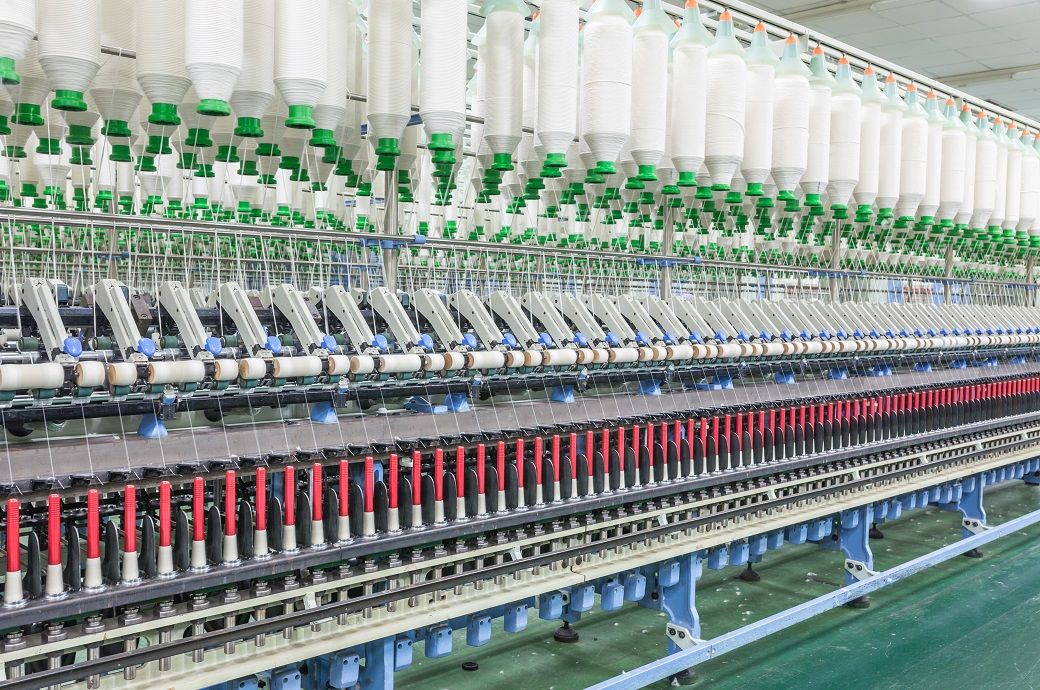
New business declined at its slowest pace in 19 months, marking the weakest reduction since May 2024. While overall demand remained subdued, some manufacturers reported improved sales supported by new projects and stronger-than-expected customer spending. Output was broadly stable, with production falling only marginally at the slowest pace in the current six-month downturn, S&P Global said in a press release.
Employment continued to expand, with firms increasing staffing levels at the fastest rate in four months, often in anticipation of stronger demand ahead. This helped reduce outstanding business, although the pace of backlog depletion eased to its slowest level in 18 months. Purchasing activity fell only marginally, while manufacturers continued to run down inventories amid muted demand conditions.
Japan’s manufacturing sector stabilised in December 2025 after five months of decline, with the S&P Global PMI rising to the neutral 50 from 48.7 in November.
New orders fell at the slowest pace in 19 months, output was broadly stable, and employment increased.
However, input costs surged at the fastest rate since April, lifting selling prices despite subdued demand.
Supply-side pressures persisted, as delivery times lengthened due to material shortages and extended shipping times, though the deterioration in vendor performance remained modest. Sub-sector data showed improved conditions for consumer and investment goods producers, while intermediate goods manufacturers faced weaker performance.
Cost pressures intensified notably in December. Input prices rose at the fastest pace since April, driven by higher raw material and labour costs, as well as the impact of a weak yen. As a result, manufacturers raised output charges again at a solid pace to protect margins.
Business confidence dipped from November’s recent high but remained above the long-run average. Firms continued to express optimism about the year-ahead outlook, citing hopes of new product launches and a recovery in customer demand during 2026, despite ongoing concerns around global economic conditions, rising costs, and demographic challenges.
“Japan’s manufacturing industry saw conditions stabilise at the end of the year, with factories reporting a much weaker reduction in sales and largely steady production levels,” said Annabel Fiddes, economics associate director at S&P Global Market Intelligence. “There was also good news on the employment front, with staffing levels rising at a slightly quicker pace as firms projected greater demand in the months ahead.”
“There were signs of stronger cost pressures in December, with input prices rising at the sharpest rate since April as higher raw material and labour costs, along with a weak yen, pushed up expenses. This led firms to raise their charges solidly as they looked to ease pressure on margins,” added Fiddes.
Fibre2Fashion News Desk (SG)











DCCI president Taskeen Ahmed told a press conference that the unchanged policy rate has forced businesses to borrow from banks at 16-17 per cent interest, creating mounting pressure.
High lending rates, unstable law and order marked by extortion, energy uncertainty, lack of coordination in revenue management and absence of policy continuity in industrial regulations are affecting the trade environment and eroding confidence in investment and business operations, trade body DCCI has said.
Rising production and distribution costs are also fuelling inflationary pressures, it noted.
“The high volume of non-performing loans (NPLs) and the reduction of the loan classification period from nine months to three months have created an undesirable situation in the financial sector, which has led to instability in the industrial sector,” he was cited as saying in a DCCI release.
“Industrial production is being hampered due to inadequate gas supply and the recent increase in gas prices for new industries and captive power plants by Tk 40 and Tk 42 per unit respectively,” he said, mentioning that both domestic demand and export targets are being missed as a result.
He also pointed to structural weaknesses in the revenue management system, saying the lack of automation leads to harassment of compliant taxpayers, while many remain outside the tax net, depriving the government of revenue and slowing collection growth.
Taskeen said delays in land acquisition, high land prices, a 41-per cent average increase in service charges by the Chattogram Port Authority and underutilisation of inland waterways have significantly raised the cost of doing business. “Rising production and distribution costs are also fuelling inflationary pressures,” he added.
As the recently-signed trade agreement with the United States does not guarantee duty-free access for the readymade garment sector, Taskeen called on the government to renegotiate the terms with the US administration.
Fibre2Fashion News Desk (DS)

The gross profit expanded 5 per cent to a record $900.3 million from $856.3 million, while gross margin improved 60 basis points (bps) to 42.5 per cent. The improvement was driven by a higher DTC mix, operational efficiency gains across manufacturing facilities and favourable exchange-rate movements, partly offset by US tariff impacts.
Delta Galil has reported record 2025 sales of $2.12 billion, up 4 per cent, driven by DTC growth and organic expansion.
Gross profit rose 5 per cent, while EBIT and net income declined due to tariffs and higher expenses.
Q4 sales reached $611.1 million with strong digital momentum.
The company declared a $10 million dividend and expects high-single-digit sales and double-digit profit growth in 2026.
Operating profitability moderated despite revenue growth. EBIT excluding non-core items declined to $174.2 million, representing 8.2 per cent of sales, compared with $184.1 million or 9 per cent in 2024. Reported EBIT stood at $164.4 million versus $169.2 million previously, reflecting tariff effects and increased SG&A expenses linked to retail expansion initiatives, Delta Galil said in a press release.
Net income excluding non-core items decreased 5 per cent to $102.6 million, while reported net income reached $93.7 million compared with $94.6 million in the prior year. Diluted earnings per share (EPS) excluding non-core items were $3.55, down from $3.82, with reported EPS at $3.21.
EBITDA excluding IFRS 16 stood at $209.1 million compared with $217.1 million in 2024. Cash flow from operating activities excluding IFRS 16 amounted to $131.8 million, versus $153.1 million a year earlier.
Financial position remained strong at year end, with cash of $135.8 million and record shareholders’ equity of $903.6 million. Net debt to EBITDA excluding IFRS 16 increased to 0.9x from 0.6x, reflecting ongoing investment in production capacity and distribution infrastructure.
“I am proud of our performance throughout 2025, which reflects the strength and commitment of our team, the resilience of our balance sheet, our culture of continuous improvement, and the power of our global platform. Together, these fundamentals give us confidence that we are well positioned for another year of profitable growth,” said Isaac Dabah, CEO of Delta Galil.
In the fourth quarter (Q4) of 2025, sales rose 2 per cent YoY to a record $611.1 million from $599.2 million. DTC sales of owned brands, excluding Bare Necessities, advanced 15 per cent in both the quarter and full year, while own-web sales surged 27 per cent in the quarter, marking the twelfth consecutive quarter of double-digit growth.
The gross profit in Q4 climbed 5 per cent to $263.2 million, with gross margin expanding 140 bps to 43.1 per cent. EBIT excluding non-core items declined to $59.3 million from $64.7 million, while reported EBIT reached $51.1 million versus $53.1 million a year earlier. Net income excluding non-core items dropped 13 per cent to $35.5 million, and reported net income stood at $28.0 million. Operating cash flow excluding IFRS 16 strengthened to $89.5 million from $64.3 million, reflecting improved working-capital dynamics.
Delta Galil declared Q4 dividend of $10 million, or $0.3825 per share, payable on March 11, 2026.
“Our fourth quarter capped an outstanding year of execution in what has been a challenging retail environment. We successfully navigated the impact of US tariffs, expanded programmes with key global customers, and delivered record sales driven by organic growth across most of our channels, geographies, and product lines. At the same time, we continued to make strategic investments in our factories and distribution centers to improve efficiencies, which enhanced our operations, brands and capabilities,” added Dabah.
Looking ahead, Delta Galil expects continued growth momentum in 2026 and guided for sales of $2.29-$2.33 billion, EBIT of $204-212 million and EBITDA of $324-332 million, alongside net income of $116-123 million and diluted EPS of $4-4.23, signalling high-single-digit revenue growth and double-digit profitability expansion compared with 2025.
Fibre2Fashion News Desk (SG)

At the conclave organised by the Department for Promotion of Industry and Internal Trade (DPIIT) in association with the Quality Council of India (QCI), Goyal emphasised that quality must become the defining mantra of India’s manufacturing and export ecosystem, asserting that Prime Minister Narendra Modi’s vision of ‘zero defect, zero effect’ will serve as the cornerstone of India’s growth story in the Amrit Kaal.
Commerce and Industry Minister Piyush Goyal said India’s $30–35 trillion economy goal by 2047 hinges on zero defect, zero effect and inclusive growth, making quality central to manufacturing and exports.
Addressing the National Quality Conclave, he stressed uniform global standards, skilling, better testing infrastructure and leveraging FTAs to achieve the $2 trillion export target.
Goyal underscored that no country can progress merely as a consumer; it must establish itself as a globally recognised producer of high-quality goods and services. He emphasised that brand India must stand for quality, reliability and trust. Noting that India has been the world’s fastest-growing large economy for the past four years and is poised to become the third-largest GDP in the next two to two-and-a-half years, he said the country’s $2 trillion export target—comprising $1 trillion in merchandise and $1 trillion in services within the next six to seven years—can only be achieved through uncompromising quality standards, the Ministry of Commerce and Industry said in a press release.
Highlighting India’s expanding trade outreach, Goyal said that nine Free Trade Agreements finalised in the past three to three-and-a-half years with 38 developed countries now cover nearly two-thirds of global GDP and trade. These agreements, he noted, open new opportunities in sectors such as textiles, leather, footwear and pharmaceuticals, provided Indian products consistently meet the highest global benchmarks. He reiterated that India’s current share in global trade remains modest, even in competitive and labour-intensive sectors, and urged industry to leverage new market access opportunities created through these agreements.
Recalling earlier challenges, Goyal remarked that Indian consumers were once compelled to seek ‘export quality’ products, reflecting a dual-quality ecosystem. He stressed that such a culture must be decisively replaced with uniform, high standards for both domestic and international markets. He lauded the QCI and DPIIT for taking the message of quality to the grassroots through extensive consultations across clusters and sectors.
Outlining a five-pillar action agenda to institutionalise quality, the minister emphasised the need for clearly defined standard operating processes with strict compliance and continuous inspection from raw material to finished product stage; skilling and re-skilling of the workforce to reduce wastage and enhance productivity, particularly in sectors such as textiles; undertaking gap analysis and benchmarking with global best practices to improve competitiveness and environmental outcomes; streamlining testing and certification protocols to reduce delays and costs; and strengthening shared infrastructure through modern, automated testing facilities across manufacturing clusters.
Goyal assured that funds would not be a constraint for establishing high-quality testing infrastructure. He encouraged industry to seek support under the Export Promotion Mission (EPM) for international approvals and compliance requirements, including REACH regulations, CBAM verification, SPS and TBT measures, and other non-tariff barriers. He stated that government support would particularly benefit micro and small enterprises in accessing global markets and meeting international standards, the release added.
The conclave represents a first-of-its-kind national initiative structured around extensive on-ground consultations with industry and MSMEs to directly capture shop-floor and supply-chain insights and integrate them into policy deliberations and the development of sector-specific quality roadmaps. Series 1 of the conclave brought together senior policymakers, industry leaders, regulators and key stakeholders from four priority manufacturing sectors — textiles, leather, footwear and pharmaceuticals — identified for their strong export potential, extensive MSME participation and contribution to employment generation.
The conclave adopted a sector-differentiated, evidence-driven three-stage engagement process over two months across more than twenty cities to ensure actionable outcomes. In the leather sector, 25+ nationwide consultations and 15+ Gunvatta Manthan dialogues were conducted with participation from 65+ industry stakeholders and MSMEs. The textiles sector engagement comprised 30+ nationwide consultations and 10+ Gunvatta Manthan dialogues engaging 10+ stakeholders and MSMEs, while the pharmaceuticals sector saw focused discussions through 7+ nationwide consultations involving 55+ stakeholders and MSMEs. The programme covered 14 manufacturing clusters and engaged over 50 government and regulatory bodies through a twin-track approach involving both private sector stakeholders and government agencies.
Fibre2Fashion News Desk (RR)


Bangladesh trade milieu hit by high rates, unstable law & order: DCCI

‘Scream 7′ major salary difference

Yes Bank Under Scanner As RBI Summons Executives Over Forex Card Breach

-

 Entertainment1 week ago
Queen Camilla reveals her sister’s connection to Princess Diana
-

 Tech1 week ago
Rakuten Mobile proposal selected for Jaxa space strategy | Computer Weekly
-

 Politics1 week ago
Ramadan moon sighted in Saudi Arabia, other Gulf countries
-

 Entertainment1 week ago
Robert Duvall, known for his roles in "The Godfather" and "Apocalypse Now," dies at 95
-
 Business1 week ago
Tax Saving FD: This Simple Investment Can Help You Earn And Save More
-

 Politics1 week ago
Tarique Rahman Takes Oath as Bangladesh’s Prime Minister Following Decisive BNP Triumph
-

 Tech1 week ago
Businesses may be caught by government proposals to restrict VPN use | Computer Weekly
-

 Sports1 week ago
Usman Tariq backs Babar and Shaheen ahead of do-or-die Namibia clash