

Politics
Japan PM Ishiba resigns after series of bruising election losses

- Rising living costs stoke voter backlash.
- Financial markets shaken by political uncertainty.
- Fiscal dove Takaichi among possible successors.
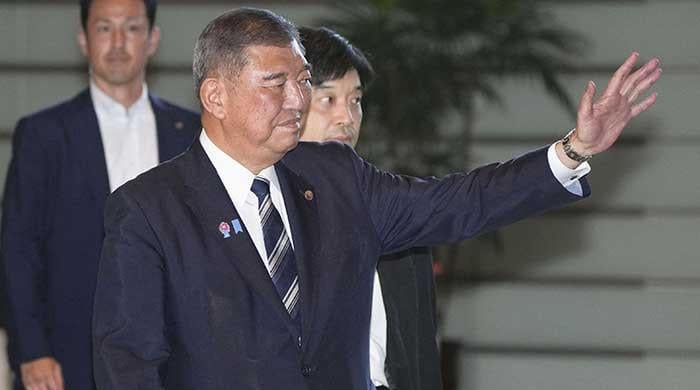
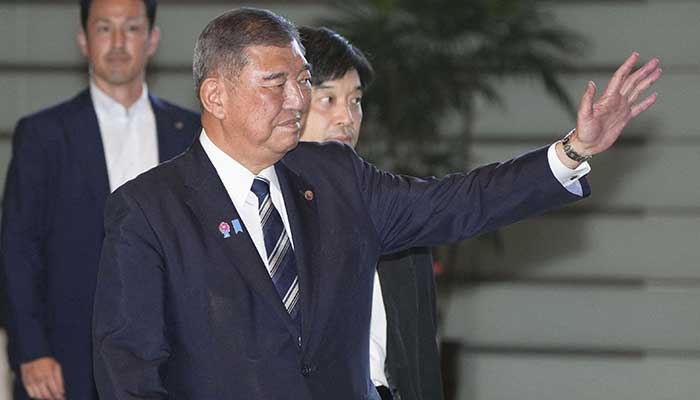
TOKYO: Japanese Prime Minister Shigeru Ishiba said on Sunday he had decided to resign, ushering in a potentially lengthy period of policy paralysis at a shaky moment for the world’s fourth-largest economy.
Ishiba, 68, instructed his Liberal Democratic Party — which has governed Japan for almost all of the post-war era —to hold an emergency leadership race, he told a press conference, adding he would continue his duties until his successor was elected.
Since coming to power less than a year ago, Ishiba has overseen his ruling coalition lose its majorities in elections for both houses of parliament amid voter anger over rising living costs.
Until Sunday, he had refused calls to step down following the latest of those losses in July’s upper house vote.
He had focused instead on ironing out details of a trade deal with the United States on President Donald Trump’s tariffs, which have roiled Japan’s critical automotive industry and cast a shadow over weak growth.
“With Japan having signed the trade agreement and the president having signed the executive order, we have passed a key hurdle,” Ishiba said, his voice seeming to catch with emotion. “I would like to pass the baton to the next generation”.
Concern over political uncertainty led to a sell-off in Japan’s yen currency and its government bonds last week, with the yield on the 30-year bond hitting a record high on Wednesday.
Speculation over Ishiba’s fate was stoked by the LDP’s decision to schedule a vote for Monday on whether to hold an extraordinary leadership election.
Possible successors
While a fresh leadership race could add pain for an economy hit by US tariffs, markets are focusing more on the chance of Ishiba being replaced by an advocate of looser fiscal and monetary policy, such as LDP veteran Sanae Takaichi, who has criticised the Bank of Japan’s interest rate hikes.
Ishiba narrowly defeated Takaichi in last year’s LDP leadership run-off. Shinjiro Koizumi, the telegenic political scion who has gained prominence as Ishiba’s farm minister tasked with trying to cap soaring prices, is another possible successor.
“Given the political pressure mounting on Ishiba after the LDP’s repeated election losses, his resignation was inevitable,” said Kazutaka Maeda, economist at Meiji Yasuda Research Institute.
“As for potential successors, Koizumi and Takaichi are seen as the most likely candidates. While Koizumi is not expected to bring major changes, Takaichi’s stance on expansionary fiscal policy and her cautious approach to interest rate hikes could draw scrutiny from financial markets,” Maeda said.
Since the party does not have a majority in either house, it is not guaranteed that the next LDP president will become prime minister.
Whoever becomes the next leader may choose to call a snap election to seek a mandate, analysts said. While Japan’s opposition remains fractured, the far-right, anti-immigration Sanseito party made big gains in July’s upper house election, bringing once-fringe ideas into the political mainstream.
Nearly 55% of respondents to a poll by Kyodo news agency published on Sunday said there was no need to hold an early election.
Ishiba’s last act as premier will have been to finalise the trade deal with the US last week, under which Japan pledged $550 billion of investments in return for lower tariffs from US President Trump.
- Afshar supports Iran’s govt and its propaganda, says State Dept.
- Official says Afshar’s husband barred from entering US.
- Marco Rubio revoked their lawful permanent resident status.
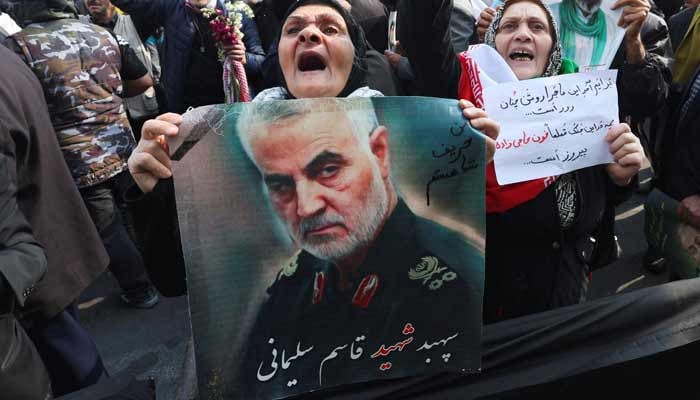
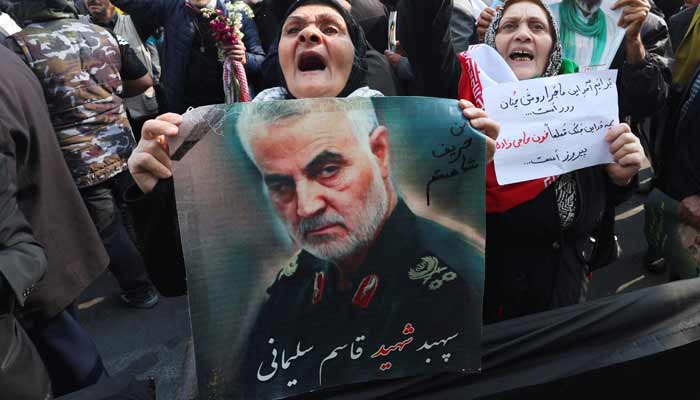
US federal agents have detained the niece and grandniece of late Iranian military commander Qassem Soleimani after Secretary of State Marco Rubio revoked their lawful permanent resident status, the State Department said on Saturday.
“Hamideh Soleimani Afshar and her daughter are now in the custody of US Immigration and Customs Enforcement,” the State Department said in a statement, saying also that Rubio revoked their green cards.
Soleimani was killed in a January 2020 US airstrike in Baghdad during President Donald Trump’s first term in office.
The State Department said Afshar supported Iran’s government and its propaganda. It also said Afshar’s husband was barred from entering the US.
The detention came as the US-Israeli war against Iran entered its sixth week .
The State Department added that earlier this month, Rubio terminated the legal status of Fatemeh Ardeshir Larijani, the daughter of veteran Iranian politician Ali Larijani, and her husband Seyed Kalantar Motamedi. Ardeshir Larijani and Motamedi are no longer in the US and are barred from future entry, according to the State Department.
Ali Larijani, an architect of Iran’s security policy, was killed in mid-March by a US-Israeli air attack.
In his second term in office, Trump’s administration has stepped up deportation attempts against immigrants, calling them threats. Rights advocates have raised concerns about free speech and due process. Many immigrants detained by ICE have been released following court orders.
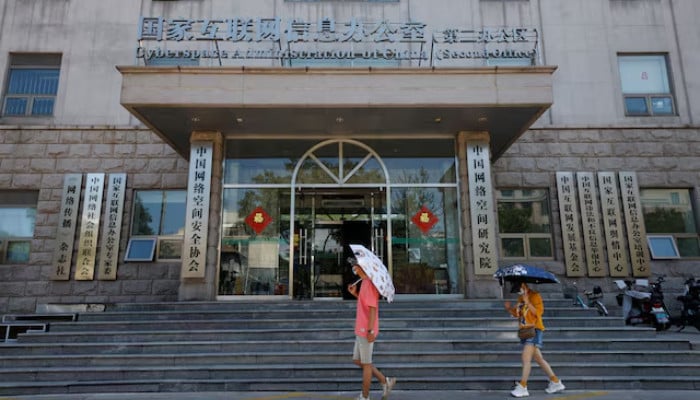
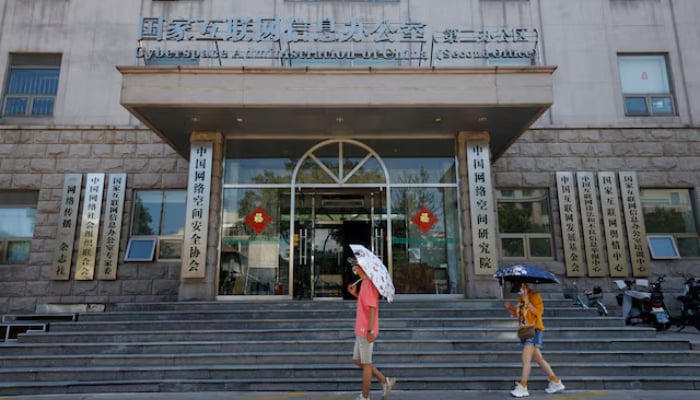
BEIJING: China’s cyberspace regulator issued draft regulations on Friday to oversee the development online of digital humans, requiring clear labelling and banning services that could mislead children or fuel addiction.
The Cyberspace Administration of China’s proposed rules would require prominent “digital human” labels on all virtual human content and prohibit digital humans from providing “virtual intimate relationships” to those under 18, according to rules published for public comment until May 6.
The draft regulations would also ban the use of other people’s personal information to create digital humans without consent, or using virtual humans to bypass identity verification systems, reflecting Beijing’s efforts to maintain control in the face of advances in artificial intelligence.
Digital humans are also prohibited from disseminating content that endangers national security, inciting subversion of state power, promoting secession, or undermining national unity, the draft rules said.
Service providers are advised to prevent and resist content that is sexually suggestive, depicts horror, cruelty or incites discrimination based on ethnicity or region, according to the document. Providers are also encouraged to take necessary measures to intervene and provide professional assistance when users exhibit suicidal or self-harming tendencies.
China made clear its ambitions to aggressively adopt AI throughout its economy in the new five-year policy blueprint issued last month. The push comes alongside tightening governance in the booming industry to ensure safety and alignment with the country’s socialist values.
The new rules aim to fill a gap in governance in the digital human sector, setting clear red lines for the healthy development of the industry, according to an analysis published on the cyberspace regulator’s website.
“The governance of digital virtual humans is no longer merely an issue of industry norms; rather, it has become a strategic scientific problem that concerns the security of cyberspace, public interests, and the high-quality development of the digital economy,” it added.
- Habshan plant fires disrupt energy operations.
- Ajban debris incident injures 12 civilians.
- Air defences intercept missiles, drones daily.
DUBAI: The death toll in the United Arab Emirates (UAE) has risen to 10, including foreign nationals, with more than 200 people injured since the Middle East conflict began on February 28, as falling debris from intercepted Iranian missiles and drones continues to hit civilian and industrial areas.
Among the deceased are four Pakistani nationals, highlighting the broader impact on expatriate communities.
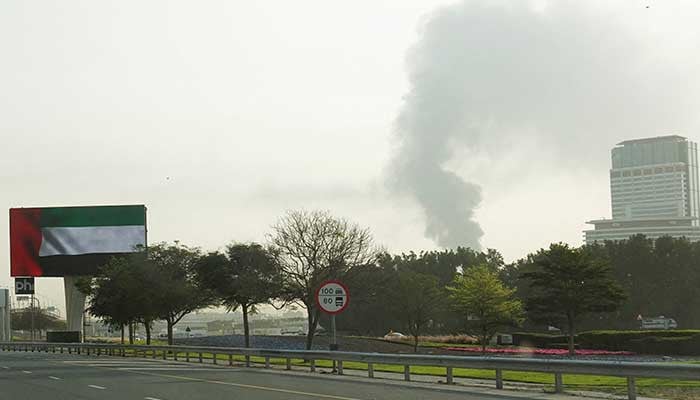
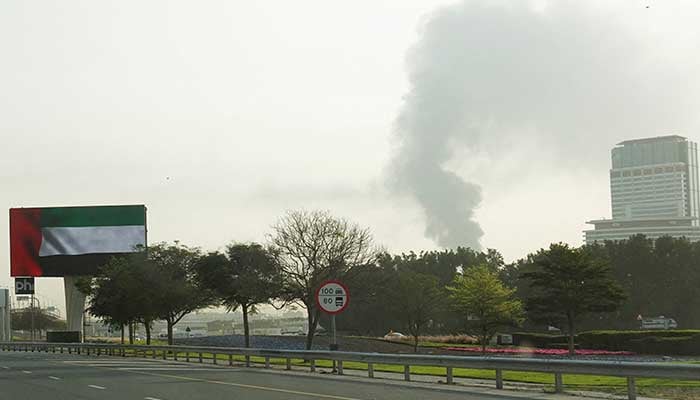
In the latest incident, debris from intercepted aerial threats triggered fires at the Habshan gas processing plant, a key energy facility in south-west Abu Dhabi.
An Egyptian national was killed during evacuation, while four others — including two Pakistanis — sustained minor injuries, according to the Abu Dhabi Media Office. Operations at the plant have been suspended, and damage assessments are ongoing.
In a separate incident in Ajban, about 80 kilometres north-east of Abu Dhabi city, debris from intercepted projectiles injured 12 people. Those wounded included nationals from Nepal and India; one individual remains in serious condition, while others suffered minor to moderate injuries.
The UAE Ministry of Defence said its air defence systems intercepted multiple ballistic and cruise missiles, as well as drones launched from Iran in the past 24 hours. While the interceptions prevented potentially larger-scale damage, officials warned that falling debris continues to pose significant risks to populated and industrial zones.
Authorities said missile and drone attacks have been reported on a near-daily basis since the conflict began, increasing pressure on emergency response systems and critical infrastructure.


UConn dispatches Illinois to make third men’s national title game in four years

Geno Auriemma needs to be better than bizarre postgame actions against South Carolina

Blake Lively refuses to back down after claims dropped

-
 Business1 week ago
How do you spot a fake online review?
-

 Sports1 week ago
Illinois defense gets tough, ousts Houston to reach Elite Eight
-

 Entertainment1 week ago
Lee Sang-bo dies at 45: Funeral details revealed
-

 Sports1 week ago
USMNT handed reality check by Doku, Belgium ahead of World Cup
-

 Sports7 days ago
2026 NCAA men’s hockey tournament: Schedule, results
-

 Fashion1 week ago
China rolls out tariff cuts on Congo imports from April 1
-

 Fashion1 week ago
EU apparel imports slump 15.48% YoY in Jan; Bangladesh hardest hit
-
Uncategorized1 week ago
[CinePlex360] Please moderate: “Apple scrapping