

Business
Japan’s rate hike signals new tightening phase | The Express Tribune

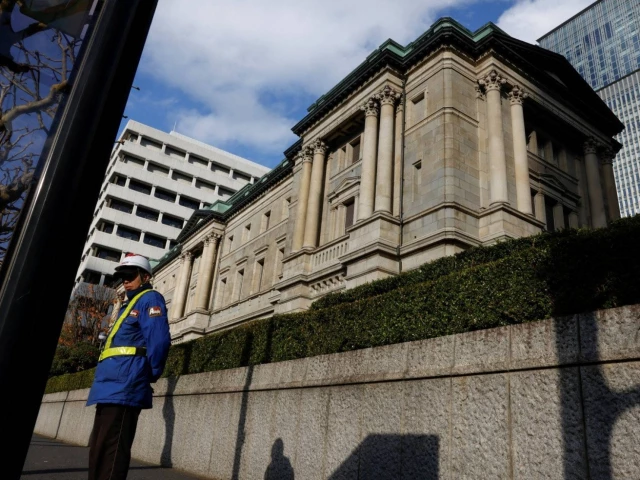
BOJ raises short-term rate to 30-year high, driven by persistent inflation, economic worries
The Bank of Japan (BOJ) has raised its benchmark interest rate to 0.75%, marking its highest level in three decades. The move, which took place after a two-day policy meeting, comes as the country grapples with persistent inflation and concerns about its economic future, the Associated Press (AP) has reported.
The rate hike of 25 basis points follows several previous increases in 2024, culminating in this policy change, which was widely expected by analysts. The BOJ’s decision signals a new phase of monetary tightening after years of ultra-low rates designed to stimulate Japan’s economy. The 0.25-percentage-point hike took the BOJ’s benchmark short-term rate to 0.75%, its highest level since September 1995. It will raise costs for mortgages and other loans. The BOJ also indicated that it might raise rates further in the future, depending on economic conditions.
According to Xinhua news agency, it is the first rate increase since January and also the first under the administration of Prime Minister Sanae Takaichi, who advocated an aggressive fiscal policy and monetary easing.
Reasons for rate cut
The BOJ’s decision to raise rates stems from a combination of economic factors that have pressured the central bank to pivot away from its historically low interest rates.
For years, Japan struggled with deflation, which is when prices fall, leading to reduced consumer spending and investment. In response, the BOJ kept interest rates near zero or negative, hoping to stimulate the economy by encouraging borrowing and spending. However, this strategy has faced challenges, especially with inflation rising faster than expected.
As of November 2024, Japan’s inflation rate was recorded at 3%, above the BOJ’s target of 2%. This sustained inflationary pressure has forced the central bank to act.
BOJ Governor Kazuo Ueda explained that the rate increase aims to ensure inflation remains consistent with the central bank’s 2% target. He added that inflationary pressures had risen moderately, and with the labour market showing signs of improvement, the BOJ could no longer justify maintaining its ultra-loose monetary policy.
However, Ueda stressed that the rate hike is still a cautious step, with real interest rates remaining in negative territory. Since Takaichi took office, the yen has sharply depreciated amid concerns that her expansionary policy would further deteriorate Japan’s fiscal health, prompting the selling of the currency and government bonds.
Implications for economy
The immediate impact of the rate hike was felt in both Japan’s currency and bond markets. The yen briefly weakened against the dollar, falling to the lower 156 range, while the yield on Japan’s 10-year government bonds rose to 2.02%, its highest level since 1999.
Rising bond yields, particularly on long-term government debt, could make borrowing more expensive for both consumers and businesses, potentially slowing economic growth. For Japanese consumers, the rate hike could lead to higher borrowing costs, especially for mortgages and personal loans. The cost of living has already risen in recent months due to higher prices for imported goods like food and energy, exacerbated by the depreciation of the yen.
While the rate hike may support the yen in the long run, providing some relief from inflationary pressures stemming from imports, it could also increase the burden on consumers already struggling with rising costs. On the other hand, the rate increase could offer higher returns on savings deposits, benefiting individuals who have invested in fixed-income assets. However, the potential rise in borrowing costs may slow down consumer spending, a critical engine of Japan’s economic growth.
The BOJ’s decision to raise rates comes at a time when most other major central banks, such as the US Federal Reserve and the European Central Bank, have either paused or begun to cut interest rates to support slowing economies.
While the US and Europe grapple with slower economic growth and the aftermath of the pandemic, Japan’s inflationary pressures and concerns about fiscal health have prompted the BOJ to shift its approach. The weakening yen, which has depreciated against the dollar in recent years, has also contributed to higher inflation in Japan.
Risks and challenges
The decision to raise rates is not without risks. Japan’s economy is still fragile, and the recent GDP contraction of 0.6% in the third quarter of 2025 highlighted the ongoing challenges faced by the country. Rising interest rates could further dampen consumer spending and investment, possibly pushing the economy into a deeper slowdown.
Moreover, Japan’s high levels of public debt, estimated at nearly 230% of GDP, present a big challenge. As borrowing costs rise, the government may face higher costs to service its debt, which could strain fiscal policy.





Business
Rupee rebounds from record low: Currency rises 128 paise to 93.57 against US dollar – The Times of India

Rupee opened the week in green, recovering sharply in early trade after regulatory intervention aimed at curbing banks’ currency exposure. The currency climbed to 93.57 against the US dollar, on Monday, gaining 128 paise from its previous close, after opening at 93.62 in the interbank foreign exchange market. This comes days after the currency had hit a record low of 94.85 on Friday, following a steep fall of 89 paise. The turnaround follows a directive issued by the Reserve Bank of India on March 27, 2026, which placed a cap of $100 million on the Net Open Position (NOP-INR) that banks can hold overnight. Lenders have been asked to comply with the new limit by April 10. Market participants said the move is prompting banks to reassess their positions, particularly those with long dollar holdings in the onshore market. As these positions are reduced, dollar sales are expected to increase, lending short-term support to the rupee. “As banks begin adjusting their positions, they are likely to sell dollars in the market, which can temporarily support the rupee. This creates a phase of relief, driven by position unwinding, not by a major shift in fundamentals, but still meaningful in the near term,” Amit Pabari, Managing Director at CR Forex Advisors told PTI. Even so, the broader environment remains challenging for the Indian currency. The dollar continues to draw strength from safe-haven demand, keeping the dollar index above the 100 mark and restricting any sustained appreciation in the rupee. The dollar index was last seen marginally lower by 0.06% at 100.09. At the same time, rising crude oil prices are adding to pressure, with Brent crude trading 2.16% higher at $115 per barrel in futures. Geopolitical tensions have played a key role in pushing oil prices higher amid concerns over supply disruptions. “For India, this is critical. Being a major oil importer, higher oil prices increase dollar demand, which directly puts pressure on the rupee,” Pabari said. He added that despite the current relief, the rupee’s outlook remains sensitive to global factors such as oil price movements, geopolitical developments and the strength of the US dollar. Dalal Street also reflected the cautious mood, with the BSE Sensex dropping 1,191.24 points to 72,391.98 in early deals, and the Nifty 50 declining 349.45 points to 22,470.15. Foreign institutional investors were also seen pulling back, having sold equities worth Rs 4,367.30 crore on a net basis on Friday, as per exchange data.
MUMBAI: RBI has placed consumer empowerment through portable bank accounts and cross-border efficiency at the centre of its Payments Vision 2028, signalling a new focus to improving user experience and reducing friction in money movement.While customers can freely open accounts with any bank, savings accounts are considered ‘sticky’ because of multiple standing instruction to send and receive money into the specified account. RBI’s work around this stickiness is a Payments Switching Service where all standing instructions are centralised. This centralised interface will allow customers to view and migrate all payment mandates, both incoming and outgoingreducing dependence on individual banks making accounts portable.A key thrust is on making cross-border payments faster, cheaper and more accessible. The central bank plans a comprehensive review of the ecosystem to identify regulatory, operational and technological bottlenecks, aligning domestic systems with global standards shaped by the G20.Proposed changes aim to lower entry barriers for firms, promote innovation and reduce delays in cross-border fund transfers, even as India has been signing agreements with other countries to link domestic fast payments systems and enable CBDC acceptance.
NEW DELHI: WTO talks in Cameroon are deadlocked over a moratorium on e-commerce with the US seeking a long freeze on countries for levying tax on digital downloads and streaming, while India is so far unwilling to agree to this period.Starting from two years, India has indicated its willingness to go up to four, with the WTO draft proposing a moratorium until June 2031, two persons familiar with the ministerial level talks told TOI.But before ministers move to that the US and Brazil have to reach common ground on farm sector liberalisation. Talks between the US and Brazil are currently underway before ministers move to the issue of e-commerce. Here, the African countries have also demanded support and technical assistance before a final text can be agreed to.For over 25 years, members of the WTO have upheld a rule — no customs duties on electronic transmissions. While India has used it as a bargaining chip at every ministerial meeting.For India, the big win is managing to keep investment facilitation for development out of the WTO framework despite standing alone at the end. It has demanded “guardrails” against using plurilaterals, which are agreements between a select group of member nations. India has indicated its willingness to support discussions on reforms but it is the US which is stalling issues despite in the past signalling that WTO wasn’t moving anywhere.Talks are expected to conclude in the next few hours as ministers have started leaving Cameroon and the ministerial meeting is not going into extra time.


Riyadh opens rail freight route linking eastern ports to Jordan border

Iran deal may be finalized ‘soon’, says Trump

UK consumer inflation remains flat at 3% YoY in Feb

-

 Politics6 days ago
Afghanistan announces release of detained US citizen
-

 Tech6 days ago
Can a Home Appliance Fix the Problem of Soft-Plastic Waste?
-

 Sports1 week ago
Men’s March Madness live tracker: Updates on Saturday’s games
-
 Business6 days ago
Property Play: Home flippers see smallest profits since the Great Recession, real estate data firm says
-

 Entertainment6 days ago
UN warns migratory freshwater fish numbers are spiralling
-

 Sports1 week ago
Arne Slot: Liverpool’s defeat to Brighton ‘hurts a lot’
-

 Sports6 days ago
Broadcast industry CEO says consolidation is ‘essential’ to compete for NFL soaring media rights prices
-
 Business6 days ago
Gold prices soar in Pakistan – SUCH TV