

Tech
JBL’s Grip Is a Bluetooth Speaker With Lava Lamp Vibes

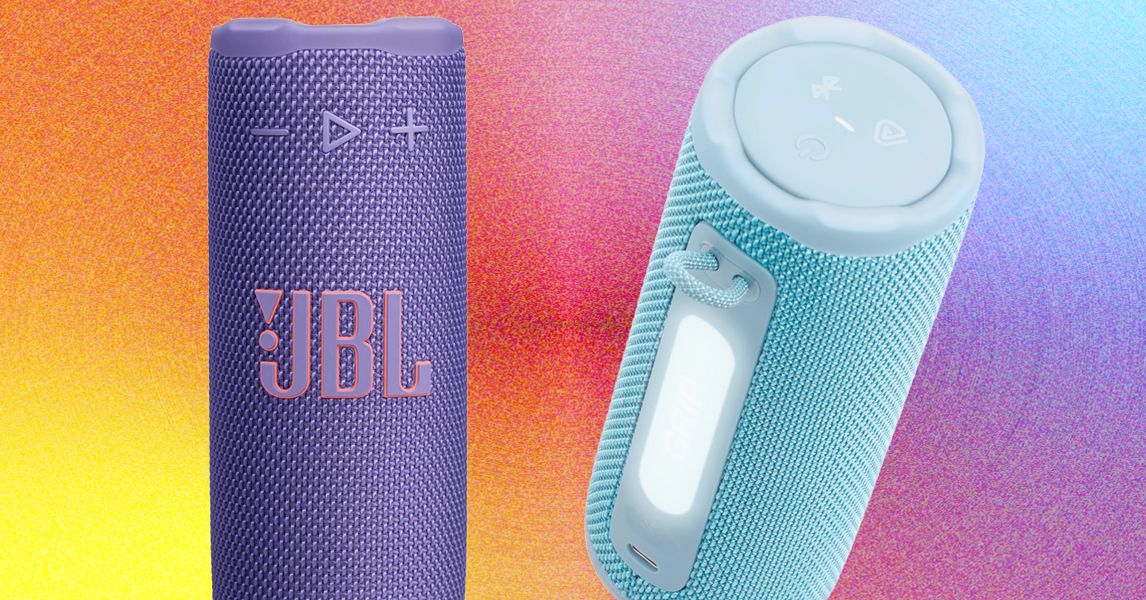
Despite the Grip’s smaller size, JBL pegs battery life on both speakers at the same 14-hour maximum. On the Grip at least, that might be overpromising. When I ran the speaker at 50% volume continuously, I only got about 10.5 hours. Using JBL’s PlayTime Boost mode could help if you really need to eke out a few more songs.
The familial similarities continue with the Grip’s ability to withstand the elements. Like the Flip 7, it’s rated IP68, making it effectively dust and waterproof. They’re both shockproof, and yet the Grip is arguably more durable since both ends are solid silicone rubber. The Flip’s ends are passive radiators, which could be permanently damaged by a sharp object. Just keep in mind that while the Grip won’t be bothered by immersion in water, it doesn’t float. So if you toss it in the pool, someone will be diving in to retrieve it.
The one difference between these siblings (other than size, power, and the Grip’s built-in light show) is orientation. While the Flip 7 can be used vertically or horizontally, the Grip is designed for vertical use only. Not that there’s anything stopping you from laying it down — the built-in loop will keep it from rolling too far. But the controls are positioned for easier access when standing up, and the rear LED panel will end up partially obscured if the speaker is sideways.
Photograph: Simon Cohen
Lava Lamp
Speaking of that LED panel, it’s a fun add-on, but don’t expect it to light up your get-together. There are four colors to choose from (purple, red, an icy-blue, and a vibrant blue) controlled by the JBL Portables app, and five display modes: four that animate and one that’s static. At full brightness, it can’t compete with a well-lit room, and outdoors, you’ll definitely have to keep your expectations in check. Still, in a darkened room, with the Grip near a corner or wall, it can create a subtle mood. Unfortunately, the four animated modes (Bounce, Trim, Switch, and Neon) don’t sync to your music, so the effect is more lava lamp than disco light. If you want a beat-coordinated light show, consider the excellent Tribit StormBox Mini+ ($40), which has a top-mounted LED ring with this feature.
The one thing about the LED panel that perplexes me is its placement: it’s on the “rear” of the speaker. If you can see the light show, it means the Grip’s single racetrack driver is facing away from you. It’s not a massive difference in sound quality, but it’s noticeable, especially in the upper midranges and highs, which lose some of their clarity.









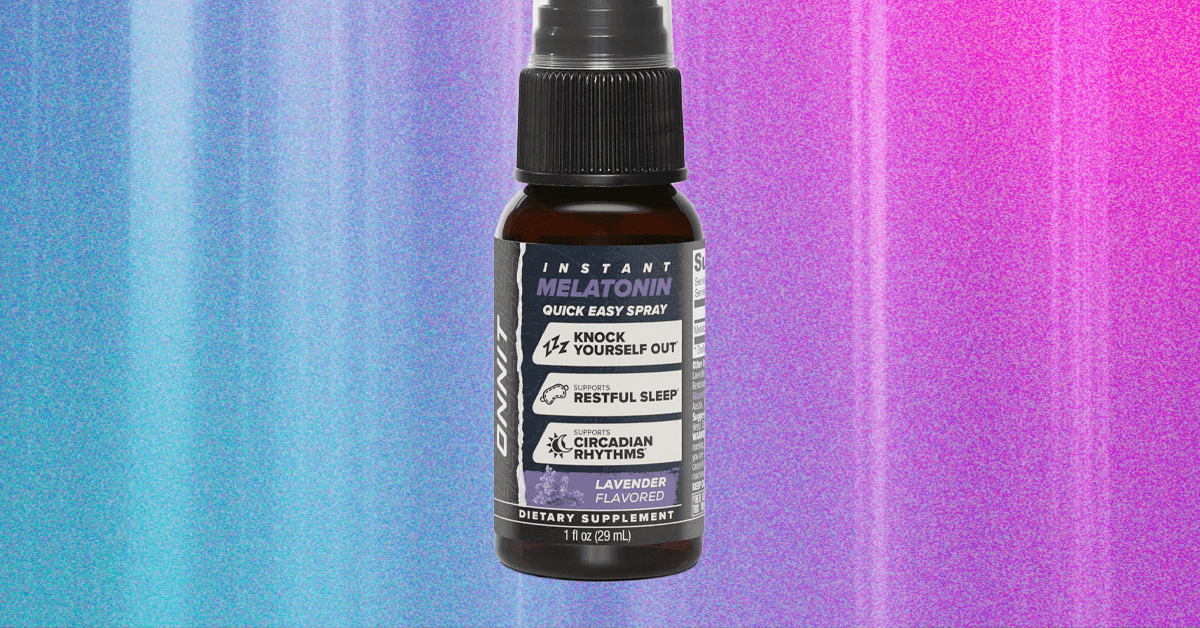
I’ve always approached taking melatonin supplements with skepticism. They seem to help every once in a while, but your brain is already making melatonin. Beyond that, I am not a fan of the sickly-sweet tablets, gummies, and other forms of melatonin I’ve come across. No one wants a bad taste in their mouth when they’re supposed to be drifting off to sleep.
This is where Onnit’s Instant Melatonin Spray comes in. Fellow WIRED reviewer Molly Higgins first gave it a go, and reported back favorably. This spray comes in two flavors, lavender and mint, and is sweetened with stevia. While I wouldn’t consider it a gourmet taste, I appreciate that it leans more into herbal components known for sleep and relaxation.
-
Photograph: Molly Higgins
-

Onnit
Instant Melatonin Mist
Keep in mind that melatonin is meant to be a sleep aid, not a cure-all. That being said, one serving of this spray has 3 milligrams of melatonin, which takes about six pumps to dispense. While 3 milligrams may not seem like a lot to really kickstart your circadian rhythm, it’s actually the ideal dosage to get your brain’s wind-down process kicked off. Some people can do more (but don’t go over 10 milligrams!), some less, but based on what experts have relayed to me, this is the preferable amount.
A couple of reminders for any supplement: consult your doctor if and when you want to incorporate anything, melatonin included, into your nighttime regimen. Your healthcare provider can help confirm that you’re not on any medications where adding a sleep aid or supplement wouldn’t feel as effective. Onnit’s Instant Melatonin Spray is International Genetically Modified Organism Evaluation and Notification certified (IGEN) to verify that it uses truly non-GMO ingredients.
Apart from that, there may be some trial and error on the ideal amount for you, and how much time it takes to kick in. Some may feel the melatonin sooner than others. For my colleague Molly, it took about an hour. Melatonin can’t do all the heavy lifting, so make sure you’re ready to go to bed when you take it, and that your sleep space is set up for sleep success, down to your mattress, sheets, and pillows.
There’s a lever on the back for this compression mechanism that you manually press down and a separate button to open the dustbin at the bottom. You can use the compression lever when it’s both closed and open. It did help compress the hair and dust while I was vacuuming, helping me see if I had really filled the bin, though at a certain point it doesn’t compress much more. It was helpful to push debris out if needed too, versus the times I’ve had to stick my hand in both the Dyson and Shark to get the stuck hair and dust out. Dyson has this same feature on the Piston Animal V16, which is due out this year, so I’ll be curious to see which mechanism is better engineered.
Bendable Winner: Shark
Photograph: Nena Farrell
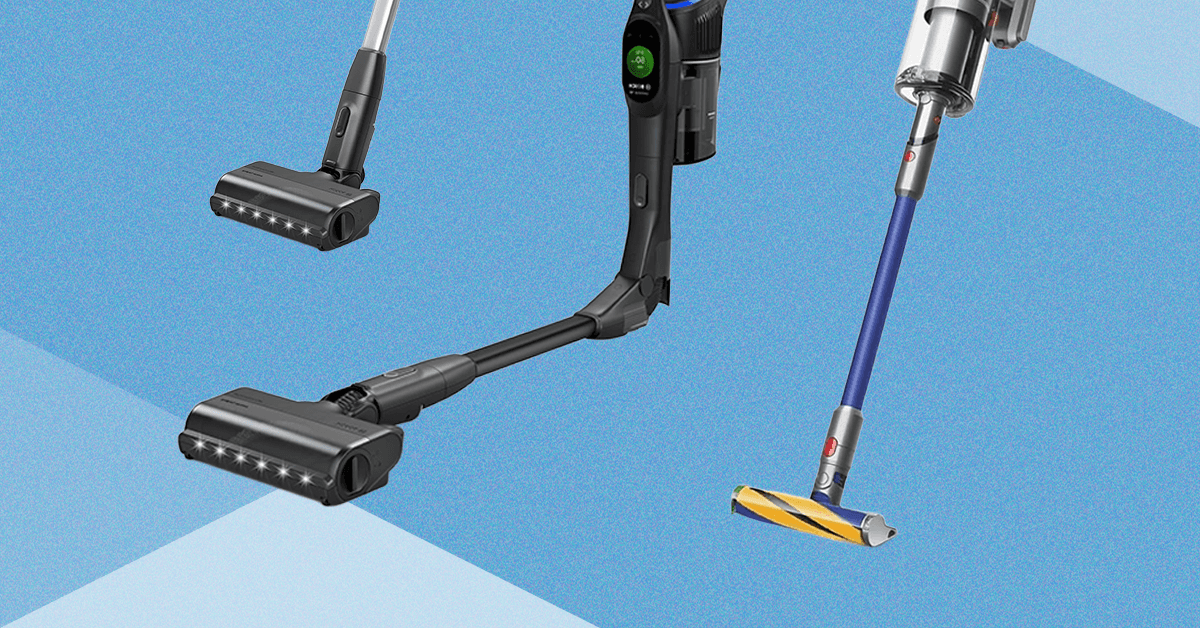
If you’re looking for a vacuum that can bend to reach under furniture, I prefer the Shark to the Bosch. Both have a similar mechanism and feel, but the Bosch tended to push debris around when I was using it with an active bend, while the Shark managed to vacuum up debris I couldn’t get with the Bosch without lifting it and placing it on top of that particular debris (in this case, rogue cat kibble).
Accessory Winner: Dyson
Dyson pulls ahead because the Dyson Gen5 Detect comes with three attachments and two heads. You’ll get a Motorbar head, a Fluffy Optic head, a hair tool, a combination tool, and a dusting and crevice tool that’s actually built into the stick tube. I love that it’s built into the vacuum so that it’s one less separate attachment to carry around, and it makes me more likely to use it.
But Bosch does well in this area, too. You’ll get an upholstery nozzle, a furniture brush, and a crevice nozzle. It’s one more attachment than you’ll get with Shark, and Bosch also includes a wall mount that you can wire the charging cord into for storage and charging, and you can mount two attachments on it. But I will say, I like that Shark includes a simple tote bag to store the attachments in. The rest of my attachments are in plastic bags for each vacuum, and keeping track of attachments is the most annoying part of a cordless vacuum.
Build Winner: Tie

Photograph: Nena Farrell
All three of these vacuums have a good build quality, but each one feels like it focuses on something different. Bosch feels the lightest of the three and stands up the easiest on its own, but all three do need something to lean against to stay upright. The Dyson is the worst at this; it also needs a ledge or table wedged under the canister, or it’ll roll forward and tip over. The Bosch has a sleek black look and a colorful LED screen that will show you a picture of carpet or hardwood depending on what mode it’s vacuuming in. The vacuum head itself feels like the lightest plastic of the bunch, though.
Tech
Right-Wing Gun Enthusiasts and Extremists Are Working Overtime to Justify Alex Pretti’s Killing

Brandon Herrera, a prominent gun influencer with over 4 million followers on YouTube, said in a video posted this week that while it was unfortunate that Pretti died, ultimately the fault was his own.
“Pretti didn’t deserve to die, but it also wasn’t just a baseless execution,” Herrera said, adding without evidence that Pretti’s purpose was to disrupt ICE operations. “If you’re interfering with arrests and things like that, that’s a crime. If you get in the fucking officer’s way, that will probably be escalated to physical force, whether it’s arresting you or just getting you the fuck out of the way, which then can lead to a tussle, which, if you’re armed, can lead to a fatal shooting.” He described the situation as “lawful but awful.”
Herrera was joined in the video by former police officer and fellow gun influencer Cody Garrett, known online as Donut Operator.
Both men took the opportunity to deride immigrants, with Herrera saying “every news outlet is going to jump onto this because it’s current thing and they’re going to ignore the 12 drunk drivers who killed you know, American citizens yesterday that were all illegals or H-1Bs or whatever.”
Herrera also referenced his “friend” Kyle Rittenhouse, who has become central to much of the debate about the shooting.
On August 25, 2020, Rittenhouse, who was 17 at the time, traveled from his home in Illinois to a protest in Kenosha, Wisconsin, brandishing an AR-15-style rifle, claiming he was there to protect local businesses. He killed two people and shot another in the arm that night.
Critics of ICE’s actions in Minneapolis quickly highlighted what they saw as the hypocrisy of the right’s defense of Rittenhouse and attacks on Pretti.
“Kyle Rittenhouse was a conservative hero for walking into a protest actually brandishing a weapon, but this guy who had a legal permit to carry and already had had his gun removed is to some people an instigator, when he was actually going to help a woman,” Jessica Tarlov, a Democratic strategist, said on Fox News this week.
Rittenhouse also waded into the debate, writing on X: “The correct way to approach law enforcement when armed,” above a picture of himself with his hands up in front of police after he killed two people. He added in another post that “ICE messed up.”
The claim that Pretti was to blame was repeated in private Facebook groups run by armed militias, according to data shared with WIRED by the Tech Transparency Project, as well as on extremist Telegram channels.
“I’m sorry for him and his family,” one member of a Facebook group called American Patriots wrote. “My question though, why did he go to these riots armed with a gun and extra magazines if he wasn’t planning on using them?”
Some extremist groups, such as the far-right Boogaloo movement, have been highly critical of the administration’s comments on being armed at a protest.
“To the ‘dont bring a gun to a protest’ crowd, fuck you,” one member of a private Boogaloo group wrote on Facebook this week. “To the fucking turn coats thinking disarming is the answer and dont think it would happen to you as well, fuck you. To the federal government who I’ve watched murder citizens just for saying no to them, fuck you. Shall not be infringed.”


Budget 2026 Live Updates: TCS On Overseas Tour Packages Slashed To 2%; TDS On Education LRS Eased

Trump says India will buy oil from Venezuela, not Iran

Budget 2026: Cabinet gives green signal to Union Budget 2026–27

-
 Business1 week ago
Success Story: This IITian Failed 17 Times Before Building A ₹40,000 Crore Giant
-

 Fashion1 week ago
South Korea tilts sourcing towards China as apparel imports shift
-

 Sports1 week ago
Transfer rumors, news: Saudi league eyes Salah, Vinícius Jr. plus 50 more
-

 Sports5 days ago
PSL 11: Local players’ category renewals unveiled ahead of auction
-

 Entertainment1 week ago
Three dead after suicide blast targets peace committee leader’s home in DI Khan
-

 Sports1 week ago
Wanted Olympian-turned-fugitive Ryan Wedding in custody, sources say
-
 Tech1 week ago
Strap One of Our Favorite Action Cameras to Your Helmet or a Floaty
-

 Tech1 week ago
This Mega Snowstorm Will Be a Test for the US Supply Chain