

Business
Jet fuel supply concerns grow as war with Iran drags on, airlines cut flights


A Lufthansa passenger aircraft is parked at a gate while a SASCA fuel truck services it on the apron at Toulouse Blagnac Airport in Blagnac in Occitanie in France on March 15, 2026.
Isabelle Souriment | AFP | Getty Images
The surging price of jet fuel isn’t the airline industry’s only problem. Now, it’s whether it will have enough.
Since the U.S. and Israel attacked Iran on Feb. 28, the price of jet fuel in the U.S. has nearly doubled, going from $2.50 a gallon on Feb. 27 to $4.88 a gallon on April 2, with the increases even sharper in other regions. The effective closure of the Strait of Hormuz is choking off supplies of both crude and refined products like jet fuel, further driving up the price.
That’s forcing airlines to consider cutting flights, especially overseas.
Carsten Spohr, CEO of Germany’s Deutsche Lufthansa, told employees in a webcast last week that the carrier is assigning teams to come up with contingency plans because of the war in the Middle East, including for drops in demand or a lack of jet fuel, a spokesman said. Those plans could include grounding some of its aircraft.
The U.S. produces a lot of jet fuel and isn’t as exposed as other regions like Europe and parts of Asia are in comparison. But aircraft fill up locally, so some U.S. airlines could face shortages on international trips.
United Airlines CEO Scott Kirby told reporters late last month that the carrier, which has the most service to Asia among U.S. airlines, would have to cut back its flights there. He also said it’s “not impossible” that airlines collectively would have to reduce service in that region.
He noted that as the price of jet fuel goes up, it could be more acute in parts of the U.S. that aren’t as connected by pipelines.
“There’s not enough refining capacity, and so fuel price prior to this and going forward is more susceptible to supply weakness on the West Coast than anywhere else in the country,” he said.
Kirby told employees earlier in March that the airline is preparing for oil to stay above $100 a barrel through 2027 and is pruning some of its flights in the near term.
“To be clear, nothing changes about our longer-term plans for aircraft deliveries or total capacity for 2027 and beyond, but there’s no point in burning cash in the near term on flying that just can’t absorb these fuel costs,” he said in a March 20 message to employees.
Travel demand wild card
Airlines overall are pruning some flights for the coming months, though they often adjust schedules throughout the year to match demand, aircraft availability or other complications.
Domestic capacity in the second quarter for U.S. carriers is up 2.1%, down from previous plans of 2.3% growth, while total capacity is set to rise 1.1%, down from 2.4% on the week ended March 20, according to a Monday report from UBS.
“We expect more capacity cuts in the coming weeks,” UBS said.
So far, airline executives have said that travel demand is strong, but the fuel strains and price spikes are a headache for carriers and passengers alike as the peak summer travel season approaches.
Fuel is generally airlines’ biggest expense after labor, and carriers are already raising airfare and fees like for checked luggage to make up for the added cost.
Investors will be listening for more insights into how the jet fuel spike could affect the industry as airline earnings kick off Wednesday with Delta Air Lines. That carrier owns a refinery, so it could benefit from jet fuel sales.
Delta on Tuesday raised checked bag fees, joining JetBlue Airways and United, which did the same last week.
The strong demand, particularly compared with this time last year could further insulate airlines, at least in the U.S. Last year, bookings fell as President Donald Trump‘s trade war kicked off with steep tariffs, markets sank and layoffs within the government, led by Elon Musk‘s so-called Department of Government Efficiency, took effect.
“The positive commentary on demand is still holding, but fuel at $4/4.50 [a gallon] for longer isn’t something airlines can pass through,” said Savanthi Syth, an airline analyst at Raymond James. “If fuel stays high, you’ll just see capacity being cut.”
Airlines could see a bigger problem if higher gasoline prices and other pressures on consumers cause a pullback in spending.
“We’re watching the airlines very closely right now. This doesn’t have to go on too terribly long at these [fuel price] levels before you start to see potential for ratings pressures,” said Joseph Rohlena, senior director at Fitch Ratings who covers U.S. airlines.






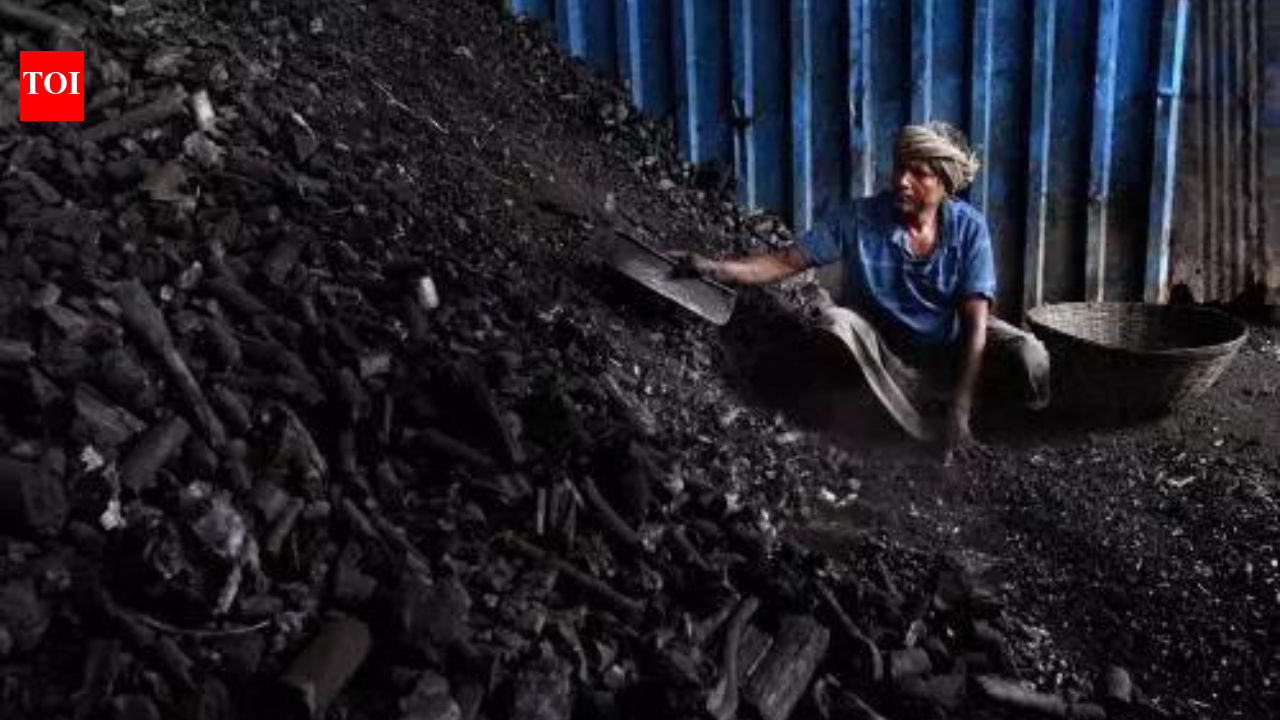
India’s coal imports declined 8.5 per cent to 16.55 million tonnes in February, as record domestic stockpiles and firm global prices reduced reliance on overseas supplies, according to data compiled by mjunction services, reported PTI. The country’s coal imports are expected to remain subdued in the near term, with domestic miners stepping up efforts to liquidate accumulated inventories.
“A record high stockpile of domestic coal and firm seaborne prices resulted in a drop in thermal coal imports. With the domestic miners endeavouring to liquidate stocks, the weak trend in imports is expected to continue during the current month,” mjunction MD & CEO Vinaya Varma said.Coal imports had stood at 18.10 million tonnes in February 2024-25, while on a month-on-month basis, imports remained largely flat compared with 16.64 million tonnes in January 2026.Of the total imports in February, non-coking coal shipments fell to 9.80 million tonnes from 11.08 million tonnes a year ago. In contrast, coking coal imports rose to 3.92 million tonnes from 3.79 million tonnes in the same period.During April-February 2025-26, non-coking coal imports stood at 137.60 million tonnes, lower than 152.26 million tonnes in the corresponding period of 2024-25. However, coking coal imports increased to 54.31 million tonnes from 49.62 million tonnes.The decline in imports comes amid a broader push to strengthen domestic coal production under the government’s self-reliance initiative.India’s total coal output rose to 1,047.523 million tonnes in 2024-25 from 997.826 million tonnes in the previous year, registering a growth of about 4.98 per cent.Coal inventories at thermal power plants remained comfortable at around 55 million tonnes as of Tuesday, sufficient for about 24 days of uninterrupted power generation based on average consumption over the past week, a senior coal ministry official said.The stock position indicates “absolute no deficit” on the power generation side, coal Joint Secretary Sanjeev Kumar Kassi said, addressing concerns over potential shortages amid rising summer demand.“Coal stock at the power plants is around 55 million tonnes as of yesterday (Tuesday), adequate for 24 days of uninterrupted power generation based on the average consumption of the last seven days. So we have absolutely no deficit at the power generation side,” he said at an inter-ministerial briefing on developments in West Asia.The official added that domestic coal production is currently matching consumption levels.
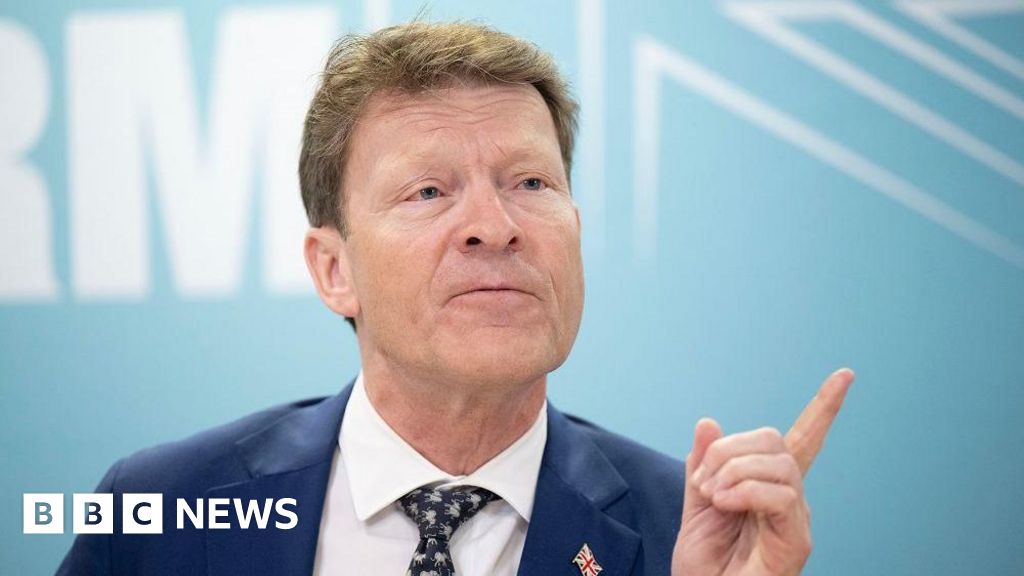
At a press conference in Westminster, Tice said Quidnet Reit Ltd was “a UK company paying UK tax in accordance with UK laws”, adding there was no “obligation” to pay the maximum tax required and suggested few people would likely take such a decision.
Business
India ramps up 5-kg LPG supply, accelerates PNG rollout amid Middle East crisis – The Times of India

India has stepped up supply of smaller 5-kg LPG cylinders and accelerated the rollout of piped natural gas (PNG) connections to manage fuel availability amid disruptions caused by the Middle East conflict, with domestic supplies remaining stable, according to an official statement.More than 13 lakh 5-kg free trade LPG cylinders have been sold since March 23, with daily sales crossing 1 lakh units, as authorities expand access for migrant workers and low-income consumers, PTI reported.At the same time, over 4.24 lakh new PNG connections have been activated since March, with more than 30,000 consumers surrendering LPG connections as part of the transition.The six-week-long war in West Asia has disrupted global energy supply. India relied on import of half of its crude oil, 40 per cent of its gas and 85-90 per cent of LPG from the region, all of which have been impacted.While the country has managed to offset the shortfall in crude oil by sourcing from other regions, LPG supplies have been affected.The government has prioritised LPG supply to domestic households, reducing supplies to commercial users such as hotels and restaurants. To bridge the gap for those without subsidised LPG connections, it has increased supply of market-priced 5-kg cylinders.As against daily sales of about 77,000 5-kg cylinders in February before the crisis, volumes have crossed over 1 lakh per day in the last two to three weeks.The statement said domestic LPG supplies remain stable overall, with no reported stockouts and over 52 lakh cylinders delivered on April 11.Online bookings account for about 98 per cent of demand, while delivery authentication systems now cover 93 per cent of transactions to curb diversion.Commercial LPG availability has been restored to about 70 per cent of pre-crisis levels, supported by targeted allocations and increased supply measures. State-run oil marketing companies — Indian Oil Corporation, Bharat Petroleum Corporation Limited and Hindustan Petroleum Corporation Limited — are coordinating with state governments to streamline distribution.The government has prioritised natural gas allocation, ensuring full supply for household PNG and CNG transport, while increasing supplies to fertiliser plants to about 95 per cent of recent average consumption, aided by additional LNG imports.City gas distributors, including Indraprastha Gas Ltd, Mahanagar Gas Ltd, and GAIL Gas Ltd, have been directed to prioritise PNG connections for commercial users, as part of a broader push to shift demand away from LPG.Refineries are operating at high utilisation with adequate crude inventories, and domestic LPG production has been stepped up. To shield consumers from rising global oil prices, the government has cut excise duty on petrol and diesel by Rs 10 per litre, while raising export levies on diesel and aviation turbine fuel to ensure domestic availability, the statement added.


NBA intel: What execs, coaches, scouts are watching this postseason

Illinois star freshman Keaton Wagler to declare for NBA draft

Pete Davidson shares bad habit comic left after daughter’s birth

-

 Fashion5 days ago
India’s exports face reset as EU links trade to carbon metrics: EY
-

 Politics1 week ago
Trump confirms rescue of airman whose F-15 was downed in Iran
-

 Tech6 days ago
A Single Strike Won’t Shut Off the Gulf’s Desalination System
-

 Entertainment5 days ago
Queen Elizabeth II emotional message for Archie, Lilibet sparks speculation
-

 Fashion5 days ago
ICE cotton hits 11-month high on drought concerns, demand boost
-

 Sports1 week ago
Transfer rumors, news: Arsenal eye Bayer Leverkusen forward
-

 Tech4 days ago
This AI Button Wearable From Ex-Apple Engineers Looks Like an iPod Shuffle
-

 Entertainment1 week ago
Netflix renews ‘Love on the Spectrum’ for season 5