

Fashion
Jonathan Anderson rewires Dior for pre-fall 2026 collection


Published
December 17, 2025
Two months after unveiling his debut women’s collection for Dior with a horror movie, Jonathan Anderson has continued his reimagining of the house by rewiring multiple codes for its pre-fall 2026 collection.
Terming it “a wardrobe suited for many characters and occasions,” the Fall 2026 collection unveiled Wednesday certainly widens Dior’s range, even as it plays around with Dior classics.
Hence the Bar jacket is cropped or soft, and even enlarged into a coat. While pants are cut large, slouchy, and flopping around the feet; finished in multiple reverse pleats and made in silk denim.
Denim, lovingly worn and distressed, is the material used for elongated floor length skirts made with classic jean pockets. Paired with speckled charcoal cardigans, they will surely ignite a major trend.

Once again, the Northern Irish designer favours big bold bows, seen in silk chemises with cuffs extending well beyond the fingertips.
“The power of fashion to rewire the everyday is affirmed, at once softly and boldly,” insists Dior in its release.
Unveiled in a photo shoot beneath Paris’ Pont Neuf, the collection will hit retail shelves in April 2026.

Anderson’s experiments in draping continue at pace. Rouching, looping, and adding huge side bows to buttinette moiré dresses or satin gowns. One dress in seaweed green is an updated version of the look Mia Goth wore to the Governor’s Ball in Los Angeles recently. It can now be seen at La Galerie Dior, the brand’s in-house museum beside its Avenue Montaigne flagship. Placed beside diaphanous looks for Dior designed by Jonathan and worn by the likes of Catherine O’Hara and Jisoo.
The new Dior couturier certainly does not lack courage and chutzpah when it comes to draping, even if his experiments at the French house still feel like a work in progress.

In fact, what often works best pre-fall are the simplest pieces: from the rather divine flared skirt and tank combined with a matte green silk blouse to the black silk culottes paired with an ecru blouse, finished with a looped neckline from which hangs a golden tassel pendant. The epitome of contemporary chic and cool.
In terms of accessories, pre-fall appeared packed with winners, from the Dior Cigale in pale gold crocodile to Dior Crunchy in blue fabric. Open toe pumps, loafers, or mules often featuring complimentary C and D buckles on each side, all had poise and pizzazz. Clever must-haves for sure.

Everything in pre-fall was designed to “allow a number of attitudes, prolonging the idea of dressing to become a character of one’s own design,” the house concluded. How true.
Copyright © 2025 FashionNetwork.com All rights reserved.



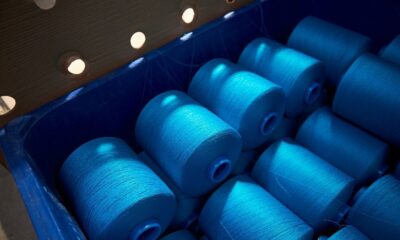


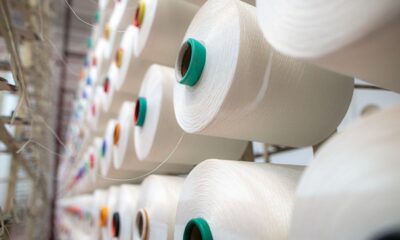


The facility will process natural fibres such as abaca, banana and pineapple into high-quality yarn, addressing long-standing challenges faced by local weavers who have relied on imported materials. This initiative is expected to create new markets for agricultural produce while providing additional income streams for farmers.
The DOST-PTRI, with DOST Region 12, will establish the Regional Yarn Production and Innovation Center in Philippine’s Cotabato to process natural fibres into yarn and support Mindanao’s textile industry.
The facility aims to boost farmer incomes, reduce reliance on imported yarn and strengthen local weaving communities through training, technology transfer and improved supply chain infrastructure.
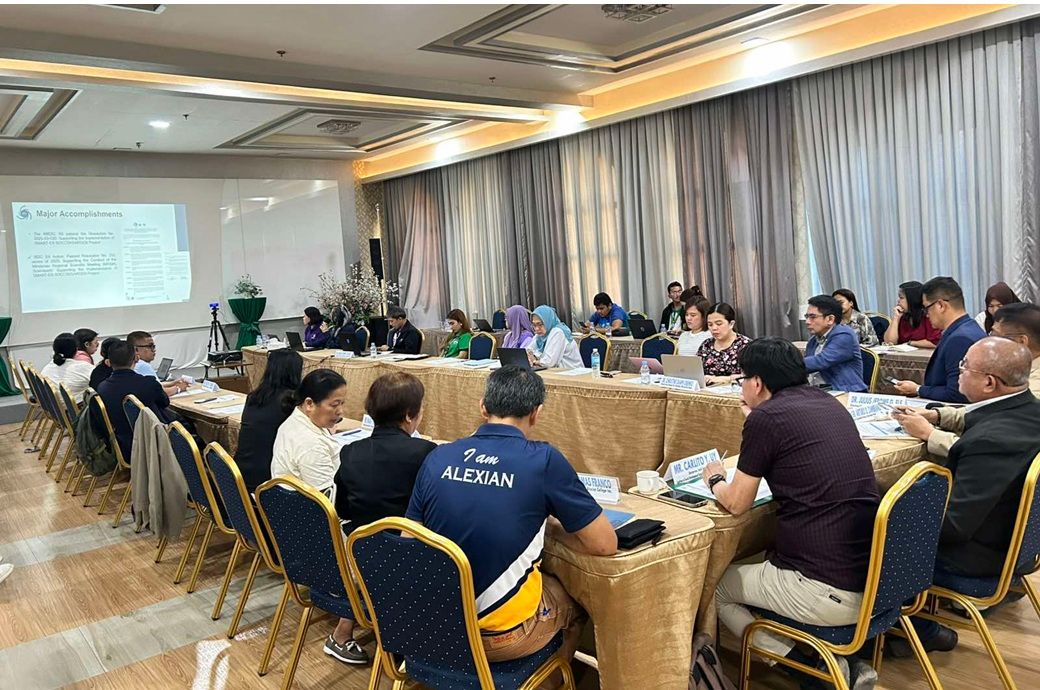
During the first-quarter meeting of the Regional Research, Development, and Innovation Committee, Evangeline Flor P. Manalang, chief science research specialist of DOST-PTRI’s Technical Services Division, stated “The RYPIC will serve as a key facility to process our natural fibers into yarn and open opportunities for skills training among farmers and local stakeholders.” She also emphasised the project’s role in building a sustainable textile ecosystem in Soccsksargen.
The RYPIC complements existing facilities such as the Natural Textile Fiber Innovation Hub at Sultan Kudarat State University and forms part of broader national programmes including the Clothing and Textile Research Innovation and Investment Agenda (CATRINA) and the FRONTIER initiative. These efforts aim to strengthen the domestic textile value chain, reduce reliance on imports and support the government’s push to expand Telang Pinoy, as highlighted by President Ferdinand R. Marcos Jr. in his fourth State of the Nation Address.
Fibre2Fashion News Desk (JP)
International markets remained a key growth driver, with revenue rising 22 per cent, while the Americas saw a marginal 1 per cent decline. Comparable sales increased 2 per cent overall, with a 15 per cent rise internationally offset by a 3 per cent decline in the Americas.
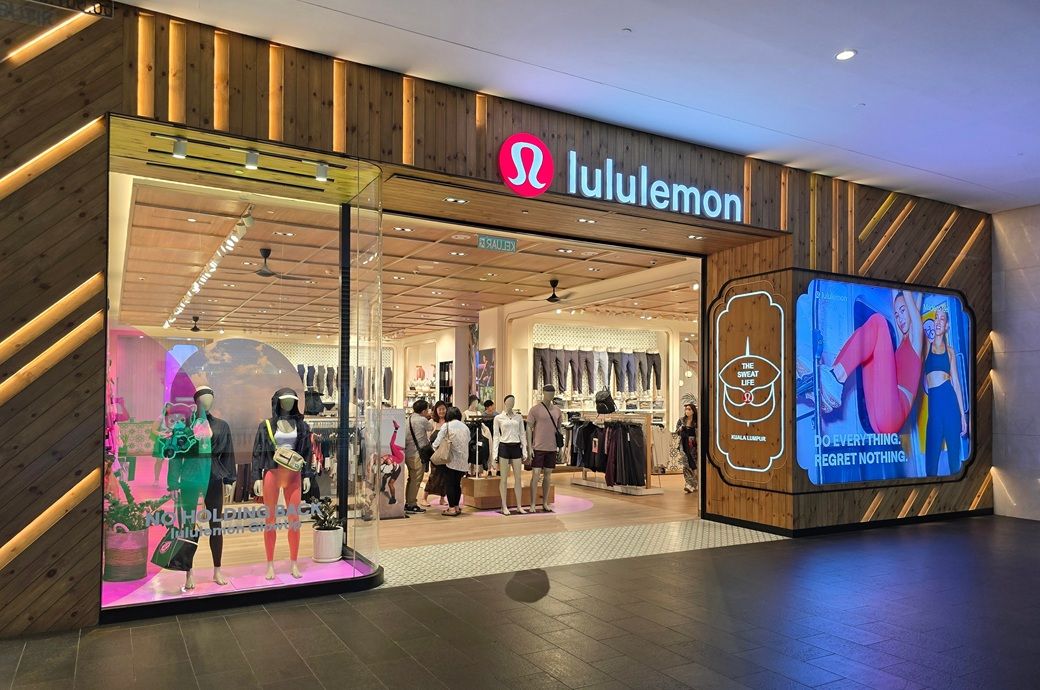
Lululemon has reported revenue of $11.1 billion in FY25, up 5 per cent YoY, driven by 22 per cent international growth despite weak Americas sales.
Margins and profits declined, with EPS falling to $13.26.
The company expanded stores and repurchased shares.
Q4 showed modest growth but weaker profitability.
Lululemon expects FY26 revenue growth of 2-4 per cent amid ongoing macroeconomic challenges.
The gross profit remained flat at $6.3 billion, while gross margin contracted by 260 basis points to 56.6 per cent. Income from operations declined 12 per cent to $2.2 billion, with operating margin narrowing to 19.9 per cent. Diluted earnings per share (EPS) fell to $13.26 from $14.64 in FY24, Lululemon Athletica said in a press release.
The company continued to invest in expansion and shareholder returns, opening 44 net new stores to reach a total of 811 locations and repurchasing 5 million shares worth $1.2 billion. Lululemon ended the year with $1.8 billion in cash and cash equivalents, while inventories rose 18 per cent to $1.7 billion.
Andre Maestrini, interim co-CEO, president, and chief commercial officer at the company, stated, “Throughout 2025, we reported double-digit revenue growth in our international business and are taking action to incorporate learnings from across our regions to drive forward our strategies. Our teams are energised by the initial response to our recent product launches and continue to deliver successful guest activations globally. Looking ahead, we are encouraged by our opportunities in North America and around the world and are grateful to our teams for their commitment to delivering the products and experiences our guests love.”
In the fourth quarter (Q4) of FY25, revenue increased 1 per cent to $3.6 billion, with international growth of 17 per cent offsetting a 4 per cent decline in the Americas. However, profitability weakened, with operating income falling 22 per cent and gross margin declining by 550 basis points to 54.9 per cent. Quarterly diluted EPS dropped to $5.01 from $6.14.
Meghan Frank, interim co-CEO and chief financial officer at Lululemon, stated, “We are pleased to achieve fourth quarter revenue and EPS results ahead of our expectations. As we begin our new fiscal year, we are focused on executing on our action plan, offering new and differentiated products to our guests, and elevating their experiences with lululemon. Driving improvement in our full-price sales over the course of 2026 is also a key priority, particularly in North America, and will enable us to enhance our brand health and deliver long-term growth and value creation for shareholders.”
Looking ahead, Lululemon expects first-quarter FY26 revenue between $2.4 billion and $2.43 billion, with full-year revenue projected at $11.35 billion to $11.5 billion, representing growth of 2 per cent to 4 per cent. Diluted EPS is forecast in the range of $12.1 to $12.3 for FY26, as the company navigates macroeconomic uncertainties and evolving market conditions.
Fibre2Fashion News Desk (SG)

China’s shipment of garments and accessories increased **.* per cent year on year to $**.*** billion from $**.*** billion, driven by steady demand from key markets such as the US and EU, where retailers have begun restocking after cautious inventory management in ****. Meanwhile, exports of textile products, including yarns, fabrics and related articles, rose at a faster pace of **.* per cent to $**.*** billion from $**.*** billion, supported by stronger downstream manufacturing activity across Asia and improved order flows from emerging sourcing hubs.
In February **** alone, exports of textile yarns, fabrics and related articles were valued at $**.*** billion, while garment shipments stood at $**.*** billion, taking the combined monthly total to $**.*** billion. The relatively balanced contribution of textiles and apparel highlights a synchronised recovery across the value chain, from raw materials to finished goods.


Govt orders faster city gas project clearances, hikes commercial LPG allocation to ease supply stress – The Times of India

Transfer rumors, news: Liverpool eye Gordon to replace Gakpo

Prince William ‘finalises’ one crucial detail for coronation ceremony

Tips and Advice for Buying Used or Refurbished Electronics

UAE savings strategies 2026 explained: Best apps, tools, budget rules and smart money hacks to beat rising cost of living in emirates – The Times of India

Iran threatens US-linked oil facilities after Kharg Island bombed

-
 Tech1 week ago
Tips and Advice for Buying Used or Refurbished Electronics
-
Business1 week ago
UAE savings strategies 2026 explained: Best apps, tools, budget rules and smart money hacks to beat rising cost of living in emirates – The Times of India
-
 Politics1 week ago
Iran threatens US-linked oil facilities after Kharg Island bombed
-

 Entertainment7 days ago
Strategic oil stocks to be released ‘immediately’ in Asia and Oceania: IEA
-

 Entertainment1 week ago
Iran at war
-

 Entertainment1 week ago
Meet one of the last true paparazzi
-

 Sports1 week ago
College Basketball Invitational abruptly cancels 2026 tournament
-

 Sports1 week ago
Transfer rumors, news: Real Madrid open to Camavinga exit, as Premier League clubs circle