

Sports
Jorginho slams singer Chappell Roan after ‘upsetting situation’

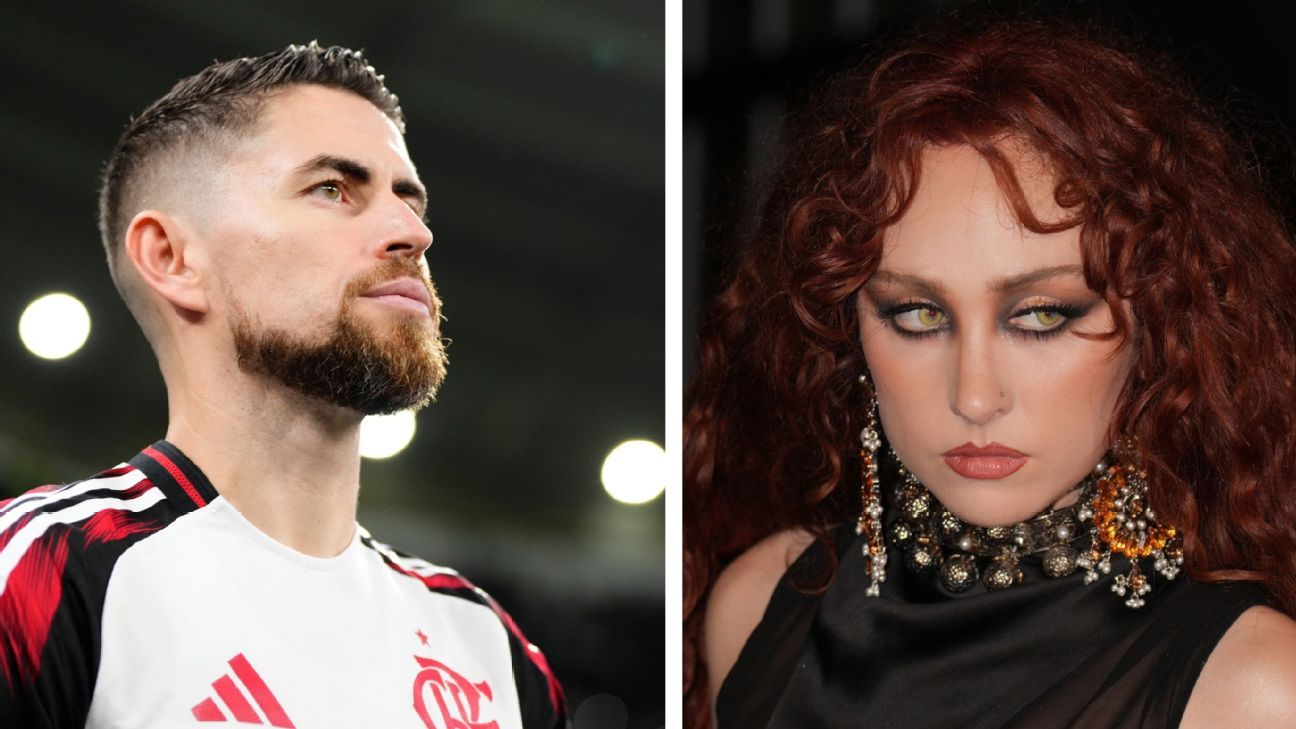
Pop singer Chappell Roan has said she “does not hate children” in response to former Chelsea and Arsenal player Jorginho‘s claim that his family suffered “a deeply upsetting situation” involving a security guard.
Jorginho, who plays for Flamengo in Brazil, posted an Instagram story Saturday explaining that his wife and daughter were in Sao Paulo for the Lollapalooza music festival to see the headlining Roan, whom his daughter is a big fan of.
The midfielder said his wife and daughter were having breakfast in a hotel when they spotted Roan eating at a nearby table and his excited daughter simply walked past her, smiled, and went back to her seat.
“A large security guard came over to their table while they were still having breakfast and began speaking in an extremely aggressive manner to both my wife [Catherine Harding] and my daughter, saying that she shouldn’t allow my daughter to ‘disrespect’ or ‘harass’ other people,” Jorginho wrote in Portuguese.
“He even said he would file a complaint against them with the hotel, while my 11-year-old daughter was sitting there in tears.
“My daughter was extremely shaken and cried a lot.”
The Italy international explained he, too, has received lots of attention in his career and understands respect and boundaries, but this was not an acceptable reaction.
“What happened there was not that. It was just a child admiring someone,” Jorginho said.
“It’s sad to see this kind of treatment coming from those who should understand the importance of fans.
“I sincerely hope this serves as a moment of reflection. No one should have to go through this, especially not a child.”
At the end of his Instagram post, Jorginho wrote: “WITHOUT YOUR FANS, YOU WOULD BE NOTHING. AND TO THE FANS, SHE DOES NOT DESERVE YOUR AFFECTION.”
Roan has since responded with a video explaining her “half of the story” after receiving backlash on social media.
“What happened today with a mother and child who were involved with a security guard who is not my personal security,” Roan said. “I didn’t even see. I didn’t even see a woman and a child. No one came up to me. No one bothered me.”
Roan said she did not ask a security to intervene.
“I do not hate people who are fans of my music,” she said. “I do not hate children. Like, that is crazy.
“I’m sorry to the mother and child that someone was assuming something, that you would do something, and that if you felt uncomfortable that makes me really sad. You did not deserve that.”
Rio de Janeiro’s mayor, Eduardo Cavaliere, has jumped to Jorginho’s defense, writing in a post on X that he intends to ban the singer from performing in his city.
The first weekend of an NCAA tournament replete with future NBA talent is in the books. With eyes set on the national championship game in a few weeks, how did top 2026 draft prospects fare in the early days of March Madness?
No. 1 pick candidates AJ Dybantsa and Darryn Peterson saw their seasons — and likely, college careers — end in early losses. Top prospects, including Cameron Boozer, Darius Acuff Jr., Kingston Flemings and Keaton Wagler, led their schools to the second weekend. And while there were a few surprises, including Florida falling in the second round, a host of other projected first-rounders advanced, setting up a series of marquee prospect matchups this week.
This is not an all-encompassing list, nor a definitive rankings update, but here are my thoughts on how the top names fared and which players helped raise their stock, as well as some interesting stay-or-go decisions that lie ahead.
More NBA draft coverage:
Pre-tournament top 100 rankings | Latest mock draft

Darryn Peterson, SG/PG, Kansas
Pre-tournament rank: No. 1
Peterson’s strange ride at Kansas came to a close Sunday, with the Jayhawks falling to St. John’s at the buzzer and their season ending in the round of 32. His showing in two tournament games was emblematic of his season, with a number of high-level shotmaking flashes interspersed with longer periods of quiet offensive impact.
When Peterson is firing on all cylinders, there’s no better scorer in this draft. There’s a feeling in NBA circles that we didn’t see the best version of him this season, with his various injuries, illness and battles with cramping taking a toll on his availability. He opened up to reporters during the Big 12 tournament about a full-body cramping episode in the preseason that has been a source of his struggles.
The positive development is that Peterson has been available over the past month. What has been concerning, however, has been his inconsistency. He averaged 20.6 points in his past nine games but shot just 38.8% from the field and 31.9% from 3-point range in that small sample. Some of his struggles are contextual: Kansas looked discombobulated offensively at times this season, and he was used as an off-ball focal point with limited playmaking opportunities. It’s worth noting Peterson has largely been a positive defender, with good instincts pursuing the ball and forcing turnovers.
While we can presume he hasn’t been at full strength — and that a reversion to the dynamic downhill athlete he was in high school is certainly on the table in the NBA — the reduced offensive impact in games where his shot wasn’t falling illustrated some potential downside. The question of which version of Peterson an NBA team will ultimately get and how to get him back to that level is a major one for teams to try to answer as they gain access to his medicals and sit with him for interviews during the predraft process.
Thanks to his special shotmaking skills, Peterson’s offensive upside remains best in class, which will keep him a strong candidate for the No. 1 spot as teams envision him in an Anthony Edwards-like role with continued development. But Dybantsa has closed the gap and can be considered a highly likely top pick candidate at this point in time based on conversations I’ve had with NBA executives over the past few weeks.

AJ Dybantsa, SF, BYU
Pre-tournament rank: No. 2
Based on conversations with sources around the NBA in recent weeks, the probability has been tilting toward Dybantsa as the most likely choice as the No. 1 pick.
Dybantsa’s college career presumably came to a close with BYU’s first-round loss to Texas, but not without a quality effort: He played every minute and finished with 37 points on 25 shots, making all 12 of his free throws and grabbing 10 rebounds. BYU had been fighting an uphill battle to win games since Richie Saunders‘ season-ending knee injury last month, and Dybantsa deserves credit for the way he approached things until the end, playing with his typically commendable intensity while seemingly never wearing down. Although nearly all the offense ran through him, he displayed a consistent willingness to trust teammates and made good reads and decisions throughout, despite winding up with zero assists.
Dybantsa also put on a No. 1 pick-worthy showing over three games at the Big 12 tournament, which was attended by several high-level decision-makers. He scored in every way possible while shouldering a heavy workload. His aggressiveness, decision-making and playmaking for teammates improved as the season went on, helping answer some questions about his style of play. With the value of his archetype as a big wing scorer and the questions that have emerged around Peterson, Dybantsa has positioned himself as the simplest choice in the minds of many around the NBA, though the race remains close.
Dybantsa has a lot of room to shore up his ballhandling, perimeter shooting and individual defense, realistic areas for improvement that will determine what level of stardom and team success he’ll ultimately reach. But he will enter the NBA on a growth trajectory and with a number of unteachable positive qualities.

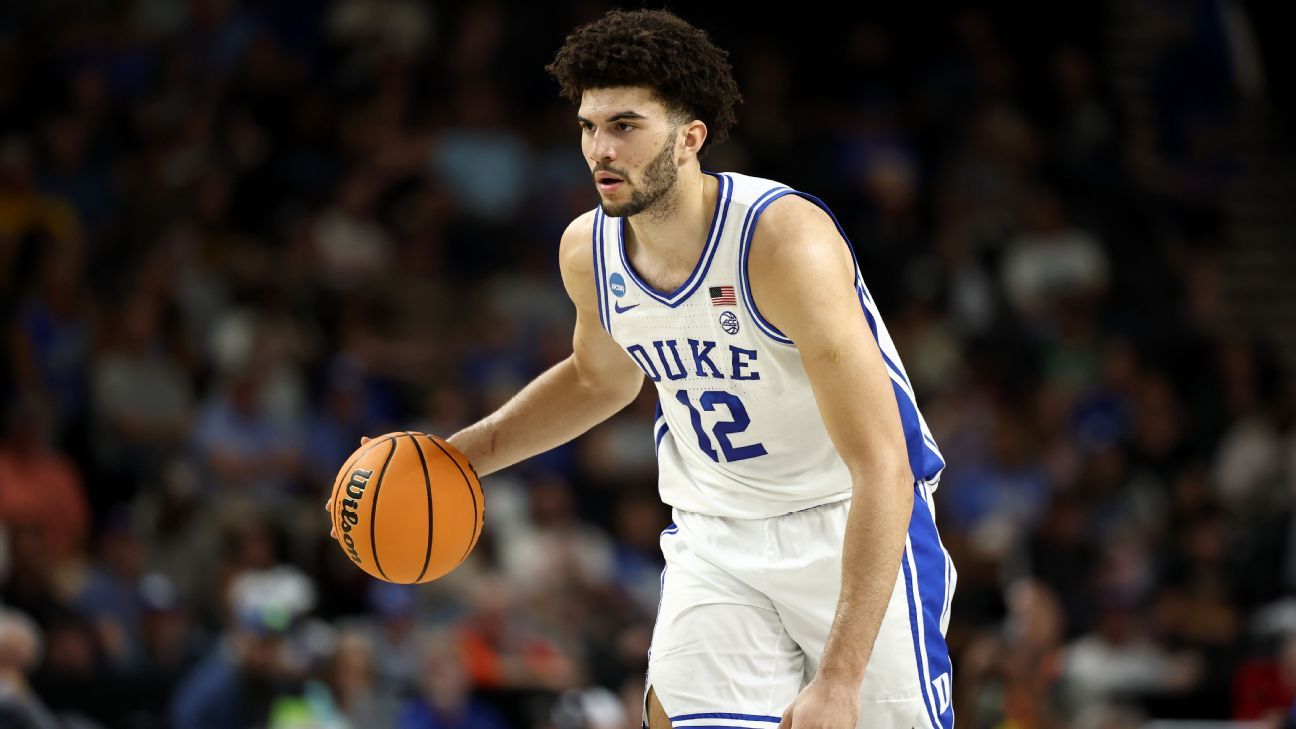
Cameron Boozer, PF, Duke
Pre-tournament rank: No. 3
It was a bumpy road for Boozer and Duke at times to make it to the second weekend, but the Blue Devils survived a scare against Siena and wore down TCU to set up a big-time matchup with St. John’s. While not a serious concern, Boozer atypically struggled against Siena (a game Duke trailed at half by 11). His limited foot speed, lack of vertical lift as a finisher and rim protection were glaring at times, especially without an injured Patrick Ngongba II to clean up behind him. Siena crowded the paint and made Boozer’s life difficult, but at the end of both games, his box score production was there as always.
Although Dybantsa and Peterson are viewed by many around the NBA as stronger candidates, Boozer has his fans and can’t be written off as an option at No. 1. There are varying opinions on the aesthetics of his game, but little argument around the results he achieves. Scouts respect the fact that he boasts the strongest winning résumé of anyone in the draft, having won every possible championship in high school and now in college, with only one remaining. Any team should feel good about selecting a player who has been the central figure in winning games for his entire career to date.
Boozer will match up with a physical St. John’s front line led by Zuby Ejiofor on Friday, in what will be another quality test for Duke. Leading the Devils back to the Final Four would be another notch in his belt.
0:17
Cameron Boozer throws alley-oop to Maliq Brown
Cameron Boozer tosses alley-oop to Maliq Brown, who slams it home to extend Duke’s late lead.
Kingston Flemings, PG, Houston
Pre-tournament rank: No. 5
Flemings continues to be a difference-maker for Houston, impressing scouts with the way he has handled pressure and responsibility on a veteran team that lost in the title game a year ago. While he didn’t individually impress in the first weekend (18 points against Idaho and just nine against Texas A&M), Flemings did his part to limit mistakes, distribute the ball and engineer a pair of blowout wins.
Arguably the most explosive downhill guard in the draft, Houston’s Sweet 16 matchup with Illinois will pit Flemings against fellow top 10 projected pick Keaton Wagler. Flemings has stepped up in critical moments this season and has a great opportunity to show that against a team that can match Houston’s size and physicality.

Keaton Wagler, PG/SG, Illinois
Pre-tournament rank: No. 6
Wagler looked like his usual self in Illinois’ pair of wins over Penn and VCU, games where he wasn’t needed to take over. Part of the appeal with Wagler at the next level is his ability to drive quality offense not only as a ball handler, but as a tall perimeter player (6-foot-6) who can see over the defense and is constantly willing to make the next pass, a quality scouts loved about Tyrese Haliburton at Iowa State. Wagler’s ability to enhance lineups raises his NBA floor significantly, with his upside tied to how efficient and technical he can become as a lead guard.
Houston’s physical defense will pose a particularly stiff test for Wagler, who has at times struggled to finish downhill in traffic and isn’t vertically explosive. He will likely be defended by Emanuel Sharp, who tends to tackle the toughest assignment and will try to crowd his space. Illinois will walk into a hostile environment, drawing the Cougars in Houston in a faux-neutral site scenario. Lifting Illinois to a win with a signature performance in that type of environment would be a significant accomplishment for Wagler as he jockeys for draft position with the other top guards.

Nate Ament, SF/PF, Tennessee
Pre-tournament rank: No. 7
Ament and Tennessee advanced to the Sweet 16 with a pair of wins against Miami (Ohio) and Virginia, but it wasn’t particularly smooth for Ament, who hasn’t been his best since injuring his ankle nearly a month ago. He failed to record a point against Miami and finished with 16 against Virginia, showing tough shotmaking flashes but also struggling at times with his accuracy (4-for-11 from the field).
While a zero-point game on the tournament stage was certainly a tough look, NBA teams understand that the case for Ament involves projecting several years out, something that has helped support his case in the draft lottery during an up-and-down freshman year. He has become somewhat polarizing for scouts, but his functional skills and shooting ability at 6-10 give him a blueprint for a long NBA career, and a pathway to success even if he doesn’t develop into a star.
Tennessee heads into a tough matchup with Iowa State on Friday, a game that will likely require Ament to play at a high level for the Volunteers to tip the scales. The biggest takeaway is that whichever team drafts him will need to have patience and playing time to offer him, as he adds physical strength and polishes his game. He will be far more attractive to teams that can bring him into an optimal development situation.
0:22
Nate Ament elevates for a massive block for the Vols
Tennessee’s Nate Ament shows off his hops as he rises up for an emphatic block in the first half.
Darius Acuff Jr., PG, Arkansas
Pre-tournament rank: No. 8
Acuff’s stellar season continues after leading Arkansas past two double-digit seeds, rolling past Hawai’i and winning a tight game against High Point. Acuff has averaged 30.2 points and 7.2 assists in five postseason games, adding a Sweet 16 berth and SEC tournament title to his impressive accomplishments this season. As he continues to set the bar higher for himself, he’s in a position to potentially hear his name called in the top five on draft night — and will move up on my board in the next top 100 update.
The group of Acuff, Flemings, Wagler and Mikel Brown Jr. (Louisville) gives the lottery real depth at the guard position. Acuff’s body of work, consistency and the fact that he has shown up in big moments have helped his case. His ability to control the ball, elevate in traffic for tough jumpers and find open teammates easily off the bounce gives him real offensive star power to boost his candidacy. He has also been able to limit turnovers (2.2 per game) while handling a 29.3% usage rate.
As is true of many NBA guards of his stature, there’s a likelihood Acuff will need to be insulated defensively. Scouts are curious to see how he measures at the combine, relative to his listed height at 6-3. But his ability to run an offense and his shotmaking chops have given his draft stock some real helium over the past month. A marquee matchup with one of the title favorites in Arizona looms on Thursday, giving Acuff the biggest possible opportunity to make a statement against a team that boasts future NBA talent at every position.
Thomas Haugh, SF/PF, Florida
Pre-tournament rank: No. 11
Florida’s season crashed to a halt in the final seconds of a second-round loss to Iowa, ending the title repeat chances for the Gators’ returning core of Haugh, Alex Condon and Rueben Chinyelu. Haugh finished with 19 points, six rebounds and made 11 of his 12 free throws, but he struggled to connect from long range (2-for-8) down the stretch.
Haugh has remained a candidate for teams starting in the late lottery, as a forward with positional size who makes quick decisions and contributes in all facets of the game, his advanced age (he turns 23 this summer) being the primary drawback in his projection. Florida’s early exit may not impact his standing all that much, with playoff-caliber teams in his range likely drawn to his versatile, plug-and-play profile and strong competitive intangibles.
Yaxel Lendeborg, PF/SF, Michigan
Pre-tournament rank: No. 12
Lendeborg was instrumental in Michigan’s second-round win over Saint Louis, stepping up with 25 points and a trio of 3s. It’s been a stellar year overall for Lendeborg, who has been at the center of Dusty May’s operation with his ability to handle the ball and initiate actions at 6-9, knock down open shots, play in transition and defend all over the floor. He will turn 24 years old before his rookie season, making him exceptionally old for a first-round pick, but the array of things he does well promises to translate into a useful role, even without significant developmental upside left.
Michigan heads next into what figures to be a fast-paced game against Alabama, one that will likely favor Lendeborg’s strengths and ability to impact the flow of a wide-open game with his physicality. Continuing to show up in big spots will help his case, as some scouts still have questions about his motor and tendency to occasionally float.

Braylon Mullins, SG, UConn
Pre-tournament rank: No. 14
Although there remains a lot to like about Mullins in the long term, he often comes up with NBA execs as one of the better candidates to return to college next season and improve his stock. He went 0-for-8 from 3 against Furman in the first round but showed toughness as he bounced back with 17 points (albeit five turnovers) in UConn’s win over UCLA. Although Mullins projects as a quality shooter in the long run — he has a quick release, can shoot off the dribble and plays with impressive confidence for his age — he has made just 33% of his 3s this season.
Mullins hasn’t found the level of consistency that would make him a no-doubt one-and-done level prospect in the present NIL era, which makes the thought of staying in school financially palatable even for higher-level prospects. With returning to school and improving his stock a viable option, considering what projects to be a thinner 2027 draft, Mullins has time left to leave an impression as UConn prepares to face a physical, experienced Michigan State team. The Huskies will need him to knock down shots as the going gets tougher.
Chris Cenac Jr., F/C, Houston
Pre-tournament rank: No. 15
Cenac has developed quite a bit since November, moving up and down our top 100 since. His showing in Houston’s two blowout wins highlighted that growth — he hauled in a season-high 18 rebounds against Idaho, then tallied 17 points with nine rebounds against Texas A&M in the second round. A fluid 6-11 big man with developing offensive skills, the strides Cenac has made in terms of competing on every play and handling physicality bode well for his long-term success in the NBA. Cenac has been asked to play out of position at power forward all season and has worked through some growing pains.
The 19-year-old Cenac will be an intriguing name to follow this spring, with untapped upside and an opportunity to rise in the predraft process, factoring in his youth, tools, trajectory and the dearth of lottery-level center talent. He can continue to showcase his comfort level as a shooter and improved work rate on the inside as the tournament goes on, with Houston heading into a challenging matchup against Illinois’ front line.
Continuing to play well should shore up Cenac’s status, but returning to school for another season could also be a consideration, with a real chance to return and improve his standing further in 2027.
0:16
Chris Cenac Jr. makes the bucket for Houston
Chris Cenac Jr. gets the 2-pointer in the first half vs. Idaho.
Brayden Burries, SG/PG, Arizona
Pre-tournament rank: No. 17
Burries has been a major mover in the second half of the season, looking like a strong lottery candidate on his best nights and emerging as a catalyst for an Arizona team set up for a real bite at the championship. The leading scorer on a balanced offense that features five players in double digits, Burries was instrumental for Arizona on Sunday, with 16 points, nine rebounds and an important late 3 to help the team get past Utah State. While known primarily for his offense, he continues to prove his value defensively and on the glass. A well-rounded profile for a guard who can play with and without the ball.
While Burries has worked his way up the board, scouts are divided on how they view his long-term upside. The question revolves around how much time he’ll ultimately spend operating with the ball, with his 6-4 frame playing up better at the point long term. Sharpening his handle and playmaking skills in the long run will be crucial to make that work, with his success more contingent on strength and craft.
The fact that he’s a whole year older than most of the other top freshmen is another factor, but Burries looks like a future backcourt fixture, and he has worked his way into top 10 discussions, as reflected by our last mock draft. Bigger moments are ahead, as Arizona will have to go through Acuff and Arkansas on Thursday to keep its season rolling.

Christian Anderson, PG, Texas Tech
Pre-tournament rank: No. 19
Texas Tech’s season ended on a low note in a 25-point loss to Alabama, with Anderson playing one of his worst games of the season with just seven points on 2-of-11 shooting. He injured his groin two weeks ago at the Big 12 tournament and likely wasn’t at 100% for the first two rounds, but did a solid job defensively on Labaron Philon Jr. despite the result. Losing in that fashion certainly wasn’t an optimal look, but Anderson helped himself in a major way this season and did well to carry the Red Raiders after JT Toppin‘s season-ending torn ACL in February.
Anderson faces an interesting draft decision, with the option to stay in school, be a major NIL earner and make a run in next year’s thinner point guard class, or capitalize on a stellar sophomore season where he shot 41.5% from 3-point range. A strong predraft process would help to solidify him inside the top 20, with many teams viewing him in a tier of guards that also includes Philon and Bennett Stirtz (Iowa).
Labaron Philon Jr., PG/SG, Alabama
Pre-tournament rank: No. 21
Philon was a mixed bag as he led Alabama back to the Sweet 16, with a strong 29-point showing against Hofstra but a strangely ineffective scoring game in the win over Texas Tech, where he shot just 2-of-12 from the field. To his credit, he played unselfishly, made simple plays and dished out a career-high 12 assists. His mix of positional size and shot-creating chops has held him steady as a projected first-rounder, but scouts are split on how they view his upside in a deep guard class.
Guard play will be the primary advantage Alabama has in the Sweet 16 against Michigan, presenting a real test for Philon as a decision-maker. He’ll need to touch the paint and make plays for teammates against the Wolverines’ NBA-caliber defensive front line, and the mix of coverages he’ll likely see.

Bennett Stirtz, PG, Iowa
Pre-tournament rank: No. 22
Stirtz and his 9-seed Hawkeyes pulled off the signature upset of the tournament thus far, taking down No. 1 seed Florida in the final seconds to advance to the Sweet 16. Though he has struggled to knock down 3s thus far in the tournament (3-for-19 from long range in two wins), Stirtz still made a difference in Iowa’s wins, with his ability to make decisions under pressure and distribute the ball and command attention from defenses a driving factor in the team’s success. He took on his typical workload, logging all 40 minutes in both games, but hasn’t played his best basketball of late.
Scouts are somewhat split on Stirtz’s upside long term, as he’s not the quickest, doesn’t always get great separation from defenders and will likely need a ball screen to create shots at a high level. Still, it seems likely he’ll help an NBA team in some capacity next season. We’ll see whether he can produce better scoring results against a rival in Nebraska that allowed him to score 25 in February but held him to 11 points earlier this month.

Tyler Tanner, Vanderbilt
Pre-tournament rank: No. 28
Tanner’s March heroics were cut short as he narrowly missed lifting Vanderbilt to the Sweet 16 when his half-court go-ahead heave rimmed out as time expired in a thrilling game against Nebraska. The first-team All-SEC guard proved to be one of the biggest stars of the first two rounds, scoring 27 against Nebraska and 26 against McNeese while catalyzing his team on both ends of the floor.
Although he’s listed at just 6-foot, Tanner is a twitchy athlete and tough competitor who impacts the game on both ends and proved himself every step of the way this season. There’s little question about Tanner’s talent, as a guard who can create his own shot and make teammates better in spite of his stature. Still, the majority of guards his size struggle defensively in the NBA and wind up better suited for specialized roles.
Tanner’s impressive trajectory gives him draft momentum and an opportunity to capitalize on an outstanding season. But the unusual depth at his position (seven point guards sit ahead of him in the top 100) should also make returning to college, where he would be a major NIL earner and among the faces of the sport, likely a very attractive consideration. His chances of earning a first-round slot might be stronger a year from now.
Alex Karaban, F, UConn
Pre-tournament rank: No. 30
Karaban upheld his reputation as one of college basketball’s most reliable winners, scoring 22 points against Furman and a career-high 27 in a huge moment against UCLA to send UConn back to the Sweet 16. While not typically a player who takes over as a scorer, Karaban sent a reminder to NBA teams of what he’s capable of when he lets it fly with confidence, making four 3s in each game.
It’s easy to see Karaban drawing strong consideration from playoff-level teams late in the first round. He is a player who could rise up the board as other prospects return to school. Although he’ll turn 24 this year, he’s the most experienced player in the draft, and should be able to step in and boost an NBA rotation immediately. He rarely takes a bad shot, is an excellent ball mover and has always made the most of his own athletic limitations with smart defensive positioning and toughness.
Karaban will try to extend his decorated career as UConn heads into a Sweet 16 game against Michigan State.
0:16
Alex Karaban’s 3-pointer has UConn rolling
UConn’s Alex Karaban knocks down a corner 3-pointer to get the Huskies rolling in the second half.
Aday Mara, C, Michigan
Pre-tournament rank: No. 32
The Wolverines have leaned on Mara and his unique skill set in the postseason, and he has played his best basketball of the season down the stretch, averaging 16.4 points, 6.8 rebounds, three assists and 3.2 blocks over his past five games, including the Big Ten tournament. Mara has rejuvenated his stock as a prospect after two years at UCLA and has showcased the mix of 7-3 height, passing instincts and interior touch (67% from the field) that initially put him on the NBA’s radar. While he’s a poor free throw shooter at 54.5%, watching him shoot in warmups does leave hope of developing a spot-up 3. Defensively, he has been sufficient walling off the paint and blocking shots with the sheer size to deter drivers, if not the speed to guard away from the rim.
Although he’s not an outstanding mover and has pronounced weaknesses, 7-footers with Mara’s skill level, coordination and ability to process the entire floor don’t come around in every draft. With NBA teams trending back toward having size on the floor, there’s a place for Mara if a team can optimize his strengths.
Mara has eligibility remaining, but a deep Michigan tournament run might create an opportunity to capitalize on a resounding bounce-back season.

Zuby Ejiofor, F/C, St. John’s
Pre-tournament rank: No. 36
Ejiofor has been on quite a roll as the central figure on a St. John’s team that has lost just twice since the start of the calendar year, following up a Big East championship (19 points, nine rebounds and seven blocks in the title game against UConn) with a strong NCAA tournament showing so far. His ability to impact both ends of the floor with relentless energy helped tilt a nail-biting win against Kansas, with 18 points and nine rebounds to send the Red Storm to a Sweet 16 matchup with Duke.
While Ejiofor is undersized for his position by NBA standards at his listed 6-9, it’s hard not to appreciate his reliability, maturity and all-out style. He has proved to be a smart passer who can help move the ball around, and continues to develop a passable spot-up jumper (29.6% from 3) that would go a long way for him in the pros.
He has helped himself quite a bit this season, solidifying his reputation as a player who will likely get the most out of his ability at the next level, and as a candidate to ultimately land in the first round as other prospects in his range and above eventually return to college. The NBA will keep a close eye on his matchup with Boozer this week.
0:16
Zuby Ejiofer gets the huge denial for St. John’s
Zuby Ejiofor protects the paint and swats a shot against the glass.
Alex Condon, F/C, Florida
Pre-tournament rank: No. 38
Purely from a draft perspective, Florida’s early exit creates some lost opportunity for the Gators’ prospects, but it’s worth underscoring how well Condon played over the past month, averaging 19.3 points, 6.1 rebounds and 2.7 assists in his final 10 games. He scored 21 points in the loss to Iowa and totaled 12 assists between Florida’s two tournament games.
Condon is a fluid mover for his size who has given Florida real versatility on both ends, with the ability to play make for others out of screens and dribble handoffs, defend both fours and fives and play in transition. His motor and willingness to play physically on the interior make him well suited for an eventual NBA role. While he showed real growth offensively this season, Condon didn’t show progress as a perimeter shooter (17% from 3, 64.9% from the foul line), an area NBA scouts view as critical to maximizing his outlook.
Condon can return to Florida for his senior year, where he’d be on the short list of top players in college basketball and a major NIL earner. Or he can opt to test again the draft, where he’d have an opportunity to improve his stock in the predraft process.

Allen Graves, F/C, Santa Clara
Pre-tournament rank: Not ranked
Graves, the West Coast Conference Freshman of the Year, has made a strong case for himself after entering the season off the NBA radar. He helped drive winning and provided a strong analytic impact (12.7 box-plus minus) while coming off the bench for Santa Clara this season, making a sleeper case for NBA teams to consider. He struggled with foul trouble in a first-round loss to Kentucky, but finished with 17 points and seven rebounds, and hit a clutch 3 to put Santa Clara up near the end of regulation.
Graves is a smart defender and physical interior player with length and passing chops, but also a below-average run-jump athlete for his position. He’ll need to focus on improving his body and expanding his offensive impact to maximize his eventual NBA chances. But the small plays he makes on both ends, coupled with 40.7% 3-point shooting, offer intrigue as a power forward who can help blend lineups.
While it may benefit Graves to spend another year in college, where he’s expected to be a top transfer portal target if he chooses, there’s enough NBA interest for him to land in guaranteed-deal territory if he puts together a strong predraft process.
March Madness is one of the best sporting events. It brings us upsets, storylines and magic for three glorious weekends of win-or-go-home college basketball. When “One Shining Moment” plays at the end of the tournament, even the most stoic fan can be moved to tears.
But for all of the celebrations for the winners, there has to be someone who loses — a team that walks off the court stunned, jerseys and towels covering tears. And behind every one of those heartbroken teams is a fan base with high expectations and disappointment about the early exit.
Is it possible to truly measure the level of pain a team and its fans feel after a loss in the NCAA tournament? As a Mets, Jets and 76ers fan, I’m well-versed in sports misery and consider myself equipped with enough firsthand knowledge to compile this ranking of just that, from least to most devastating.
Every team’s exit is categorized into one of eight tiers:
-
Just happy to be here: Self-explanatory.
-
Such a tease: This is for the seeds who made us do a double take at the scoreboard a few times before the expected conclusion eventually played out, usually in blowout fashion.
-
Here’s your participation trophy: There was a reasonable chance to advance, but in the end these teams never really were a threat.
-
Silver linings playbook: The losses here weren’t ideal, but there’s still something positive to take away from the experience.
-
So close, yet so far: The teams that were in it for a majority of the game, even if the final score didn’t show it.
-
We’re not mad, just disappointed: For the flat-out underperformers.
-
Emotional roller coaster: They had us at the edge of our seat and biting our nails.
-
… What just happened?! Reserved for the most painful finishes.
The rankings and tiers are based on pre-tournament expectations, peak win probability (according to ESPN Analytics), and other notable storylines or circumstances. With over half the field eliminated after the first weekend, who had the most heartbreak?
Tiers:
Just happy to be here | Such a tease |
Here’s your participation trophy |
Silver linings playbook | So close, yet so far |
We’re not mad, just disappointed | Emotional roller coaster |
What just happened?!
Just happy to be here

52. Lehigh Mountain Hawks (16-seed, South)
How they lost: 67-55 to 16-seed Prairie View A&M in the First Four
Peak win probability: 77% with 5:06 left in first half, leading by 7
Lehigh was making its first NCAA tournament appearance since 2012, when CJ McCollum shocked the world as the 15-seed Hawks toppled Duke. Simply returning to the Dance was enough. Remember, Lehigh didn’t win the Patriot League regular-season title but instead went on a three-game run to win the conference tournament. That will ease the sorrow of scoring just 19 points in a 21-minute span across both halves of the First Four loss.

51. Idaho Vandals (15-seed, South)
How they lost: 78-47 to 2-seed Houston in the first round
Peak win probability: 3% with 15:24 left in first half, leading by 3
The good news: Idaho scored 15 points in the first eight minutes against a vaunted Houston Cougars defense. Not a bad start! The bad news: The Vandals scored 32 points in the final 32 minutes against a vaunted Houston Cougars defense. It was still a great March for Idaho, which finished seventh in the Big Sky and rattled off four wins to take the conference’s automatic bid to the NCAA tournament.
50. Prairie View A&M Panthers (16-seed, South)
How they lost: 114-55 to 1-seed Florida in the first round
Peak win probability: 0.9% with 13:41 left in first half, tied at 15
To say the Panthers were never in the game would be an understatement. But they were never expected to be in it. Winning a First Four game brings money to the school and its conference (which is why 16-seeds play in that round instead of only the last at-large teams in the field), so anything beyond that is simply playing with house money. Prairie View fans would do well to ignore the 45-6 run Florida went on in the first half, as well as the 59-point margin that ranks as the second largest in tournament history.

49. Long Island University Sharks (16-seed, West)
How they lost: 92-58 to 1-seed Arizona in the first round
Peak win probability: 1% just 34 seconds into the game, tied at 0
The Sharks made their first NCAA tournament appearance since 2018 — when they lost in the First Four — and their first appearance in the round of 64 since 2013. After winning just three games in Rod Strickland’s first year at the helm, LIU improved to seven wins in 2024, 17 last season and 24 this season. This is a perfect example of a team that already capped off a successful season before the tournament.

48. Queens University Royals (15-seed, West)
How they lost: 104-71 to 2-seed Purdue in the first round
Peak win probability: 2% with 2:57 left in first half, trailing by 5
Here’s your trivia for the day: Queens University is not located in the NYC borough where the Mets play; the school is named after the nickname for Charlotte, North Carolina, where it’s located: Queen City. You might not have known this because 2025-26 was the Royals’ first season of eligibility for the NCAA tournament after reclassifying from Division II — and they made it! One of the best stories entering the tournament even played competitively for the first half, down just 35-30 to the Boilermakers with three minutes to go before halftime.

47. Tennessee State Tigers (15-seed, Midwest)
How they lost: 108-74 to 2-seed Iowa State in the first round
Peak win probability: 2% with 15:18 left in first half, trailing by 2
To be fair to the Tigers, they simply don’t play a style of basketball that lends itself to massive upsets. Ideally, teams that play slow and limit possessions while attempting lots of 3-point shots allow for the most variance within a 40-minute span. Tennessee State played at a top-30 pace this season but attempted shots from behind the arc at a bottom-20 rate nationally. Iowa State put away the Tigers early, going on a 23-0 run. That said, Nolan Smith still had a successful first season in Nashville, and things are only pointing up.

46. North Dakota State Bison (14-seed, East)
How they lost: 92-67 to 3-seed Michigan State in the first round
Peak win probability: 9% with 16:26 left in first half, leading by 3
The Bison would have loved to tack on an upset win to yet another triumphant season in the Summit League, but that was unlikely once the bracket was revealed and their opponent was set. For reference, Tom Izzo has lost just one first-round game as the better seed in the past 20 years. But North Dakota State can rest on the laurels of a program-record 27 wins since moving to Division I. Keep an eye on the Bison next season, as they could potentially return all but one rotation player.

45. Miami (Ohio) RedHawks (11-seed, Midwest)
How they lost: 78-56 to 6-seed Tennessee in the first round
Peak win probability: 19% with 17:21 left in first half, leading by 4
The placement of this loss was one of the most difficult decisions — just as including Miami in the field was for the selection committee. I’m going to try not to wax poetic about scheduling, records, Auburn, WAB, who’s deserving and who’s good, etc. — although it’s a discussion I’d love to have with anyone who’s interested. But at the end of the day, even the most fervent Miami haters claimed the RedHawks should be placed in the First Four to beat another bubble team and prove they earned their tournament bid. Well, they did exactly that, picking apart SMU to advance and face a top-20 Tennessee outfit. An undefeated regular season will live forever, and an NCAA tournament win against an equal opponent is validation that a blowout loss to the Vols won’t blemish.

44. UMBC Retrievers (16-seed, Midwest)
How they lost: 86-83 to 16-seed Howard in the First Four
Peak win probability: 66% just 44 seconds into the game, leading 4-0
Sure, some alums and fans of chaos would have loved to see UMBC in another matchup against a 1-seed Goliath. But Ryan Odom took his coaching talents to Charlottesville in 2021, and the Retrievers will have to settle for simply an appearance in the NCAA tournament — their first since that magical 2018 season. UMBC did pull within one possession late against Howard in the First Four, but a last-second heave smacked the backboard, to no avail.

Such a tease

43. Penn Quakers (14-seed, South)
How they lost: 105-70 to 3-seed Illinois in the first round
Peak win probability: 5% with 17:49 left in first half, leading 4-0
If you went to bed around 11:00 p.m. ET on the first night of the opening round, you might have noticed Penn was hanging around with Illinois. The Quakers made the first two baskets of the game and were within two possessions as halftime approached. Unfortunately for them, Illinois did Illinois things and scored 65 points in the second half. TJ Power couldn’t carry over the magic from his 44-point output in the conference title game, and the Ivy Leaguers did in fact go gently into that good night.

42. Howard Bison (16-seed, Midwest)
How they lost: 101-80 to 1-seed Michigan in the first round
Peak win probability: 3% with 19:27 left in second half, trailing by 2
Howard never led in this one and lost by 20. But scoreboard watchers likely kept checking in to make sure nothing interesting developed, because the Bison kept it within 10 for the majority of the game. They even had a chance to take the lead against the 1-seed Wolverines shortly after halftime! Couple that with a First Four win, and there’s not much to complain about in D.C.

41. Hofstra Pride (13-seed, Midwest)
How they lost: 90-70 to 4-seed Alabama in the first round
Peak win probability: 41% with 5:17 left in first half, leading by 9
The Pride should be … proud (pun unintended) of their effort in the tournament, hanging with an elite SEC team in Alabama that reached its fourth straight Sweet 16. Think about it: The Tide’s second-round opponent, Texas Tech, was never remotely close in their game; meanwhile, Hofstra actually led by 10 early on. But, Alabama puts up enough 3s that eventually they will start going in — and a five-point game with just under five minutes to go quickly ballooned into a 19-point margin. Hofstra’s nonconference wins against Pitt and Syracuse in December should help the March medicine go down.

40. Kennesaw State Owls (14-seed, West)
How they lost: 73-64 to 3-seed Gonzaga in the first round
Peak win probability: 15% with 2:44 left in first half, leading by 4
The Owls led for the majority of the first half and, even after the Zags pulled ahead, got within a single point shortly after halftime. But, let’s be honest, Gonzaga never truly had to sweat. It would have been a stunning development for a Kennesaw State team that finished outside the top five in a middling Conference USA, with a 10-10 league record. Two NCAA tournament berths in the past four seasons after never going dancing prior, though? That’s nothing to sneeze at.
Here’s your participation trophy
39. Hawai’i Rainbow Warriors (13-seed, West)
How they lost: 97-78 to 4-seed Arkansas in the first round
Peak win probability: 9% at tipoff
Maybe it was Hawai’i shocking the world in 2016 and beating Cal in a 4-13 game in Eran Ganot’s first season. Or maybe it was simply the desire to see a big upset and wondering if Arkansas would slip up after a massive run at the SEC tournament. But this had “trap game” in its DNA and eventually advanced beyond the “Happy to be here” tier when Darius Acuff Jr. & Co. raced out to an 11-0 lead and just kept pushing the pace. The loss won’t sting too long, but there’s a bit of a sucker-punch factor here adding to the pain.

38. Troy Trojans (13-seed, South)
How they lost: 76-47 to 4-seed Nebraska in the first round
Peak win probability: 15% with 10:24 left in first half, leading by 3
When you allow a 29-8 run heading into halftime and go five-plus minutes without a made field goal in the second half, all you get is a participation trophy. It’s as simple as that sometimes. The Trojans had some truly questionable losses this season, but they also upset San Diego State, beat Akron by double digits and took USC to triple overtime. Coupled with Nebraska’s reliance on 3s, there were certainly the ingredients for a Cinderella stew, although it lacked some meat and potatoes. Troy is still searching for its first NCAA tournament victory.

37. Northern Iowa Panthers (12-seed, East)
How they lost: 79-53 to 5-seed St. John’s in the first round
Peak win probability: 16% just 27 seconds into the game, still scoreless
A roller-coaster season came mercilessly to a halt in the first round. After starting the year 12-3, then losing five of six, and rebounding to an MVC title as the league’s 6-seed, the Panthers were considered a hipster Cinderella pick for about a week — until an underseeded St. John’s squad was named their opponent. Their deliberate pace would have opened the door for an upset, had the Johnnies cooperated. Instead, St. John’s pushed the pace as often as possible. The Panthers scored just 10 points in the first 10 minutes, and only nine in the final nine.
36. Texas A&M Aggies (10-seed, South)
How they lost: 88-57 to 2-seed Houston in the second round
Peak win probability: 29% with 16:35 left in first half, leading by 4
At the risk of sounding a bit harsh, this felt like an online Madden game where the team that’s losing turns off the controller and quits. Some credit is due to the Houston defense, less ferocious than in past years but still a world-class unit. But A&M went scoreless for nearly seven minutes in the first half (missing 12 straight attempts) and didn’t make a basket in the final 5:43, either. The Aggies moved up a weight class for this bout, and it showed. At least they won their first-round game before exiting stage left.

35. Saint Mary’s Gaels (7-seed, South)
How they lost: 63-50 to 10-seed Texas A&M in the first round
Peak win probability: 54% at tipoff
This wasn’t Randy Bennett’s best team, nor his worst. But it was his last in Moraga, as he’s headed to Arizona State. The Gaels knocked off Gonzaga in the pair’s final meeting as conference rivals, but they also fell to Santa Clara twice. Saint Mary’s often finds itself in one of these 5-12, 6-11, 7-10 games that can lean either direction. And, more often than not, the slow pace and great ball movement lead to competitive matchups. Not so much this time: Texas A&M sprinted out to a 9-0 lead and never trailed. Between 18 turnovers and multiple extended scoring droughts, a loss like this still hurts a bit, even more so with it being Bennett’s final game.
Silver linings playbook

34. VCU Rams (11-seed, South)
How they lost: 76-55 to 3-seed Illinois in the second round
Peak win probability: 28% with 3:09 left in first half, leading by 2
Shaka Smart isn’t walking through that door, but Phil Martelli Jr. sure is. The son of the Saint Joseph’s legend is carving his own legacy in the Atlantic 10, going 15-3 in conference play in his inaugural season — after a 25-7 conference performance at Bryant. The Rams were seeking their first Sweet 16 appearance since their 2011 Cinderella Final Four run, but earning their first win in the NCAA tournament since 2016 (snapping a five-game losing streak in the process) has got to feel good. Oh yeah, VCU also lost to a far superior Illinois team with one of its best players, Nyk Lewis, injured in the opening minutes. The writing was on the wall.
33. Louisville Cardinals (6-seed, East)
How they lost: 77-69 to 3-seed Michigan State in the second round
Peak win probability: 63% with 17:46 left in first half, leading 4-0
It’s likely a battle of mixed emotions for Louisville fans. Mikel Brown Jr.’s injury status was one of the big stories of the season, as the Cardinals were 8-6 without him. So, it’s really no surprise Louisville went 1-1 in the ACC tournament and 1-1 in the NCAA tournament with Brown sidelined. It’s also never the end of the world to lose to Tom Izzo in March. Besides, Pat Kelsey followed up a 27-win season with a 24-win season. It appears that we might finally have some stability for a program that’s on its fifth coach in 10 seasons. The Cardinals also finally got their first NCAA tournament win since Rick Pitino left town.

32. Villanova Wildcats (8-seed, West)
How they lost: 86-76 to 9-seed Utah State in the first round
Peak win probability: 86% with 16:49 left in second half, leading by 8
Double takes at this ranking are warranted, especially with that peak win probability and a blown lead, not to mention Villanova scoring only 3 points in the final six minutes. But Nova fans have finally emerged from the darkness after three seasons of missing the NCAA tournament. Kevin Willard actually set the program record for most wins by a first-year head coach. And a transfer-heavy team with a freshman point guard losing late to a senior-laden mid-major that was favored in the contest is nothing to snarl at. Things are trending up on the Main Line.
31. Miami Hurricanes (7-seed, West)
How they lost: 79-69 to 2-seed Purdue in the second round
Peak win probability: 52% with 2:06 left in first half, leading by 7
You’ll notice a bit of a pattern with many of the teams in this tier: They’re led by first- or second-year head coaches who overperformed from preseason expectations. Miami overhauled the entire program in Jai Lucas’ debut, as the only player or staff member who returned was the director of basketball operations. Nevertheless, the Hurricanes persisted and nearly reached the second weekend. A lack of 3-point shooting prowess likely meant they wouldn’t sniff a title, but if Purdue hadn’t gone a near-perfect 21-of-22 from the free throw line, this result could very well have flipped.
So close, yet so far

30. Utah State Aggies (9-seed, West)
How they lost: 78-66 to 1-seed Arizona in the second round
Peak win probability: 18% at tipoff
This was about as prototypical a 1-9 game as it gets. Arizona led for 39:37, scoring on the very first possession of the game and never looking back. Yet, Utah State lurked throughout the game, leading to a stressful, if still unspectacular, second half where Jaden Bradley seemed to always have an answer. Aggies fans were likely frustrated by the result — and the fact that they’re once again losing a coach, with Jerrod Calhoun headed to Cincinnati — but can take solace in knowing that simply making a very dominant Arizona sing for its supper is impressive enough.

29. Wright State Raiders (14-seed, Midwest)
How they lost: 82-73 to 3-seed Virginia in the first round
Peak win probability: 36% with 5:32 left in second half, leading by 1
This game was played within a six-point margin for the first 38 minutes. Wright State even led as the final media timeout approached. But Virginia found a way to exorcise its first-round demons with a 15-3 run to end the game and prevent what would have been the biggest upset of the tournament. You read that right: The Raiders didn’t beat a single top-150 KenPom team this season and have made just four NCAA tournament appearances in the past 30 seasons, so this was a truly unexpected result that serves as another reminder that anything can happen in March.

28. Akron Zips (12-seed, Midwest)
How they lost: 91-71 to 5-seed Texas Tech in the first round
Peak win probability: 21% with 9:42 left in second half, trailing by 4
Fans of analytics will remember the Zips consistently rated as the best team in the MAC this season, ahead of Miami (Ohio). Between that knowledge, the RedHawks’ win in the First Four and Texas Tech being without All-American JT Toppin, this was one of the most popular 12-5 upset picks. That comes with a certain set of expectations. And those expectations were met for about 33 minutes, even if Akron never took the lead. But the Red Raiders closed on a 22-7 run to destroy any upset hopes faster than you can say Zips.
27. UCF Knights (10-seed, East)
How they lost: 75-71 to 7-seed UCLA in the first round
Peak win probability: 47% with 17:07 left in first half, leading 6-0
At first glance, it might not seem like UCF belongs in this category: The Knights lost by only 4, after all. But it felt like a canyon-wide margin watching the game. A five-minute drought early put them in catch-up mode for the rest of the game, and they mostly trailed by double digits, occasionally getting within a couple possessions. Johnny Dawkins had his squad living on the bubble much of the season without a marquee nonconference win, and outperforming the predictive metrics is always commendable. But UCF will be left to replace a lot of graduating upperclassmen in the offseason.

26. Furman Paladins (15-seed, East)
How they lost: 82-71 to 2-seed UConn in the first round
Peak win probability: 9% with 5:27 left in second half, trailing by 5
Ignore that peak win probability. UConn was without one of its best players for this one, and in the NCAA tournament, anything can happen. Furman is most well-known in March for pulling off a last-second 13-4 upset over Virginia in the 2023 first round, and the script started similarly this year. The Paladins weren’t even a top-four seed in the SoCon tournament (they had 28 wins the year they pulled the upset), making this heist a tougher proposition. UConn has a title pedigree, though, and was able to pull away late, leaving Furman fans feeling forlorn.

25. Saint Louis Billikens (9-seed, Midwest)
How they lost: 95-72 to 1-seed Michigan in the second round
Peak win probability: 26% with 10:00 left in first half, leading by 4
Oh look, another 9-seed that couldn’t withstand a 1-seed juggernaut’s firepower and melted away in the second half like the Wicked Witch of the West. It was wonderful to watch Robbie Avila — he of many excellent nicknames — finally get a chance to compete with the best. And the Billikens traded punch for punch early on. But a 4-point deficit swelled to 15 and then 25 to spell the end of the road for SLU. We’ve deserved to see a team like this in the NCAA tournament for a while, and we got to see both the highs (the win vs. Georgia) and the lows (this loss). Farewell, Cream Abdul-Jabbar. Your legend will live on.
24. McNeese Cowboys (12-seed, South)
How they lost: 78-68 to 5-seed Vanderbilt in the first round
Peak win probability: 52% with 14:36 left in first half, leading by 11
The Cowboys were not fazed by another 12-5 NCAA tournament matchup, after they upset Clemson last season. Will Wade left for NC State and took star Quadir Copeland with him, but Bill Armstrong retooled and got McNeese to its third straight season with 28-plus wins. A double-digit first-half lead in the first round eventually dissipated, however, and the Cowboys were clinging to a one-possession deficit at 63-60 with 6:30 left. Then Vanderbilt took hold, and as we saw so often in this tournament, extended scoring droughts cost another Cinderella a glass slipper.
23. South Florida Bulls (11-seed, East)
How they lost: 83-79 to 6-seed Louisville in the first round
Peak win probability: 25% with 15:53 left in first half, leading by 2
One of the trendiest upset picks nearly lived up to the billing, albeit in shockingly reverse fashion. Traditionally, the underdog builds a lead and tries to hold on. The Bulls found themselves down 21 with 10 minutes remaining, and trailing by 14 with 6:00 left, but whittled the lead down to four by the end. A furious seven-point flurry in the final 25 seconds proved too little, too late, but South Florida proved it belonged. This loss was also its biggest margin of defeat since mid-December.
22. UCLA Bruins (7-seed, East)
How they lost: 73-57 to 2-seed UConn in the second round
Peak win probability: 54% with 8:16 left in first half, leading by 5
Injuries derailed a promising UCLA season, whether it was Donovan Dent departing in the first half of the Big Ten semifinals, Skyy Clark missing 10 games midseason or Tyler Bilodeau missing the final three games of the year. The Bruins played just seven games with their ideal starting five and went 6-1 in that span, with wins over Illinois, Michigan State and Nebraska. Even sans Bilodeau against UConn, UCLA led in the second half before going scoreless for 5:39. His absence was felt.
21. TCU Horned Frogs (9-seed, East)
How they lost: 81-58 to 1-seed Duke in the second round
Peak win probability: 26% with 16:11 left in second half, leading by 2
Capsizing a top seed requires defensive mettle. Elite offensive units can go on 8-0 and 10-0 runs in the span of a minute and, in the blink of an eye, the game is essentially over. TCU beat Florida and played Michigan close in the regular season, then battled top overall seed Duke for nearly 30 minutes. It held Cameron Boozer to two points in the opening frame. If you got up to make a sandwich, you might have returned to a 20-point Blue Devils lead and a despondent TCU team whose win probability dropped from 26% to 5% in under three minutes.
20. Kentucky Wildcats (7-seed, Midwest)
How they lost: 82-63 to 2-seed Iowa State in the second round
Peak win probability: 67% with 12:48 left in first half, leading by 12
With Joshua Jefferson out with an ankle injury, Iowa State was potentially fallible in the second round. Kentucky opening the game on an 18-6 run put fear in Cyclones fans and gave hope to Big Blue Nation. ISU bricked 11 consecutive 3-pointers to start the game. Alas, the early lead was a mirage. No one puts baby in a corner, and no one keeps sharpshooter Milan Momcilovic off the scoreboard. For Kentucky, an up-and-down season featuring multiple season-ending injuries and an early-season identity crisis ends similarly, with a stunning buzzer-beater against Santa Clara and a hapless second half a few days later.

19. Missouri Tigers (10-seed, West)
How they lost: 80-66 to 7-seed Miami in the first round
Peak win probability: 62% with 9:15 left in second half, leading by 2
Despite barely avoiding Dayton and the First Four, the Tigers were gifted a home game by the selection committee, playing in St. Louis with a 10 p.m. start against an East Coast team that was arguably underseeded. Yet Missouri never led by more than two points and allowed 16 offensive rebounds. For their part, the Hurricanes were unfazed by the road environment. The primary reason this loss doesn’t rank as more disappointing is that the Tigers were still a 10-seed that had played only .500 ball since the calendar turned to December. A deep run wasn’t really expected here.
We’re not mad, just disappointed

18. Texas Tech Red Raiders (5-seed, Midwest)
How they lost: 90-65 to 4-seed Alabama in the second round
Peak win probability: 53% with 18:09 left in first half, leading 2-0
You have to hand it to Grant McCasland for the way he kept the train running after JT Toppin was sidelined by an ACL injury. But that train was eventually going to run out of track, too; it just happened to be in the loss to Alabama. The Red Raiders were already slightly undersized when the 6-foot-9 Toppin was healthy; they were just physical enough to make up for it. But now, lacking a difference-maker, playing a short rotation in both depth and stature was too tall a task for even Paul Bunyan. The Crimson Tide quite literally ran Texas Tech out of the building, scoring 26 points in less than eight minutes, dropping 49 in the first half and reaching 90 before the final media timeout. It’s a disappointing finish following an auspicious apex for the Red Raiders, who lost four of five games to end the season.
17. Georgia Bulldogs (8-seed, Midwest)
How they lost: 102-77 to 9-seed Saint Louis in the first round
Peak win probability: 51% at tipoff
There may not be any mid-majors in the Sweet 16, but this tournament did a pretty swell job of emphasizing the strength that still appears in those ranks. It was expected to be a “race to 80” between Georgia and Saint Louis, both fast-paced and efficient teams. What resulted was a beatdown the likes of which we’ve almost never seen in an 8-9 game. The final score differential was the fifth largest in an 8-9 game all time, but that’s also painting a rosy picture that skips over the fact that the Billikens led this game 100-60 at one point. No team seeded 11th or better has lost by 40 in the opening round, and that’s the history Georgia was on the verge of making.

16. SMU Mustangs (11-seed, Midwest)
How they lost: 89-79 to 11-seed Miami (Ohio) in the First Four
Peak win probability: 82% just 1:27 into the game, leading 4-0
SMU’s season was derailed by B.J. Edwards‘ ankle. No, really: The Mustangs went 1-6 without him (including the game he left injured). The team announced Edwards was expected to return for the NCAA tournament, a statement that could have contributed to SMU getting an at-large bid. But on Tuesday, Edwards was inactive for the loss to Miami (Ohio). And his absence was palpable. The Mustangs’ defense allowed over 10 points per game more without him this season, and the RedHawks nailed 16 3-pointers and ran away with the win in the second half of the First Four matchup.

15. Gonzaga Bulldogs (3-seed, West)
How they lost: 74-68 to 11-seed Texas in the second round
Peak win probability: 88% with 4:29 left in first half, leading by 8
The Zags have won 30-plus games a whopping nine times in the past 14 seasons — a feat that will be tested as they move to the new-look Pac-12 next season. They’ll be doing so off back-to-back second-round exits, however, following a streak of nine consecutive Sweet 16s. This was the Bulldogs’ worst 3-point shooting team in Mark Few’s tenure (33%), and that weakness came back to bite them as they went 4-of-16 from beyond the arc against Texas. It leaves a bad taste in the mouth and makes you wonder: If Braden Huff hadn’t gotten injured, what might this team’s ceiling have been?

14. BYU Cougars (6-seed, West)
How they lost: 79-71 to 11-seed Texas in the first round
Peak win probability: 64% at the opening tip
Talent like AJ Dybantsa doesn’t grow on trees (except apparently in this year’s freshman class), and anything less than a trip to the second weekend was sure to feel like a letdown for the BYU faithful. But defensive issues, road woes and a season-ending injury to star Richie Saunders in February combined to send a promising 16-1 start to the season spiraling into a 23-12 finish. The Cougars never led by more than 1 in this game, and found themselves down 17 midway through the second half. They managed to trim the deficit to 4 but were unable to get the final stops necessary to pull off a comeback. Kevin Young will be hard-pressed to build a better roster next season.
Emotional roller coaster

13. Clemson Tigers (8-seed, South)
How they lost: 67-61 to 9-seed Iowa in the first round
Peak win probability: 51% at tipoff
The Tigers did well to stem the tide after Carter Welling tore his ACL in the team’s opening game of the ACC tournament. And it was clear this was a team that was greater than the sum of its parts — more than 340 teams had a leading scorer who averaged more points than Clemson’s RJ Godfrey (12.0 PPG). Knocking off North Carolina in the ACC quarterfinals was a morale booster, as was keeping pace with an Iowa team that would go on to topple defending champion Florida two days later. At just 54 possessions, this game was quite possibly the slowest-paced in all of Division I this season, too, meaning every single basket felt monumental, and every miss equally devastating.

12. California Baptist Lancers (13-seed, East)
How they lost: 68-60 to 4-seed Kansas in the first round
Peak win probability: 8% at tipoff
When Darryn Peterson‘s stepback 3 gave Kansas a 20-point halftime lead, most had written off this game as having no chance to become intriguing. When that lead increased to 22 midway through the second half, it felt even less likely. But CBU sure made it interesting, trimming the lead to 6 with an 18-2 run. In ESPN production rooms, there was a groundswell of chatter as the lead evaporated, and one more bucket likely would have sent the room into a fervor. Regardless, it was still a successful season for the Lancers in their first NCAA tournament appearance.

11. NC State Wolfpack (11-seed, West)
How they lost: 68-66 to 11-seed Texas in the First Four
Peak win probability: 61% with 17:25 left in second half, leading by 2
The Wolfpack trailed most of this First Four game but were always within striking distance, although things looked bleak when they were down nine with 2:00 left. A furious 13-4 rally capped by Tre Holloman free throws tied the game. One possession was left before overtime. Then Tramon Mark sank the go-ahead jumper in the final seconds to put Texas in front for good. It was a rough finish to the season for NC State, which had high hopes in Will Wade’s first season in Raleigh. Losing eight of 10 down the stretch and failing to reach the first round of the NCAA tournament will have that effect.

10. Siena Saints (16-seed, East)
How they lost: 71-65 to 1-seed Duke in the first round
Peak win probability: 37% with 17:20 left in second half, leading by 13
Realistically, the writing was probably on the wall when the Saints played their entire starting lineup a full 40 minutes; it would be nearly impossible for Siena to be as efficient in the final minutes as it was to start the game. But we were so close to the biggest upset in NCAA tournament history. Yes, two different 16-seeds have beaten a 1-seed now. But Duke is Duke, and there’s a twin NBA lineage on this Blue Devils squad. Siena actually led until the five-minute mark and never trailed by more than six points, which almost makes it more painful. As the seconds ticked down, the hope built and built, only to be crushed at the end. The Saints were just a few shots away. Could you imagine? Folks in upstate New York certainly did.

9. High Point Panthers (12-seed, West)
How they lost: 94-88 to 4-seed Arkansas in the second round
Peak win probability: 46% with 14:11 left in second half, leading by 4
After pulling off the upset of the tournament two days earlier against Wisconsin, High Point almost reached an even higher point against the Razorbacks. A matchup of two of the best teams in transition and on the fast break was sure to lead to points, and traditionally that favors the more talented team (in this case, Arkansas). The Panthers nearly donned the glass slipper despite the Hogs shooting 56% from deep. Tied with three minutes remaining, HP simply ran out of horsepower, and its typically tenacious D could not pick its own destiny. Big shoutouts to this team, though, for being one of two teams from North Carolina to win an NCAA tournament game. In High Point’s case, it was also the program’s first.

8. Virginia Cavaliers (3-seed, Midwest)
How they lost: 79-72 to 6-seed Tennessee in the second round
Peak win probability: 55% with 11:22 left in first half, leading by 4
Another underperformance, another long scoring drought. Virginia led by 4 early on but went scoreless for 5:36, and Tennessee grabbed a lead it would surrender only once. Between multiple replays, a technical foul, multiple late-game air balls and a few questionable-at-best, wrong-at-worst calls, this had to be frustrating for the Hoos, who had lost only to Duke and North Carolina since the calendar flipped to 2026. The instant success of Ryan Odom leading his hometown team wipes away some tears, as the future is bright. But that’s the long-term view. You know who else is frustrated with this result? ESPN user Christienter, who had the final perfect bracket in ESPN’s Tournament Challenge out of 26-plus million and lost it with the Cavaliers.
What just happened?!

7. Ohio State Buckeyes (8-seed, East)
How they lost: 66-64 to 9-seed TCU in the first round
Peak win probability: 82% with 6:19 left in second half, leading by 5
Ohio State — sorry, The Ohio State — spent most of February working its way off the bubble and into the opening game of the first round as an 8-seed. In the first game of the day, the Buckeyes found themselves trailing early and chasing a 15-point deficit at the half. Eventually OSU took a 5-point lead, and a back-and-forth battle ensued: think scores of 57-56, 58-57, 59-58, 60-59, 61-60. There were three straight go-ahead or game-tying baskets in the final minute. TCU’s Xavier Edmonds‘ layup in the waning seconds put the Horned Frogs into the second-round matchup with Duke and sent the Buckeyes home before some on the West Coast even woke up. Excellent drama to kick off the best few days of the sports calendar. Sadness for Ohio State fans, of course.
6. Wisconsin Badgers (5-seed, Midwest)
How they lost: 83-82 to 12-seed High Point in the first round
Peak win probability: 94% with 5:20 left in second half, leading by 8
The Badgers had some of the highest highs this season, thanks to sky-high rates of attempted 3s and high-end wins (Michigan, Purdue, Michigan State, Illinois twice). But there comes a point — a High Point, if we may — where a house of cards built on variance, hot shooting and subpar physicality on the defensive end all comes crumbling down. You see, the other team is also allowed to shoot 3s. And when they do it twice as often as you do (the Panthers took 40 attempts from beyond the arc to Wisconsin’s 23) while turning it over only six times, you end up in the situation the Badgers had: a nail-biter where one mistake can flip everything on its head. The irony, of course, is that High Point’s winning layup came from Chase Johnston, who hadn’t made a 2-pointer all season.
5. Kansas Jayhawks (4-seed, East)
How they lost: 67-65 to 5-seed St. John’s in the second round
Peak win probability: 57% with 13 seconds left in second half, tied at 65
This was quite possibly the ugliest first half of basketball any of us have seen in a very long time. Forget 50-40-90 as the hallmarks of good shooting: There was a moment where St. John’s was shooting 27-25-62 — and still winning. Both teams committed turnovers on out-of-bounds plays by missing their teammate by multiple feet. Of course, victories count the same, no matter how they’re earned. And the Jayhawks nearly erased a 13-point deficit with 6:30 left. Adding to the quirky drama was that Kansas had two team fouls at the end of the game but then committed four straight to avoid giving St. John’s time to run a play. And when the Jayhawks couldn’t foul anymore, they appeared to give up entirely on defense, letting Dylan Darling get from beyond half court all the way to the rack on four dribbles in under four seconds, completely untouched, for the win at the buzzer. The jarring ending wrapped up a jarring season for Kansas, one in which Darryn Peterson‘s will-he-won’t-he availability had more twists and turns than Ross and Rachel. Now, Kansas is the one on a break until next season.

4. Vanderbilt Commodores (5-seed, South)
How they lost: 74-72 to 4-seed Nebraska in the second round
Peak win probability: 80% with 5:34 left in second half, leading by 5
This game had everything. A double-digit lead. Multiple three-minute scoring droughts. Twenty-two made 3s. Multiple guys named Tyler. The coach’s son. A player named Chandler Bing. Six go-ahead or game-tying shots in the final 2:08. And, of course, the pièce de résistance: a half-court heave from Tyler Tanner that hit the backboard and bounced around the rim — twice! — in and out. Shades of Gordon Hayward and Butler. Tanner collapsed to the floor in anguish after seeing how close he was to making a shot that would live in “One Shining Moment” reels for years to come. The rest of us just stared at our screens, jaws on the floor.
3. North Carolina Tar Heels (6-seed, South)
How they lost: 82-78 (OT) to 11-seed VCU in the first round
Peak win probability: 99.2% with 14:07 left in second half, leading by 19
Please check on your Tar Heel friends and tell them it’s going to be OK. Carolina just allowed the sixth-largest comeback in NCAA tournament history and the second-largest second-half comeback — blowing a 19-point lead. Not only was UNC’s win probability at 99.2% with 14 minutes left, it was still at 99.1% while up 14 with over six minutes to go. A season that started with such promise, featuring one of the biggest wins over Duke in program history in early February, unraveled just one game later when freshman phenom Caleb Wilson broke his hand against Miami. The Heels rebounded to win five of their next six, but then the death knell came: Wilson broke his other hand just before returning and would miss the rest of the season. From that point, the team lost to Duke, nearly erased an 18-point deficit of its own in the ACC quarterfinals before losing, and then collapsed against VCU in the first round of the NCAA tournament. The Tar Heels even had the audacity to give fans more hope, trailing for only 21 seconds in overtime and holding a lead with 30 seconds left. It all adds up to a third year out of four missing the second round for Hubert Davis.

2. Santa Clara Broncos (10-seed, Midwest)
How they lost: 89-84 (OT) to 7-seed Kentucky in the first round
Peak win probability: 98% with two seconds left in second half, leading by 3
Kentucky’s Otega Oweh hits a game-tying layup with nine seconds left. Santa Clara drives the floor and hits a dagger 3-pointer with just two ticks remaining. Oweh turns around and banks in a buzzer-beating heave of his own to send the game to overtime. Without any timeouts called, we got a glorious bounty of adrenaline and euphoria stacked one on top of another. There was no time to process the madness. It was cinematic, it was poetry, it was perfection. What’s that? Santa Clara’s coach tried to call timeout, very visibly on replay, and the refs missed it? And Kentucky likely wouldn’t have pulled off an improbable tying shot and won in overtime? The Pain Index hath no fury like a fan base scorned. The dramatic panic as Oweh tied it, followed by the pure elation of a seemingly game-winning bucket, all topped by utter silence after the ensuing buzzer-beater. Even coming in as a 10-seed, being wronged on the timeout call is the cherry on top of the worst-tasting postgame sundae you can possibly imagine.
1. Florida Gators (1-seed, South)
How they lost: 73-72 to 9-seed Iowa in the second round
Peak win probability: 91% with eight seconds left in second half, leading by 2
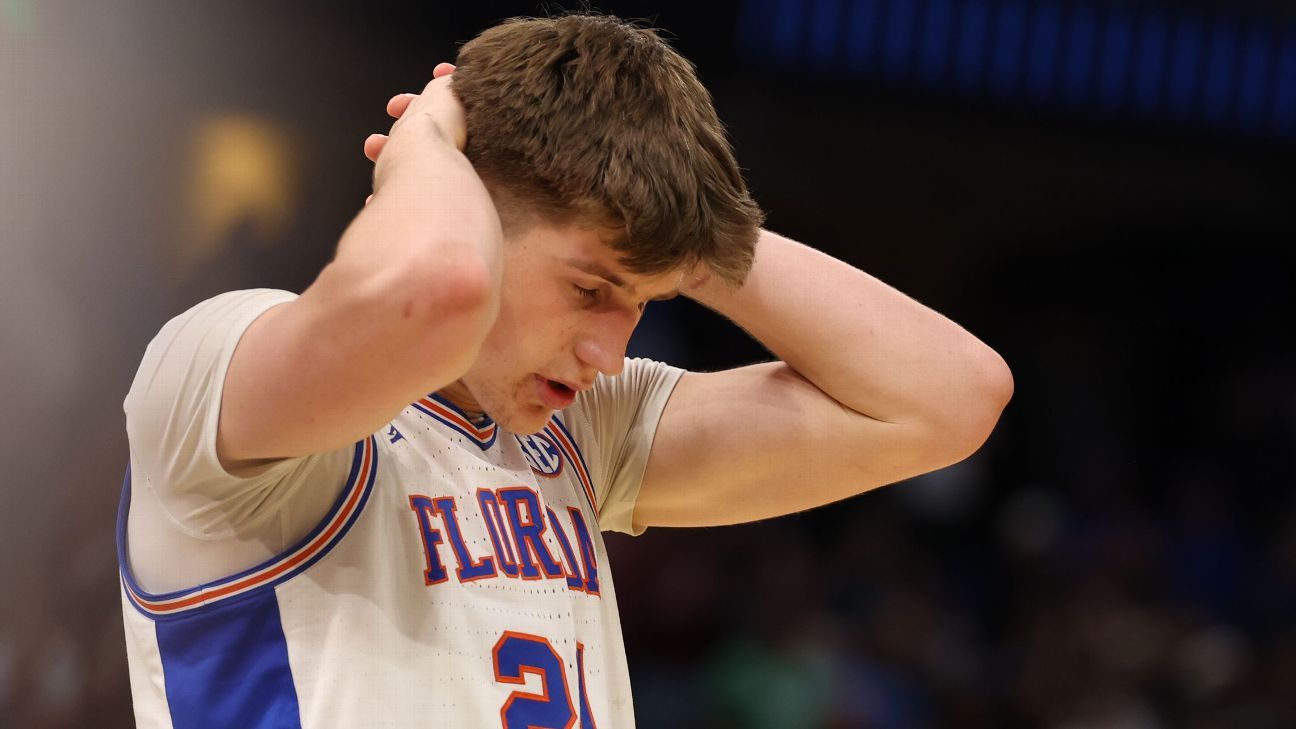
It’s hard to defend a title in college basketball. Only three teams have gone back-to-back in the past 50 years (Duke in the 1990s, Florida in the 2000s, UConn a few years ago). This Florida team had its relative weaknesses, including relying on less proven guards — never ideal in this sport. Yet the Gators had blown by everyone in the previous weeks and appeared unstoppable again. A 26-10 run turned a 12-point deficit into a four-point lead in the final minutes. Clinging to a one-possession advantage, Florida simply needed to rebound and make free throws.
That’s when the bargaining stage of grief would have set in for Gators fans. They got the rebound but missed one at the line. Oh no. That’s OK, though, just defend for one possession. Oh, they’re pressing on defense? Seems risky, just don’t allow broken coverage for an open 3. Oh no. That’s OK, though, only down one, this is an elite offense with enough time to run a play. They’ll get a good shot off. Oh no, he’s driving to the hoop. That’s OK, though, maybe he’ll get fouled. Oh no, he passed it. That’s OK, though, Thomas Haugh can put it up quickly. Wait there’s no more time? That can’t be how it ends, without even a shot attempt? It’s just over?!
Admittedly, there’s a certain amount of irony involved in Florida winning a title at the buzzer last season because Houston couldn’t get a shot off, only to fall victim to the same fate 12 months later. Fate can be cruel sometimes.
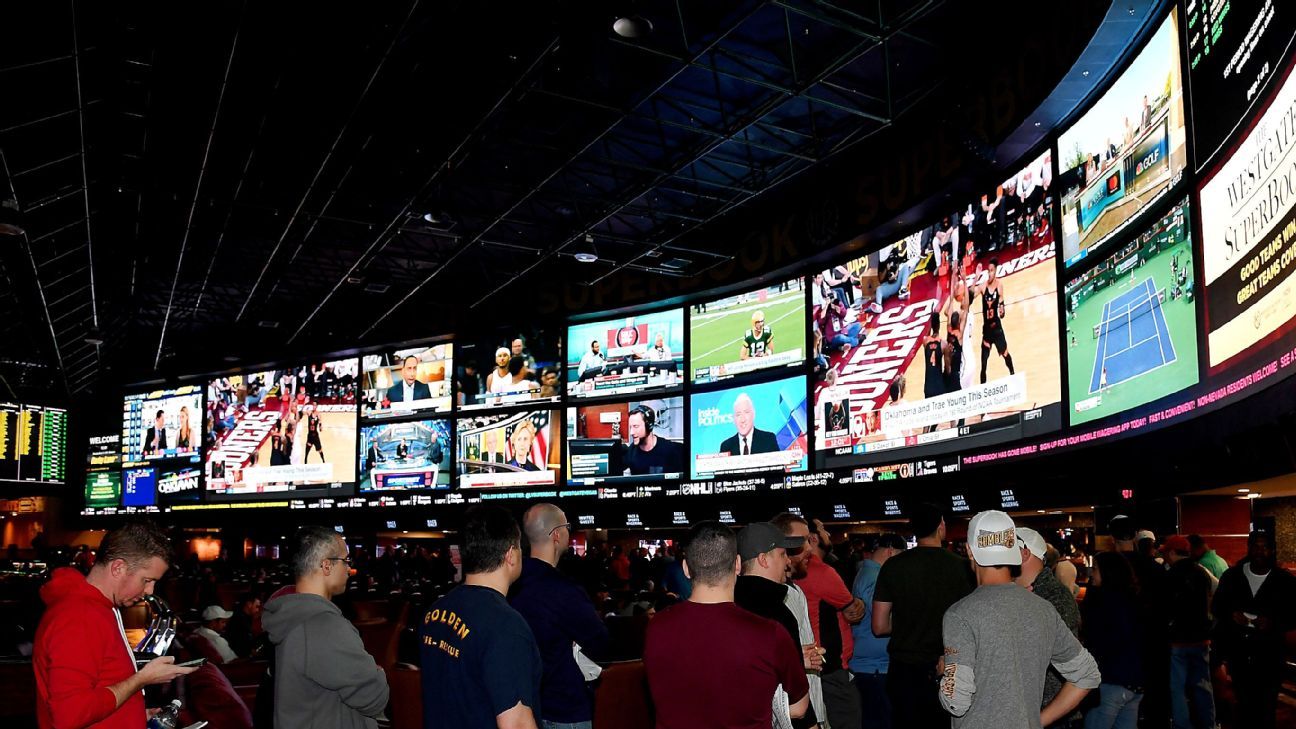
The University of Mississippi on Monday announced the upcoming launch of its new Center on Collegiate Gambling, which researchers describe as the “first of its kind in the nation” amid rising national concern about betting on collegiate sports.
The center was approved by the Institutions of Higher Learning Board of Trustees in February and will cost about $700,000 a year. It was conceived to study the “heightened risks” for college students and student-athletes caused by the rapid growth of legalized sports betting and online gambling, its founders said. Researchers said the center will now begin hiring staff.
IHL’s approval of the center follows the release of survey results by University of Mississippi researchers showing that 39% of Mississippi college students gambled in a variety of formats in the past year. Of those who engaged in sports betting, 6% of Mississippi college students met criteria for problem gambling as defined by the American Psychiatric Association.
“We really think that this is an issue that affects Mississippi at large,” Hannah Allen-King, executive director of the university’s William Magee Institute for Student Wellbeing and assistant professor of public health, said in a news release. “And so, we’re trying to work with our legislators as they debate policy change around gambling in the state.”
Commercial sports betting was effectively banned with a few exceptions until 2018, when the U.S. Supreme Court overturned a 1992 prohibition. Mississippi allows sports betting now, but only inside casinos.
After the 2018 U.S. Supreme Court decision, sports gambling companies launched a full-court press lobbying campaign to bring sports betting to tens of millions of mobile phones around the country, an effort reported to be the fastest expansion of legalized gambling in American history. The companies have poured money into lobbying state legislators, including those in Mississippi.
But Mississippi has remained one of the few holdout states, largely due to fears that legalization could harm the bottom line of the state’s casinos and increase the prevalence of gambling addiction. That hasn’t stopped a thriving black market from taking hold in the state.
In 2024, illegal online betting in Mississippi made up about 5% of the national illegal market, which is about $3 billion in illegal bets in Mississippi, proponents said that year. Supporters of legalization say people will place online sports wagers regardless of whether the practice is legal, so the state should regulate and tax it.
The state House has voted, for the third year in a row, to legalize mobile sports betting during the ongoing 2026 legislative session. But Senate leaders have said they plan to let the measure die again.
Nevertheless, college campuses have become hubs of activity for sports betting and, increasingly, gambling addiction. This has prompted calls for research into mobile sports betting’s growth and impact on young adults. The new center will aim to produce such research, which its founders say is lacking without a national research center in the U.S. dedicated solely to the study of collegiate gambling.
The academic research will focus on college student gambling behaviors ranging from card games to proposition betting and prediction markets. The center will also promote “evidence-based policies and programs to prevent harm,” including training counselors to help students struggling with gambling.
Eight University of Mississippi counselors have already received the certification to better equip them to identify gambling addiction in students, the researchers said.
The rise of collegiate gambling has also led to increased threats directed at athletes, whose performance is now closely tracked by gamblers.
“In a state like Mississippi where we don’t have a lot of professional sports teams, college sports are such a big part of our culture, and a large part of our state population follows and cares about college sports,” Allen-King said. “We’ve seen that it can impact the mental health of student-athletes who are getting threatened and harassed because people are losing money because of their performance during games.
Daniel Durkin, an associate professor of social work who is also one of the center’s founding members, said raising awareness of sports gambling’s prevalence on college campuses will be a central goal.
“Part of the issue right now is everybody’s just having a good time,” Durkin said. “Look at the ads; gambling’s fun. Everybody’s doing it. The seriousness of the issues has not really come to the forefront yet, but it’s only a matter of time.”


2026 NBA draft stock watch: Which NCAA prospects are rising?

Space company plans bold landing on fast-moving asteroid passing near Earth
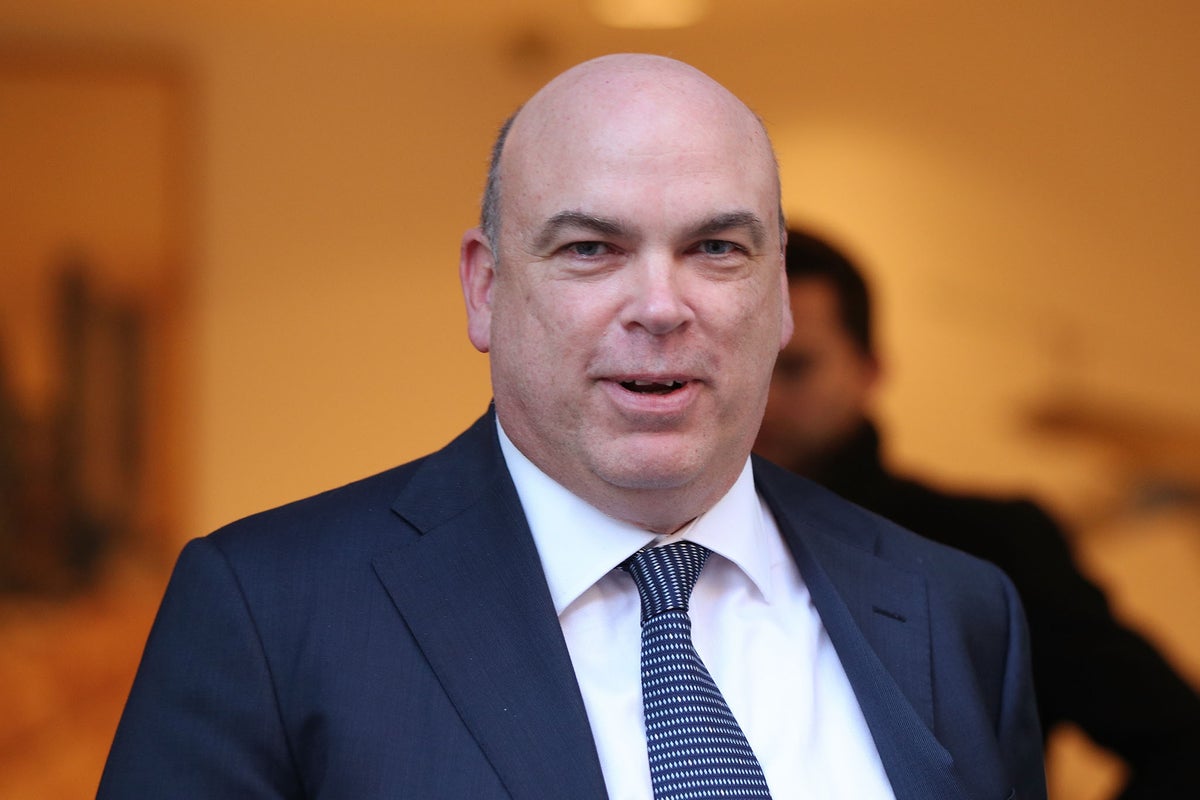
Mike Lynch estate ordered to pay almost £1bn

-

 Fashion1 week ago
Trump signs order to combat fraudulent ‘Made in America’ labels
-

 Tech7 days ago
Justice Department Says Anthropic Can’t Be Trusted With Warfighting Systems
-
 Business1 week ago
Stocks To Watch: Tata Motors, IndiGo, Jindal Stainless, GMR Airports, Hindalco, And Others
-
 Business1 week ago
Stocks and pound rise as US rate call approaches
-
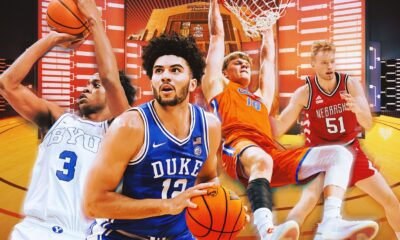
 Sports1 week ago
Men’s March Madness 2026 bracket: Get to know all 68 teams
-
 Business1 week ago
Gas supply crunch a worry for AC makers ahead of peak season – The Times of India
-

 Tech1 week ago
Early Deals From the Amazon Spring Sale That Passed Our BS Test
-

 Sports6 days ago
March Madness 2026 – How to watch in SA, start time, schedule, TV channel for NCAA championship basketball tournament