

Business
K-beauty: From social media trend to economic powerhouse


Suranjana TewariAsia Business Correspondent, Seoul, South Korea
Who would have thought serums infused with snail mucin – the sticky substance they secrete – would become a part of skincare routines around the world?
Well, it’s happened – and the gooey elasticity is key, according to a viral TikTok challenge promoting the serum. It made its manufacturer, the small South Korean label CosRX, go global. It is now owned by Amorepacific, the country’s biggest cosmetics company.
The rapid spread of that sticky serum tells you just how wildly successful K-beauty has become. Fuelled by viral content and trends, it is one of the biggest industries in South Korea, where the pressure to look almost flawless has always been huge in a highly competitive society.
The domestic market alone was valued at about $13bn (£9.6bn) in 2024, with sales of some products expected to grow at double-digit rates. And the rest of the world is just as obsessed with K-beauty – which is perhaps unsurprising given it’s part of the Hallyu, or Korean Wave, which has made K-Pop and K-dramas a global phenomenon.
K-beauty brands now occupy whole sections at global retailers – from Sephora to Boots to Walmart. In the first half of 2025, South Korea overtook France, the birthplace of modern cosmetics, to become the world’s second-largest exporter of beauty products, after the United States.
Search for “Korean skincare” on TikTok, Instagram or YouTube and you’ll be met with a deluge of content from influencers, some of whom have hundreds of millions of followers. They dissect ingredient lists, film unboxings and record “Get Ready With Me” videos built around ideas such as “glass skin”, sheet masks and, of course, snail mucin.
“There are so many products and brands, and a lot of times you’re exposed to millions of them as a consumer – it’s highly saturated and competitive,” said Liah Yoo, a beauty influencer and founder of the US-based K-beauty brand Krave Beauty.
The formula behind the rise
At the heart of K-beauty’s rise is a relentless pace of innovation. New formulations appear every few months, often designed to spark the next online obsession.
Ten-step skincare routines, overnight “water sleeping masks” and headline-grabbing ingredients such as salmon sperm were once viewed as niche or unappealing. Today, many are staples in bathroom cabinets from London to Los Angeles.
Social media has been central to this shift. Products launched in Seoul are on TikTok and Instagram feeds in the US, UK, India and Australia instantly.
There are however growing concerns about the social impact of beauty ideals, particularly on young people. Experts warn that constant exposure to skincare content online can fuel anxiety and excessive spending.
 Getty Images
“We are fully aware that excessive use or misuse of social media can lead to backlash,” said Kim Seung-hwan, Amorepacific’s chief executive, adding that brands must strike a careful balance in how they use online platforms.
The challenge will only grow as the industry expands to include Western multinationals.
L’Oréal acquired a South Korean conglomerate which included the brand Dr.G in late 2024, saying the deal would help meet rising demand for effective yet affordable K-beauty products.
Other global firms are increasingly incorporating popular ingredients associated with Korean brands such as centella asiatica and rice water into their own lines.
Many of South Korea’s large beauty brands are part of the country’s powerful conglomerates, or chaebols.
Amorepacific accounts for roughly half of the domestic market. Its portfolio ranges from premium brands such as Sulwhasoo to global mass-market names like Laneige, environmentally focused labels such as Innisfree, and fast-growing independent brands. But even as a chaebol, Amorepacific says it looks to smaller independent brands for fresh ideas.

 Getty Images
“Through the founder and the CosRX team, we were able to learn their approach to formula innovation and how to respond more quickly to consumer needs,” Mr Kim from Amorepacific said. “These lessons have since been integrated into our wider organisation.”
In 2024, Amorepacific sold about $6.2bn of products. LG Household & Health Care, another major conglomerate, recorded sales of $4.1bn. The scale of the industry continues to show up in South Korea’s export figures too.
Exports rose 15% in the first half of 2025 to a record $5.5bn, largely driven by strong sales in the US and Europe, putting the country on track to surpass $10bn in annual beauty exports.
For Mr Kim, all customers are not the same.
“In countries like Japan, Korea and China, there is more interest in things like flawless skin. In Europe fragrance is the main category, and in the US make-up is more popular,” he said.
“Things are changing though,” he added, pointing to rising interest among Western consumers in youthful-looking skin and sun protection, particularly as awareness of climate change and UV exposure grows.
Keeping up with the competition
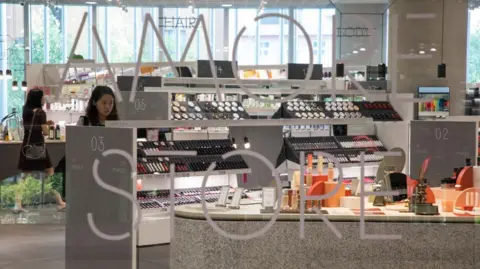
To cater to the ever-growing demand, South Korea’s 30,000 or so beauty brands rely on a highly sophisticated industrial ecosystem.
They are supported by original development manufacturers, or ODMs, which handle research, formulation and production for thousands of labels.
 Getty Images
Even large conglomerates outsource some product lines, while smaller names depend heavily on ODMs to move quickly and keep costs down.
Cosmax, one of the largest manufacturers, supplies products to about 4,500 brands from factories across South Korea, China, the US and South East Asia.
In 2024, it accounted for just over a quarter of South Korea’s $10bn worth of cosmetics exports.
This allows products to move from being conceptualised to being sold in as little as six months – the process that can take one to three years for many Western brands.
Automation helps keep costs down. The BBC visited a sprawling Amorepacific factory outside South Korea’s capital Seoul, where a handful of workers oversaw fully automated production lines bottling Laneige’s Water Sleeping Mask and CosRX’s Vitamin C 23 Serum.
Speed, however, comes at a cost. Intense competition has contributed to thin profit margins and high rates of business failures. According to government data, more than 8,800 cosmetics brands have gone out of business in recent years.
“South Korea has great infrastructure that can help you create a brand quickly, but growing a successful brand is another story,” said Ms Yoo. “It comes down to your brand ethos, your identity, and how different your products are from anything else on the market.”
As competition intensifies, brands face growing pressure to be more transparent, and to focus on ingredients and the effectiveness of their products rather than celebrity endorsements.
“We’re not just buying from the big brands now. We’re actually talking about ingredients, where it’s sourced, what it does,” said Mia Chen, a prominent beauty influencer. “A lot of Korean skincare derives from natural ingredients, and we all want that on our skin without side effects.”
 Getty Images
The industry is also being shaped by its changing market.
China is no longer the biggest overseas buyer as its own brands erode the dominance once enjoyed by Japanese and Korean imports.
For the first time in 80 years, Amorepacific’s North America business overtook the one in China last year, Mr Kim said, adding that the firm also expects growth in Japan, Europe, India and the Middle East.
The US remains a key market, importing more beauty products from South Korea than anywhere else. But President Donald Trump’s 15% tariffs on Korean imports have sparked some uncertainty.
Olive Young, South Korea’s biggest cosmetics retailer which plans to open its first store in the US this year, imposed a 15% customs duty on American orders. Amorepacific said it would consider price increases only on a case-by-case basis, based on discussions with retail partners such as Sephora and Walmart.
But the firms have the backing of the South Korean government, which designated K-beauty a strategic national asset in December, promising to support manufacturing and exports.
It is a telling vote of confidence in an industry that kicked off as a viral trend and is now an economic force.
Additional reporting by Jaltson Akkanath Chummar and Juna Moon
Business
US stock market today (April 10, 2026): S&P 500, Nasdaq rise on tech gains after inflation data – The Times of India
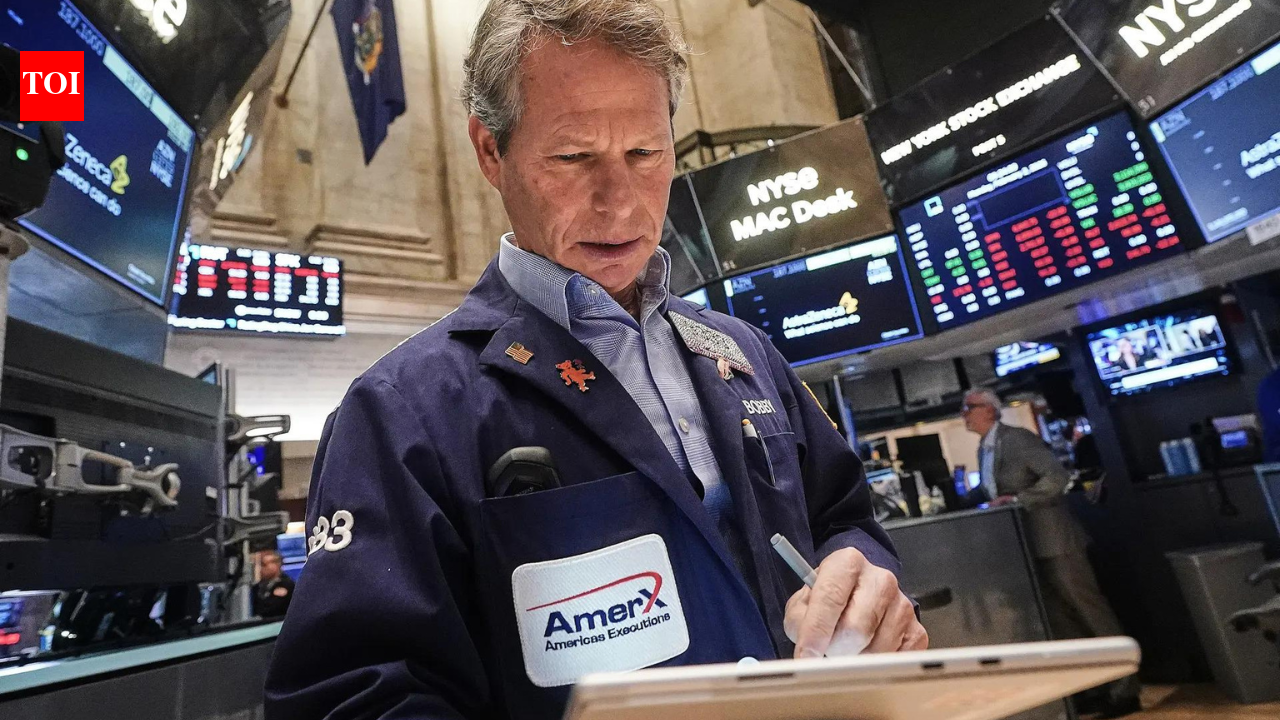
US equity benchmarks traded mixed on Friday, with the S&P 500 and Nasdaq moving higher on strength in technology stocks after March inflation data came in line with expectations, while investors kept a close watch on geopolitical tensions in the Middle East.US consumer prices rose the most in nearly four years in March, driven by higher oil prices linked to the Iran conflict and continued tariff pass-through. Despite this, traders maintained expectations that the US Federal Reserve will hold borrowing costs steady this year, scaling back earlier bets of two rate cuts prior to the conflict, according to Reuters.“When paired with Thursday’s PCE data, the message is clear: inflation remains sticky – and that optimistically assumes the energy surge proves to be a temporary headwind rather than a lasting recalibration,” said Bret Kenwell, US investment analyst at eToro. “It should keep policymakers on pause, unless we see a more notable deterioration in the labor market or the broader economy.”San Francisco Fed President Mary Daly told Reuters on Thursday the oil shock from the Iran war would extend the timeline on bringing inflation back to the US central bank’s 2% target.At 10:15 a.m. ET, the Dow Jones Industrial Average was down 109.60 points, or 0.23%, at 48,076.20, while the S&P 500 gained 10.56 points, or 0.15%, to 6,835.22, and the Nasdaq Composite rose 123.70 points, or 0.54%, to 22,946.11.Gains were led by technology stocks, with the S&P 500 information technology index advancing 0.8%, supported by chipmakers. Nvidia rose 1.8% and Broadcom climbed 4.4%, while the Philadelphia Semiconductor index touched a record high of 8,926.08.However, declines in financial stocks, down 0.8%, limited the broader upside. Goldman Sachs and Travelers weighed on the Dow.On a weekly basis, Wall Street’s main indexes were poised for gains, with the S&P 500 and Dow set for their strongest weekly rise since November and June, respectively.Investor sentiment was supported by the two-week ceasefire between Washington and Tehran, along with remarks from Israeli Prime Minister Benjamin Netanyahu indicating efforts to initiate direct talks with Beirut. However, the Pakistan-brokered truce showed signs of strain, with both sides accusing each other of violations ahead of talks scheduled for Saturday.“This is a headline-driven market… as long as the ceasefire holds and the market sees a path toward relative calm in the Middle East, investors should be able to look through disruptions,” said Jeff Buchbinder, chief equity strategist at LPL Financial.Separately, preliminary data showed the University of Michigan’s consumer sentiment index fell to 47.6 in April, below economists’ expectations of 52, according to a Reuters poll.US-listed shares of Taiwan Semiconductor Manufacturing, the world’s largest contract chipmaker, rose 2.7% after reporting stronger-than-expected first-quarter revenue.CoreWeave advanced 6.8% after announcing a multi-year agreement with Anthropic and pricing its convertible bond offering at a premium.Advancing stocks outpaced decliners by a 1.22-to-1 ratio on the NYSE and by 1.07-to-1 on the Nasdaq. The S&P 500 recorded 17 new 52-week highs and 18 new lows, while the Nasdaq logged 84 new highs and 70 new lows.
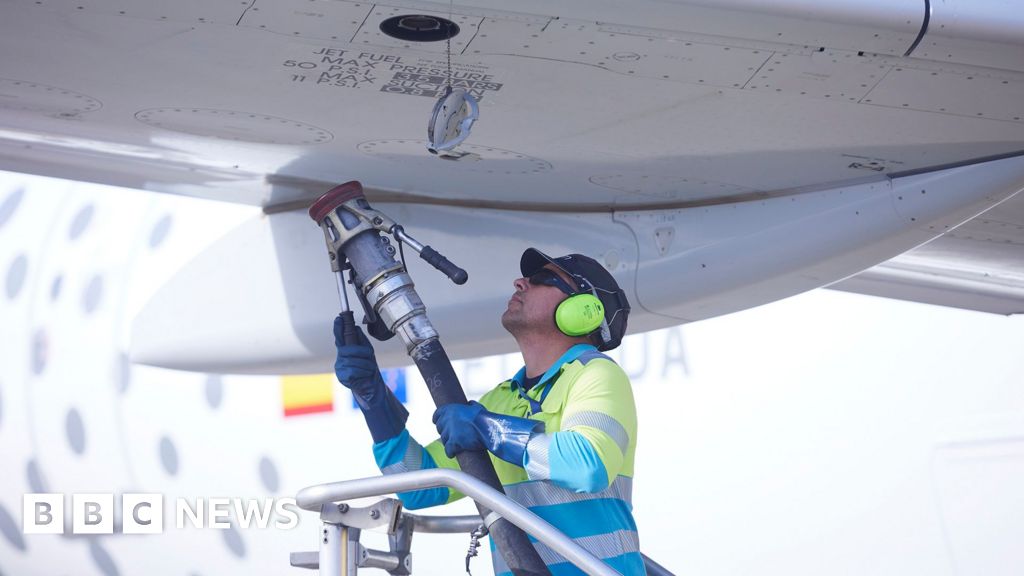
The trade body for European airports said if the Strait of Hormuz did not open in the next three weeks, there could be shortages.
Source link

A surge in prices at the pump due to the Iran war has pushed the inflation rate to 3.3%.
Source link


Pacers fans go viral after animated conversation caught on camera during Nets game in Brooklyn

Management of Strait of Hormuz has entered new stage: IRGC

Kiyan Anthony returning to Syracuse for sophomore season

-
 Business1 week ago
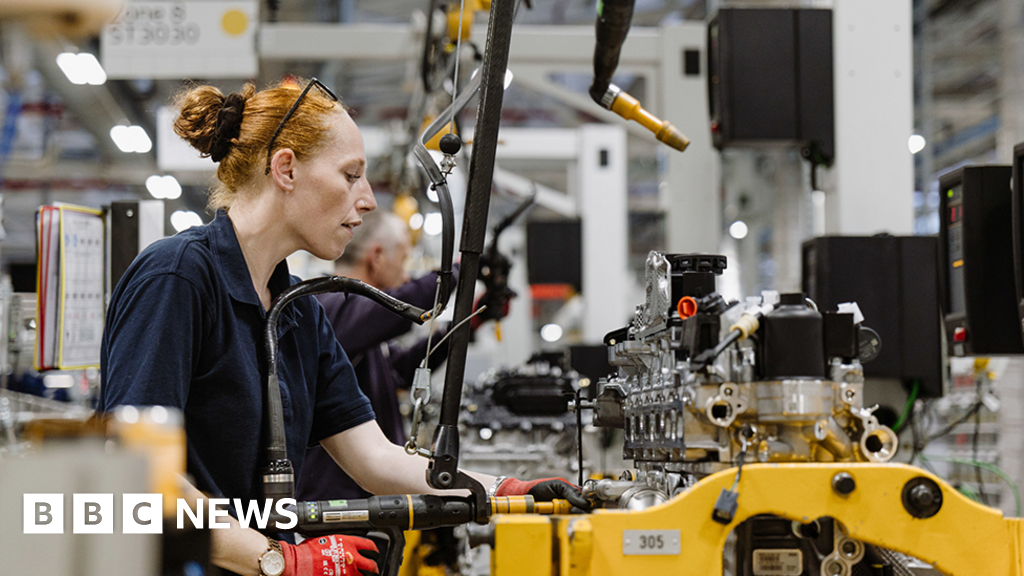
Jaguar Land Rover sees sales recover after cyber attack
-
Uncategorized1 week ago
[CinePlex360] Please moderate: “Trump signals p
-

 Entertainment7 days ago
Joe Jonas shares candid glimpse into parenthood with Sophie Turner
-

 Tech7 days ago
Our Favorite iPad Is $50 Off
-

 Sports7 days ago
UConn Final Four run could trigger a $50M furniture giveaway for Massachusetts-based Jordan’s Furniture
-
 Business1 week ago
Video: Why Is the Labor Market Stuck?
-

 Entertainment7 days ago
Blake Lively reacts to harassment claims dismissal against Justin Baldoni
-

 Politics1 week ago
Iran can sustain Strait of Hormuz closure for years, will cut US military logistics: Official