

Fashion
Kering bets on China’s gold jewelry boom as Laopu’s sales soar

By
Bloomberg
Published
December 5, 2025
A new crop of Chinese gold jewelry brands are attracting investor interest in the wake of Laopu Gold Co.’s breakout success.
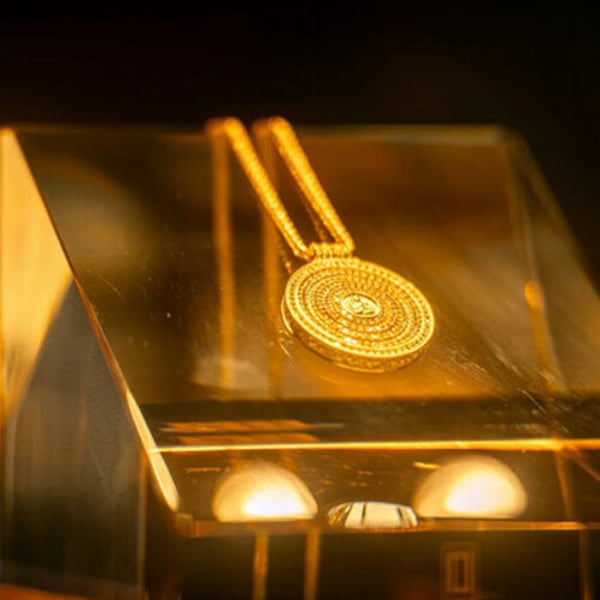
Hangzhou-based Borland, a gold jeweler specializing in traditional Chinese goldsmith technique known as “filigree”, said this week it has raised more than 100 million yuan ($14 million) from investors including Kering Ventures, the startup investment arm of Kering SA, and Shunwei Capital, a top Chinese venture capital firm co-founded by billionaire Xiaomi Corp. chairman Lei Jun.
Kering said the small minority interest in Borland through Kering Ventures enables the company to “participate in the development of a rapidly growing brand in the particularly buoyant 24-karat gold jewelry segment”.
Separately, Dayone Capital in recent days announced a strategic investment worth more than 100 million yuan in Lamchiu, a maker of hand-crafted bespoke pieces based in the northwest Chinese city of Lanzhou.
China’s high-end gold jewelry boom has been fueled by the surprise rise of Laopu, which has defied the weak performance seen among Western luxury rivals in China. Laopu’s revenue in the first half of 2025 soared more than 250% year-on-year to 12.4 billion yuan, on top of 168% sales growth the year before.
“Laopu has shown the market that this niche sector can continue to break out, and rising gold prices also help lift the overall buzz,” said Richard Lin, a consumer analyst with SPDB International Holdings Ltd. “The rising investment and financing enthusiasm for the heritage gold segment is clearly driven by confidence in the category’s long-term growth potential.”
Heritage gold jewelry refers to gold pieces rooted in Chinese culture and traditional goldsmith techniques, including filigree work. With stores in top-tier malls, Laopu’s clientele overlaps — and increasingly threatens — stalwarts from Hermès International SCA to Richemont-owned Cartier.
Still, while Borland and Lamchiu have official stores on e-commerce platforms like Alibaba Group Holding Ltd.’s Tmall and JD.com Inc., both have a limited physical presence — Borland operates just three mall outlets and Lamchiu, despite more than 1 million followers on ByteDance Ltd.’s TikTok-like Douyin, has only one Lanzhou storefront.
Borland said it will use the new funding to expand distribution and boost supply chain resilience. Dayone has formed a team to help Lamchiu with similar tasks.









Published
January 19, 2026
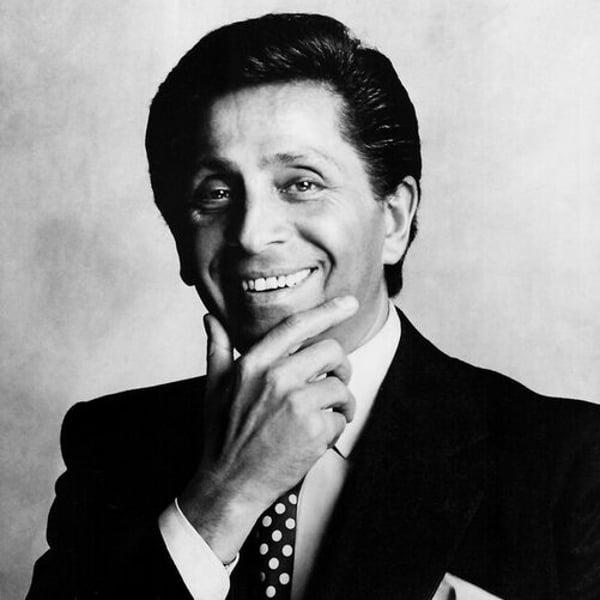
Valentino Garavani, an icon of Italian fashion, founder of his eponymous maison, and widely regarded as one of the greatest designers of all time, died in Rome on January 19, surrounded by his loved ones.
Born in Voghera, Italy on May 11, 1932, he showed remarkable artistic talent from an early age, which led him to study drawing and fashion in Paris, where he worked with couturiers such as Jean Dessès and Guy Laroche.
Upon returning to Italy, he opened his first atelier on Via Condotti in Rome in 1960, supported by his business partner, Giancarlo Giammetti. International success soon followed: his debut show at Florence’s Palazzo Pitti in 1962 marked his breakthrough, establishing him as an undisputed standard-bearer of Italian fashion worldwide. In 1968, the famous “V” logo was introduced, later becoming the emblem of the maison. Equally iconic is his signature red, inspired by a gown he saw at the opera in his youth, which made this shade a defining hallmark of the house.
Valentino Garavani announced his retirement in 2007, at the age of 75, with a final show celebrating his extraordinary career. His legacy is also chronicled in the 2008 documentary directed by Matt Tyrnauer: “Valentino: The Last Emperor.”
Garavani’s lying in state will be held at PM23, Piazza Mignanelli 23 in Rome, on Wednesday and Thursday, January 21 and 22, 2026, from 11:00 to 18:00. The funeral will take place on Friday, January 23, 2026, at 11:00, at the Basilica of Santa Maria degli Angeli e dei Martiri, Piazza della Repubblica 8, Rome.
This article is an automatic translation.
Click here to read the original article.
Copyright © 2026 FashionNetwork.com All rights reserved.
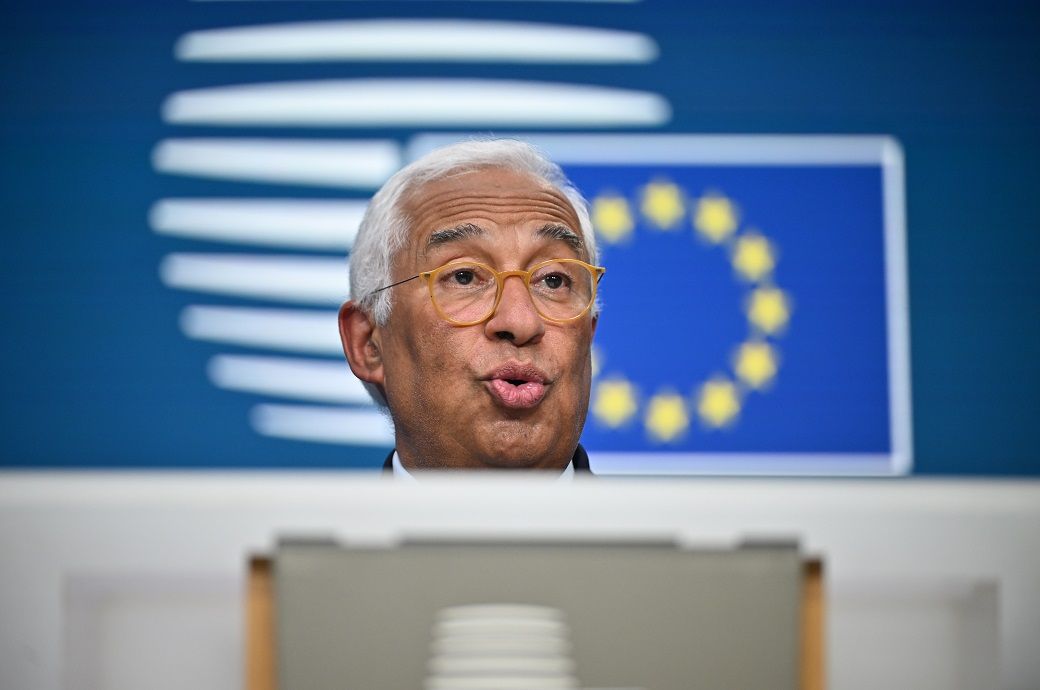
Trump last week announced he would impose a new round of higher tariffs on several EU members starting February 1 as the latter did not support US demand to buy Greenland from Denmark.
EU diplomats have agreed to accelerate efforts to dissuade President Donald Trump from imposing tariffs on European allies, while preparing retaliatory measures.
European Council President Antonio Costa consulted members on the Greenland issue and said he would convene an extraordinary meeting of the Council in the coming days.
The bloc is committed to defend itself against any form of coercion, he said.
“NATO has been telling Denmark, for 20 years, that ‘you have to get the Russian threat away from Greenland’,” he wrote on Truth Social. “Unfortunately, Denmark has been unable to do anything about it. Now it is time, and it will be done!!!”
European Council President Antonio Costa consulted member states on the latest tensions over Greenland and issued a statement saying such tariffs would undermine trans-Atlantic relations and are incompatible with the EU-US trade agreement. He reconfirmed the bloc’s strong commitment to defend it against any form of coercion.
Expressing the bloc’s readiness to continue engaging constructively with the United States on all issues of common interest, he said he would convene an extraordinary meeting of the Council in the coming days.
“Europe will not be blackmailed,” Danish Prime Minister Mette Frederiksen said in a statement.
An option being reportedly considered is a package of tariffs on €93 billion worth of US imports that could automatically take effect on February 6 following the expiry of a six-month pause.
Another involves deploying the Anti-Coercion Instrument (ACI), a never-used tool that could restrict access to public tenders, investments or banking activity and limit trade in services, including digital services, where the United States runs a surplus with the bloc.
After speaking to NATO Secretary General Mark Rutte, French President Emmanuel Macron, British Prime Minister Keir Starmer, German Chancellor Friedrich Merz and Italian Prime Minister Giorgia Meloni, European Commission chief Ursula von der Leyen asserted EU commitment to upholding the sovereignty of Greenland and Denmark and posted on X: “We will always protect our strategic economic and security interests”.
“We will face these challenges to our European solidarity with steadiness and resolve,” she said.
“No intimidation or threat will influence us—whether in Ukraine, in Greenland or elsewhere in the world,” Macron wrote on X. “Tariff threats are unacceptable and have no place in this context. Europeans will respond in a united and coordinated manner if they are confirmed,” he wrote.
“We will not allow ourselves to be blackmailed,” said Swedish Prime Minister Ulf Kristersson.
Fibre2Fashion (DS)
Fashion
Reliance misses third-quarter profit estimates at $2.06 billion for the October-December quarter
By
Reuters
Published
January 19, 2026
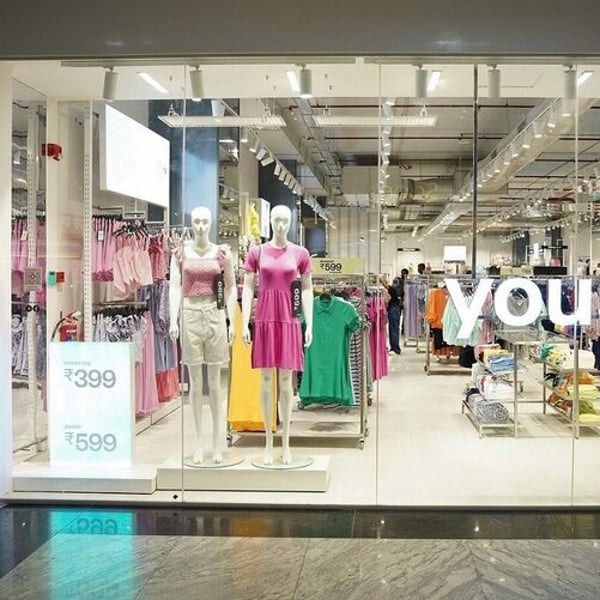
On Friday, India’s Reliance Industries posted an 186.45 billion rupees ($2.06 billion) profit for the October-December quarter, missing analysts’ average estimate of 196.44 billion rupees, according to data compiled by LSEG.
Shares of Reliance Industries fell as much as 2.7% in early trade on Monday after the conglomerate announced missing its third-quarter profit estimates, weighed down by slowing earnings growth in its retail segment. Shares of the Mukesh Ambani-led firm were trading at 1,426. 60 rupees, as of 9:41 am, and were among the top five losers on the benchmark Nifty 50 Index
UBS analysts trimmed Oil-to-Chemicals(O2C) and retail estimates slightly but said they still see room for a valuation re-rating, as the company’s earnings before interest and taxes (EBIT) mix increasingly shifts toward structural growth drivers such as digital and retail, reducing dependence on the cyclical oil and gas segment. Festive discounting, investment in hyper-local delivery startups, and a one-off impact from India’s new labour code trimmed core margins at its retail unit to 8% from 8.6% a year earlier.
Retail growth softened primarily because the festive season was brought forward and due to the one-month impact of the consumer products demerger, analysts at Emkay said. Core earnings for the segment grew 1.3% to 69.15 billion rupees, compared with 9.5% growth a year earlier.
Reliance’s oil and gas segment weakened due to lower output and softer price realisations from its ageing KG-D6 fields, leading to an 8.4% revenue decline and a 12.7% drop in core earnings amid higher maintenance costs. Meanwhile, analysts at Systematix forecast a rise of 5%, 12%, and 9% O2C, Retail, and Jio revenue CAGR, respectively, during FY25-FY28, while a 12% decline in their oil and gas businesses.
© Thomson Reuters 2026 All rights reserved.


José Mourinho rejects ‘soap opera’ links to Real Madrid vacancy

Valentino Garavani dies aged 93

Prince Harry returns to U.K. to be in court for case accusing tabloids of illegal snooping

-

 Tech7 days ago
New Proposed Legislation Would Let Self-Driving Cars Operate in New York State
-
 Sports1 week ago
Clock is ticking for Frank at Spurs, with dwindling evidence he deserves extra time
-

 Entertainment6 days ago
X (formerly Twitter) recovers after brief global outage affects thousands
-
 Fashion1 week ago
South India cotton yarn gains but market unease over US tariff fears
-
 Fashion1 week ago
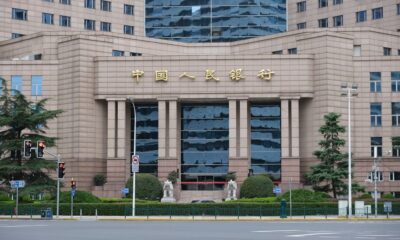
China’s central bank conducts $157-bn outright reverse repo operation
-

 Sports1 week ago
US figure skating power couple makes history with record breaking seventh national championship
-

 Sports4 days ago
Pak-Australia T20 series tickets sale to begin tomorrow – SUCH TV
-

 Entertainment1 week ago
Five killed in road accident in Khyber