

Fashion
Kimberly-Clark acquires Neutrogena-owner Kenvue


By
Reuters
Published
November 3, 2025
Kimberly-Clark is laying down $40 billion to buy Kenvue in a massive deal that has puzzled some investors as the Tylenol maker struggles with weak sales, lawsuits and White House attacks linking its painkiller to autism.
Shares of Kimberly-Clark dropped sharply after the Monday announcement as stockholders scrutinized the 46% premium being paid for the former Johnson & Johnson unit that has had a turbulent year: Kenvue ousted its CEO in July and has been under fire from President Donald Trump over unproven claims that Tylenol use during pregnancy can cause autism in children.
Kenvue shares, which had dropped sharply since Trump’s comments, jumped as much as 19.6% on Monday. Many investors have been awaiting a sale of all or parts of the company for months, following activist pressure.
Kimberly-Clark had admired Kenvue for years, going back to when it was still part of J&J, and viewed it as a target, but deal talks between the companies started after Kenvue announced it was reviewing strategic alternatives and the departure of its CEO over the summer, sources familiar with the matter told Reuters.
Jay Woods, chief market strategist at Freedom Capital Markets, said the market reaction suggests some investors believe Kimberly-Clark “may be buying damaged goods”.
Despite the concerns, Kimberly-Clark forecast $2.1 billion in annual cost savings from the deal, with the addition of Kenvue’s vast portfolio of brands from Listerine mouth wash to skincare names like Aveeno and Neutrogena expected to bring in annual revenues of roughly $32 billion for the combined company.
Both companies sit side by side on store shelves, so the scale and distribution logic make sense even if the Tylenol overhang remains a shadow any buyer would rather avoid, said Kimberly Forrest, chief investment officer at Bokeh Capital Partners.
“Kimberly-Clark will take on potential litigation risk for the Tylenol brand… This is hard to quantify,” said TD Cowen analyst Robert Moskow.
There are concerns around Kenvue’s potential legal exposure to hundreds of private lawsuits alleging the company hid supposed links between Tylenol and autism or attention deficit hyperactivity disorder in children.
While U.S. Health and Human Services Secretary Robert F. Kennedy Jr. recently said there is no conclusive evidence of such a link, he called existing data “very suggestive.”
U.S. sales of Tylenol fell 11% between September 20 and October 4 after the Trump administration’s remarks, BNP Paribas analyst Navann Ty said in a note last month.
Kenvue is also battling litigation tied to its talc-based baby powder products.
“Most investors expected Kenvue to sell off select brands, not the entire company, given the Tylenol and talc overhangs. But Kimberly-Clark likely saw long-term value in a strong brand portfolio trading at a steep discount,” said James Harlow, senior vice president at Novare Capital Management.
Kenvue investors cheered the deal.
One long-term investor who has spoken with the board and management over the last months called the deal “awesome”, while some others said the price was not as good as they would have hoped for two months ago, before the company came under fire from the White House.
“They did have a long slog ahead of them … I think they must have looked at the situation and … had the opportunity to sell the whole company. That’s the most simple of transactions,” Harlow said, adding that selling off individual brands would have taken a long time.
Kenvue has long struggled with weakness in its core businesses, especially the skin health and beauty segment – a challenge activist investors have previously flagged. The company said on Monday third-quarter sales at the skin health segment fell 3.2% to $1.04 billion.
“One of our challenges at Kenvue right now is we’re living in between, which is no place to live – in the murky middle,” said Kirk Perry, who was named permanent CEO of Kenvue earlier in the day.
Kimberly-Clark is also navigating a consumer goods environment increasingly fraught with a more value-seeking shopper, forcing companies, including sector bellwether Procter & Gamble to invest in smaller pack sizes, and trim underperforming business units.
It sold a majority stake in its international tissue business to Brazilian pulp maker Suzano, as part of a restructuring, proceeds from which are expected to help the Kenvue buyout, the company said on Monday.
“Kimberly-Clark has been discussing its ‘transformation’ for some time now, but do think this feels like very early days to be nearly doubling the size of the company,” Barclays analysts said.
Kenvue’s shareholders will receive $3.50 per share and 0.15 Kimberly-Clark shares for each Kenvue share held. That implies an equity value of $40.32 billion, according to Reuters calculations.
The deal, expected to close in the second half of 2026, will be financed through a mix of cash and debt, with committed funding from JPMorgan Chase Bank.
Either party may be required to pay a $1.12 billion termination fee in cash if the deal falls through, according to a regulatory filing.
Upon closing, Kimberly-Clark’s CEO Mike Hsu will take over as the top boss and chairman of the combined company.
© Thomson Reuters 2025 All rights reserved.







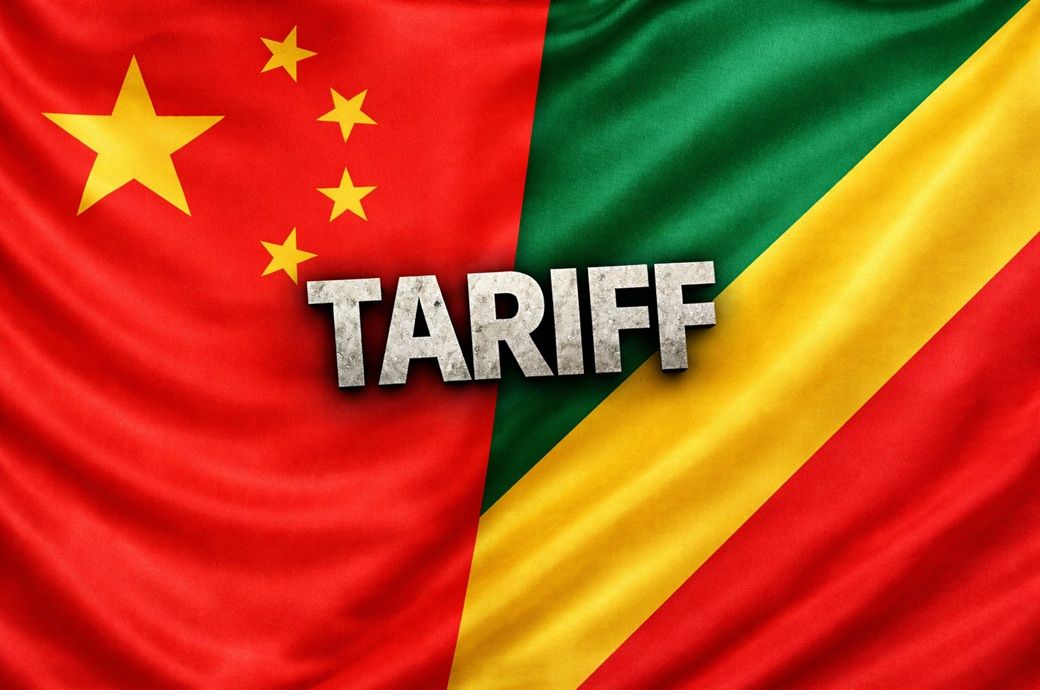
The measure implements tariff reduction commitments made under the ‘Early Harvest Arrangement of the Agreement on Economic Partnership for Shared Development’ between the two countries.
China will implement preferential tariff rates on selected imports from the Republic of the Congo starting April 1 under the Early Harvest Arrangement of their economic partnership agreement.
The move announced by the Customs Tariff Commission, is aimed at fulfilling tariff reduction commitments, enhancing bilateral trade cooperation and advancing long-term economic ties between the two countries.
The commission said the move is in line with China’s tariff law and reflects the country’s continued efforts to expand opening-up and strengthen trade ties with African partners.
Officials stated that the preferential tariff treatment will help deepen bilateral economic and trade cooperation and support the development of a higher-level community with a shared future between China and the Republic of the Congo.
The Early Harvest Arrangement, signed in November 2025, marked the first such agreement of its kind between China and an African country, paving the way for broader market access and phased tariff reductions.
Fibre2Fashion News Desk (JP)
These countries are particularly vulnerable to rising oil prices and potential supply disruptions, it noted in a recent article.
The Iran war poses a greater risk to Bangladesh, Pakistan and Sri Lanka, and to a lesser extent Laos, due to their high dependence on imported energy and limited reserves, S&P Global Ratings said.
These countries are particularly vulnerable to rising oil prices and potential supply disruptions.
All four governments are likely to see significant credit metric deteriorations, if the conflict is prolonged.
In our base case scenario, the war is unlikely to have a material impact on our sovereign ratings on these countries, but a more prolonged price and supply shock in global energy markets could cause more pronounced credit damage.
Pakistan, Sri Lanka, and Bangladesh are showing signs of economic recovery. The three countries have made progress, but sustained high energy prices and potential disruptions to trade and remittances could derail their fragile economies.
S&P Global Ratings believes the higher-income Asia-Pacific (APAC) economies are better placed to weather temporary disruptions to oil and gas supply from the Middle East.
Even where they are highly dependent on imported energy, they generally have more significant oil reserves to meet the shortfall in imports. They also have financial resources to acquire available supply in the spot oil and gas markets to secure needed energy, the rating agency noted.
Lower-income economies in the region do not enjoy such flexibility. The sovereign ratings on some may face pressure if the supply disruption persists longer than our assumptions. Bangladesh, Laos, Pakistan and Sri Lanka are among this group. These economies have one thing in common: a high dependence on imported energy products.
The Middle East war is likely to have a more severe impact on these economies, due to their fuel import bills, and generally weaker fiscal and external reserves to withstand supply shortages and high oil prices.
Among the four sovereigns, Laos is likely to fare better due to the dominance of hydropower in its energy mix.
Bangladesh, with government revenues at only around 9 per cent of gross domestic product, has fewer options to cap electricity and fuel prices through fiscal means.
All four governments are likely to see significant credit metric deteriorations, through inflation and currency channels, if the Middle East conflict is prolonged. However, the impact on the agency’s ratings on these sovereigns may be limited, as the generally low rating levels have already captured a significant share of the risks.
S&P Global Ratings’ base case for the Middle East war assumes that elevated hostilities will persist into early April, with the Strait of Hormuz facing material disruptions.
Fibre2Fashion News Desk (DS)
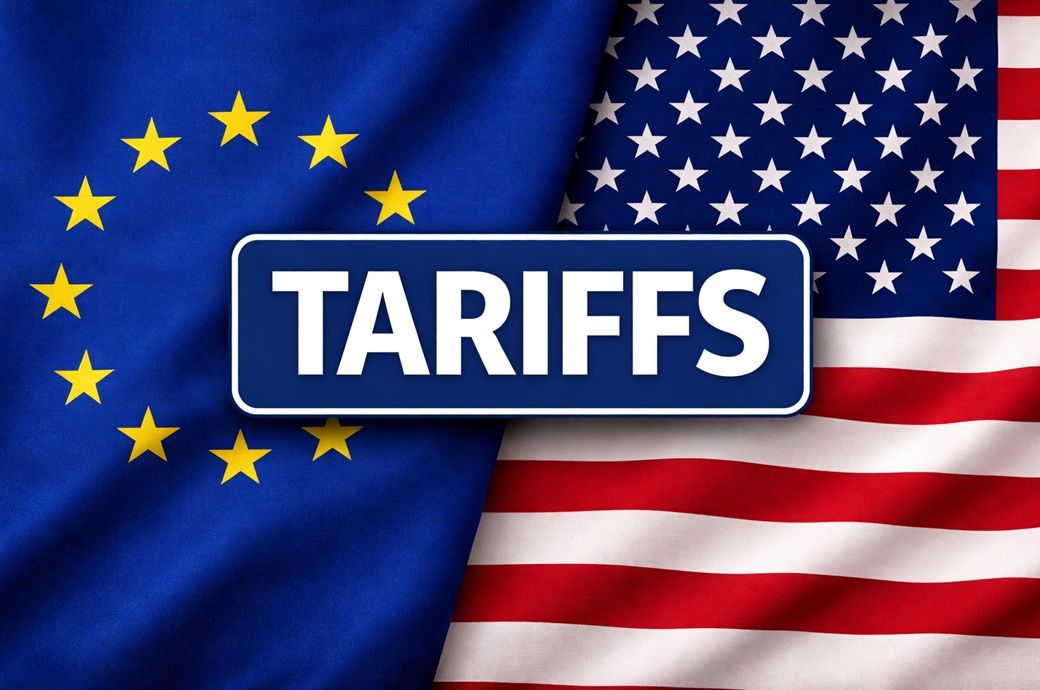
On July 27, 2025, in Turnberry, Scotland, US President Donald Trump and European Commission President Ursula von der Leyen reached a deal on tariff and trade issues, outlined in a joint statement published on August 25.
EU Parliament members have adopted their position on two proposals implementing the tariff aspects of the EU-US Turnberry trade deal.
The texts, if agreed with EU members, will eliminate most tariffs on US industrial goods and offer preferential market access for many US seafood and agricultural goods.
The members strengthened the proposed suspension clause, and introduced ‘sunrise’ and ‘sunset’ clauses.
The texts, if agreed with EU member states, will eliminate most tariffs on US industrial goods and provide preferential market access for a wide range of US seafood and agricultural goods, in line with the commitments made in summer 2025 between the EU and the United States.
The MEPs strengthened the proposed suspension clause, which would allow the tariff preferences with the US to be suspended under a number of conditions.
For instance, the Commission would be able to propose suspending all or some trade preferences if the US were to impose additional tariffs exceeding the agreed 15-per cent ceiling, or any new duties on EU goods, a release from the Parliament said.
The suspension clause could also be activated if the US undermines the objectives of the deal, discriminated against EU economic operators, threatened member states’ territorial integrity, foreign and defence policies, or engaged in economic coercion, it noted.
The MEPs have introduced a ‘sunrise clause’ that means the new tariffs would only become effective if the US respects its commitments. These conditions include the US lowering its tariffs on EU products with a steel and aluminium content below 50 per cent, to a tariff of maximum 15 per cent.
Furthermore, for EU products with a steel and aluminium content of above 50 per cent, unless the US reduces its tariffs to a maximum of 15 per cent, EU tariff preferences for US exports of steel, aluminium and their derivative products would cease to apply six months after the entry into application of the regulation.
The members also agreed on an expiry date for the main regulation on March 31, 2028. This could only be extended via a new legislative proposal, to be submitted following a thorough impact assessment of the effects of the regulation.
The European Commission would be tasked with monitoring the impact of the new rules and would be able to suspend the new tariffs temporarily, should US imports reach a level that could cause serious harm to EU industry.
Fibre2Fashion News Desk (DS)


Asda boss rejects profiteering claims as petrol price tops 150p

Britney Spears turns a new page after recent legal trauma

This Premium Sennheiser Soundbar Is $1,000 Off

-

 Entertainment1 week ago
Val Kilmer revived 1 year after death through AI
-

 Fashion7 days ago
China’s textile & apparel exports surge 17% to $50 bn in Jan-Feb 2026
-
 Business1 week ago
Video: The Effects of High Oil Prices
-
 Business7 days ago
Flipkart group CFO to leave co amid IPO plans – The Times of India
-

 Sports7 days ago
Rating Adidas’ 2026 World Cup away shirts: Argentina, Spain, Mexico and more
-
Tech1 week ago
The Corsair 4000D RS PC Case Keeps Your System Cool
-

 Sports7 days ago
American Conference Commissioner Tim Pernetti thanks Trump for Army-Navy game executive order
-
 Fashion1 week ago
The hidden $1.62 war tax now embedded in every garment you source