

Business
KSE-100 falls amid rollover week volatility, corporate earnings uncertainty | The Express Tribune

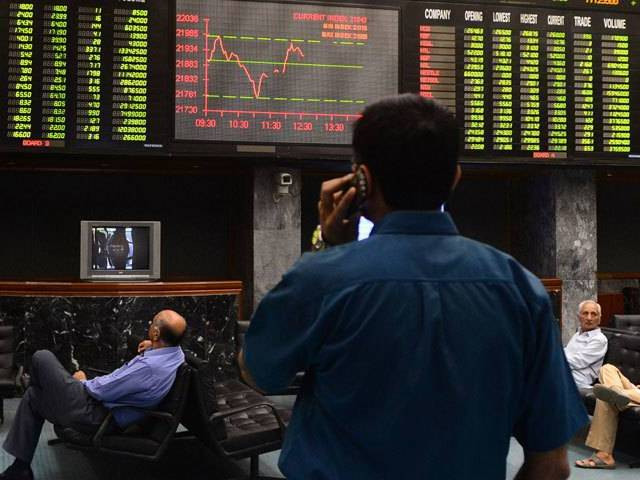
Market traded within narrow range, touching intra-day high of 163,570.83 and low of 161,766.61
The Pakistan Stock Exchange began the week on a bearish note, with the benchmark KSE-100 index slipping 1,140 points to close at 162,163.81, marking a 0.70% decline from the previous session’s close of 163,304.13.
The market traded within a narrow range on Monday, touching an intra-day high of 163,570.83 and a low of 161,766.61. Investor sentiment remained fragile due to Monetary Policy Committee (MPC) meeting, leading to cautious trading and broad-based profit-taking, particularly in the energy and manufacturing sectors.
KTrade Securities, in its market wrap, noted that the PSX opened the rollover week under selling pressure due to the absence of positive triggers. “The benchmark KSE-100 index declined 1,140 points, or 0.70%, closing at 162,163, as investor sentiment weakened,” it said.
Major laggards during the session included heavyweights such as Pakistan State Oil, Lucky Cement, United Bank Limited, Mari Energies, Pakistan Petroleum, Habib Bank Limited, Oil and Gas Development Company, and Systems Limited. These stocks collectively dragged the index lower.
On the other hand, some support came from Air Link Communication, Askari Bank, Searl Company, and Interloop Limited, which managed to limit further losses. Despite the overall negative trend, trading activity remained relatively healthy.
Market participants also reacted to the mixed financial results of several key players, including Gharibwal Cement, Millat Tractors, and Fauji Cement, which showed mild volatility. The cautious mood reflected broader investor hesitation amid macroeconomic uncertainties and expectations around interest rate movements.
Looking ahead, analysts expect sentiment to remain subdued as investors continue to navigate the rollover week and await further policy clarity. However, the ongoing corporate earnings season may provide some direction and potential recovery opportunities in the coming sessions.
KTrade Securities added that the State Bank of Pakistan’s (SBP) decision to maintain the policy rate at 11% could help restore some market confidence and bring short-term stability to investor expectations.





The UK’s competition watchdog says it is looking at five firms in its investigation into misleading online reviews.
Source link
Business
Gold price today (March 25, 2026): How much 24K and 22K gold cost in Delhi, Mumbai & more- Check rates – The Times of India
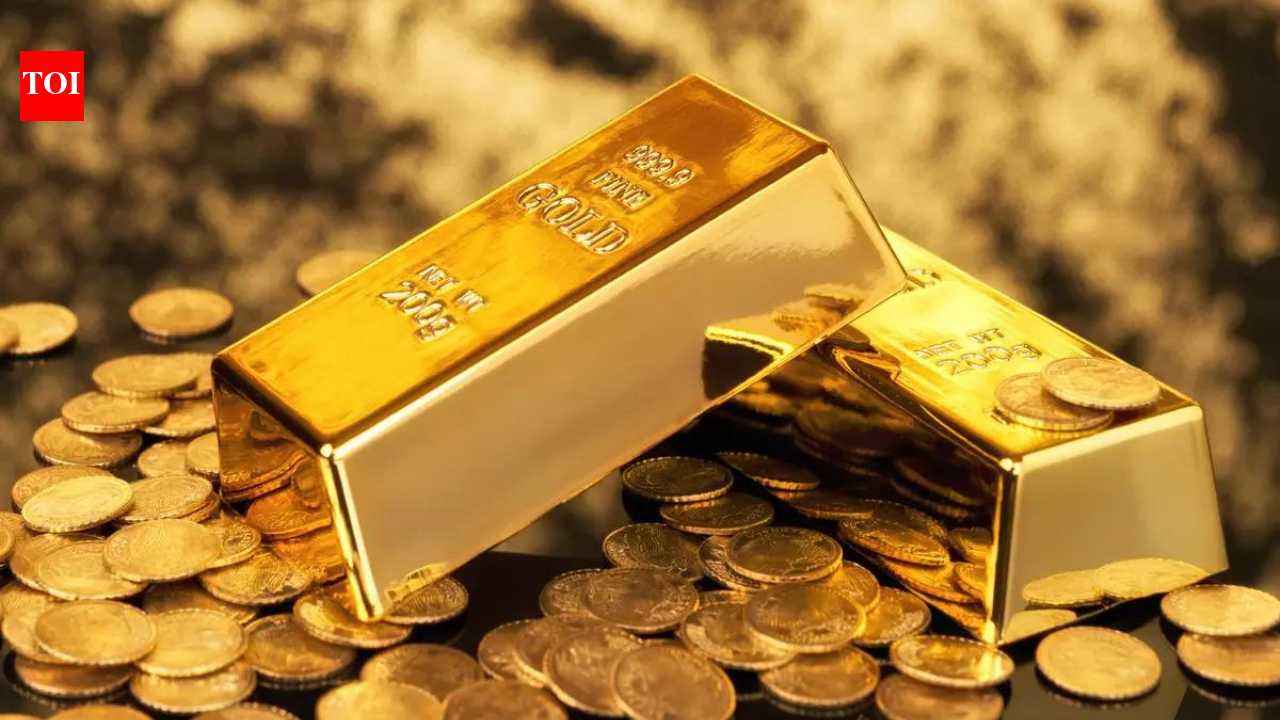
Gold futures traded higher on the Multi Commodity Exchange (MCX) on Friday with key contracts registering gains of up to 1.6 per cent amid firm buying interest and supportive global cues.The April 2026 gold contract rose by Rs 2,290, or 1.64 per cent, to trade at Rs 1,41,783 per 10 grams. The contract moved between an intraday low of Rs 1,40,287 and a high of Rs 1,42,800. The June 2026 contract, which saw higher trading activity, gained Rs 1,921, or 1.35 per cent, to Rs 1,44,435 per 10 grams. During the session, it touched a low of Rs 1,43,652 and a high of Rs 1,45,773. Meanwhile, the August 2026 contract advanced by Rs 1,480, or 1.02 per cent, to Rs 1,47,100 per 10 grams, with an intraday range of Rs 1,47,040 to Rs 1,48,600.Here is how gold prices stand across major cities today:
Gold price in Delhi today
Gold prices in the national capital declined, with 24K gold quoted at Rs 14,486 per gram, down Rs 218, while 22K gold slipped Rs 200 to Rs 13,280 per gram.
Gold price in Mumbai today
Mumbai bullion markets also saw a drop, with 24K gold priced at Rs 14,471 per gram, down Rs 218, and 22K gold at Rs 13,265 per gram, lower by Rs 200.
Gold price in Chennai today
Chennai recorded a sharper decline, with 24K gold selling at Rs 14,651 per gram, down Rs 262, while 22K gold dropped Rs 240 to Rs 13,430 per gram.
Gold price in Kolkata today
In Kolkata, 24K gold was quoted at Rs 14,471 per gram, down Rs 218, while 22K gold stood at Rs 13,265 per gram, lower by Rs 200.
Gold price in Hyderabad today
Hyderabad markets reflected a similar trend, with 24K gold priced at Rs 14,471 per gram, down Rs 218, and 22K gold at Rs 13,265 per gram, slipping Rs 200.
Gold price in Bangalore today
In Bangalore, 24K gold was quoted at Rs 14,471 per gram, down Rs 218, while 22K gold was selling at Rs 13,265 per gram, lower by Rs 200.
Gold price in Ahmedabad today
Ahmedabad bullion markets showed declines, with 24K gold at Rs 14,476 per gram, down Rs 218, while 22K gold fell Rs 200 to Rs 13,270 per gram.
Gold price in Lucknow today
In Lucknow, 24K gold was priced at Rs 14,486 per gram, down Rs 218, while 22K gold moved lower by Rs 200 to Rs 13,280 per gram.
Gold price in Patna today
Patna markets also recorded weaker rates, with 24K gold quoted at Rs 14,476 per gram, down Rs 218, and 22K gold at Rs 13,270 per gram, lower by Rs 200.
Gold price in Jaipur today
In Jaipur, 24K gold was quoted at Rs 14,486 per gram, down Rs 218, while 22K gold stood at Rs 13,280 per gram, down Rs 200.

A key survey indicates growing doubt among shoppers over prospects for the UK economy in the next year.
Source link


NCAA men’s tournament: Rick Pitino’s case for best men’s college basketball coach ever
Gold price today (March 25, 2026): How much 24K and 22K gold cost in Delhi, Mumbai & more- Check rates – The Times of India
JustEat and Autotrader among firms investigated in fake reviews probe

-

 Entertainment1 week ago
Val Kilmer revived 1 year after death through AI
-

 Fashion1 week ago
US’ G-III Apparel’s FY26 sales fall 7% to $2.96 bn
-

 Sports1 week ago
March Madness 2026 – How to watch in SA, start time, schedule, TV channel for NCAA championship basketball tournament
-
 Business1 week ago
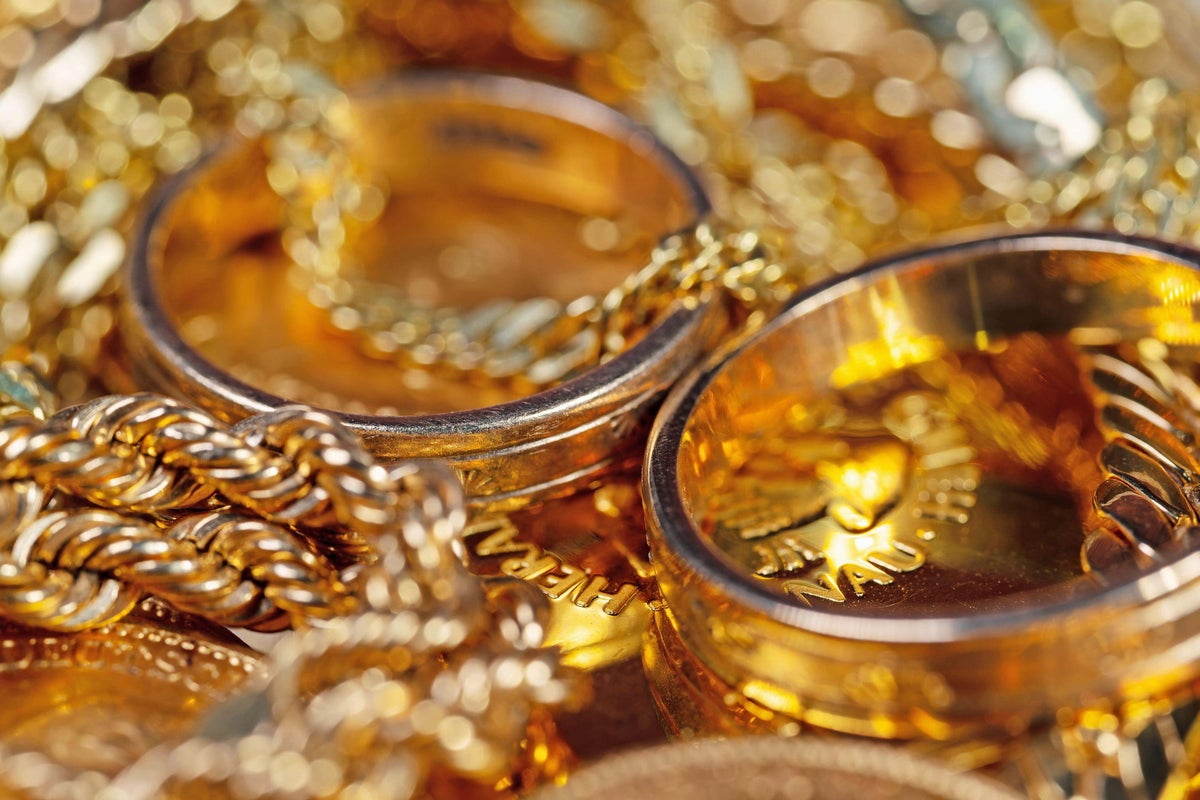
Brits cashing in jewellery as gold price hits record high
-

 Fashion6 days ago
China’s textile & apparel exports surge 17% to $50 bn in Jan-Feb 2026
-
 Business6 days ago
Flipkart group CFO to leave co amid IPO plans – The Times of India
-
 Business1 week ago
Video: The Effects of High Oil Prices
-

 Sports7 days ago
Rating Adidas’ 2026 World Cup away shirts: Argentina, Spain, Mexico and more