

Business
Labour must stick to manifesto pledge not to raise key taxes, Lucy Powell says

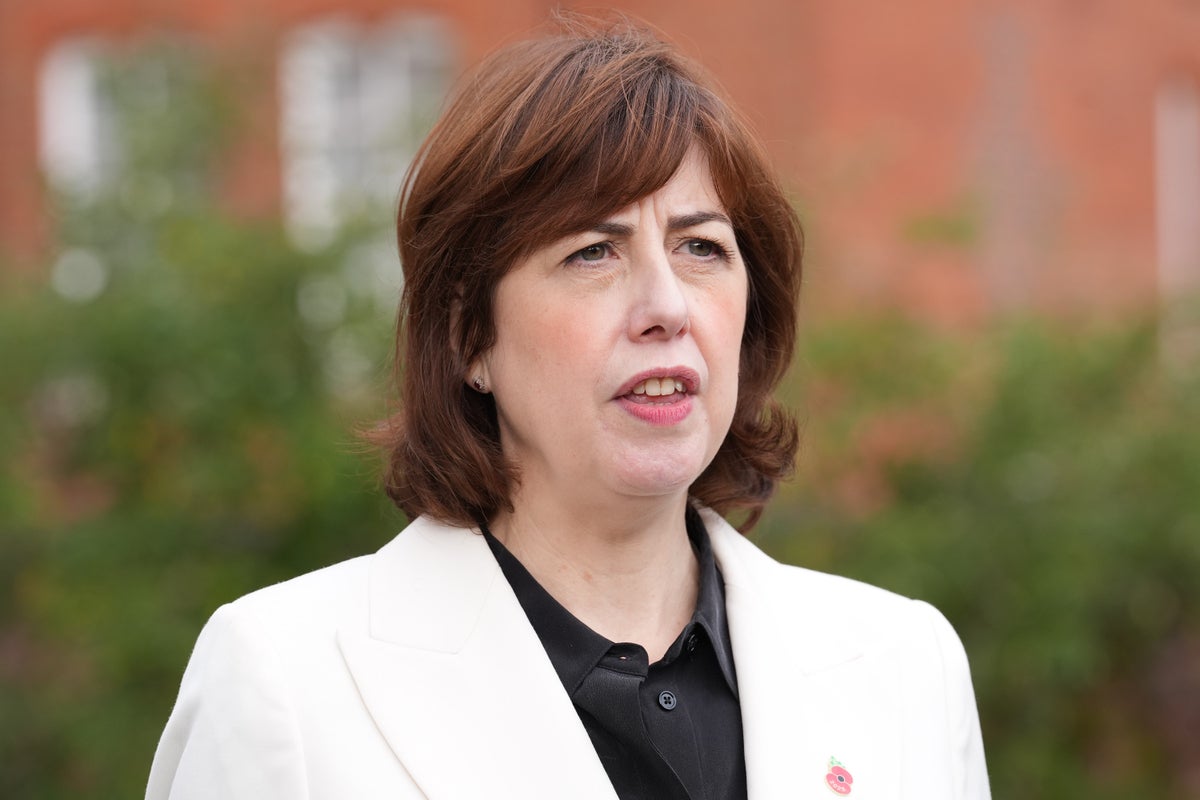
Labour’s new deputy leader Lucy Powell has said the Government should not rip up its manifesto promises over tax hikes, amid mounting speculation it is preparing to do so at the Budget.
Ms Powell, who was sacked from Sir Keir Starmer’s Cabinet in September before winning the deputy leadership election last month, said “we should be following through on our manifesto, of course”.
She suggested breaking the pledge not to raise income tax, national insurance or VAT would damage “trust in politics”.
Speaking to BBC Radio 5 Live, the former Commons leader said: “We should be following through on our manifesto, of course. There’s no question about that.”
She continued: “Trust in politics is a key part of that because if we’re to take the country with us then they’ve got to trust us and that’s really important too.”
Ms Powell said the highly anticipated Budget should be about “putting more money back into the pockets of ordinary working people”.
She said: “That’s what that manifesto commitment is all about. And that’s what this Budget will be about I’m sure.”
She added: “It’s really important we stand by the promises that we were elected on and that we do what we said we would do.”
The Manchester Central MP also called for the two-child benefit cap to be lifted “in full” as a matter of urgency.
The Government has come under increasing pressure to scrap the policy, which restricts child tax credit and universal credit to the first two children in most households.
Ms Reeves is expected to make changes to the limit, first announced in 2015 by the Conservatives, in her autumn statement.
It has been reported the Treasury is looking at different options including whether additional benefits might be limited to three or four children, or whether there could be a taper rate meaning parents would receive the most benefits for their first child and less for subsequent children.
Ms Powell said: “I think what we’ve all been talking about recently is the urgency of that now, because every year that passes with this policy in place, another 40,000 minimum, 40,000 children, are pushed into deep levels of poverty as a result of it and that’s why it is urgent that we do lift it and we lift it in full.”
Her comments could cause a headache for the Prime Minister and Chancellor Rachel Reeves, who have recently heightened expectations that the November 26 Budget will feature an increase in the basic rate of income tax.
Doing so would mean ditching Labour’s commitment to voters ahead of last year’s general election not to increase income tax, national insurance or VAT.
Ms Reeves could use a 2p rise in income tax to help plug what the National Institute of Economic and Social Research said is a £50 billion black hole in the nation’s public finances and give herself a larger fiscal headroom.
Ms Powell won the deputy leadership race after a campaign based on a call for the party to change course.
Her intervention will be seen as evidence that she will use her position to speak out against Sir Keir’s administration’s policies, which she is free to do from the back benches, unlike her defeated deputy leadership rival, Education Secretary Bridget Phillipson, who is bound by collective responsibility.
Business
Iran oil returns: India set to receive first cargo in 5 years, tanker heads to Gujarat – The Times of India
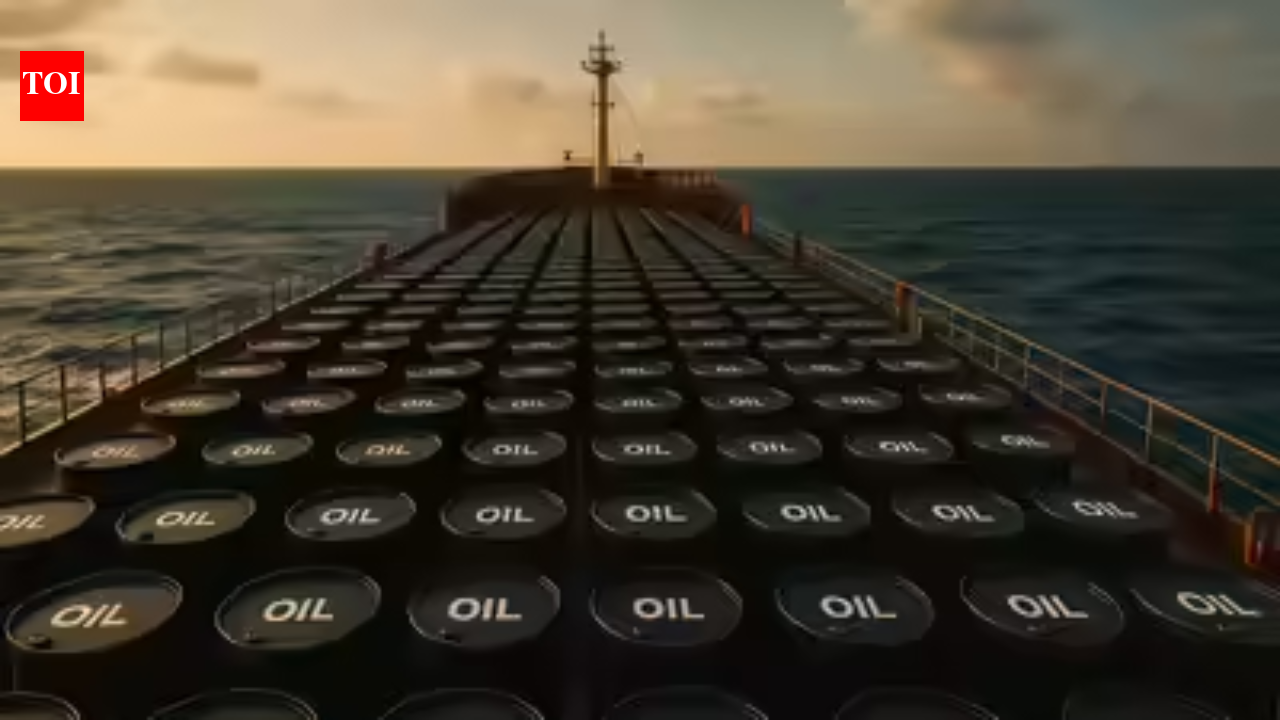
India is set to receive its first shipment of Iranian crude oil since 2019, with a tanker carrying 600,000 barrels of oil en route to Gujarat following a temporary sanctions waiver by the US, according to PTI.Ship-tracking data indicates that the vessel Ping Shun is headed towards Vadinar port, marking a potential revival of Indo-Iran oil trade after nearly five years.“The Indo-Iranian oil trade has flickered back to life. Following the US administration’s decision to grant a 30-day window for Iranian oil “on the water” due to regional conflict, the vessel Ping Shun is now en route to Vadinar (in Gujarat) with 600,000 barrels of crude. This is the first such delivery since May 2019 and comes at a critical time for Indian refiners facing tightening inventories,” said Sumit Ritolia, Lead Research Analyst, Refining and Modelling at Kpler.The development follows Washington’s decision earlier this month to allow a 30-day window for the purchase of Iranian oil already at sea, aimed at easing global oil prices amid the ongoing US-Israel conflict with Iran. The window is set to expire on April 19.While the buyer of the cargo remains unidentified, Vadinar houses a 20 million tonnes per annum refinery operated by Rosneft-backed Nayara Energy and also serves as a landing point for crude supplies to inland refineries such as BPCL’s Bina unit.India’s oil ministry has so far maintained that any decision to resume imports from Iran will depend on techno-commercial viability.Before sanctions were tightened in 2018, India was among the largest buyers of Iranian crude, importing both Iran Light and Iran Heavy grades due to refinery compatibility and favourable pricing terms.Imports ceased in May 2019 after US sanctions were reimposed, with India shifting to alternative suppliers including the Middle East and the US. At its peak, Iranian crude accounted for 11.5 per cent of India’s total imports.India had imported about 518,000 barrels per day (bpd) of Iranian oil in 2018, which declined to 268,000 bpd between January and May 2019 during a sanctions waiver period before dropping to zero thereafter.“The Aframax Ping Shun (IMO 9231901) loaded with Iranian crude oil from Kharg Island in early March has emerged as the first vessel observed signalling a destination of Vadinar, India since May 2019, following sanction reimposition on Iranian oil by the first Trump administration,” Ritolia said.The tanker is estimated to have loaded around 600,000 barrels from Kharg Island around March 4 and is expected to reach Vadinar on April 4.An estimated 95 million barrels of Iranian oil are currently stored on vessels at sea, of which around 51 million barrels could be supplied to India, while the rest may be directed to China and Southeast Asian markets.However, payment mechanisms remain uncertain as Iran continues to be excluded from the SWIFT global banking system, complicating international transactions.Earlier, payments were routed in euros through Turkish banks, but that channel is no longer available following renewed sanctions restrictions.Iran was first disconnected from SWIFT in 2012 due to EU sanctions over its nuclear programme, with further disruptions in 2018 after the US reimposed sanctions, limiting its ability to receive payments and access foreign currency reserves.

The 217-year-old firm says it appointed FRP Advisory as administrators on Tuesday.
Source link
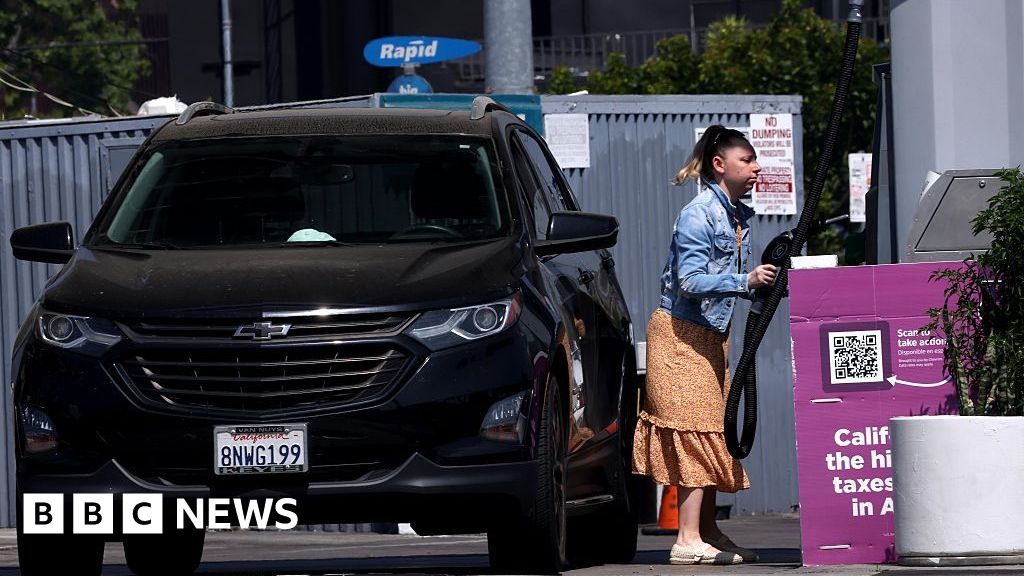
The Iran war continues to push up prices at the pump for US motorists.
Source link


Iran air defenses shoot down MQ-9 drone in Isfahan, LUCAS drone over Qeshm Island
Iran oil returns: India set to receive first cargo in 5 years, tanker heads to Gujarat – The Times of India

Taylor Swift sued by Vegas performer for trademark infringement over “The Life of a Showgirl”

-

 Politics1 week ago
Afghanistan announces release of detained US citizen
-

 Sports1 week ago
Broadcast industry CEO says consolidation is ‘essential’ to compete for NFL soaring media rights prices
-

 Entertainment1 week ago
UN warns migratory freshwater fish numbers are spiralling
-

 Tech1 week ago
Can a Home Appliance Fix the Problem of Soft-Plastic Waste?
-
 Business1 week ago
Property Play: Home flippers see smallest profits since the Great Recession, real estate data firm says
-
 Business1 week ago
Gold prices soar in Pakistan – SUCH TV
-

 Fashion1 week ago
ICE cotton slips on weaker crude, profit booking
-
 Business1 week ago
More women are entering wealth management, but few are in advisory roles, study finds