

Politics
latest in string of museum heists

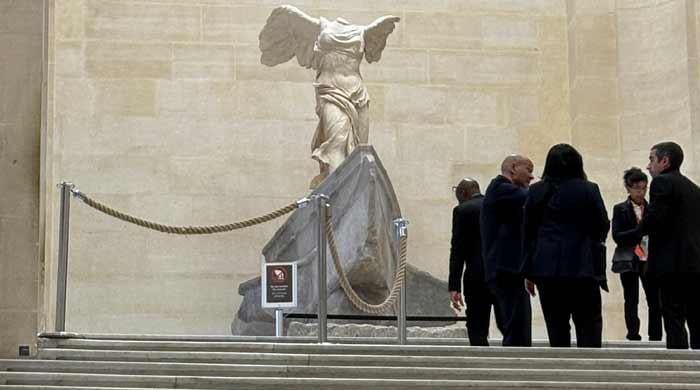
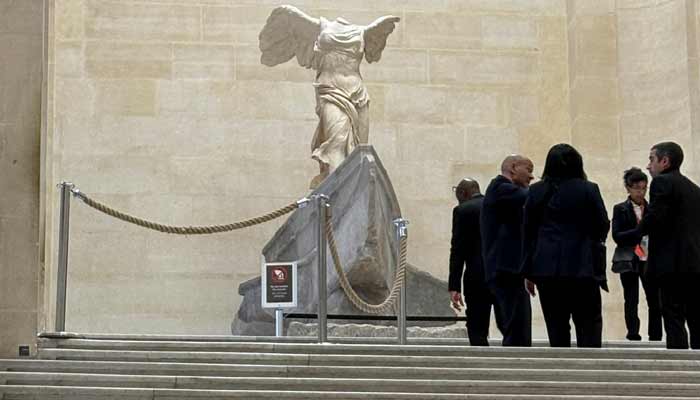
The heist at the Louvre in Paris on Sunday is the latest major robbery of artworks and precious objects from museums.
Here are some precedents:
The Mona Lisa, The Louvre
The Louvre, the world’s most visited art museum, has been targeted more than once over the years.
The most audacious incident was the theft of Leonardo de Vinci’s iconic “Mona Lisa” on August 21, 1911.
Suspicion initially fell on poet Guillaume Apollinaire and artist Pablo Picasso.
But the culprit turned out to be an Italian glazier who had helped frame the museum’s paintings and knew his way round the building.
Glazier Vincenzo Perugia hid the Renaissance masterpiece in his Paris home for two years before trying to sell the portrait to a Florentine dealer.
The risky venture backfired. The dealer raised the alarm and Vincenzo was jailed for seven months.
Montreal Museum of Fine Arts
In the early hours of September 4, 1972— Canada’s Labour Day holiday — three masked robbers armed with machine guns and rifles took advantage of building repair work to slip into the Montreal Museum of Fine Arts via a skylight.
The skylight was usually secured by an alarm, but that had been deactivated while the roof was being mended.
The thieves made off with 18 invaluable paintings and around 40 items of jewellery and precious objects worth a total of two million dollars at the time. Their value has skyrocketed since.
The works stolen during the Skylight Caper included paintings attributed to 17th-century Flemish masters Rembrandt, Brueghel the Elder and Rubens, and 19th-century French Romantics Corot and Delacroix.
Only one painting and one piece of jewellery are thought to have been recovered.
Boston’s Gardner Museum
Early on the morning of March 18, 1990, two men disguised as police officers tricked staff at the Isabella Stewart Gardner Museum in Boston and walked off with 13 works by grand masters, including Degas, Rembrandt, Vermeer and Manet.
The haul, estimated to be worth at least $500 million, has never been recovered despite a 2017 promise of a $10-million reward.
Cellini’s ‘Salt Cellar’
The “Salt Cellar”, a golden sculpture made by Florentine artist Benvenuto Cellini in 1543 for King of France Francis I, disappeared from Vienna’s Museum of Fine Arts at dawn on May 12, 2003.
The thief, an expert in alarm systems, climbed scaffolding erected for the restoration of the museum to make off with the masterpiece.
When the museum alarms went off, security guards ignored them, believing they had been triggered by mistake.
The sculpture, valued at more than €50 million, was found three years later, almost intact, in a crate buried in a forest northwest of Vienna.
Investigators tracked it down after the thief, who had unsuccessfully demanded a ransom of €10 million, gave himself up. He was sentenced to five years in prison.
Oslo Munch Museum
Two armed robbers in balaclavas burst into the Munch museum in Oslo in broad daylight on August 22, 2004.
They seized two major artworks— “The Scream” and “Madonna”— in a 50-second operation, before fleeing in front of stunned visitors.
Two years later, the two masterpieces were found, damaged, in mysterious circumstances. Three men were jailed.
Museum of Modern Art, Paris
Five works by Picasso, Matisse, Braque, Modigliani and Leger, with an estimated combined value of more than €100 million, disappeared from the Museum of Modern Art in Paris on May 20, 2010.
The thief, who had initially only set out to steal Leger’s “Still Life With Candlestick”, capitalised on a major breakdown in the security system, including motion detectors not working, to seize four other major works.
None were recovered, although the “Spiderman” robber was sentenced to eight years in prison in 2017.
Dresden’s Green Vault museum
Thieves stole 18th-century jewels worth €113 million from the Green Vault museum within Germany’s Dresden Castle on November 25, 2019.
Five members of a well-known Berlin criminal family network were found guilty in 2023 over the audacious nighttime raid.
Much of the treasure, including a diamond-encrusted sword, was recovered ,but other jewels are feared lost.
- Private carrier admits misjudgement, planning gaps.
- Regulator orders IndiGo to relieve senior office bearers.
- Operational meltdown linked to new policy of pilot rest.
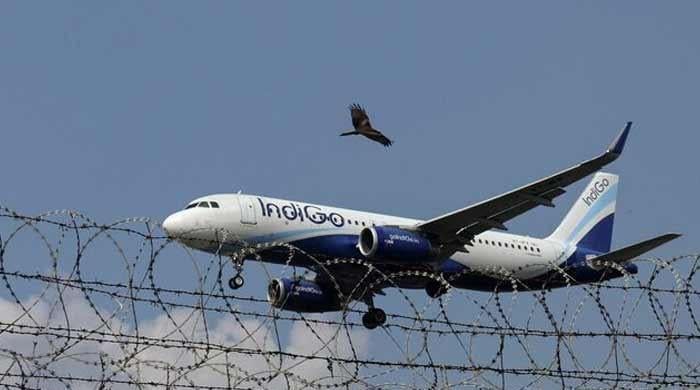
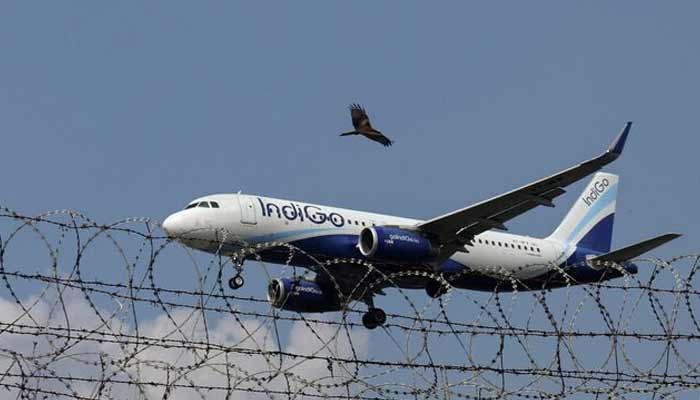
India’s civil aviation regulator on Saturday imposed a fine of $2.45 million on IndiGo, the country’s biggest airline, for poor roster planning that led to large-scale flight cancellations in December.
Airports across India were thrown into disarray late last year, with the private carrier admitting “misjudgement and planning gaps” in adapting to a new policy of pilot rest.
Over 4,000 mostly domestic flights were either cancelled or delayed for over a week across the country, stranding hundreds of thousands of passengers.
The operational meltdown came even though IndiGo had two years to prepare for the new rules aimed at giving pilots more rest periods in between flights to enhance passenger safety.
The Directorate General of Civil Aviation (DGCA) said it was levying the penalty for several lapses, including “failure to strike (a) balance between commercial imperatives and crew members’ ability to work effectively”.
The regulator ordered IndiGo to relieve its senior vice president of its operations control centre of his responsibilities, according to a statement released on Saturday.
It also issued warnings to senior officials at the company, including CEO Pieter Elbers “for inadequate overall oversight of flight operations and crisis management”.
There was no immediate response from IndiGo to the fine.
IndiGo, which commands 60% of India’s domestic market, operates more than 2,000 flights a day.
The crisis was one of the biggest challenges faced by the no-frills airline that has built its reputation on punctuality.
India is one of the world’s fastest growing aviation markets. In November 2024, IndiGo reached a daily level of 500,000 passengers for the first time.
- Khamenei terms wave of protests “American conspiracy”.
- Iran’s supreme leader says will not spare domestic criminals.
- DPM Dar expresses hope for peace and stability in region.
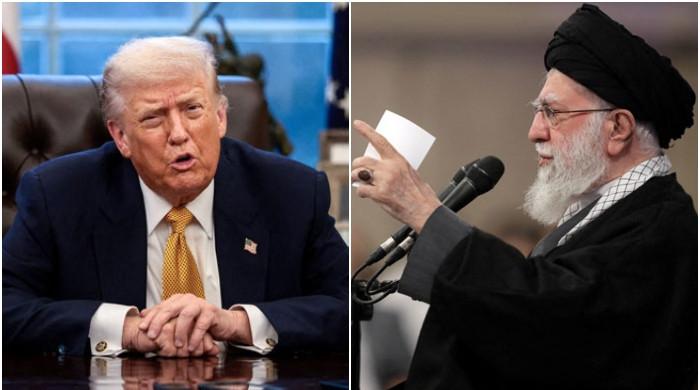
Iran’s supreme leader Ayatollah Ali Khamenei on Saturday accused US President Donald Trump of being responsible for “casualties” during a protest wave in the country.
“We hold the American president guilty for the casualties, damages and accusations he has levelled against the Iranian nation,” he told a crowd of supporters during an address marking a religious holiday.
“This was an American conspiracy,” he said, adding that “America’s goal is to swallow Iran… the goal is to put Iran back under military, political and economic domination”.
He further said authorities “must break the back of the seditionists” after a crackdown on the protest wave.
“We do not intend to lead the country to war, but we will not spare domestic criminals… worse than domestic criminals, international criminals, we will not spare them either,” he added.
“By God’s grace, the Iranian nation must break the back of the seditionists just as it broke the back of the sedition.”
It is pertinent to mention here that more than 3,000 people have died in Iran’s nationwide protests, rights activists said on Saturday, while a “very slight rise” in internet activity was reported in the country after an eight-day blackout.
The protests erupted on December 28 over economic hardship and swelled into widespread demonstrations calling for the end of clerical rule in the country, culminating in mass violence late last week.
Tensions in Iran, however, subsided after three weeks of protests under an internet blackout. The capital Tehran, however, has been comparatively quiet for four days, said several residents reached by Reuters.
Drones were flying over the city, but there were no signs of major protests on Thursday or Friday, said the residents, who asked not to be identified for their safety.
Separately, Deputy Prime Minister Ishaq Dar held telephonic conversation with Iran’s Foreign Minister Abbas Araghchi today.
They discussed the current situation in Iran and the wider region.
DPM Dar expressed hope for peace and stability, and both sides agreed to continue bilateral consultations on matters of mutual interest.
Earlier, US President Donald Trump thanked Iran’s leaders for cancelling what he said were hundreds of planned executions of protesters after a crackdown.
Taking to his social media platform, he said the mass hangings had been called off and praised Tehran for the move.
US President Donald Trump, whose repeated threats to act had included a vow to “take very strong action” if Iran executed protesters, said Tehran’s leaders had called off mass hangings.
“I greatly respect the fact that all scheduled hangings, which were to take place yesterday (Over 800 of them), have been cancelled by the leadership of Iran. Thank you!” he posted on social media.
- Venezuela’s Machado gave her Nobel medal to Trump.
- Donald Trump says he intends to keep the medal.
- Original laureate recorded in history as prize recipient.
OSLO: The Nobel Peace Prize remains inseparably linked to the person or organisation that won it, though the medal can be given away, the Norwegian Nobel Committee said on Friday, a day after last year’s winner gave her medalto US President Donald Trump.
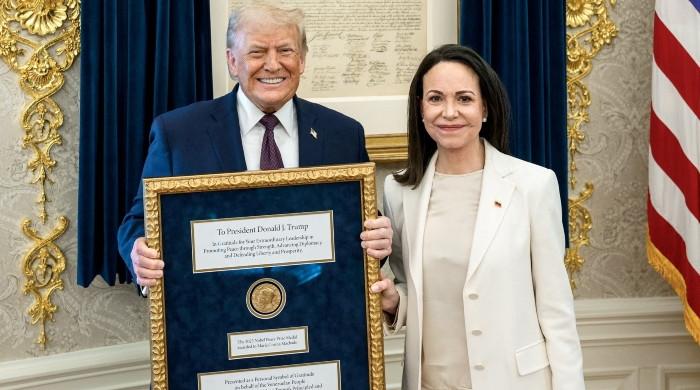
Venezuelan opposition leader Maria Corina Machado gave her medalon on Thursday to Trump, who thanked her for it. The White House released a photo of Trump and Machado, with Trump holding up a gold-coloured frame displaying it, and a White House official said Trump intends to keep it.
Machado’s award also consists of a diploma and 11 million Swedish crowns ($1.19 million).
“Regardless of what may happen to the medal, the diploma, or the prize money, it is and remains the original laureate who is recorded in history as the recipient of the prize,” the award body said in a statement.
“There are no restrictions in the statutes of the Nobel Foundation on what a laureate may do with the medal, the diploma, or the prize money. This means that a laureate is free to keep, give away, sell, or donate these items,” it added.
‘Inseparably linked’
The medal and the diploma are physical symbols confirming that an individual or organisation has been awarded the prize, said the five-strong award committee.
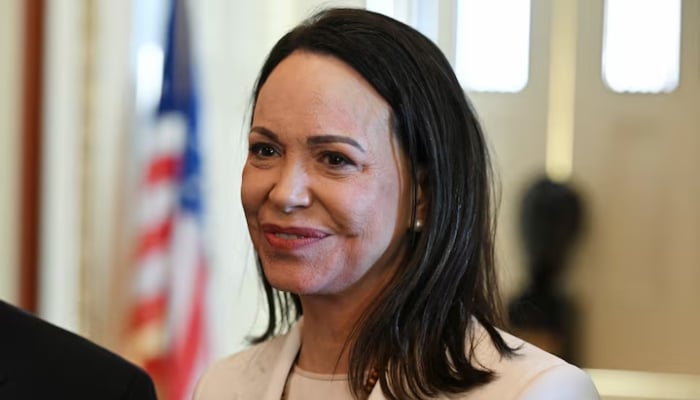
“The prize itself – the honour and recognition – remains inseparably linked to the person or organisation designated as the laureate by the Norwegian Nobel Committee,” it said.
The committee, which did not refer to Trump and Machado by name in its statement, said it does not comment on a laureate’s statements, decisions or actions after the prize is announced.
It was not the first time a Nobel laureate has given away the medal. In 1943, Nobel literature laureate Knut Hamsun gave his to Nazi propaganda minister Joseph Goebbels.
In 2022, Nobel Peace laureate Dmitry Muratov sold his medal for $100 million to raise money for the UN children’s fund Unicef to help Ukrainian refugee children.
In 2024, the widow of former UN Secretary-General Kofi Annan donated his 2001 Nobel Peace Prize medal and diploma to the UN office in Geneva.


Sources: Inter Miami eyeing $15M move for Monterrey’s Berterame

Saturday Sessions: Whitney performs “Won’t You Speak Your Mind”

India slaps $2.45m fine on IndiGo for mass flight cancellations

-
 Tech5 days ago
New Proposed Legislation Would Let Self-Driving Cars Operate in New York State
-
 Sports7 days ago
Clock is ticking for Frank at Spurs, with dwindling evidence he deserves extra time
-
Sports1 week ago
Commanders go young, promote David Blough to be offensive coordinator
-

 Entertainment4 days ago
X (formerly Twitter) recovers after brief global outage affects thousands
-

 Fashion7 days ago
South India cotton yarn gains but market unease over US tariff fears
-
 Fashion7 days ago
China’s central bank conducts $157-bn outright reverse repo operation
-
 Business1 week ago
SoftBank reduces Ola Electric stake to 13.5% from 15.6% – The Times of India
-

 Sports7 days ago
US figure skating power couple makes history with record breaking seventh national championship