

Fashion
LFW Saturday: Patrick McDowell, Roksanda, Completedworks, The Ouze, and Lueder

Published
September 21, 2025
In a busy 24 hours of London Fashion Week, two couture-worthy houses, Patrick McDowell and Roksanda, held statement shows, along with two jewelry happenings, and a Berlin winter rave moment in a basement on the Strand.
Patrick McDowell
There are not that many bona fide couturiers in London, but Patrick McDowell certainly merits the etiquette, especially after witnessing his richly refined collection entitled Lancashire Rose on Saturday morning.
Inspired by his late grandmother, a lady so venerable she was born in 1923. Even before the independence of Ireland, as copies of her blue passport left on each seat read Great Britain and Ireland.
Practically every look played with roses: notably a blurred red rose print used in sleeveless jackets; skilfully sculpted bustiers; or mid-calf dresses and skirts covered with gauze. Best of all, a perfectly cut coat dress finished with crystal buttons.
McDowell clearly has a very competent atelier – in evidence with an early sleeveless black satin column embroidered with a fabric rose, whose stem reached from shoulder to ankle. Or in a cool deconstructed trench reduced to the size of a corset that bloomed with fabric flowers.
Patrick also has a smart sense of humor – finishing several black corsets and gowns with scores of dangling silver hem thimbles.
Though reverential, the collection was also technologically savvy – each look carrying a Digital Product Passport (DPP) courtesy of Certilogo. Which one can scan to discover provenance, material and sustainability. In a word, connected couture.

Staged with precision inside Control Room A of Battersea Power Station, to a soundtrack that blended his granny’s voice with lush orchestration – Erland Cooper & Scottish Ensemble. A classy couture statement, and a rather wonderful “love letter” in remembrance of a departed grandmother.
“This collection is about the life of my grandmother, a life that spanned ten decades, eight children, a world war, and me. The matriarch, the reason I began to sew, and my blueprint for fairness and straightforwardness, her presence shapes me in ways both ordinary and profound,” explained McDowell inside the passport.
Roksanda: A hipster Hepworth in The Chancery Rosewood
The other pre-eminent couturier in London is Roksanda, who presented the most accomplished collection so far this season in London Fashion Week.

Roksanda’s use of volume and silhouette has rarely been better. Seen in voluptuous trench-coats that swirled around the body, or stunning silk cocoon dresses in all manner of abstract daubs. Finishing half her looks with long tentacles of fabric of three-meter trains.
Though this season she added in a soupçon of risqué – like a cut-out, body-con black crepe top worn with billowing satin harem pants; or same cut of pant worn in pale concrete wool suit with superb wide-lapel jacket. The best suit we’ve seen on any runway after ten days of collections in New York and London.

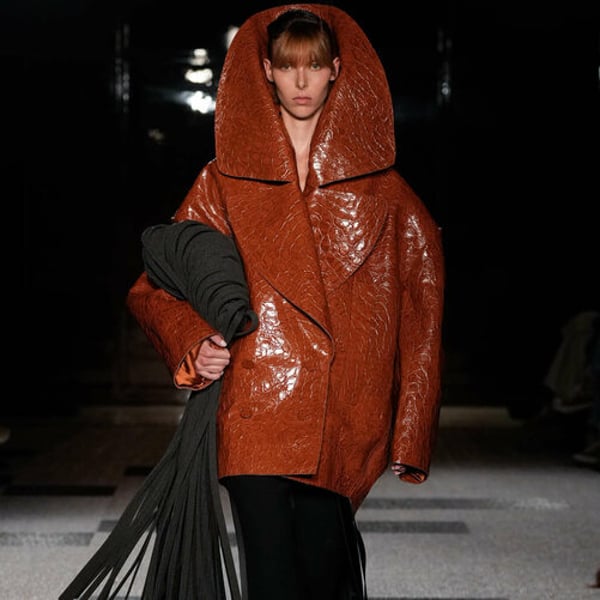
Folding, slashing, reducing in a collection inspired by sculptor Barbara Hepworth. One does need to be tall – like Roksanda herself – to pull off these clothes, from the giant orange alligator caban to the trio of beautiful gowns made in layers of Mikado silk and the dexterously sewn sliced cock feather panels.
Staged in The Chancery Rosewood, the restored former American embassy in London, the show and collection won the designer an intense three minutes of applause. Every single clap was merited.
Completedworks: Jerry Hall performance art
A work of performance at Completedworks, starring Jerry Hall as mock TV presenter, talk show host and fortune teller.
Attired in a three-piece teal blue suit, perched on an artic blue concrete block armchair, on top of a cerulean blue carpet.
“Stop distracting me! Bread and butter, bread and butter, mema mema, mema,” Hall began, puckering her lips in preparation for her fake talk show as a producer and makeup artist fussed nearby.

“Thank you for joining us at our brand-new network, CWTV… Before we get started, I want to impart a few important messages. Beware the color green. Red is lucky for the coming months. Green is no, red is dough,” she insisted, her image magnified on a huge screen behind her.
Gradually unveiling the jewelry brand’s latest ideas. Sleek silver bracelets, hyper polished black leather bags with silver barbed wire handles, glass bowls and sapphire blue ceramic mugs.
Before, six guests who had been lent objects belonging to other members of audience, stood up with their small bags of loot.
The second of which proved to be a heavily pregnant Joséphine de La Baume. The redheaded French singer dressed in a black ruffled dress. Her bracelet – Hall explained – was an heirloom of her great grandmother. The memory of which caused the French lady to tear up. Each tear captured in detail on the screen.
At the finale, guests were offered tiny pale blue ice-creams covered in sweet pearls. Altogether turning a jewelry presentation into an arty happening.
The Ouze: Award for mise en scene
The mise en scene was the key at another cool jewelry marque The Ouze, which presented its creations inside a wicked series of tableaux as part of LFW’s NewGen selection on The Strand.

An open fridge revealed a battered chain bracelet beside a dish of butter above a gold ring around a leek, while a tough chic napkin ring and silver cutlery were left amid the aftermath of a boozy dinner party.
Close by, cool Grecian style brooches hung on a classy Prince of Wales coat inside a gent’s haberdashery. Dog tags, rugged scissors and a letter opener adorned a classical desk.
Lueder: Berlin in a basement on The Strand
Lueder is a London-based brand designed by its Berlin-raised founder Marie Lueder. And the result is a look that mangles up elements of both cities. The dark, worn and industrial aesthetic of Berlin, with the bohemian dash of London.

Lueder’s staging for her latest show mixed the two burbs’ as all. A country house banqueting table used as a runway, where the cast’s Puma sneakers left black footmarks on the white linen tablecloth. A score of “guests” at the table sipping on red wine and champagne.
Attired in ragged sweatpants and shorts; scrunched up jersey tops; ruched leather shirt/jackets and some great new beige boxing boots.

Clothes that mashed up eras as well. Medieval cowls and Tudor shorts met vertically ribbed NATO maneuver sweaters. Part of the show containing a new co-branding Lueder just completed with Pull & Bear. Full marks to the high street brand for the gutsy collab’.
And full marks to Lueder, whose show was celebrated with raucous enthusiasm. One can only imagine how much fun they will have at her after party.
Copyright © 2025 FashionNetwork.com All rights reserved.







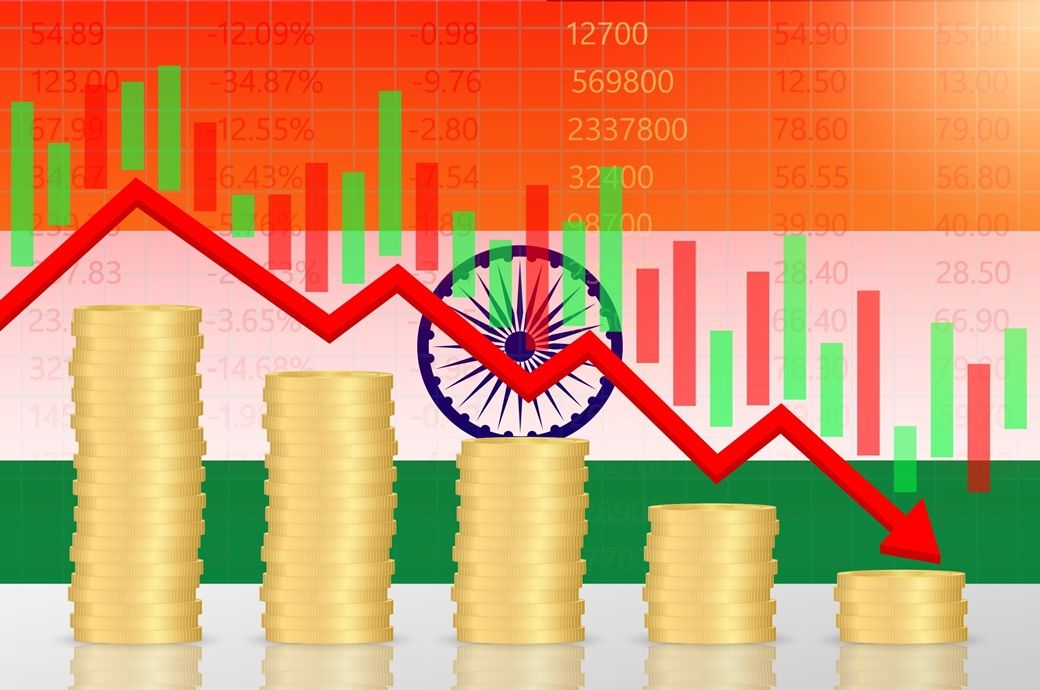
While trends in high frequency indicators for January-February 2026 appear favourable, the heightened uncertainty around the duration of the Middle East conflict casts a shadow on the near-term macroeconomic outlook for India amid high import dependency for items like crude oil, natural gas and fertilisers, it noted.
India’s FY27 GDP growth is likely to slow to 6.5 per cent from the projected 7.5 per cent in FY26 owing to the impact of higher energy prices and concerns around energy availability, ICRA Ratings said.
The heightened uncertainty around the duration of the Iran war casts a shadow on the near-term macroeconomic outlook for India.
If the conflict lasts longer, the adverse effects could widen across sectors.
If the conflict lasts for an extended period, the adverse implications of the same could widen across sectors, amid an uptick in input costs and the consequent impact on profitability of the India corporate sector.
Amid the projected uptrend in the consumer price index-based inflation in FY27 with risks tilted to the upside, ICRA Ratings expects an extended pause on the policy rates by the central bank’s monetary policy committee in the fiscal despite the anticipated softening in the GDP growth. However, it expects the Reserve Bank of India to continue to intervene on the liquidity front during FY27.
The available data for January–February FY2026 indicate a positive trend across most non-agricultural indicators, with the year-on-year performance of 12 out of 18 indicators improving compared to the third quarter of FY26, while the remaining six deteriorated.
Fibre2Fashion News Desk (DS)
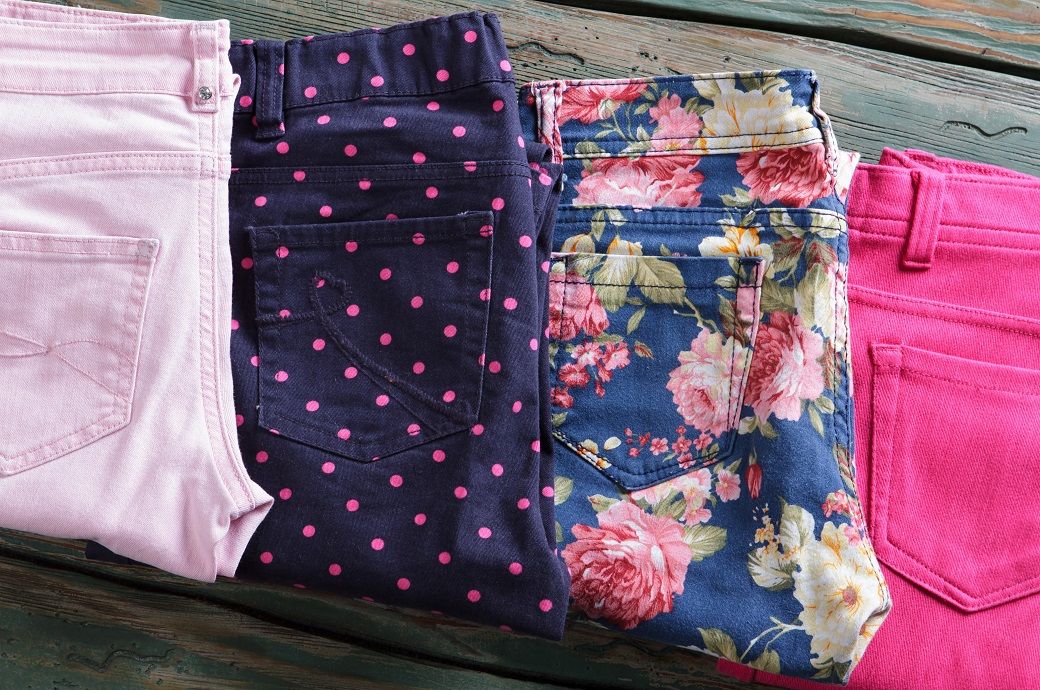
Indonesia’s apparel exports rose modestly to $8.705 billion in 2025 from $8.316 billion in 2024, reflecting gradual recovery.
The US remained dominant, accounting for over 56 per cent of shipments, highlighting growing market dependence.
While Japan, South Korea and Europe offered stability, exports stayed concentrated in key products and segments.
Source link

Methanol prices in India have surged nearly 150 per cent from pre-Iran–US tension levels, tracking a sharp rise in crude oil and tightening global energy markets.
Hormuz disruption risks, limited rerouting capacity, rising freight and insurance costs, and constrained imports are fuelling volatility, with prices seen approaching ₹90 per kg.
Source link


Nike shares fall 9% on weak outlook, expected 20% sales decline in China

Wrigley Field to host Big Ten/SEC volleyball doubleheader
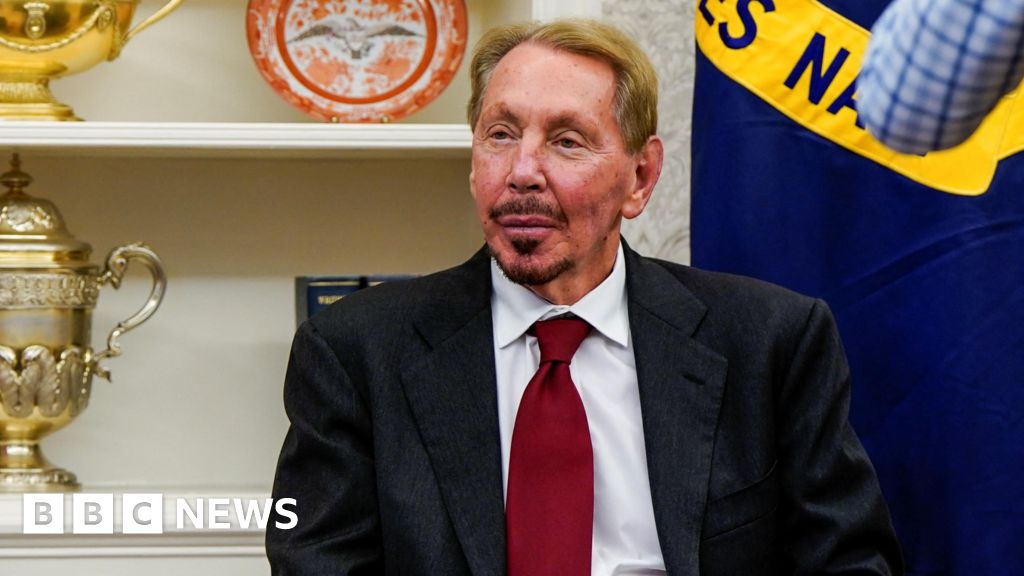
Tech giant Oracle makes ‘significant’ job cuts

-

 Politics1 week ago
Afghanistan announces release of detained US citizen
-

 Sports1 week ago
Broadcast industry CEO says consolidation is ‘essential’ to compete for NFL soaring media rights prices
-

 Entertainment1 week ago
UN warns migratory freshwater fish numbers are spiralling
-

 Tech1 week ago
Can a Home Appliance Fix the Problem of Soft-Plastic Waste?
-
 Business1 week ago
Property Play: Home flippers see smallest profits since the Great Recession, real estate data firm says
-
 Business1 week ago
Gold prices soar in Pakistan – SUCH TV
-

 Fashion1 week ago
ICE cotton slips on weaker crude, profit booking
-
 Business1 week ago
More women are entering wealth management, but few are in advisory roles, study finds