

Business
LIC Trims Stakes In HDFC, ICICI, Kotak; Bets On SBI, Yes Bank: Key Takeaways For Investors


Last Updated:
According to data, LIC added 6.41 crore shares of SBI during the quarter, amounting to an investment of roughly Rs 5,285 crore

LIC
Life Insurance Corporation of India (LIC), the country’s largest institutional investor with an equity portfolio worth over Rs 16 lakh crore, made bold portfolio moves in the September quarter, trimming its holdings in top private sector lenders—HDFC Bank, ICICI Bank, and Kotak Mahindra Bank—while sharply increasing exposure to public sector giant State Bank of India (SBI) and the smaller Yes Bank.
According to data from Prime Database, LIC added 6.41 crore shares of SBI during the quarter, amounting to an investment of roughly Rs 5,285 crore. In a contrarian move, the insurer also quadrupled its stake in Yes Bank—from less than 1% in June to 4% by September—even as several domestic institutional investors reduced their exposure to the stock.
At the same time, LIC sold shares worth an estimated Rs 3,203 crore in HDFC Bank, Rs 2,461 crore in ICICI Bank, and Rs 2,032 crore in Kotak Mahindra Bank. The sell-down caused overall insurance company holdings in these lenders to drop by 8–10% sequentially, marking LIC’s sharpest pullback from India’s leading private banks in recent years, Prime Database noted.
“A significant trend in the market is the resilience of the PSU banking space. This segment is even now attractively valued in a market which is richly valued,” said VK Vijayakumar of Geojit. “The prospects of this segment look bright in the context of the coming merger of PSU banks.”
The timing of LIC’s shift is notable. Even as the insurer increases exposure to public lenders, foreign investors have been pouring capital into private banks in 2025. Emirates NBD acquired a 60% stake in RBL Bank for $3 billion, Sumitomo Mitsui boosted its holding in Yes Bank to 24.2% following a $1.6 billion investment, and Blackstone bought nearly 10% of Federal Bank for Rs 6,196 crore.
Market expert Neeraj Dewan cautioned that valuations of PSU banks already reflect high expectations. He noted that while smaller PSU banks have delivered decent results, sustaining momentum will depend on how well they capture loan demand amid easing interest rates and improved liquidity. Dewan warned that after a strong rally, even a slight earnings miss could trigger investor disappointment.
LIC’s broader equity strategy during the quarter underscored its value-oriented approach. The insurer increased stakes in 68 NSE-listed companies, with an average decline of 5.55% in their purchase prices—indicating opportunistic buying in beaten-down counters—while trimming positions in 94 firms that saw stable prices, consistent with profit-taking behavior.
Brokerage Motilal Oswal highlighted that both private and public sector banks delivered solid Q2 results. Private lenders benefited from stronger net interest margins and healthy credit growth, while PSU banks also reported robust performance. Many banks, it added, have guided for further margin expansion in the second half of FY26, supported by the recent cash reserve ratio (CRR) cut and improving growth momentum.
ArunaGiri N, CEO of Trustline Holdings, remarked that the recent wave of foreign direct investment could be an early sign of broader institutional inflows. He suggested that FDI often precedes renewed foreign institutional investor (FII) participation, implying a potential comeback of FIIs in India’s private banking space.
The performance gap between PSU and private banks has been evident in recent months. Over the past three months, the Nifty PSU Bank index has surged more than 21%, while the broader Nifty Bank index has gained just over 4%.
According to Shibani Sircar Kurian of Kotak Mahindra AMC, valuations in the banking sector remain attractive relative to historical levels. She maintained a positive view on the space, with a slight preference for private banks but a focus on larger PSU lenders that still offer improving return ratios and favorable valuations. Kurian also noted that bigger PSU banks are better positioned to benefit from rising retail credit demand and lower funding costs as deposit rates ease.
Meanwhile, the government is reportedly considering allowing direct foreign investment in state-run banks of up to 49%, more than double the current ceiling. Analysts at Nuvama estimate that such a move could trigger as much as $4 billion in passive inflows into PSU banks.

Aparna Deb is a Subeditor and writes for the business vertical of News18.com. She has a nose for news that matters. She is inquisitive and curious about things. Among other things, financial markets, economy, a…Read More
Aparna Deb is a Subeditor and writes for the business vertical of News18.com. She has a nose for news that matters. She is inquisitive and curious about things. Among other things, financial markets, economy, a… Read More
November 10, 2025, 15:35 IST
Read More





GST collections: India’s net Goods and Services Tax (GST) collections increased to Rs 1.78 lakh crore in March 2026, marking a rise of 8.2% compared to the previous month, according to official figures released on Wednesday.Gross GST revenue for March stood at Rs 2 lakh crore, which is an 8.8% increase over the same month last year.Abhishek Jain, Indirect Tax Head & Partner, KPMG says, “GST collections continue to show steady 9% annual growth, supported by strong import activity this month and consistent compliance. While export refunds have eased this month but remain healthy overall for the year”Refunds during the month totalled Rs 0.22 lakh crore, up 13.8% on a year-on-year basis, which resulted in net GST collections of Rs 1.78 lakh crore.Domestic GST revenue reached Rs 1.46 lakh crore, registering a growth of 5.9%, while revenue from imports was recorded at Rs 0.54 lakh crore, rising sharply by 17.8% during the period.Post-settlement GST figures across states presented a varied trend. While industrially advanced states recorded strong growth, several others reported a decline.Maharashtra contributed the highest amount to the overall collections at Rs 0.13 lakh crore on a pre-settlement basis, followed by Karnataka and Gujarat.Among states showing an increase in post-settlement SGST collections were Himachal Pradesh, Punjab, Uttarakhand, Haryana, Rajasthan, Uttar Pradesh, Bihar, Gujarat, Maharashtra, Karnataka, Kerala, Tamil Nadu, Telangana and Andhra Pradesh, among others.On the other hand, states such as Jammu and Kashmir, Chandigarh, Delhi, Arunachal Pradesh, Meghalaya, Assam, West Bengal, Jharkhand, Odisha, Chhattisgarh and Madhya Pradesh, among others, registered a decline in post-settlement SGST revenues.

A wave of bullishness swept the Pakistan Stock Exchange on Wednesday, pushing the 100 Index up by more than 5,000 points to reach 153,700.
The surge reflects increased investor confidence and strong trading activity across major sectors.
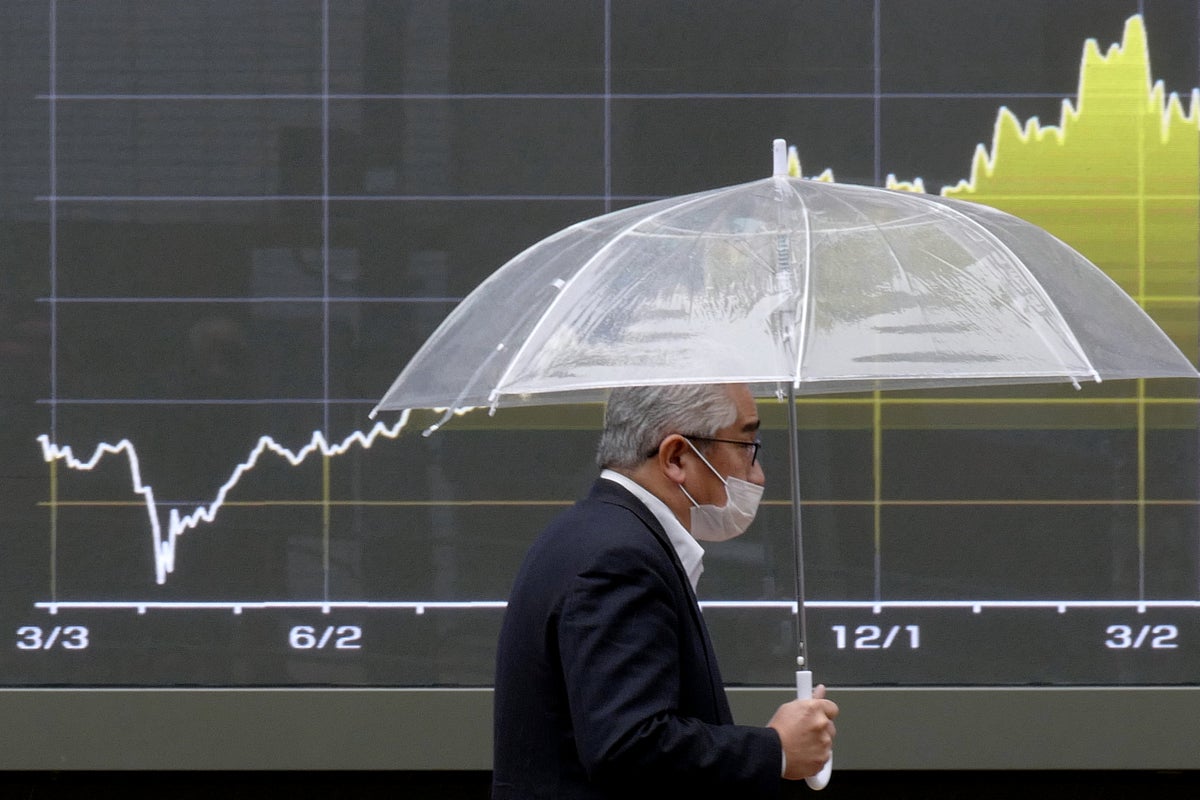
Business sentiment among major Japanese manufacturers rose from 16 to 17 in March, according to the Bank of Japan’s quarterly survey released on Wednesday.
The improvement in the so-called diffusion index in the closely watched “tankan” report, recorded for the fourth quarter straight, comes even as worries grow about Japan’s economic growth and oil supplies because of the US-Israeli war on Iran.
The survey is an indicator of companies foreseeing good conditions minus those feeling pessimistic.
The index for large non-manufacturers, such as the service sector, stood unchanged from the last tankan at 36.
Japan’s inflation has so far remained relatively moderate, but worries are growing about prices at the gas stands and other products. Investors and consumers alike are filled with uncertainty about how much longer the war may last and what US president Donald Trump might say next. Japan’s benchmark Nikkei 225 has gyrated wildly in recent weeks.
Analysts say the Bank of Japan may start to raise interest rates because of concerns about inflation, given the soaring energy costs and declining yen, two elements that greatly affect living costs for the average Japanese consumer.
Historically, Japan has benefited from a weak yen because of its giant exports, exemplified in autos and electronics. A weak yen raises the value of exports’ earnings when converted into yen.
But in recent years, a weak yen is working as a negative, as resource-poor Japan imports much of its energy, as well as other key products such as food and manufacturing components.
The US dollar has been soaring against the yen lately.
Japan’s central bank had a negative interest rate policy for years to fight deflation until it normalised policy in 2024. It kept the rate unchanged at 0.75 per cent in March. The next Bank of Japan monetary policy board meeting is set for April 27 and 28.


Rupee at 95/$: What it means for India’s textile sector

China’s Anta Sports posts record $11.62 bn revenue in 2025
GST collections rise 8.2% in March 2026 to hit Rs 1.78 lakh crore – The Times of India

-

 Politics1 week ago
Afghanistan announces release of detained US citizen
-
 Business1 week ago
Property Play: Home flippers see smallest profits since the Great Recession, real estate data firm says
-

 Sports1 week ago
Broadcast industry CEO says consolidation is ‘essential’ to compete for NFL soaring media rights prices
-

 Entertainment1 week ago
UN warns migratory freshwater fish numbers are spiralling
-

 Tech1 week ago
Can a Home Appliance Fix the Problem of Soft-Plastic Waste?
-
 Business1 week ago
Gold prices soar in Pakistan – SUCH TV
-

 Fashion1 week ago
ICE cotton slips on weaker crude, profit booking
-
 Business1 week ago
More women are entering wealth management, but few are in advisory roles, study finds