

Politics
Main protesters ‘announced end’ of lawful protests: Iranian Embassy

- Govt dialogue addressed shopkeepers’ concerns: embassy.
- Security forces swiftly contained scattered illegal protests.
- Internet restored nationwide amid cybersecurity monitoring.
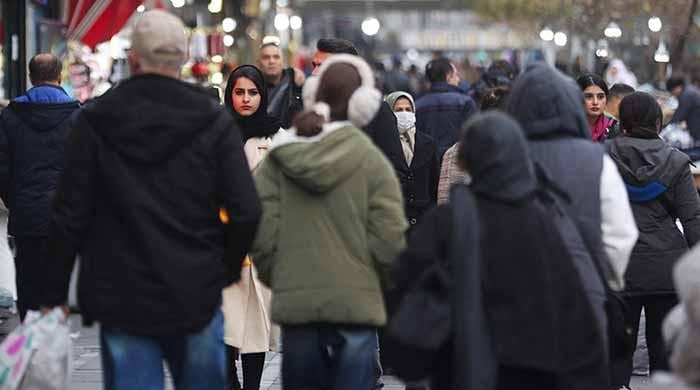
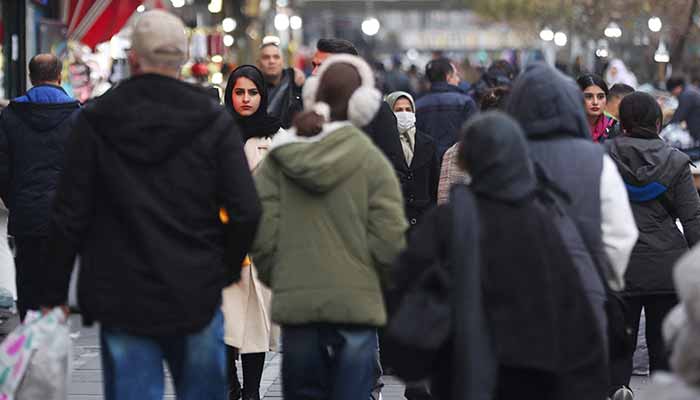
The Iranian Embassy in Islamabad on Monday said that the main group of protesters, largely comprising shopkeepers and trade guilds, had officially announced the conclusion of their lawful protests following government engagement and confidence-building measures.
The demonstrations began last Sunday when shopkeepers staged a strike over high prices and economic stagnation, but they have since spread to other places and expanded to include political demands.
Protests took place in 25 out of Iran’s 31 provinces and affected, to varying degrees, at least 45 different cities, most of them small or medium-sized and concentrated in the west, according to an AFP tally based on official statements and media reports.
At least 12 people have been killed since December 30 in localised clashes, including members of the security forces, according to a tally based on official announcements, and there have been media reports of episodes of property damage in the west.
The Fars news agency said on Monday that “the trend observed on Sunday night shows a notable decrease in the number of gatherings and their geographic reach compared to previous nights”.
In a statement issued today, the embassy in Islamabad said protests had erupted in recent weeks after a sudden increase in the exchange rate, prompting demonstrations by shopkeepers and members of various professional guilds.
According to the embassy, the Iranian government immediately acknowledged the protests and initiated talks through relevant authorities, with President Masoud Pezeshkian playing a central role in negotiations. The discussions resulted in agreements aimed at addressing the protesters’ concerns.
The embassy claimed that hostile external elements sought to exploit the situation to create nationwide insecurity and instability, using cyberspace to incite certain groups.
It claimed that public statements by Israel and the United States in support of protesters further encouraged attempts to mobilise people in some smaller towns.
However, the embassy said the timely presence of security forces prevented the situation from escalating, adding that illegal elements were quickly contained.
Providing updates on the current situation, the embassy said internet connectivity had been restored across Iran, though minor and temporary reductions in speed remained in place due to security and cybersecurity considerations.
It said the government, while recognising the legal rights of lawful protesters, had launched constructive dialogue with representatives of trade guilds and market associations, a step that significantly contributed to stabilising the situation.
The statement noted that in a few cities, limited and weak clusters of illegal protests briefly appeared in remote locations but were swiftly dispersed by law enforcement agencies. In several other cities, calm and public order had been fully restored under the supervision of security forces, the embassy said.
It further highlighted that the responsible conduct and vigilance shown by lawful protesters, particularly their adherence to legal frameworks, played a crucial role in preventing escalation and containing unrest over recent days.
The embassy also claimed that Israel and the United States continued to incite what it described as deceived elements, adding that some arrested rioters had confessed to links with foreign agencies and receiving financial support from abroad.
Meanwhile, Gholamhossein Mohseni Ejei, the head of the judiciary, said Iran will offer no leniency to “rioters”, though the public has a right to demonstrate.
“I instruct the attorney general and prosecutors across the country to act in accordance with the law and with resolve against the rioters and those who support them… and to show no leniency or indulgence,” Gholamhossein Mohseni Ejei said, according to the judiciary’s Mizan news agency.
He added that Iran “listens to the protesters and their criticism, and distinguishes between them and rioters”.
The rial was depreciating again on Monday against the greenback after strengthening in recent days, according to the informal black-market rate, which stands at around 1.4 million rials, compared with about 770,000 a year earlier.
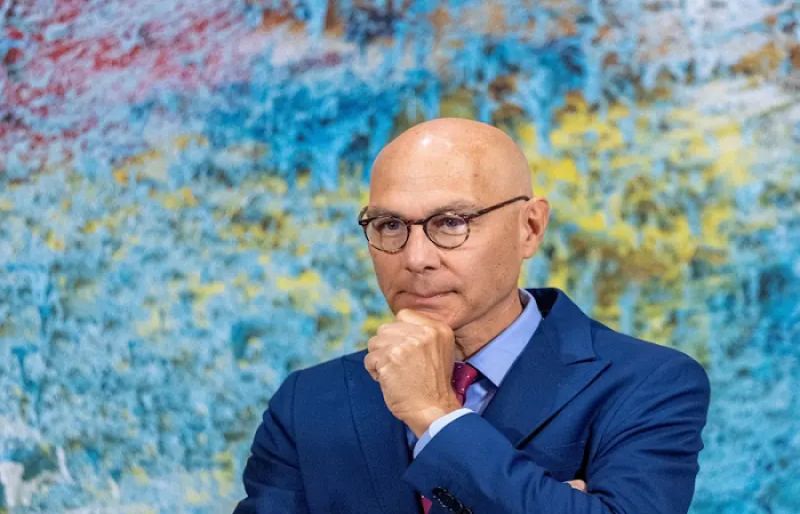

GENEVA: The United Nations High Commissioner for Human Rights Volker Turk has said that killings such as the reported death of Ali Khamenei raise serious concerns under international human rights law.
Speaking to reporters, Turk said that from a human rights perspective, any form of killing is unacceptable.
“From a human rights perspective, any killing of anyone is not in the interest of international human rights law,” he said.
Strike on Girls’ School Raises Concern
Turk also addressed reports of a strike on a girls’ school in Minab, a city in southern Iran, during the first day of US and Israeli attacks.
Iran’s ambassador to the UN in Geneva, Ali Bahreini, claimed that the attack killed around 150 students, although the figure has not been independently verified.
The UN rights chief stressed that schools are civilian institutions and should never be targeted during armed conflicts.
Call for Independent Investigation
Turk called for an impartial investigation into the incident to determine the circumstances surrounding the strike, including the type of weapon used and the timing of the attack.
He said responsibility now lies with those who carried out the strikes to ensure a transparent inquiry.
Meanwhile, US officials told media that military investigators are examining the possibility that American forces were responsible, though the investigation has not yet reached a final conclusion.
The incident has intensified international concern about civilian casualties and humanitarian law violations as the conflict in the region continues to escalate.

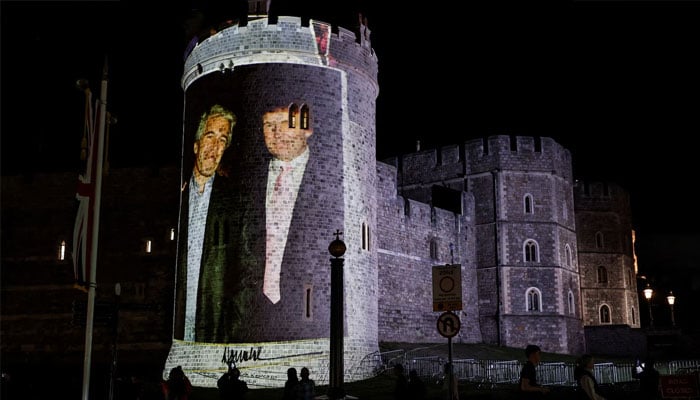
WASHINGTON: The US Justice Department published additional FBI documents describing interviews with a woman who said President Donald Trump sexually assaulted her after she was introduced to him by Jeffrey Epstein.
The documents had not been made public under previous congressionally-mandated file releases related to the late convicted sex offender because they were mistakenly marked “duplicative,” the department said.
Democrats are investigating the Trump administration’s handling of the Epstein files.
The documents released include descriptions of multiple 2019 interviews the FBI held with the woman, who alleged she was assaulted by both Epstein and Trump while she was between 13 and 15 years old.
In one interview, the woman said Epstein took her to “either New York or New Jersey” and introduced her to Trump.
The woman said she and people close to her received threatening calls over the years demanding she keep quiet that she believed were related to Epstein.
Trump has denied any wrongdoing related to the Epstein allegations, and the Justice Department previously said some of the documents it has released “contain untrue and sensationalist claims against President Trump.”
Democrats have accused the Trump administration of covering up details of the Epstein investigation that could negatively impact Trump.
On Wednesday, a House committee voted to subpoena Attorney General Pam Bondi to answer questions about the Justice Department´s handling of the documents.
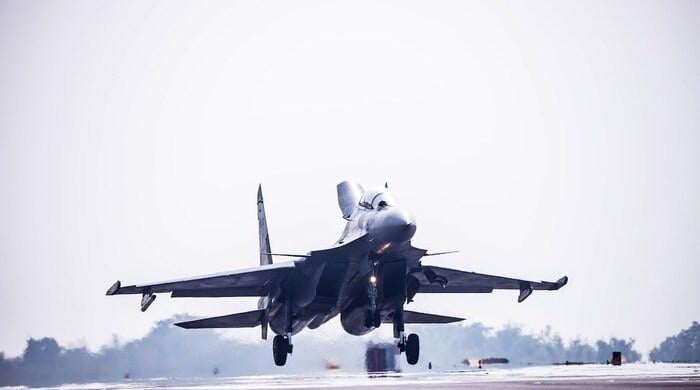
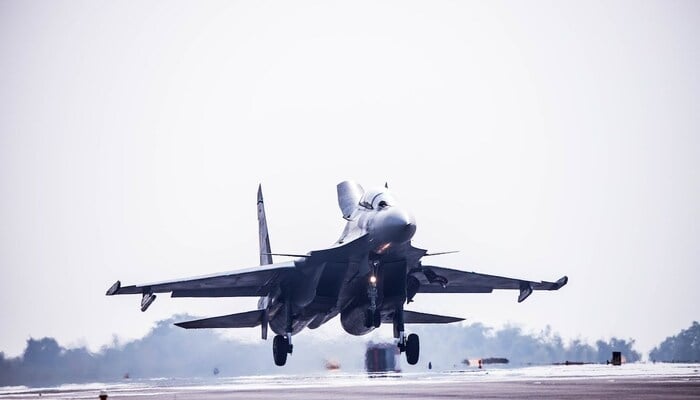
- Sukhoi Su-30MKI fighter jet crashes during training.
- Jet went missing after taking off from Jorhat airbase.
- Dead pilots identified as Sq Ldr Anuj, Flight Lieutenant Duragkar.
Two pilots from the Indian Air Force (IAF) were killed after a Sukhoi Su-30MKI fighter jet crashed in India’s northeastern state of Assam, NDTV reported, citing officials.
The Indian Air Force said on Friday that a fighter jet, which was on a training mission, crashed in the northeast Indian state of Assam.
“The Su-30MKI, which was on a training mission, crashed in the area of Karbi Anglong, Assam, approx 60 km from Jorhat,” the Indian Air Force said on X.
The aircraft had gone missing shortly after taking off from the Jorhat airbase. Communication with the Russian-origin fighter jet was lost at 7:42pm, according to officials.
The crash occurred in Assam’s Karbi Anglong district, around 60 kilometres from the airbase. The aircraft reportedly went down in a remote hilly area.
The IAF identified the deceased pilots as Squadron Leader Anuj and Flight Lieutenant Purvesh Duragkar.
“All personnel of the IAF express sincere condolences, and stand firmly with the bereaved family in this time of grief,” the Air Force said in a post on X.
Local residents in the area said they heard a loud explosion from a nearby hill and saw a ball of fire shortly afterwards.
India’s Defence Minister Rajnath Singh said he was “deeply saddened” by the loss of the two pilots in the “tragic” crash.
The Sukhoi Su-30MKI is a two-seater, long-range fighter aircraft developed by Russian manufacturer Sukhoi. It is produced under licence in India by state-run Hindustan Aeronautics Limited (HAL) for the IAF.
The aircraft was first inducted into the Indian Air Force in 1997, and the service currently operates a fleet of more than 260 Su-30MKI jets.
Similar incidents have occurred in recent years. A Sukhoi fighter jet crashed in Nashik, Maharashtra, in June 2024, while another Su-30 aircraft crashed in January 2023 shortly after taking off from the Gwalior airbase in Madhya Pradesh.


Stock market today: Which are the top losers and gainers on March 6- check list – The Times of India

Bangladesh road map aims at raising tax-to-GDP ratio to 15% by 2035

Watch: How war in Iran may affect food and fuel prices

-
 Business1 week ago
Attock Cement’s acquisition approved | The Express Tribune
-

 Fashion1 week ago
Policy easing drives Argentina’s garment import surge in 2025
-

 Politics1 week ago
What are Iran’s ballistic missile capabilities?
-
 Business1 week ago
India Us Trade Deal: Fresh look at India-US trade deal? May be ‘rebalanced’ if circumstances change, says Piyush Goyal – The Times of India
-

 Politics1 week ago
US arrests ex-Air Force pilot for ‘training’ Chinese military
-
 Business7 days ago
Greggs to reveal trading amid pressure from cost of living and weight loss drugs
-

 Sports7 days ago
LPGA legend shares her feelings about US women’s Olympic wins: ‘Gets me really emotional’
-

 Sports1 week ago
Sri Lanka’s Shanaka says constant criticism has affected players’ mental health