

Politics
Man killed by US federal agents was nurse who ‘wanted to make a difference’

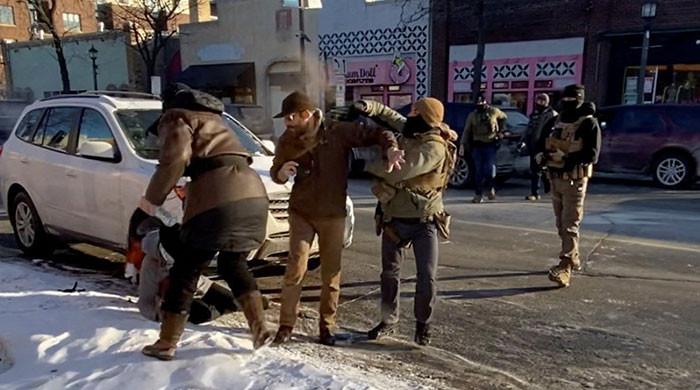
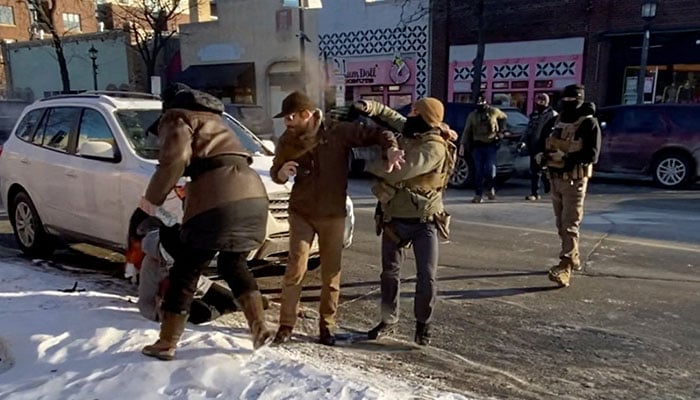
MINNEAPOLIS: The US citizen shot dead by federal immigration agents in Minneapolis on Saturday was an intensive care nurse at a local veterans’ hospital who “wanted to make a difference in this world,” family members said.
Alex Pretti, 37, was shot and killed while scuffling with immigration officials on an icy roadway in the Midwestern city, less than three weeks after an Immigration and Customs Enforcement (ICE) officer shot and killed Renee Good, also 37, in her car.
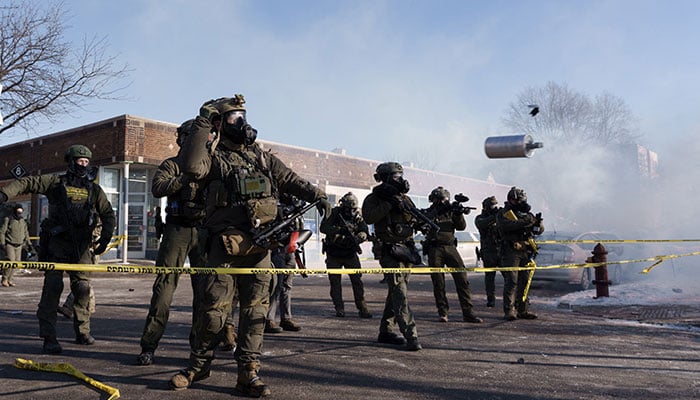
The latest killing sparked fresh protests and rebukes from local officials, who disputed the Trump administration’s quick claims that Pretti intended to harm federal agents as he participated in demonstrations against a sweeping immigration crackdown.
Pretti was “a kindhearted soul who cared deeply for his family and friends” and those he cared for at a Minneapolis Veterans Affairs (VA) hospital, his parents said in a statement on Saturday.
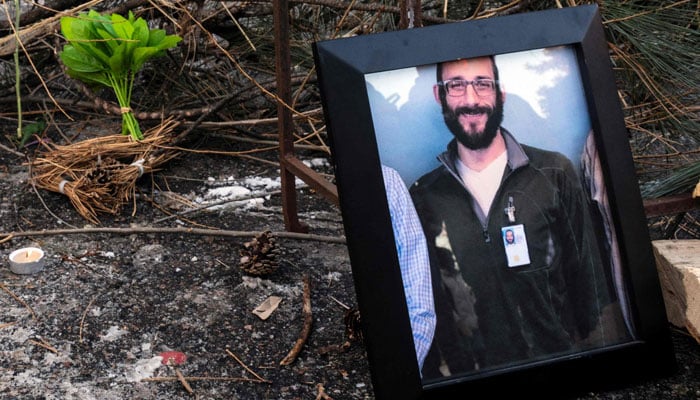
“Alex wanted to make a difference in this world. Unfortunately, he will not be with us to see his impact,” his parents said.
Dimitri Drekonja, chief of the Infectious Diseases Section at the Minneapolis VA hospital and a colleague of Pretti´s, called him “a good kind person who lived to help.”
“He had such a great attitude. We’d chat between patients about trying to get in a mountain bike ride together. Will never happen now,” Drekonja wrote on the social media platform Bluesky.
He said Pretti was a nurse working “to support critically ill Veterans.”
Pretti graduated from high school in Green Bay, Wisconsin, in 2006, according to local media reports. He went to nursing school before joining the VA.
Trump administration officials have sought to brand Pretti as a violent aggressor but their accounts are contradicted by video, which AFP has not verified, aired widely by US media.
Pretti’s parents said their son had stepped in front of a federal agent who shoved a woman protester shortly before his death.
They denounced what they called “sickening lies” from the Trump administration and said the gun found on Pretti, which local officials said he was licensed to carry, was not in his hand when he was shot.
“Alex is clearly not holding a gun when attacked by Trump’s murdering and cowardly ICE thugs,” his parents said in the statement.
“He has his phone in his right hand and his empty left hand is raised above his head while trying to protect the woman ICE just pushed down all while being pepper sprayed.”
The family asked the public to “get the truth out about our son. He was a good man.”
“We are heartbroken but also very angry,” they said.
- Family of US detainee urged Afghan leader to release him for Eid.
- Afghan top court deems detention sufficient, orders release.
- Coyle, 64, arrested by Afghan authorities in January 2025.
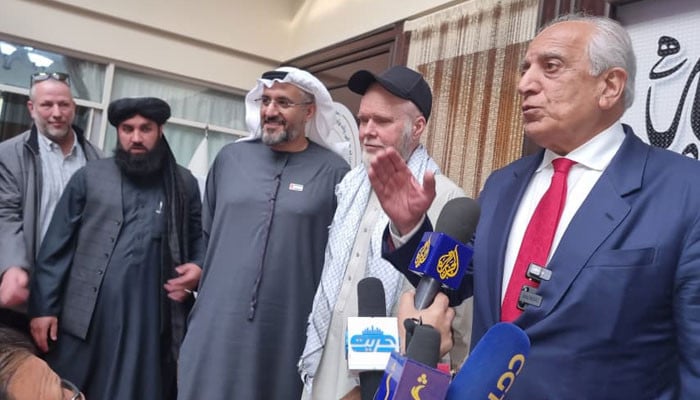
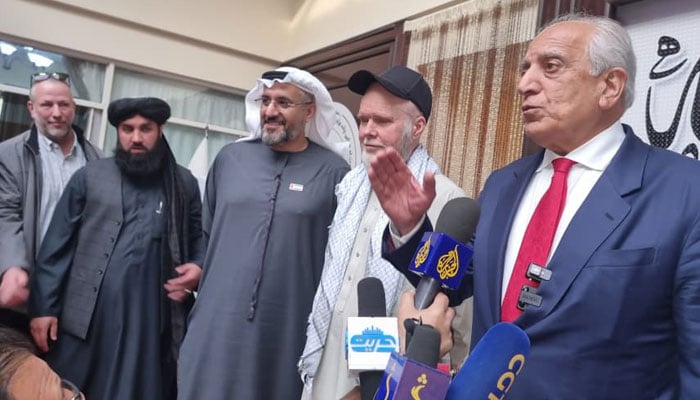
KABUL: Afghanistan’s Taliban government announced on Tuesday that it was freeing a US national who had been detained for more than a year.
The foreign ministry said the family of linguist and researcher Dennis Coyle had written to the supreme leader of Afghanistan, requesting his release for Eid.
“The Supreme Court of the Islamic Emirate deemed his period of detention sufficient and decided on his release,” a statement read.
The announcement came after a meeting of Foreign Minister Amir Khan Muttaqi, US former special envoy to Afghanistan Zalmay Khalilzad, the UAE ambassador to Kabul Saif Mohammed Al-Ketbi, and a member of Coyle’s family.
The UAE facilitated the release, the ministry said, adding that Coyle had been reunited with his family in Kabul on Tuesday.
Coyle, 64, was arrested by the Afghan authorities in January 2025, according to the Foley Foundation, which advocates for the release of Americans taken hostage or arbitrarily detained abroad.
A website set up by his family, freedenniscoyle.com, said he was “legally working to support Afghan communities as an academic researcher” when he was detained.
They said he had been held in “near-solitary conditions, requiring permission even to use the bathroom, and without access to adequate medical care”.
Coyle first travelled to Afghanistan in the early 2000s “to survey Afghanistan’s rich linguistic diversity and help Afghan communities develop resources in their own languages”, they added.
“Throughout his years of service, Dennis maintained a home in Kabul and built deep, meaningful relationships with the Afghan people,” the website read.
“Those who know him speak with profound appreciation for both the man and his work. Dennis has always embraced Afghan culture with genuine warmth – sharing cups of traditional green tea, enjoying dried fruit snacks, and engaging in the kind of heartfelt conversations that bridge cultures.
“His love for the Afghan people isn’t just professional; it’s personal and deeply felt.”
Earlier this month, Secretary of State Marco Rubio said the United States had formally placed Afghanistan on its list of countries engaged in “wrongful detentions”.
The Afghan authorities called that “regrettable” and pointed to talks between the two sides and previous releases with mediators from Qatar.
In 2025, five American citizens were released in what the Taliban authorities said was a “goodwill gesture”.
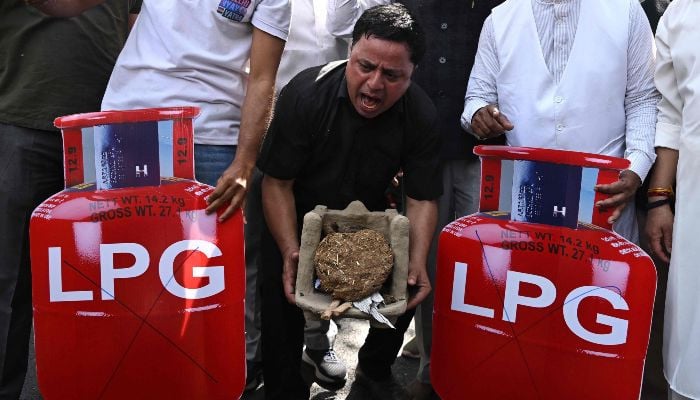
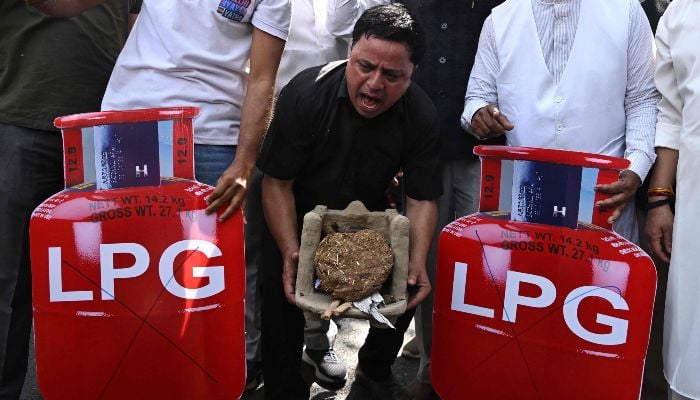
NEW DELHI: Soaring black-market prices of cooking gas in India’s capital are pushing poorer families back to wood and coal, raising health risks and worsening air quality in the highly polluted megacity.
India is the world’s second-largest buyer of liquefied petroleum gas (LPG), which is used for cooking and predominantly sourced from the Middle East — and supplies have been strangled by the ongoing war.
India’s Prime Minister Narendra Modi has urged states to curb black marketing and avoid panic, stressing that India’s energy supplies remain stable.
In the low-income Madanpur Khadar neighbourhood, 36-year-old domestic helper Sheela Kumari says she has been forced to abandon LPG cooking gas cylinders for cooking after prices more than doubled.
“We used to buy cylinders for INR 1,800-2,000 ($19-$21), but now on the black market it has gone up to 5,000 ($53),” she told AFP, nearly as much as she entire monthly salary of INR 6,000.
“It is unimaginable for us,” she said. “The next best option for us was going back to wood and coal.”
Kumari said a 14 kilogramme cylinder lasts only 15-20 days for her family of six, even when they stretch its use out.
But she says a 10 kilogramme bundle of firewood, lasting several days, costs 30 rupees ($0.30).
“There are health repercussions, and my children cough,” she said. “But tell me a way out?”
‘Too expensive’
Her neighbour, 45-year-old Munni Bai, who has asthma, had switched to using an electric cooker as well as biogas from cow dung, to help her breathing.
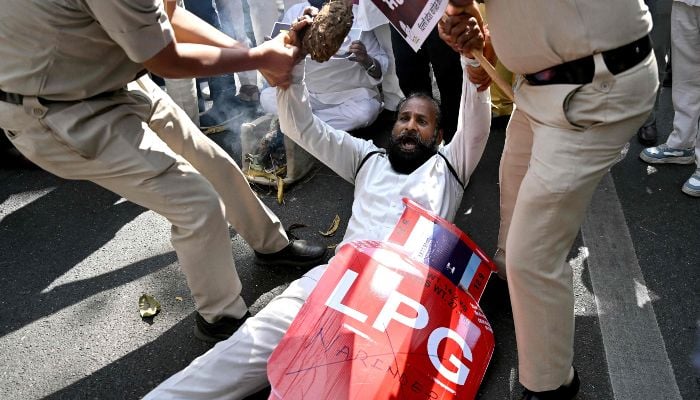
But now she said she was being forced to resume use of alternative fuels.
“Gas is too expensive,” she said. “We cannot depend on it — we moved from coal and wood, due to my health issue, but now it is difficult to sustain.”
But activists say the problem is more about access.
Many migrant workers lack documentation needed for subsidised LPG and rely on informal markets, where hoarding has pushed up prices.
“There is no major shortage yet, but hoarding has increased,” said Deepak, who uses only one name, from the Centre for Advocacy and Research (CFAR).
“Many migrants depend on black-market cylinders, and prices have gone up two to three times”.
New Delhi, and its wider sprawling metropolitan region of 30 million residents, is regularly ranked among the world’s most polluted capitals, due to a deadly mix of emissions from power plants, heavy traffic, as well as the burning of rubbish and crops.
For the past decades, India’s government has pushed its “Ujjwala” or “light” clean-energy scheme, to provide over 100 million LPG connections to poor households.
Burning wood, coal and biomass indoors exposes families to high levels of smoke and toxic particles, increasing the risk of respiratory illnesses.
Women and children, who spend more time near cooking areas, are especially vulnerable.
Politics
Trump approved Iran operation after Netanyahu argued for joint assassination of Khamenei: sources
- Netanyahu lobbied hard for Iran attack.
- Rubio warned US facilities will be targeted.
- Operation Epic Fury launched Feb 27.
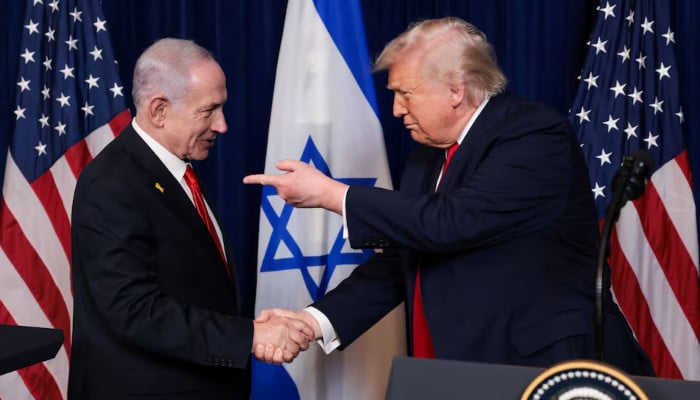
Less than 48 hours before the US-Israeli strike on Iran began, Prime Minister Benjamin Netanyahu spoke by phone to President Donald Trump about the reasons for launching the kind of complex, far-off war the American leader once had campaigned against.
Both Trump and Netanyahu knew from intelligence briefings earlier in the week that Iranian Supreme Leader Ayatollah Ali Khamenei and his key lieutenants would soon meet at his compound in Tehran, making them vulnerable to a “decapitation strike” — an attack against a country’s top leaders often used by Israelis but traditionally less so by the United States.
But new intelligence suggested that the meeting had been moved from Saturday night to Saturday morning, according to three people briefed on the call.
The call has not been previously reported.
Netanyahu, determined to move forward with an operation he had urged for decades, argued that there might never be a better chance to assassinate Khamenei
By the time the call took place, Trump already had approved the idea of the United States carrying out a military operation against Iran but had not yet decided when or under what circumstances the United States would get involved, said the sources, who spoke on condition of anonymity to discuss sensitive internal deliberations.
The US military had for weeks built up a presence in the region, prompting many within the administration to conclude it was just a matter of when the president would decide to move forward. One possible date, just a few days earlier, had been scuttled because of bad weather.
Reuters was unable to determine how Netanyahu’s argument affected Trump as he contemplated issuing orders to strike, but the call amounted to the Israeli leader’s closing argument to his US counterpart.
The three sources briefed on the call said they believed it — along with the intelligence showing a closing window to assassinate Iran’s leader — was a catalyst for Trump’s final decision to order the military on February 27 to move ahead with Operation Epic Fury.
The first bombs struck on Saturday morning, February 28. Trump announced that evening that Khamenei was dead.
In response to a request for comment, White House spokeswoman Anna Kelly did not directly address the call between Trump and Netanyahu but told Reuters the military operation was designed to “destroy the Iranian regime’s ballistic missile and production capacity, annihilate the Iranian regime’s Navy, end their ability to arm proxies, and guarantee that Iran can never obtain a nuclear weapon.”
Neither Netanyahu’s office nor Iran’s UN representative responded to comment requests.
Netanyahu in a news conference on Thursday dismissed as “fake news” claims that “Israel somehow dragged the US into a conflict with Iran. Does anyone really think that someone can tell President Trump what to do? Come on.”
Trump has said publicly that the decision to strike was his alone.
Reuters reporting, with officials and others close to both leaders speaking mostly on condition of anonymity given the sensitivity of internal deliberations, does not suggest that Netanyahu forced Trump to go to war.
But the reporting shows that the Israeli leader was an effective advocate and that his framing of the decision — including the opportunity to assassinate an Iranian leader — was persuasive to the president.
Defence Secretary Pete Hegseth in early March suggested that revenge was at least one motive for the operation, telling reporters, “Iran tried to kill President Trump, and President Trump got the last laugh.”
June attack targeted nuclear sites
Trump ran his campaign in 2024 based on his first administration’s foreign policy of “America First” and said publicly that he wanted to avoid war with Iran, preferring to deal with Tehran diplomatically.
But as discussions over Iran’s nuclear programme failed to produce a deal last spring, Trump began contemplating a strike, according to the three people familiar with White House deliberations.
A first attack came in June, when Israel bombed Iran’s nuclear facilities and missile sites, and killed several Iranian leaders. US forces later joined the attack, and when that joint operation ended after 12 days, Trump publicly reveled in the success, saying the US had “obliterated” Iran’s nuclear facilities.
Yet months later, talks began again between the US and Israel about a second aerial attack aimed at hitting additional missile facilities and preventing Iran from gaining the ability to build a nuclear weapon.
The Israelis began to plan their attack on Iran under the assumption they would be acting alone, Defence Minister Israel Katz told Israel’s N12 News on March 5.
But during a December visit to Trump’s Mar-a-Lago estate in Florida, Netanyahu told Trump that he was not fully satisfied with the outcome of the joint operation in June, said two people familiar with the relationship between the two leaders, speaking on condition of anonymity.
Trump indicated he was open to another bombing campaign, the people added, but he also wanted to try another round of diplomatic talks.
Two events pushed Trump toward attacking Iran again, according to several US and Israeli officials and diplomats.
The US operation on January 3 to capture Venezuela’s President Nicolas Maduro in Caracas — which resulted in no American deaths while removing from power a longstanding US foe — demonstrated the possibility that ambitious military operations could have few collateral consequences for US forces.
Later that same month, massive anti-government protests erupted in Iran. Trump vowed to help the protesters but did little immediately that was public.
Privately, however, cooperation intensified between the Israel Defence Forces and the US military’s Middle East command, known as Centcom, with joint military planning conducted during secret meetings, according to two Israeli officials, speaking on condition of anonymity.
Not long after, during a February visit by Netanyahu to Washington, the Israeli leader briefed Trump on Iran’s growing ballistic missile programme, pointing out specific sites of concern.
He also laid out the dangers of the ballistic missile programme, including the risk that Iran might eventually gain the ability to strike the American homeland, said three people familiar with the private conversations.
The White House did not respond to questions about Trump’s December and February meetings with Netanyahu.
Trump’s chances at history
By late February, many US officials and regional diplomats considered a US attack on Iran very likely to proceed, though the details remained uncertain, according to two other US officials, one Israeli official and two additional officials familiar with the matter.
Trump was briefed by Pentagon and intelligence officials on the potential advantages to be gained from a successful attack, including the decimation of Iran’s missile program, according to two people familiar with those briefings.
Before the phone call between Netanyahu and Trump, Secretary of State Marco Rubio told a small group of top Congressional leaders on February 24 that Israel was likely to attack Iran, whether or not the US participated, and Iran would then likely retaliate against US targets, according to three people briefed on the meeting.
Behind Rubio’s warning was an assessment by American intelligence officials that such an attack would indeed provoke counterstrikes from Iran against US diplomatic and military outposts and US Gulf allies, said three sources familiar with US intelligence reports.
This prediction proved accurate. The strikes have led to Iranian counterattacks on US military assets, the deaths of more than 2,300 Iranian civilians and at least 13 US service members, attacks on US Gulf allies, the closure of one of the world’s most vital shipping routes, and a historic spike in oil prices that is already being felt by consumers in the United States and beyond.
Trump had also been briefed that there was a chance, even if small, that the assassination of Iran’s top leaders could usher in a government in Tehran that was more willing to negotiate with Washington, said two other people familiar with Rubio’s briefing.
The possibility of regime change was one of Netanyahu’s arguments in the call shortly before Trump gave final orders to attack Iran, said the people briefed on it.
That view was not held by the Central Intelligence Agency, which had assessed in the weeks prior that Khamenei would likely be replaced by an internal hardliner if he was killed, as Reuters previously reported.
The CIA did not immediately respond to a request for comment.
Trump repeatedly called for an uprising after Khamenei was assassinated. With the war in its fourth week and the region engulfed in conflict, Iran’s Revolutionary Guards still patrol the nation’s streets. Millions of Iranians remain sheltered in their homes.
Khamenei’s son Mojtaba, considered even more harshly anti-American than his father, has been named the new supreme leader of Iran.


Property Play: Home flippers see smallest profits since the Great Recession, real estate data firm says

Centre plans to cut broken rice share in PDS, boost ethanol feedstock supply – The Times of India

Afghanistan announces release of detained US citizen

-

 Entertainment1 week ago
Strategic oil stocks to be released ‘immediately’ in Asia and Oceania: IEA
-

 Fashion1 week ago
Trump signs order to combat fraudulent ‘Made in America’ labels
-
 Business1 week ago
Stocks To Watch: Tata Motors, IndiGo, Jindal Stainless, GMR Airports, Hindalco, And Others
-
 Business1 week ago
UK looking at all options to secure Strait of Hormuz, says Ed Miliband
-

 Sports1 week ago
Men’s March Madness 2026 bracket: Get to know all 68 teams
-

 Tech1 week ago
Early Deals From the Amazon Spring Sale That Passed Our BS Test
-

 Sports1 week ago
Team USA advances to World Baseball Classic final after win over Dominican Republic
-

 Sports6 days ago
March Madness 2026 – How to watch in SA, start time, schedule, TV channel for NCAA championship basketball tournament