

Tech
Meta’s New AI Model Gives Mark Zuckerberg a Seat at the Big Kid’s Table


Meta on Wednesday announced its first major model since CEO Mark Zuckerberg rebooted the company’s AI efforts last year under a new division called Meta Intelligence Labs. The model, called Muse Spark, is a step toward Zuckerberg’s vision of “personal superintelligence,” the company says, and for now, it will remain closed source.
Zuckerberg said in a social media post that Meta’s goal is to build AI products that “don’t just answer your questions but act as agents that do things for you.” The billionaire added that he is “optimistic that this will support a wave of creativity, entrepreneurship, growth, and health.”
Muse Spark certainly appears to be a major upgrade over Meta’s last big release, Llama 4, which came out in April 2025 and was viewed in the tech industry as a disappointment with middling performance.
Meta is making Muse Spark available via meta.ai and through the Meta AI app. Unlike Llama, Muse Spark is not being released for others to download, though the company says it hopes to open-source future versions. Meta was previously seen as a leader in open source AI and made its Llama models available for researchers, startups, and hobbyists to download and customize.
“Looking ahead, we plan to release increasingly advanced models that push the frontier of intelligence and capabilities, including new open source models,” Zuckerberg wrote.
Meta’s self-reported benchmark scores for Muse Spark suggest the model is better at some tasks than the latest models from OpenAI, Anthropic, Google, and xAI. “Muse Spark is the first step on our scaling ladder,” Meta said in a blog post, referring to its goal of building AI that far outstrips human abilities.
Artificial Analysis, an AI benchmarking company that got early access to Muse Spark, said on social media that the new model is one of the best it has tested. “Muse Spark scores 52 on the Artificial Analysis Intelligence Index, placing it within the top 5 models we have benchmarked,” the company said in its post, citing its own rubric for scoring models that combines various third-party benchmarks.
Meta says the new model is natively multimodal, meaning that it has been trained to handle images, audio, and video as well as text. Muse Spark also features advanced reasoning capabilities, a key feature of the best AI models available today, and it was built from scratch to have strong coding capabilities. Meta described these features as the foundation for building ever-more capable models using modern machine-learning methods.
Meta says that it built Muse Spark to be especially good at providing medical advice. “To improve Muse Spark’s health reasoning capabilities, we collaborated with over 1,000 physicians to curate training data that enables more factual and comprehensive responses,” the company said in its blog post.
Zuckerberg has spent a small fortune overhauling Meta’s artificial intelligence efforts since Llama 4 came out. The tech giant poached top AI engineers from competing firms with compensation packages worth hundreds of millions. It also spent billions to acquire or make major investments in a number of AI startups. Meta recruited Alexandr Wang, the CEO of Scale, an AI training company, to lead its AI efforts after investing $14.3 billion in the company.
Meta also published a document outlining its vision for safely scaling AI models to superhuman levels of performance. The company’s Advanced AI Scaling Framework outlines safety checks that the company will perform as its models become increasingly advanced.













As the world held its breath on Tuesday night, news of a ceasefire and the potential reopening of the Strait of Hormuz brought a collective sigh of relief. But with shipments stalled in the strait for over a month, the disruption to global shipping will not resolve immediately.
“Traffic through Hormuz dropped by about 95 percent [during this conflict]. As a result, prices surged, and not just for crude oil but also for refined products like jet fuel, diesel, and gas oil,” says Carsten Ladekjær, CEO at Glander International Bunkering, which specializes in supplying fuel and lubricants to the global shipping industry.
The impact has been uneven across regions. Countries heavily dependent on Middle Eastern energy—particularly in Asia—have been most affected. India sources around 55 percent of its energy imports from the region, China about 50 percent, Japan 93 percent, South Korea 67 percent, and Singapore 70 percent, according to Ladekjær.
While the ceasefire signals a possible reopening, key details remain unclear. “Even with a ceasefire, reopening won’t be immediate,” Ladekjær says. “There’s a backlog, with ships waiting to leave, and likely a controlled process for who gets out first. Iran still appears to be managing that.”
Energy markets reacted quickly. Brent crude fell to around $94 from $110 earlier in the week—a drop of roughly 15 percent.
“Refined products like diesel and jet fuel have dropped even more, because markets are forward-looking—they price in expectations,” says Arne Lohmann Rasmussen, chief analyst and head of research at Global Risk Management. “But we’re still well above prewar levels, which were around $60 to $70.”
A System Under Backlog
Around 1,000 ships remain in the Gulf, including hundreds of tankers awaiting passage.
As of this writing, more than 800 cargo ships and tankers are stuck inside the Persian Gulf, with over 1,000 additional vessels waiting on both sides of the Strait of Hormuz.
Under normal conditions, roughly 150 vessels pass through the strait daily. Experts say clearing the backlog will take time, as ships must be sequenced through, refueled, and repositioned.
“That’s a logistical nightmare. We don’t yet know what the current capacity will be, especially from a security standpoint,” says Lohmann Rasmussen. “It’s not something that can be solved overnight. There are logistical issues, security issues, and even communication challenges.”
Though the market has already seen a correction, that doesn’t mean prices at the pump or in storage will drop immediately.

The financial data of just under 140 members of the UK Civil Service Pension Scheme (CSPS) has been exposed following a data breach affecting its online portal, which is overseen by Capita.
According to the outsourcer, the issue led to scheme members being able to view personal annual benefit statements (ABSs) that were not their own. Capita pulled the ABS functionality in order to investigate and remediate the issue, and at the time of writing, it remains offline.
Computer Weekly understands all affected members of the pension scheme were contacted on 3 April – those who have not received any message at this stage were not impacted and do not need to take any further action.
A Capita spokesperson said: “We are aware of an issue that occurred on the CSPS member portal for around 35 minutes on 30 March 2026, affecting the accuracy of a small number of Annual Benefit Statements (ABS) generated in this period.
“This was identified quickly, ABS functionality was immediately suspended, and a full investigation undertaken. We sincerely apologise for this issue and any concerns you may have. We take the protection of members’ personal data extremely seriously,” they said.
A Cabinet Office spokesperson added: “”We are aware of the incident and take the issue extremely seriously.
“While only a very small number of members were affected, we are working with Capita to establish the facts and ensure appropriate measures are taken. We will consider further action as required,” they said.
Dominic Hook, national officer at the Unite union, said: “Once again, Capita has proved itself to be totally unfit to manage the pensions of millions of public sector workers.
“This latest in a litany of extremely serious failures by Capita shows why the government’s manifesto promise to reverse outsourcing is more important than ever. Ministers need to keep that promise by bringing the CSPS back inhouse,” he added.
Pension crisis
Though minor in its scope the breach at the CSPS comes amid serious ongoing issues with Capita’s administration of the scheme, which it took over in December 2025 under a seven-year, £239m contract over which the Public Accounts Committee (PAC) had already raised significant concerns.
During this transition, it emerged that Capita had inherited a “significant volume” of outstanding work, including almost 90,000 work-in-progress cases and 15,000 emails that had never been read.
At the end of March, Richard Holroyd, who leads Capita’s public services unit, told MPs that the firm was making progress on addressing its backlog, saying it has cleared and closed 145,000 open cases since December.
“Whilst challenges remain, we’re seeing progress and expect services to improve in the coming months,” he said, suggesting that normal service levels could be resumed by June.
However, the remedial work needed to get the CSPS back in good order has led to missed payments for pensioners, among other problems. Computer Weekly recently reported the story of a former civil servant of 40-years standing – with no other source of income – who had not received any payments for four months.

Microsoft Azure is refusing capacity to cloud customers in the company’s UK South (UKS) region, with issues around the availability of Azure virtual machines (VMs) – especially in AMD-based compute, those aimed at HPC workloads and graphics processing unit (GPU)-equipped services.
That’s according to comments made to Computer Weekly and in message board threads on Reddit, where many blame Microsoft’s drive to roll out datacentre resource-hungry Copilot AI to the detriment of existing customer requirements.
One commenter said: “It’s well known to be terrible and apparently is waiting for more capacity to come online at the end of the year.”
Another said: “Terrible capacity issues in UKS. It seems to be impacting one availability zone more than others, and AMD CPUs [central processing units] are far more scarce. We’ve been executing a migration and have faced a number of hurdles securing quota and capacity. I’m told Microsoft are in the process of moving their own internal services such as M365 out of those datacentres to free up capacity for customers.”
Azure’s UK South region has had capacity issues for some time. Earlier this year, one customer reported being stuck part-way through an Azure Virtual Desktop migration due to not being able to secure capacity.
“With 75% of our staff moved, and around 40 vCPU used, we are being denied all additional capacity requests, even after raising tickets and escalating,” they said. “Because of the nature of the apps that we use, low latency is vital (really, it prefers local LAN). We are also required by many of our clients to host data in the UK only due to the nature of what we do.
“We’d successfully migrated around 75% of the company, and then when trying to increase quota to finish the job, found that we were denied capacity for everything we tried, v5 and v6 [Azure VMs], AMD, Intel. We escalated several tickets, and were told that our request would be backlogged and denied by the region owner due to capacity.”
Another commenter said they could get capacity for the platform as a service offering they work on, but could not be sure about future requests: “The service I work on has capacity in UK South – but what happens if we have to scale out further to make room for more resources?”
UK South is one of two Azure regions in the UK. The other is UK West, based in south Wales.
UK South can offer Availability Zones, which means operations are spread across three datacentres to offer resilience. Many UK South customers run primary operations there and use UK West – which is a single datacentre – as a disaster recovery failover location.
Some disgruntled customers believe Microsoft has prioritised the roll-out of datacentre capacity for Copilot AI to the detriment of existing services. In other words, that roll-out of GPU-equipped servers – which are massively resource-hungry – have put a squeeze on datacentre capacity.
“Reading between the lines, the rush to AI has f****d Microsoft’s bread and butter services,” said one commenter. “So, they’ve effectively shot themselves in their foot pushing out a product no one wants, to the detriment of one people do.
“All resources are thrown into the AI abyss. It’s also created hardware shortages that don’t seem to have an end.
AI sales focus
Owen Sayers, an independent consultant with decades of experience in delivering public sector IT, said: “In UK South, Microsoft offers 10 different types of GPU. In UK West, they have just two, and the A100 there is no spring chicken. Microsoft are focusing heavily on sales of AI, and if customers in the UK are buying GPU, it’s pretty much always going to be in UK South as their anchor tenancy.
“That will increase heat, power and load,” he added. “Nothing restricts datacentre capacity more than a few hundred power-draining GPUs. Also, Microsoft wants to sell GPUs with everything, so perhaps their focus has drifted from traditional cloud towards AI and they aren’t managing capacity well as a result.”
According to data from Barbour ABI and ComputerWeekly, around 121MW of datacentre capacity is due to complete in 2026, in areas that come within Azure’s UK South and West regions. The bulk of that will be at a Virtus development in High Wycombe in Bucks, a Kao development at Harlow in Essex, and for Vantage Data Centres in Newport, South Wales, which would be within UK West and could allow capacity to be reallocated.
Microsoft responded to a summary of complaints with the following: “Azure is delivered through a global network of around 80 regions worldwide, giving customers flexibility in how they deploy and scale workloads. As customer demand for Azure services in the UK remains strong, we continuously monitor and adjust how resources are allocated to ensure reliable support for existing customer workloads and maintain service availability and performance.”

[CinePlex360] Please moderate: “ICE cotton stay

UK sees warmest early April in 80 years, breaking 1946 record

As the Strait of Hormuz Reopens, Global Shipping Will Take Months to Recover

-
Uncategorized6 days ago
[CinePlex360] Please moderate: “Trump signals p
-

 Entertainment5 days ago
Joe Jonas shares candid glimpse into parenthood with Sophie Turner
-

 Tech5 days ago
Our Favorite iPad Is $50 Off
-
 Business6 days ago
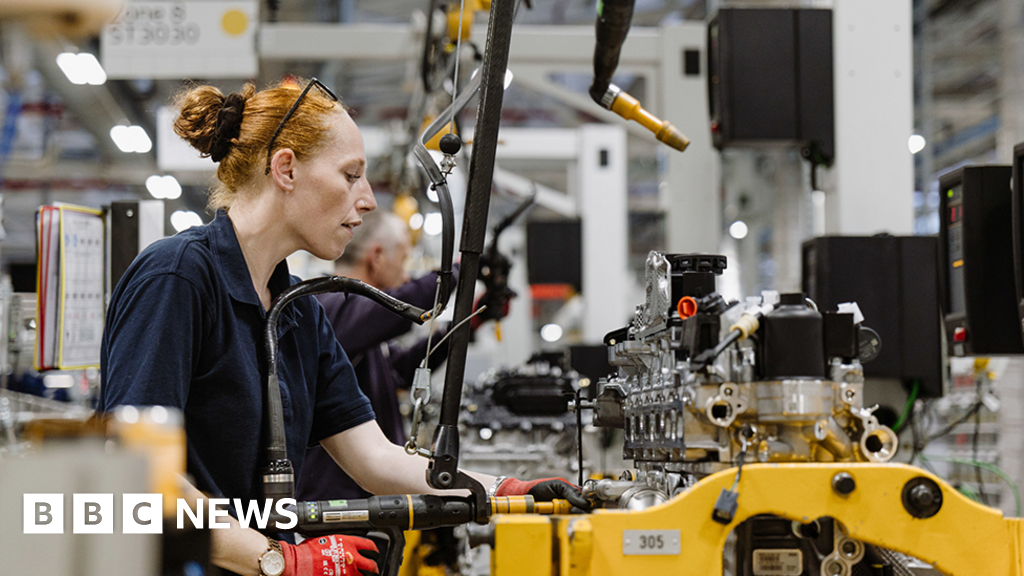
Jaguar Land Rover sees sales recover after cyber attack
-

 Fashion1 week ago
China’s Anta Sports posts record $11.62 bn revenue in 2025
-

 Politics5 days ago
Iran can sustain Strait of Hormuz closure for years, will cut US military logistics: Official
-

 Sports5 days ago
UConn Final Four run could trigger a $50M furniture giveaway for Massachusetts-based Jordan’s Furniture
-

 Politics1 week ago
Trump considers asking Arab allies to help to pay for Iran war