

Business
Minister blames ‘shifting sands’ amid criticism of pre-Budget ‘fiscal fandango’


A Cabinet minister has defended the pre-Budget process, saying it has taken place on “shifting sands” amid fears about the economic impact of the weeks of speculation about what it will contain.
Transport Secretary Heidi Alexander also declined to deny that the Chancellor is planning a pay-per-mile scheme for electric vehicle (EV) drivers, even as she boosts a grant that cuts the upfront costs for buyers.
Speaker of the House Lindsay Hoyle has criticised what he called the “hokey cokey” Budget and called out ministers for leaking key announcements ahead of the Chancellor’s statement on Wednesday.
Rachel Reeves abandoned expected plans to hike income tax rates after a press conference and behind-the-scenes briefings aimed at preparing the country for the manifesto-busting move.
The apparent U-turn was said to have come about because of improved economic forecasts.
Transport Secretary Heidi Alexander, when asked on the BBC’s Sunday With Laura Kuenssberg programme whether speculation about tax rises has damaged the economy, said: “The review that the Office for Budget Responsibility have done about the productivity forecasts has meant that this whole process has really taken place on shifting sands to start off with, and we’ve got a very challenging global economic environment.”
Former Bank of England chief economist Andy Haldane said the “fiscal fandango” of the past months had caused “paralysis” among businesses and consumers.
“Next week, we need a decisive action that puts to bed and beyond reproach any notion of further tax rises,” he told the programme.
Ms Alexander declined to reveal Budget details, but did not deny that drivers of electric vehicles could face a pay-per-mile charge as the Chancellor adds £1.3 billion to a grant cutting upfront costs for buying EVs.
She said: “We need a fair vehicle taxation system for all motorists, because EVs, like drivers of petrol and diesel cars, they’re driving on roads that require maintenance.”
The Chancellor has pledged to get a grip on the cost of living in her Budget next week.
Making people better off is a “fundamental precursor to economic growth”, she wrote in The Sunday Times.
“There is an urgent need to ease the pressure on households now. It will require direct action by this Government to get inflation under control,” she wrote.
But at the same time Ms Reeves is widely expected to raise taxes in an effort to bridge a multibillion-pound gap in her spending plans.
Ms Reeves is grappling with weak economic growth, persistent inflation and an expected downgrade to official productivity forecasts as she prepares her statement.
The Treasury said she would raise £1.2 billion by March 2031 by extending a crackdown on fraudulent and mistaken universal credit payments via the targeted case review (TCR) scheme.
In an example of one move aiming to ease the pressure on people’s finances, rail fares are to be frozen for the first time in 30 years, saving commuters on more expensive routes more than £300 a year.
But an extension of the freeze on income tax thresholds is also among rumoured measures and would see more people dragged into paying tax for the first time or shifted into a higher rate as their wages go up.
Tory leader Kemi Badenoch said the Chancellor should “have the balls” to admit that such a move would breach Labour’s manifesto promise not to raise taxes on working people.
Ms Reeves is also expected to scrap the two-child benefit cap, in a move that could cost more than £3 billion.
The Conservatives, who put the cap in place, are against the move.
Shadow chancellor Mel Stride told Sky News’s Sunday Morning With Trevor Phillips programme: “I want to see the Chancellor stand up and explain how she is going to control public spending, particularly welfare, in order to make sure that we’re not having to put up taxes and she’s not going to be breaking all these promises that she’s made.”
Reform UK’s Zia Yusuf said the Chancellor was “prioritising foreign nationals” by raising taxes on UK nationals.
“We have laid out £25 billion of savings that could be made by this Chancellor, and by choosing not to do that, Trevor, and choosing to raise taxes on people in this country, she is prioritising foreign nationals over UK citizens,” he told the programme.
Green Party leader Zack Polanski has said scrapping the two-child benefit cap in the Budget would be a “victory” but urged the Chancellor to go further and “tax the rich”.
“When are we going to see tough choices for multi-millionaires and billionaires? It’s time to tax the rich,” he told Kuenssberg.
Funding of £48 million for 350 new planners to boost Government efforts to build 1.5 million new homes is also reported.
A Treasury source said the Chancellor is expected to announce all care leavers would be guaranteed full student loan support, worth up to £13,500 each.
Other measures expected include £5 million for secondary schools to buy more books for their libraries, an £18 million scheme to revamp playgrounds in England, and a crackdown on shops selling illegal vapes.

GST collections: India’s net Goods and Services Tax (GST) collections increased to Rs 1.78 lakh crore in March 2026, marking a rise of 8.2% compared to the previous month, according to official figures released on Wednesday.Gross GST revenue for March stood at Rs 2 lakh crore, which is an 8.8% increase over the same month last year.Abhishek Jain, Indirect Tax Head & Partner, KPMG says, “GST collections continue to show steady 9% annual growth, supported by strong import activity this month and consistent compliance. While export refunds have eased this month but remain healthy overall for the year”Refunds during the month totalled Rs 0.22 lakh crore, up 13.8% on a year-on-year basis, which resulted in net GST collections of Rs 1.78 lakh crore.Domestic GST revenue reached Rs 1.46 lakh crore, registering a growth of 5.9%, while revenue from imports was recorded at Rs 0.54 lakh crore, rising sharply by 17.8% during the period.Post-settlement GST figures across states presented a varied trend. While industrially advanced states recorded strong growth, several others reported a decline.Maharashtra contributed the highest amount to the overall collections at Rs 0.13 lakh crore on a pre-settlement basis, followed by Karnataka and Gujarat.Among states showing an increase in post-settlement SGST collections were Himachal Pradesh, Punjab, Uttarakhand, Haryana, Rajasthan, Uttar Pradesh, Bihar, Gujarat, Maharashtra, Karnataka, Kerala, Tamil Nadu, Telangana and Andhra Pradesh, among others.On the other hand, states such as Jammu and Kashmir, Chandigarh, Delhi, Arunachal Pradesh, Meghalaya, Assam, West Bengal, Jharkhand, Odisha, Chhattisgarh and Madhya Pradesh, among others, registered a decline in post-settlement SGST revenues.

A wave of bullishness swept the Pakistan Stock Exchange on Wednesday, pushing the 100 Index up by more than 5,000 points to reach 153,700.
The surge reflects increased investor confidence and strong trading activity across major sectors.
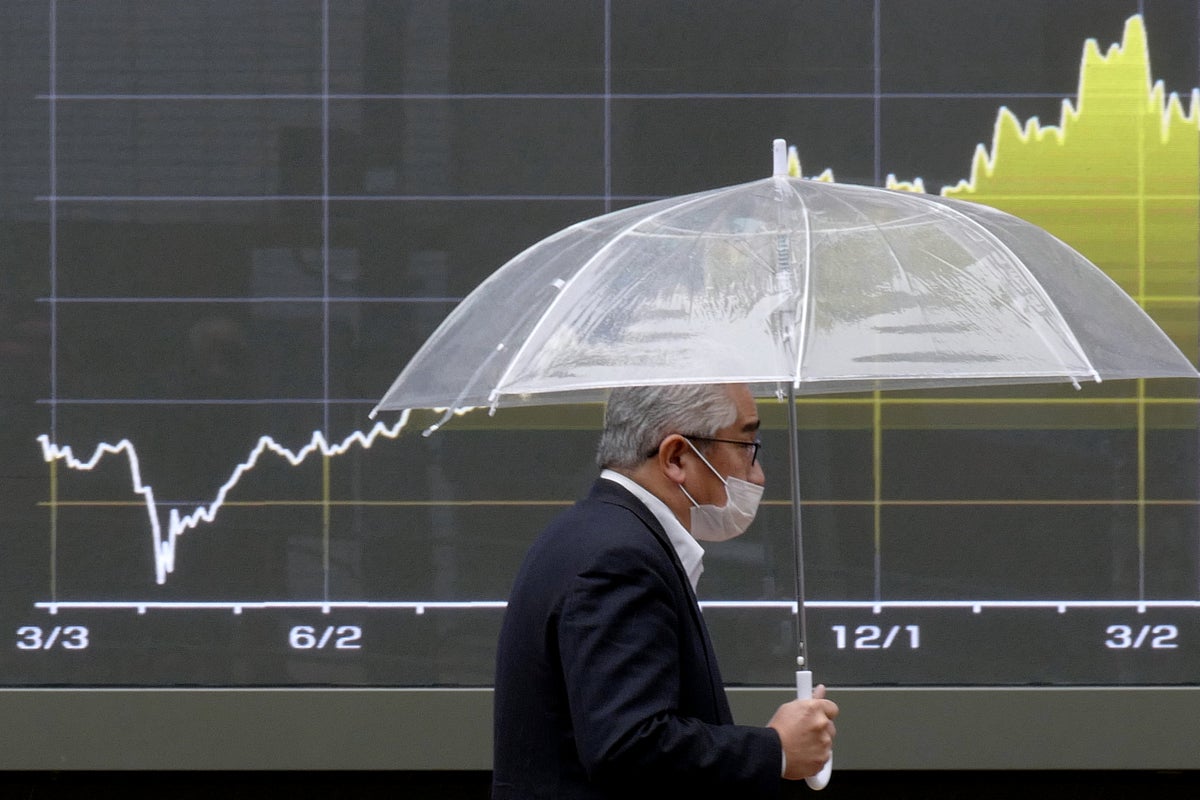
Business sentiment among major Japanese manufacturers rose from 16 to 17 in March, according to the Bank of Japan’s quarterly survey released on Wednesday.
The improvement in the so-called diffusion index in the closely watched “tankan” report, recorded for the fourth quarter straight, comes even as worries grow about Japan’s economic growth and oil supplies because of the US-Israeli war on Iran.
The survey is an indicator of companies foreseeing good conditions minus those feeling pessimistic.
The index for large non-manufacturers, such as the service sector, stood unchanged from the last tankan at 36.
Japan’s inflation has so far remained relatively moderate, but worries are growing about prices at the gas stands and other products. Investors and consumers alike are filled with uncertainty about how much longer the war may last and what US president Donald Trump might say next. Japan’s benchmark Nikkei 225 has gyrated wildly in recent weeks.
Analysts say the Bank of Japan may start to raise interest rates because of concerns about inflation, given the soaring energy costs and declining yen, two elements that greatly affect living costs for the average Japanese consumer.
Historically, Japan has benefited from a weak yen because of its giant exports, exemplified in autos and electronics. A weak yen raises the value of exports’ earnings when converted into yen.
But in recent years, a weak yen is working as a negative, as resource-poor Japan imports much of its energy, as well as other key products such as food and manufacturing components.
The US dollar has been soaring against the yen lately.
Japan’s central bank had a negative interest rate policy for years to fight deflation until it normalised policy in 2024. It kept the rate unchanged at 0.75 per cent in March. The next Bank of Japan monetary policy board meeting is set for April 27 and 28.


Should the USMNT be concerned about Pulisic’s goal drought?

Who was Jessie Jones? ‘Most-produced female American playwright’ dies at 75

Rupee at 95/$: What it means for India’s textile sector

-

 Politics1 week ago
Afghanistan announces release of detained US citizen
-

 Sports1 week ago
Broadcast industry CEO says consolidation is ‘essential’ to compete for NFL soaring media rights prices
-

 Entertainment1 week ago
UN warns migratory freshwater fish numbers are spiralling
-

 Tech1 week ago
Can a Home Appliance Fix the Problem of Soft-Plastic Waste?
-
 Business1 week ago
Property Play: Home flippers see smallest profits since the Great Recession, real estate data firm says
-
 Business1 week ago
Gold prices soar in Pakistan – SUCH TV
-

 Fashion1 week ago
ICE cotton slips on weaker crude, profit booking
-
 Business1 week ago
More women are entering wealth management, but few are in advisory roles, study finds