

Entertainment
Mohsin Naqvi hits back at Indian PM Modi for ‘dragging war into sport’

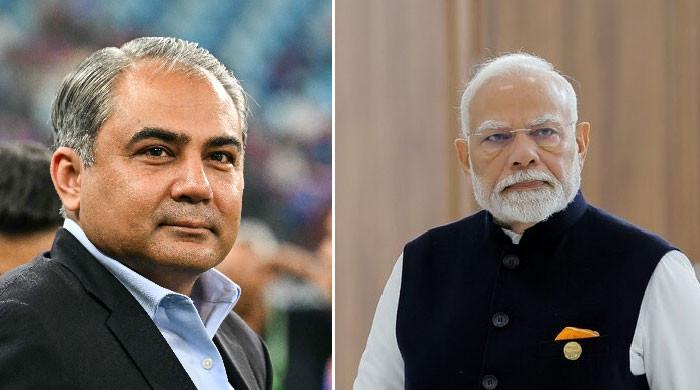
- India refuse to collect Asia Cup trophy from ACC Chief Naqvi.
- Dragging war into sport disgraces spirit of game: Mohsin Naqvi
- Salman Agha slams India’s ‘disappointing’ conduct in Asia Cup.
Pakistan Cricket Board (PCB) Chairman and Asian Cricket Council (ACC) Chief Mohsin Naqvi has strongly criticised Indian Prime Minister Narendra Modi for “dragging war into sport”, saying that such remarks undermine the spirit of the game.
Hitting back at Modi, Naqvi, who is also the country’s interior minister, said history has already recorded India’s humiliating defeats at Pakistan’s hands in the battlefield and cautioned that politicising sport with conflict reflected desperation rather than pride.
“If war was your measure of pride, history already records your humiliating defeats at Pakistan’s hands. No cricket match can rewrite that truth. Dragging war into sport only exposes desperation and disgraces the very spirit of the game,” Naqvi said in a post on X.
The statement came in response to Modi’s illogical tweet after India’s win over Pakistan in Sunday’s Asia Cup 2025 final, where the Indian premier had equated the cricket victory to “Operation Sindoor” to congratulate his players, only to invite widespread condemnation that the remark militarises a sporting event.
Taking a jibe at the Indian leader, Defence Minister Khawaja Asif also joined the criticism, saying that Modi was destroying the culture and spirit of cricket for political gain, thereby diminishing chances of peace and conflict resolution in the subcontinent.
“Modi is ending the possibilities of peace and solutions to issues in the subcontinent to save his politics by destroying the culture and spirit of cricket. Honour cannot be regained this way. The score of the Pak-India war, 6-0, has been engraved on stone. We are not saying anything but Modi has been humiliated in India and as well as in the entire world,” Asif wrote on X.
Modi faced criticism for his tweet not only by Pakistani leaders, but also by the people in his own country. Social media users and commentators, even from Indian, quickly condemned the comparison. Critics say equating a cricket match with a military operation risks politicising sport and undermining the game’s spirit.
Reacting to the move, a journalist wrote on X: “A prime minister declaring Cricket Match equal to war. Just because India lost the war to Pakistan, they need anything just anything to compensate for that loss.”
“Equating a cricket win with #OperationSindoor, where our soldiers laid down their lives, is deeply disrespectful,” wrote another user on X while taking a dig at Modi.
Asia Cup trophy debacle
Earlier, the closing ceremony of the ACC Men’s T20 Asia Cup 2025 ended in controversy on Sunday after the Indian cricket team declined to collect the winners’ trophy from Asian Cricket Council (ACC) chief Mohsin Naqvi, who also heads the Pakistan Cricket Board (PCB).
India had earlier defeated Pakistan by five wickets in a tense final at the Dubai International Cricket Stadium,
However, the post-match presentation was delayed after the Indian side refused to accept the trophy from Naqvi, damaging the gentleman’s game.
The ceremony concluded without the traditional handover, marking an unusual end to the tournament. No customary handshakes were exchanged between players, continuing a pattern from earlier matches where political undercurrents and heightened tensions were evident.
“I have been informed by the ACC that the Indian cricket team will not be collecting their awards tonight. So that does conclude the post-match presentation,” says presenter Simon Doull.
Pakistan skipper Salman Agha said India’s actions during the tournament had been “bad for cricket”.
“I think what has happened in this tournament is very disappointing,” Agha told reporters.
“If they think they disrespected us by not shaking hands, then I say they disrespected cricket.
“It’s been seen for the first time. I do not know where it will stop. What has happened in this tournament is bad for cricket.”
Agha further said that the team would donate their Asia Cup final match fees to families of civilians and children killed in the May Indian attacks.
The Asia Cup marked the first cricketing contest between the two sides since their military confrontation in May, with off-field politics repeatedly overshadowing on-field competition.
— With additional input from AFP
- NAB reforms to ensure transparent leadership selection.
- Anti-corruption plan targets top high-risk departments.
- Banks to access officials’ asset data.
Pakistan has assured the International Monetary Fund (IMF) of implementing key anti-corruption reforms, including public disclosure of civil servants’ asset declarations and granting greater operational autonomy to the National Accountability Bureau (NAB) under agreed structural benchmarks by January 2027, The News reported.
To provide independence and operational autonomy to the leading anti-corruption agency, NAB’s institutional independence will be ensured through a transparent selection process for senior management and the publication of operating rules and statistics, under the new structural benchmark set for end-January 2027.
The government has given a written commitment to the IMF that it will review and improve the appointment process for the NAB chairman.
Under the guidance of the Anti-Corruption and AML/CFT Committee, proposed amendments to the NAB Ordinance will be developed and laid before Parliament to: (i) adopt pre-determined qualification criteria (eg, years of experience, integrity standards); (ii) establish a merit-based, open and competitive selection process; and (iii) designate a multi-sectoral stakeholder commission (with representatives from the government, opposition, judiciary, civil service, academia and civil society) to conduct an open, rules-based, rigorous and transparent recruitment.
“The government will also publish NAB’s standard operating procedures and rules, as well as annual statistics regarding the investigation, prosecution and conviction of corruption offences on NAB’s website,” the government assured the IMF.
Pakistan and the IMF have agreed on the completion of the third review under the $7 billion Extended Fund Facility (EFF) programme. Under this agreement, Islamabad will strengthen institutional capacities and take further measures to fight corruption to support inclusive growth and a level playing field for businesses and investments.
The publication of asset declarations of high-level federal civil servants will be accomplished by the end of December 2026. The Establishment Division has revised the Civil Servant (Conduct) Rules requiring: (i) centralised digital submission and collection of asset declarations; (ii) risk-based verification; and (iii) disclosure of declarations with limited restrictions on confidential personal information.
The Establishment Division is set to revise the declaration form to specify restrictions on confidential personal information by the end of May 2026, and in coordination with the FBR, will develop a framework for risk-based verifications.
The FBR will develop a digital platform for the submission of asset declarations by the end of June 2026 to facilitate the implementation of the reform.
To grant access to asset declarations for Anti-Money Laundering (AML) and Counter-Financing of Terrorism (CFT) purposes, the SBP, FBR and FMU will continue to support banks’ access to asset declarations of high-level federal public officials (BPS 17-22).
The FBR has issued a notification to expand banks’ access to cover asset declarations of any officer of the federal or provincial governments or autonomous bodies, corporations and companies owned by such governments. To enhance banks’ awareness, by June 2026, the government will publish access statistics on the FBR’s website.
Tasked by the Anti-Corruption and AML/CFT Committee — constituted by the Prime Minister of Pakistan and chaired by the Minister for Law and Justice — the National Accountability Bureau (NAB) has been designated to lead the development of an action plan to mitigate corruption vulnerabilities in the top ten government departments identified with the highest corruption risks. This plan is to be completed by the end of October 2026 as a Structural Benchmark.
To guide the development of the plan, in consultation with and agreement of IMF staff, the Anti-Corruption and AML/CFT Committee will, by end-June 2026, develop and publish a methodology for assessing and prioritising agency-level corruption risks, along with protocols for conducting risk assessments, reporting and reviewing results of the analysis, and defining the plan to reduce corruption risks in identified agencies.
The methodology should lay out the assessment criteria, making use of relevant information held by agencies and ministries across government, including NAB, the Auditor General, the Competition Commission, the FBR and the FIA. It should consider: (i) the value of money at risk due to corruption vulnerabilities related to the agency’s functions and budget; (ii) typologies of corruption in the assessed agency; (iii) the existence of structural weaknesses that give rise to corruption vulnerabilities; and (iv) information on the frequency of corruption, including past and ongoing corruption cases.
The government has apprised the IMF that it has established three committees to monitor progress under the recently published Economic Governance Reform (EGR) plan, which implements the priority recommendations of the GCD report. Progress reports will be prepared on a six-month basis to track implementation and will be published on the website of the Ministry of Finance.
The government is going to organise a policy dialogue in April 2026 to discuss institutional and structural implementation issues, design of performance indicators, common challenges and cross-cutting issues, public monitoring, reporting and capacity development. The government will invite development partners, civil society organisations and other stakeholders to participate in this process.
Based on these discussions and in close consultation with key stakeholders, the government will develop and publish outcome-based updates on progress in its semi-annual report. These updates will serve as a backdrop to a second policy dialogue in July 2026, which will take stock of the six-month implementation of the EGR plan.
The government will continue enhancing the capacities of Provincial Anti-Corruption Establishments (PACEs) to conduct financial investigations related to corruption at the provincial level. In line with the AML Act and the National Fiscal Pact, the relevant federal notification process initiated by the Financial Monitoring Unit (FMU) will be issued by the end of December 2026, designating the PACEs to investigate money laundering related to corruption offences within their jurisdiction, and to request and receive financial intelligence from the FMU as an investigating agency.

Prince William has been making big moves behind Palace doors to face the ongoing challenges that have been a nightmare for the royal family.
King Charles has reportedly been delegating responsibilities to the Prince of Wales, knowing full well that William would be taking over the monarchy one day. Although it does not erase the fact that there is major conflict of approach between the monarch and his heir.
The royals are currently dealing with the consequences of Andrew Mountbatten-Windsor’s scandals and his connection with paedophile Jeffery Epstein. While William’s cousins Beatrice and Eugenie are also faced with an uncertain future, Prince Harry and Meghan Markle are also on the future king’s agenda.
“William is not afraid to make hard calls,” one insider told journalist Rob Shuter. “And right now, that’s exactly what the Royal Family needs.”
The source pointed out that the monarchy is under “more pressure than ever” and the royals need someone who can make “tough, unpopular decisions” even if that comes with a heavy price.
“He understands the stakes,” the insider added. “This isn’t just family — it’s a business.”
William is aware of all the problems, especially the ones caused by his blood relatives and he is acting accordingly. “He’s not trying to be liked. He’s trying to protect the monarchy.”
According to friends of William’s, there is a contrast between the father and son. Charles “leads with his heart” and William “leads with strategy”.
Royal experts have claimed that the Prince of Wales has a “ruthless” approach and he “doesn’t forget and doesn’t forgive easily”.
“If you cross the line, that’s it.”
Even though Charles is still the king, he understands that William would be taking the reins in the future. Hence, while he holds authority, he has been making William a big part of all the decisions that are carried out.
The world at large has been taken aback by Islamabad’s conspicuous role as the only interlocutor between Washington, DC and Tehran in a conflict that has also engulfed Gulf countries hosting US bases, including Qatar, Bahrain, Jordan, the United Arab Emirates (UAE) and Kuwait – and to a lesser extent Oman and Saudi Arabia.
Given US President Trump’s consistently inconsistent disposition – he has regularly delivered contradictory and inflammatory statements regarding the end of hostilities – Pakistan’s role has been outstanding by any standards and has been the only ray of hope in bringing the warring parties to the negotiating table. While Islamabad’s untiring efforts have been appreciated by many, its prominent position has bruised New Delhi’s self-aggrandisement and hubris.
For India, it is a hard pill to swallow Pakistan’s consistently mounting relevance on the global stage. The effect was so severe that it made Indian External Affairs Minister S Jaishankar mad enough to utter exceedingly indecent and undiplomatic words, a shockingly pejorative term regarding Pakistan in fact. Pakistan’s Foreign Office befittingly responded that the usage of such terms “betrays a deeper sense of frustration”, and “when arguments run thin, invective appears to fill the gap”.
Whatever perceptions India or other stakeholders may have of Pakistan’s global relevance, the fact is that, despite the country’s internal weaknesses, no one can deny Pakistan’s perennial geopolitical significance in the international order.
It is appropriate to cite Hathaway, who argues in his study titled ‘The Leverage Paradox: Pakistan and the United States’ that “by most standard measures of power – population size, GDP, size and capability of its military, possession of nuclear weapons – Pakistan stands toward the top in global rankings”.
The author asserts that “as Bruce Riedel has noted, if Pakistan were dropped into a different spot on the map – say, Latin America or Africa – it would be one of the dominant countries in its region” (p 117). Hence, for many doyens, Pakistan cannot be neglected in its significance to the regional and global geopolitical and security architecture.
During the two decades of the ‘war on terror’ and the intensification of the conflict at the domestic front inside Pakistan, the country witnessed unprecedented turmoil and destruction perpetrated by foreign proxies and terrorists. During these years, Pakistan started to be portrayed as the most dangerous place in the world. Besides negative media coverage, various publications also titled the country in ways that led readers to think the situation there is precarious and that the state and society are on the verge of inevitable collapse.
For example, one commentator starts his write-up in The Atlantic with this description: “with its ‘Islamic’ nuclear bomb, Taliban- and Al-Qaeda-infested borderlands, dysfunctional cities, and feuding ethnic groups, Pakistan may well be the world’s most dangerous country, a nuclear Yugoslavia-in-the-making” (Kaplan, 2009). Manuscripts printed during this era contained titles such as ‘Descent into Chaos’ (Rashid, 2008), ‘Armageddon in Islamabad’ (Riedel, 2009), ‘Pakistan: a hard country’ (Lieven, 2011), ‘Breakdown in Pakistan’ (Bano, 2012), ‘Avoiding Armageddon’ (Riedel, 2013), ‘The Pakistan Paradox’ (Jaffrelot, 2015), ‘Pakistan at the Crossroads’ (Jaffrelot, 2016), ‘Pakistan under siege’ (Afzal, 2018) and ‘Pakistan: courting the abyss’ (Devasher, 2018). These are just a few titles besides countless media reports portraying or foretelling an imminent doomsday for Pakistan.
There is no doubt that, since the birth of this country and throughout its turbulent history, the overall economic and political landscape has not improved much more than what the nation deserves, and the country is grappling with multiple crises today as it was in the late 1990s. Pakistan, since its independence in 1947, has had to face tumultuous years for the first four decades, including wars with India and the breakup of East Pakistan to become Bangladesh in 1971. No doubt, the country is still faced with a poly-crisis comprising domestic political, economic, governance and security challenges. Yet, as in the past, it is the nation’s resilience that enables Pakistan to emerge from the abyss.
To begin with, one of the key fortes of the country is the geographical location of Pakistan: a country located at the intersection of three regions comprising Central Asia, the Middle East and South Asia. Because of its distinctive location, Pakistan has remained an active player in global politics and has played a dynamic role in epoch-making historical events such as the cold-war era and in the ‘war on terror’ period.
For a long time, Pakistan has occupied a key position on the global stage due to its geography, demography and other factors (such as its strong military capabilities). For example, according to Chase, Hill, and Kennedy (1999), among the world’s 140 developing states, there is a group of nine pivotal states whose status and fates are likely to significantly affect regional and even global security. Pakistan is among these nine states (others are Indonesia, India, Turkiye, Egypt, South Africa, Brazil, Algeria and Mexico).
Pakistan and these countries have mostly been considered “pivotal states” (Chase, Hill, & Kennedy, 1996, p33) – countries whose fate determines the survival and success of the surrounding region and ultimately the stability of the international system. Hence, “because of its position wedged between Afghanistan and India, as well as its Indian Ocean coastline, Pakistan will continue to be a lynchpin state both for the US and for China” (Sweijs, Oosterveld, Knowles, & Schellekens, 2014, p38).
While many policy pundits indicated that Pakistan’s significance would considerably diminish for the US, particularly after the departure of its troops from Afghanistan in August 2021, the reality is that Pakistan appears to be a pivotal state in the current crisis. The country has emerged as the only actor to mediate between the US and Iran, as both countries have trust in Islamabad.
In recent years, Pakistan’s foreign policy has been remarkably successful in maintaining robust ties with both Beijing and Washington as well as with Tehran and important Gulf capitals. Islamabad’s engagement with Beijing is built on decades of mutual trust, and the relationship is multifaceted, encompassing deep defence collaboration, joint military projects, intelligence cooperation, expanded trade and economic cooperation under CPEC and Pakistan’s status as the largest recipient of Chinese arms exports since 2008. All these make Islamabad-Beijing ties quite unique without a formal defence treaty or military alliance.
At the same time, against the backdrop of Trump’s ‘America First’ policy, there is no doubt that since his second arrival at the Oval Office, Pakistan has successfully engaged his administration. Islamabad has been remarkably successful in earning Trump’s accolades at several forums on multiple occasions. It is still a long shot as to what extent Pakistan can broker a much-awaited and direly needed peace deal, contingent on the behaviour of Iran and the US
The very fact that both Tehran and Washington have reposed trust in Islamabad and that Pakistan has maintained a channel of communication between the two countries signifies Pakistan’s extraordinary diplomatic efforts and stature.
The writer teaches at the University of Malakand. He can be reached at: [email protected]
Disclaimer: The viewpoints expressed in this piece are the writer’s own and don’t necessarily reflect Geo.tv’s editorial policy.
Originally published in The News


Gap & Awake NY to launch ’90s-inspired streetwear line
Air India revises fuel surcharge amid energy crunch; here’s how much more you will pay – The Times of India

Europe Gets Serious About Age Verification Online

-
Uncategorized5 days ago
[CinePlex360] Please moderate: “Trump signals p
-
Uncategorized1 week ago
[CinePlex360] Please moderate: “Further tariff
-

 Tech4 days ago
Our Favorite iPad Is $50 Off
-

 Entertainment4 days ago
Joe Jonas shares candid glimpse into parenthood with Sophie Turner
-

 Fashion6 days ago
China’s Anta Sports posts record $11.62 bn revenue in 2025
-
 Business6 days ago
UPI transactions hit record Rs 29.53 lakh crore in March; volumes cross 22.6 billion – The Times of India
-
 Politics1 week ago
Trump considers asking Arab allies to help to pay for Iran war
-
 Sports1 week ago
Fakhar Zaman denies ball-tampering charge in PSL match | The Express Tribune