

Business
Moody’s revises Pakistan banking sector outlook from positive to stable | The Express Tribune

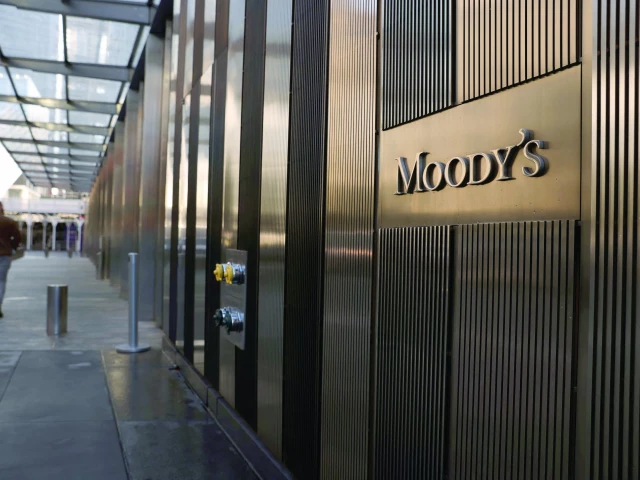
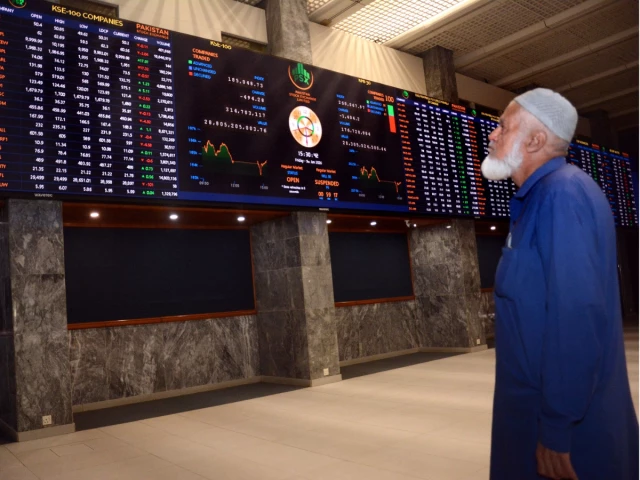
International credit rating agency projects Pakistan’s GDP growth at 3.5 per cent in 2026
Moody’s rating downgrade, along with Fitch and S&P Global, signals Washington has lost some lustre, causing US Treasury yields to rise as investors see more risk in lending money to the government. photo: REUTERS
ISLAMABAD:
International credit rating agency Moody’s has revised Pakistan’s banking sector outlook from positive to stable.
According to Moody’s outlook report, Pakistan’s economic conditions are gradually improving, although the pace of recovery remains slow. The report states that banks’ performance is expected to remain stable over the next 12 to 18 months.
The report also highlights that high interest rates and credit risk pressures persist in Pakistan. Moody’s identified government financial challenges as a major risk for the banking sector.
Moody’s projects Pakistan’s GDP growth at 3.5 per cent in 2026 but noted that concerns over external financing and inflation remain. Additionally, risks associated with policy implementation could affect the outlook.
Read: Moody’s upgrades deposit ratings of Pak banks
Earlier, Moody’s Ratings upgraded to Caa1 from Caa2 the local and foreign-currency long-term deposit ratings of five Pakistani banks, namely Allied Bank Limited (ABL), Habib Bank Limited (HBL), MCB Bank, National Bank of Pakistan (NBP) and United Bank Limited (UBL).
“We have also upgraded the baseline credit assessments (BCAs) and adjusted BCAs for ABL, HBL, MCB and UBL to Caa1 from Caa2, and for NBP to Caa2 from Caa3,” the rating agency said in a statement.
The outlook on long-term deposit ratings of all banks has been changed to stable from positive.
Rating actions follow its decision to upgrade the government of Pakistan’s local and foreign currency issuer and senior unsecured debt ratings to Caa1 from Caa2 to reflect Pakistan’s improving external position, supported by its progress in reform implementation under the International Monetary Fund’s (IMF) Extended Fund Facility.
Moody’s said that the decision to upgrade Pakistani banks’ ratings reflects the country’s improving operating environment, as captured by the raising of its Macro Profile for Pakistan to “very weak+” from “very weak”; the government of Pakistan’s improved capacity to support banks in case of need, as indicated by the sovereign rating upgrade; and banks’ own resilient financial performance.
The revised Macro Profile score is underpinned by Pakistan’s improving external position, supported by its progress in reform implementation. Nonetheless, it said, Pakistan’s external position remains fragile. Its foreign exchange reserves remain well below what is required to meet external debt obligations, underscoring the importance of steady progress with the IMF programme to continually unlock financing.





Anthony Albanese says nation’s supply remains “secure” amid reports of panic buying and shortages.
Source link

A woman has been awarded $6m in a verdict that could have implications for hundreds of other cases in the US.
Source link

A major teachers’ union is calling for its members to skip Target when buying back-to-school supplies, the latest twist in a series of boycotts that have targeted the big-box retailer as its turnaround shows signs of life, CNBC has learned.
The AFT, or American Federation of Teachers, passed a resolution Thursday that calls on its 1.8 million members and others to shop at local stores and not at Target, saying the company did not respond adequately to the surge of federal immigration enforcement in the retailer’s hometown of Minneapolis this winter. Federal agents shot and killed two U.S. citizens, Renee Good and Alex Pretti, during the operation.
The labor union, which is affiliated with the AFL-CIO, plans to urge a similar resolution at AFL-CIO’s convention in Minneapolis this summer and at conventions held by other organizations, including the NAACP and LULAC, AFT President Randi Weingarten said.
Target declined to comment specifically on the AFT’s resolution but said in a statement that it has “a longstanding commitment to strengthening the communities we serve,” including donating 5% of profits since the company’s founding and offering a discount to educators as part of a teacher appreciation program.
Target’s annual sales have declined for the past three years in a row, but the company’s new CEO Michael Fiddelke laid out an ambitious plan earlier this month to refresh its stores, add more enticing merchandise and return to sales growth. The retailer said it expects net sales to rise about 2% this fiscal year compared with the prior year and anticipates sales will grow every quarter.
It is unclear if and how much the AFT’s call for a back-to-school boycott could hurt Target, which is trying to win back customers. Earlier this month, Atlanta area pastor Jamal Harrison Bryant announced the end of a yearlong boycott of the company, called Target Fast, which had started because of the company’s rollback of major diversity, equity and inclusion initiatives.
At a press conference, Bryant said Target has demonstrated its commitment to the Black community with investments in Black businesses and donations to Historically Black Colleges and Universities. Yet other activists leading a separate boycott, including former Ohio state Sen. Nina Turner, have said they continue to call for shoppers to steer clear of Target.
The AFT previously supported and participated in the Target boycott over its DEI rollback.
The retailer has attributed some of its sales losses to backlash to its DEI decision, along with other factors including company missteps with merchandise, a weaker store experience and softer discretionary spending.
At an investor meeting in Minneapolis in early March, Fiddelke stressed that it’s “a new chapter for Target.” He said the company is “doing the work to build connection with new guests, deepen relationships with existing guests and earn back trust with guests we’ve disappointed.”
In a separate email to Target employees earlier this month, Fiddelke highlighted how the retailer is putting its strategy into action, including through its move to cut prices on more than 3,000 items and the opening of its 2,000th store. He said Target has made progress with winning back trust, too, noting the end of the Target Fast boycott.
He said Target has had “ongoing conversations with the organizers” of the boycott, who have “acknowledged the meaningful contributions Target has made, and will continue to make, to the Black community.”
In an interview with CNBC, Weingarten said the AFT’s boycott is focused on what she called Target’s lack of response to the surge of aggressive and violent immigration enforcement in its own backyard. Weingarten said the AFT sent a letter to Target and met with Target staff to encourage them to speak up before the union moved to pass the resolution.
“Target was negotiating with our colleagues in the civil rights community for weeks and weeks and weeks,” she said. “They could have very easily dealt with both [concerns about DEI and immigration enforcement] and they chose not to.”
She said Target is “more worried about standing with the Trump administration than the communities that made them a profitable company.”
Fiddelke joined dozens of executives from Minnesota-based corporations in co-signing a letter in late January calling for an “immediate de-escalation” in the state after the fatal shooting of Pretti. However, the letter did not name the shooting victims Pretti or Good or call out the president, his immigration policies or federal agents.
Fiddelke also shared a video message with employees that more directly acknowledged current events, but stopped short of calling for ICE agents to leave the city or for accountability in the two shooting deaths.
Weingarten described the CEOs’ letter as “insulting” and said it “basically blamed both sides.”
She said the union, which includes many teachers, can have the greatest financial impact during the back-to-school shopping season this summer and fall. By passing the resolution now, she said, the AFT can get the word out to members and “give Target enough time to come back to its senses.”


John Mellencamp wins Icon Award at 2026 iHeartRadio Music Awards

World Cup European playoffs recap: Italy win, Czechia and Bosnia advance on PKs

Export demand lifts North India cotton yarn; local demand slow

-

 Fashion1 week ago
Sales at US apparel, clothing accessories stores up 4% YoY in Jan 2026
-

 Entertainment1 week ago
Val Kilmer revived 1 year after death through AI
-
 Fashion1 week ago
US’ G-III Apparel’s FY26 sales fall 7% to $2.96 bn
-

 Sports1 week ago
March Madness 2026 – How to watch in SA, start time, schedule, TV channel for NCAA championship basketball tournament
-
 Business1 week ago
Brits cashing in jewellery as gold price hits record high
-

 Fashion6 days ago
China’s textile & apparel exports surge 17% to $50 bn in Jan-Feb 2026
-
 Business1 week ago
World’s largest mining group names new chief executive
-

 Fashion1 week ago
Suez and Hormuz shut together, triggering global supply shock