

Business
Nasdaq slides: Index posts steepest weekly drop since April; AI rally doubts weigh on tech stocks – The Times of India


The Nasdaq Composite ended slightly lower on Friday but posted its sharpest weekly loss since early April, as investors questioned how long the artificial intelligence boom could sustain recent market highs. The index slipped 0.21% to 23,004.54, bringing its total weekly fall to around 3%, while chipmakers and technology shares led the declines.Despite this pullback, the Nasdaq has surged more than 50% since April, when US President Donald Trump announced wide-ranging tariffs, with AI optimism lifting markets to record levels. However, sentiment cooled this week after Nvidia CEO Jensen Huang was quoted by The Financial Times as saying that China may surpass the US in the AI race. “We’re seeing this AI selloff continue after the comments we had about China winning the AI race,” said Michael O’Rourke, chief market strategist at JonesTrading in Stamford, Connecticut, as per news agency Reuters. He added that the sector’s weakness reflected “a recalibration of multiples” and some investors taking profits after a strong run.The S&P 500 rose 0.13% to 6,728.81, and the Dow Jones Industrial Average gained 0.16% to 46,987.10, both rebounding late in the session after reports suggested progress in ending the longest federal government shutdown in US history. The global equities index MSCI (.MIWD00000PUS) slipped 0.07%, and the STOXX 600 in Europe lost 0.55%, as weak trade data from China renewed worries over slowing global growth.Chinese exports fell 1.1% in October, the steepest decline since February, underscoring the damage from Trump’s tariffs and denting investor confidence across Asia.In the bond market, US treasury yields edged down after surveys pointed to worsening consumer sentiment. The University of Michigan’s preliminary index for November dropped to 50.3, the lowest since June 2022, driven by record-low views of current economic conditions amid concerns over the shutdown. The 10-year Treasury yield eased slightly to 4.091%.The US dollar weakened against major currencies, with the dollar index slipping 0.11% to 99.57. The euro firmed to $1.1563, while the yen weakened to 153.45 per dollar. As per Reuters, the shutdown has delayed key economic reports, though current indicators suggest the economy remains resilient, potentially reducing pressure for the Federal Reserve to cut rates at its December meeting.Meanwhile, oil prices rebounded on optimism after Trump met Hungary’s Prime Minister Viktor Orbán at the White House, fuelling hopes that Hungary could use Russian crude. US crude settled 32 cents higher at $59.75 per barrel, while Brent rose 25 cents to $63.63. Gold prices also firmed as investors sought safety amid uncertainty.


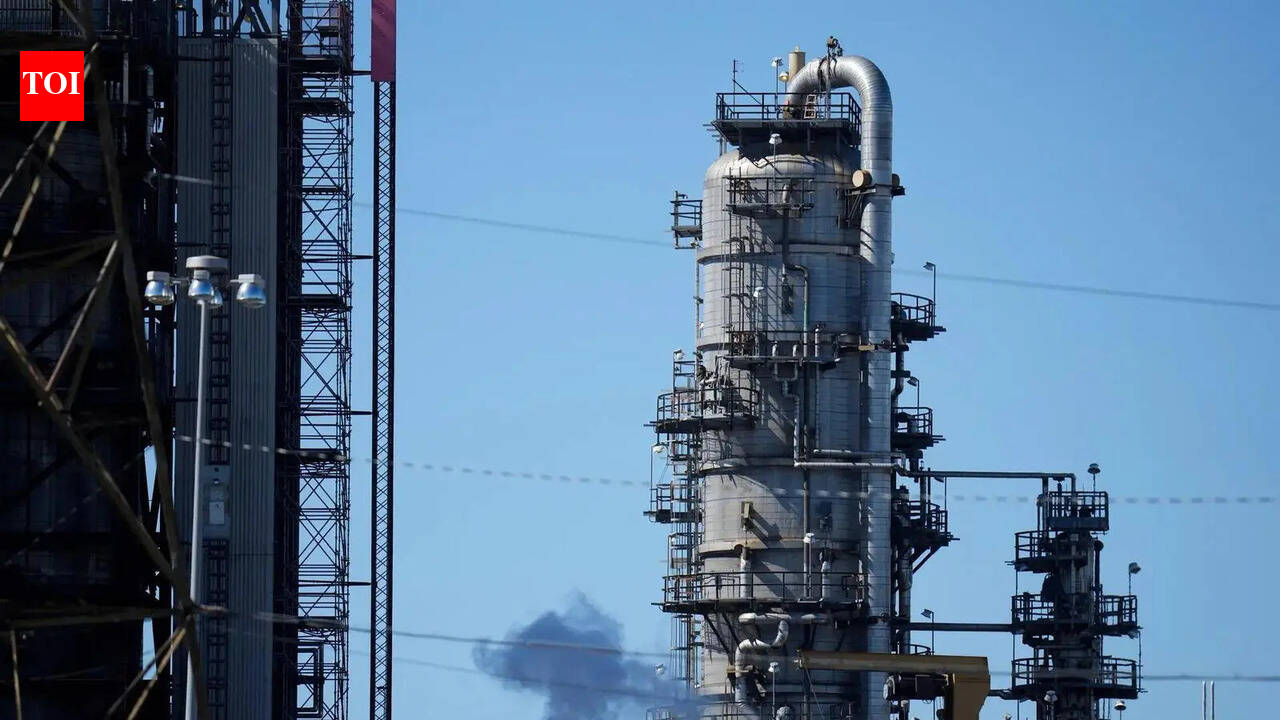






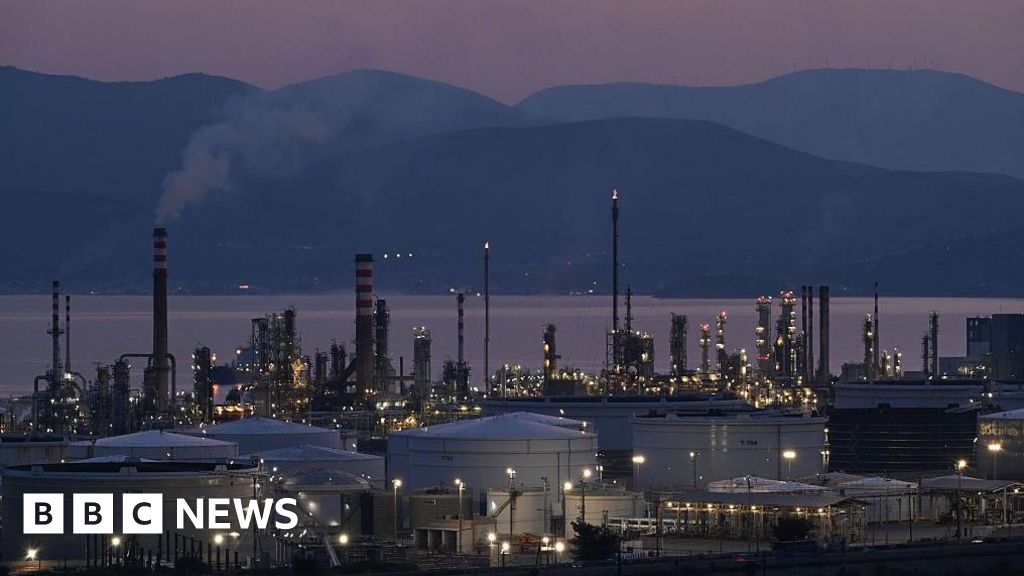
The US-Israel Iran war has halted almost all traffic in a key waterway and the price Brent crude has surged.
Source link

Crunch talks between resident doctors and the Government are set to continue in a bid to avert strike action.
Sir Keir Starmer has given the resident doctors committee of the British Medical Association (BMA) a deadline to reconsider a deal on pay and jobs which includes an offer of thousands of extra NHS training posts.
It is understood the proposal will be removed from the deal if resident doctors in England press ahead with a six-day strike from April 7 in a row over jobs and pay.
Dr Jack Fletcher, chairman of the resident doctors committee of the union, said: “It is wrong for Government to withhold desperately-needed jobs as part of negotiating tactics.
“Anyone who works in the NHS knows that patients need these 4,000 jobs created as soon as possible.
“We made that very clear to Government in our meetings today.
“We are not interested in arbitrary deadlines – we will be looking to get this dispute ended right up to the last minute.
“We believe there is a deal there to be done if Government is willing to withdraw the changes it made at the last minute that reduced the funding for pay rises. Talks continue.”
It comes as senior medics announced they were escalating their disputes with the Government.
Consultants and other senior doctors are to be balloted on industrial action after ministers announced they would be getting a 3.5% pay award.
Simultaneous ballots of consultants and specialist, associate specialist and specialty (SAS) doctors will run from May 11 until July 6.
Addressing resident doctors, Prime Minister Sir Keir Starmer wrote in The Times: “The truth is this: no-one benefits from rejecting this deal.
“Resident doctors will be worse off. Instead of improved pay, progression and support, they will receive the standard pay award this year, with none of the reforms that would have strengthened their working lives.”
The deal sets out a minimum of 4,000 new additional specialty posts to be delivered over the next three years.
NHS England boss Sir Jim Mackey confirmed the offer to expand training places will “come off the table” if an agreement is not reached.
The walkout, which is due to run from 7am on April 7 until 6.59am on April 13, will be the 15th round of strikes by resident doctors in England since 2023.
In a letter to health leaders, Mike Prentice, national director for emergency planning at NHS England, wrote: “We expect this round to be challenging as there is a shorter notice period, bank holidays within the notice period and the action itself falling during the Easter holidays.
“This will represent a significant strain on staffing resources to provide safe cover.”
Business
Iran oil returns: India set to receive first cargo in 5 years, tanker heads to Gujarat – The Times of India

India is set to receive its first shipment of Iranian crude oil since 2019, with a tanker carrying 600,000 barrels of oil en route to Gujarat following a temporary sanctions waiver by the US, according to PTI.Ship-tracking data indicates that the vessel Ping Shun is headed towards Vadinar port, marking a potential revival of Indo-Iran oil trade after nearly five years.“The Indo-Iranian oil trade has flickered back to life. Following the US administration’s decision to grant a 30-day window for Iranian oil “on the water” due to regional conflict, the vessel Ping Shun is now en route to Vadinar (in Gujarat) with 600,000 barrels of crude. This is the first such delivery since May 2019 and comes at a critical time for Indian refiners facing tightening inventories,” said Sumit Ritolia, Lead Research Analyst, Refining and Modelling at Kpler.The development follows Washington’s decision earlier this month to allow a 30-day window for the purchase of Iranian oil already at sea, aimed at easing global oil prices amid the ongoing US-Israel conflict with Iran. The window is set to expire on April 19.While the buyer of the cargo remains unidentified, Vadinar houses a 20 million tonnes per annum refinery operated by Rosneft-backed Nayara Energy and also serves as a landing point for crude supplies to inland refineries such as BPCL’s Bina unit.India’s oil ministry has so far maintained that any decision to resume imports from Iran will depend on techno-commercial viability.Before sanctions were tightened in 2018, India was among the largest buyers of Iranian crude, importing both Iran Light and Iran Heavy grades due to refinery compatibility and favourable pricing terms.Imports ceased in May 2019 after US sanctions were reimposed, with India shifting to alternative suppliers including the Middle East and the US. At its peak, Iranian crude accounted for 11.5 per cent of India’s total imports.India had imported about 518,000 barrels per day (bpd) of Iranian oil in 2018, which declined to 268,000 bpd between January and May 2019 during a sanctions waiver period before dropping to zero thereafter.“The Aframax Ping Shun (IMO 9231901) loaded with Iranian crude oil from Kharg Island in early March has emerged as the first vessel observed signalling a destination of Vadinar, India since May 2019, following sanction reimposition on Iranian oil by the first Trump administration,” Ritolia said.The tanker is estimated to have loaded around 600,000 barrels from Kharg Island around March 4 and is expected to reach Vadinar on April 4.An estimated 95 million barrels of Iranian oil are currently stored on vessels at sea, of which around 51 million barrels could be supplied to India, while the rest may be directed to China and Southeast Asian markets.However, payment mechanisms remain uncertain as Iran continues to be excluded from the SWIFT global banking system, complicating international transactions.Earlier, payments were routed in euros through Turkish banks, but that channel is no longer available following renewed sanctions restrictions.Iran was first disconnected from SWIFT in 2012 due to EU sanctions over its nuclear programme, with further disruptions in 2018 after the US reimposed sanctions, limiting its ability to receive payments and access foreign currency reserves.


Wrigley Field to host Big Ten/SEC volleyball doubleheader

Romelu Lukaku facing disciplinary action after missing Napoli training

Crew that flew Apache helicopters near Kid Rock’s house suspended from flying

-

 Politics1 week ago
Afghanistan announces release of detained US citizen
-

 Sports1 week ago
Broadcast industry CEO says consolidation is ‘essential’ to compete for NFL soaring media rights prices
-

 Entertainment1 week ago
UN warns migratory freshwater fish numbers are spiralling
-

 Tech1 week ago
Can a Home Appliance Fix the Problem of Soft-Plastic Waste?
-
 Business1 week ago
Property Play: Home flippers see smallest profits since the Great Recession, real estate data firm says
-
 Business1 week ago
Gold prices soar in Pakistan – SUCH TV
-

 Fashion1 week ago
ICE cotton slips on weaker crude, profit booking
-
 Business1 week ago
More women are entering wealth management, but few are in advisory roles, study finds