

Sports
NCAA: Six hoops players banned for betting plots

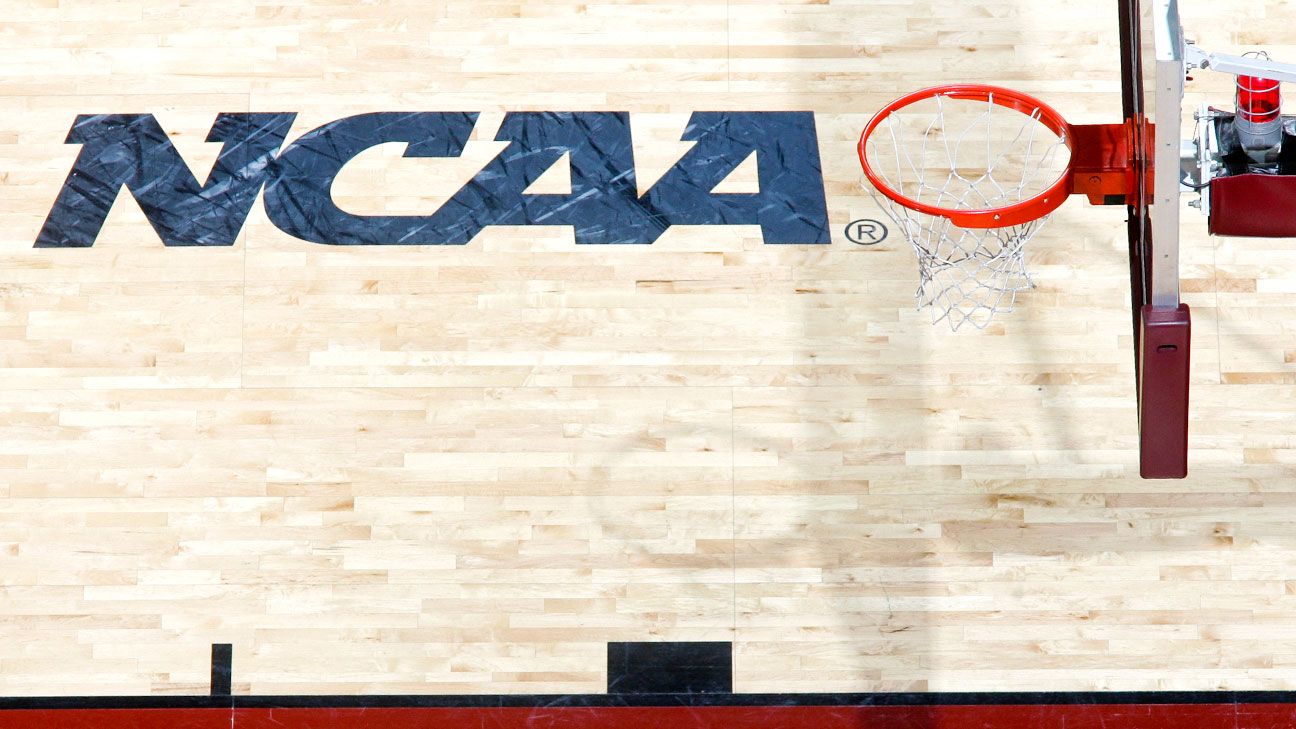
Six former men’s college basketball players at three schools — New Orleans, Mississippi Valley State and Arizona State — participated in gambling schemes that included game manipulation or sharing information with known bettors, the NCAA announced Friday.
Dae Dae Hunter, Dyquavian Short and Jamond Vincent, who played for New Orleans last season, manipulated their performance for betting purposes in seven games, according to the NCAA findings. In all seven games, Hunter, Short and Vincent allegedly lost or attempted to lose by more points than the spread at sportsbooks as part of a conspiracy with outside bettors, the NCAA said.
Two players at Mississippi Valley State, Donovan Sanders and Alvin Stredic, were offered money to throw a Jan. 6, 2025, game against Alabama A&M, according to the NCAA. Sanders also was overheard discussing “throwing the game” ahead of a Dec. 21, 2024, contest against Tulsa, the NCAA found.
Former Arizona State forward B.J. Freeman was found to have shared information with a former teammate who was betting on Freeman’s performance at a daily fantasy site.
Vincent and Stredic denied participating in any gambling schemes when reached by ESPN on Friday. Attempts to reach Short, Hunter, Sanders and Freeman were unsuccessful.
The NCAA permanently revoked eligibility for all six players. None of them is enrolled at his previous school.
In the New Orleans case, the NCAA found that Hunter, Short and Vincent were overheard discussing the alleged scheme before and during a Dec. 28, 2024, game against McNeese State. An unidentified athlete told the NCAA that during a timeout near the end of the contest, Short instructed the player not to score any more points, according to the findings. New Orleans was around a 23-point underdog and lost by 25.
A second unidentified athlete told the NCAA that Short told him a bettor had contacted him on social media about throwing the McNeese State matchup, according to the report. The athlete said that after the game, Short and Hunter met someone about 45 minutes outside New Orleans to pick up cash, according to the NCAA.
Vincent’s texts included screenshots from FanDuel and DraftKings with specific amounts to wager on the McNeese State game, according to the NCAA.
The NCAA also found text messages on Short’s phone in which he and Hunter discussed receiving $5,000 and spoke with a known bettor on Jan. 20, 2025, the day of a game against Northwestern State.
In total, the NCAA found the athletes participated in the scheme against McNeese State, Vanderbilt, Texas A&M Corpus Christi, Southeastern Louisiana, East Texas A&M, Northwestern State and Incarnate Word. New Orleans lost and failed to cover the spread in six of the seven games. The Privateers beat East Texas A&M 82-73 on Jan. 18.
New Orleans suspended Short, Hunter and Vincent in late January.
At Mississippi Valley State, an unidentified men’s basketball player said he overheard teammate Sanders talking on the phone about “throwing the game” against Tulsa, according to the NCAA report. Sanders then asked the player to join the call with the bettor, who wanted to know if other players would participate in the alleged scheme. Sanders later instructed the player to delete their texts, according to the NCAA.
Sportsbooks flagged Mississippi Valley State’s game against Tulsa after a series of large bets came in on the Golden Hurricane to cover the 26-point spread, according to documents obtained by ESPN in an open records request. Mississippi Valley State lost by 45.
The NCAA found that Sanders and Stredic provided information to bettors on a second game, against Alabama A&M on Jan. 6. Sanders told NCAA investigators he and Stredic were offered money to throw that game by another bettor, who told them to play poorly in the first half.
Stredic denied the NCAA’s allegation that he knowingly provided information to individuals that Mississippi Valley State would lose by more points than the spread against Alabama A&M.
“I had nothing to do with it,” Stredic told ESPN on Friday. “I gave the NCAA my phone, and that was it, and then I finished the season.”
Stredic added that he spoke with an FBI agent in recent weeks to discuss the matter.
In its report, the NCAA said the betting handle for the Mississippi Valley State-Alabama A&M game was 3.6 times higher than the average amount wagered on SWAC games.
In all, the NCAA found that Sanders provided inside information to bettors in two games while Stredic did for one.
The NCAA found that former Arizona State guard Freeman gave former Fresno State player Mykell Robinson information before at least four games so that Robinson could bet on his statistics, according to its report. Freeman also gave information to his then-girlfriend before two games so she could wager on his stats.
Robinson and Freeman were teammates at Dodge City Community College in Kansas in 2021-22.
Robinson was one of three athletes the NCAA banned at Fresno State and San Jose State. The NCAA announced in September that Robinson had manipulated his performance for gambling purposes and conspired with two players to bet on his statistics.
ESPN previously reported that an NBA gambling ring placed suspicious bets on men’s college basketball games, including ones involving Mississippi Valley State. Some of the same accounts also placed large wagers on prop bets involving former Toronto Raptors player Jontay Porter and Miami Heat guard Terry Rozier.
Rozier was charged last month in a federal indictment with manipulating his performance and providing inside information to bettors. Through an attorney, Rozier has denied the allegations.
Porter admitted to manipulating his performance in an NBA game for the benefit of gamblers. He pleaded guilty to federal charges last year and is awaiting sentencing.
The NCAA said in October that it had opened investigations into potential betting violations by approximately 30 current or former men’s basketball players.
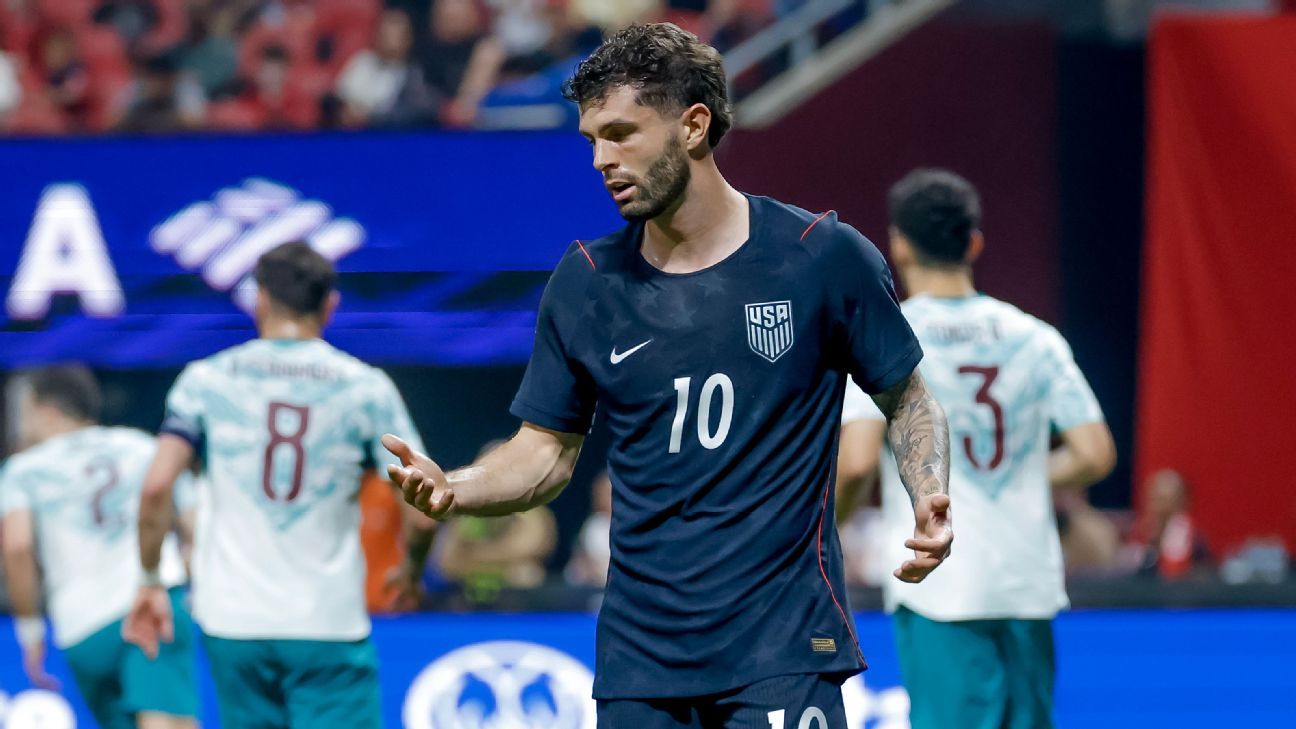
ATLANTA — On the day before the United States men’s national team’s 2-0 loss to Portugal, head coach Mauricio Pochettino mentioned that he might elect to make some tactical tweaks to help star attacker Christian Pulisic end a long scoring drought and build back some lost confidence.
“Maybe we help a little bit to [get him] a little bit more closer to the goal,” he said.
The coach was speaking literally. Pulisic started up front as a center forward on Tuesday and found familiar cohorts in Weston McKennie and Tim Weah feeding him the ball. He received more passes than any other U.S. attacker in the first half and attempted seven ground duels, the most on the team. But he won only one of those duels, and although he forced a couple of saves from Portugal keeper José Sá, he was indeed held scoreless once again.
– Player ratings: Pulisic 3/10 in USMNT’s loss to Portugal
– Ogden: Türkiye will be USMNT’s stiffest test in World Cup group stage
– O’Hanlon: Will USMNT’s depth be World Cup game-changer?
It was Pulisic’s eighth consecutive national team match without a goal, the longest drought of his career, and by the time he gets another opportunity, at least 18 months will have gone by since his last U.S. goal. Increasingly frustrated as the first half went on, the AC Milan star committed a couple of fouls and received a yellow card before halftime. He was subbed out after 45 minutes.
“We were able to create chances, which if I finish chances, which I know I’m going to, then things are going to be a bit different,” Pulisic said after the game.
Pulisic’s struggles — plus a 37th-minute Portugal goal after a turnover by McKennie and a perfect passing sequence from Vitinha to Bruno Fernandes to Francisco Trincão — overshadowed another solid first-half performance in which the U.S. attempted eight shots to Portugal’s three and generated 0.45 xG to Portugal’s 0.26. The U.S. had seen more touches in the box, too.
Neither team had started its entire first-choice lineup, but in the second half Portugal’s extreme depth advantage showed. While Patrick Agyemang (Derby County), Tanner Tessmann (Lyon) and Max Arfsten (Columbus Crew) subbed on for the U.S., Portugal coach Roberto Martinez was able to bring in Nuno Mendes (Paris Saint-Germain), Matheus Nunes (Manchester City), João Félix (Al Nassr), and Francisco Conceição (Juventus), among others.
Mendes, one of the best left backs in the world, was quickly able to test Alex Freeman down the Americans’ right side and, after Freeman conceded a corner, a wide-open João Félix slammed in Portugal’s second goal — both assisted by Fernandes — in the 59th minute. At that point, the match was effectively over.
The March international window before a World Cup is a particularly odd one. The U.S. scheduled a couple of heavyweights in Belgium and Portugal, knowing that the results would hold massive weight on perceptions and narratives heading into the summer. It’s safe to say that two losses by a combined 7-2 will certainly define discussions over the next few weeks.
At the same time, there’s a reason Portugal boss Martinez called team assessments in March “worthless” earlier in the week. With a number of prospective World Cup starters still out with minor injuries and a number of roster spots still up for grabs, however, Pochettino needed further impressions from a lot of the 24 players who saw the field over the two matches. What did he see?
-
Malik Tillman created five chances in 138 minutes while splitting time in a central attacking midfield role (against Belgium) and on the left wing (against Portugal). He created only two shot attempts for himself, however, putting one on goal.
-
McKennie scored from a set piece against Belgium and found another great chance early against Portugal, sending it wide. He wasn’t as sharp in the second match, and his turnover near midfield sent Portugal off toward their first goal.
-
Defender Auston Trusty played almost the entire match against Portugal and won five of seven duels. He was mostly stable out of possession, though you could make the case that he dropped back far too low on Portugal’s first goal, giving Trincão space to fire off an open shot.
-
After struggling at right back against Jérémy Doku and Belgium, Weah was the team’s most dangerous attacker against Portugal, making six progressive carries (the most on the team) and sending in a pair of dangerous crosses.
-
Aidan Morris and Sebastian Berhalter were given massive opportunities, starting against a dynamite Portuguese midfield. Morris, one of the best duel winners in the player pool, won a pair of duels and made seven defensive interventions, and each player completed four progressive passes.
-
Freeman played 79 minutes on Tuesday and won four of seven duels, though he very much had his hands full with Nunes in the second half.
-
Agyemang was mostly quiet against Portugal but was a lone bright spot against Belgium, scoring late.
For now, however, the biggest impression comes from Pulisic. The 27-year-old has now gone 14 matches for club and country without a goal, his longest drought since 2022.
“Physically I feel really good, feel really sharp and I’m doing a lot of good things,” Pulisic said. “I have to help my team to create assists and score goals and create chances. Obviously when I don’t do that it’s frustrating, but I feel like I’m close and I feel good things are coming.”
He will now return to Milan as they attempt to push up from second place in Serie A.
That’s two teams counting on his return to form.
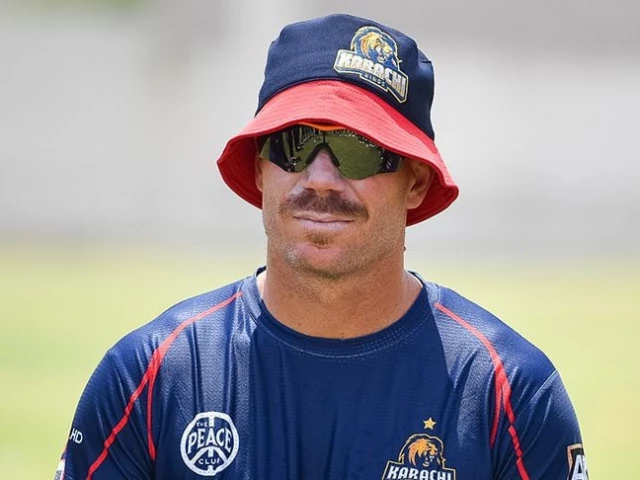
David Warner lauds team effort as Karachi Kings edge a tense low-scoring chase. Photo: PSL
KARACHI:
Karachi Kings captain David Warner expressed satisfaction with his team’s recent performances in the Pakistan Super League, crediting their spin attack and improved momentum in crucial phases of the game.
Reflecting on a recent run chase, Warner said, “the last game chasing a smaller total I was a little bit nervous, but the guys have been playing very well and I think the spinners specifically performed brilliantly,the last two games have been outstanding, they have been able to bring the momentum back our way in the middle overs and that’s been able to win us both games I feel.”
Speaking about the match against Lahore Qalandars, he emphasized the importance of securing the result. “For us it was about winning the game first and foremost and making sure we got the job done. When you’re chasing low totals it can be difficult, we sort of got it down to the wire and thankfully Mohammad Abbas came out, in his first game this year and he hit two boundaries to win the game for us.”
When asked about standout performers, Warner highlighted Saad Baig. “it’s Hard to say one, – I think Saad baig has come back a very good player from last year, he looked like more positive, good intent, last year he was finding his feet inside the team and this year I think he’s impressed me from what I’ve seen so far ”
Warner also spoke about playing in empty stadiums. “Look I think, you know In unprecedented times, we’ve played before in that environment and you know for us its about putting smiles on peoples faces and helping others out by entertaining on tv, so for us without the crowds clearly their energy, it brings a different energy to you and being in front of crowds is what you want but if they are coming back which I think they are, it would be exciting for everyone”
He praised Salman Ali Agha for his support on the field. “Salman Ali Aga is very good player , he’s helping me a lot on the field, he understands a lot of the players which I think is very helpful for me and I think having an experienced player like himself there as someone who knows other players from the other teams as well very well, its a bit of an advantage.”
On the presence of Australian players in the PSL, Warner said, “it makes everything comforting here, there’s a lot of downtime we are in the hotel a lot, we can’t go out much at all. So for us it’s about having coffee together, gelling each other and yeah trying to help a lot of young Pakistani players.”
Looking ahead, Warner made the team’s ambitions clear. “every time you’re playing in these tournaments you’re aiming for the final, irrelevant to where you come the year before. We are just going to try and keep playing better and smarter cricket.”
He also shared lighter moments from the tour. “after many requests they’ve given us one request that’s been done, so we enjoyed it, hopefully when we request some more we can go out and hopefully we can play golf at raya as well.”
Speaking about his stay, Warner added, “I haven’t tried any Pakistans food since I’ve been here but now my good friend Usman khawaja is here, I will be going down there with him”
On the league’s quality, he said, “I don’t like comparing other leagues around the world, I think each league is unique in their own way. I think what I can say is that the talent here in Pakistan, specifically you look at fast bowling, there’s a lot of guys that bowl high 140’s which I think is exceptional and they’re working on their skills and I think overall the competition is fantastic.”
Discussing his own performance, Warner remained ambitious. “hopefully I will try and score a 100 every time I go out there. If I can, I will.”
On his favourite left-handed batters, he said, “there’s a few Fakhar zaman is one.Saim ayob , is quicker on the pull shot as well so its probably similar to me.”
When asked about challenging bowlers, Warner responded, “Its hard to ask me as a batsman, because I don’t find any bowler difficult. I think one guy who is very skilful, I would say is shaheen shah Afridi but on our team we have got three very, very good skilful bowlers, Hasan Ali I’ve faced in the big bash this year, his skills are exceptional and obviously Mir hamza with the new ball is very difficult because he would swing the ball back into the left handers and Abbas Afridi change ups are very good.”
On his future, Warner said, “Im commentating at the moment,” before joking, “I’m thinking about making a come back in to international cricket, I think Australia needs me. I’m joking, I’ll coach, I’ll probably coach down the line but at the moment I’ve got no interest.”
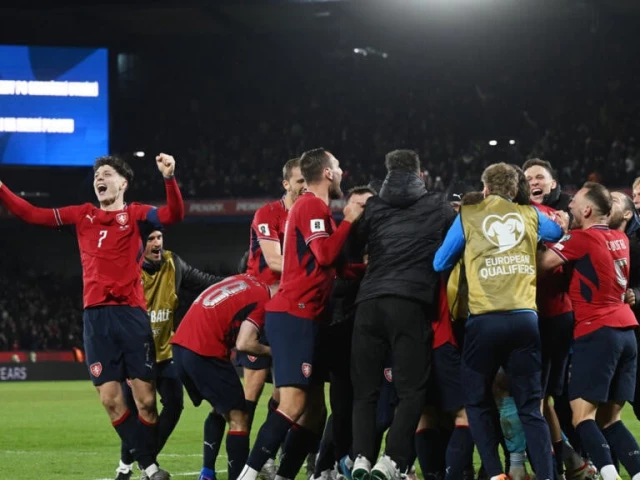
Czech Republic players celebrate after the penalty shoot out in Prague. Photo: AFP
PRAGUE:
Michal Sadilek’s penalty sent the Czech Republic to the World Cup as they beat Denmark in a shootout in Prague on Tuesday following a 2-2 draw after extra time.
The Czechs will play their first World Cup since 2006, facing Mexico, South Africa and South Korea in Group A of the tournament hosted by the United States, Canada and Mexico in June and July.
Tomas Chory and Tomas Soucek also scored for the Czechs in their second shootout in six days, while skipper Ladislav Krejci was denied by Danish goalkeeper Mads Hermansen.
For the visitors, Christian Eriksen was the only shootout scorer while Rasmus Hojlund hit the crossbar, Anders Dreyer failed to beat goalkeeper Matej Kovar and Mathias Jensen fired over the crossbar.
“I’m speechless. Hats off to everyone, I’m incredibly happy,” Krejci told Czech state television.
“Let’s be honest, we were not the better team but we showed more heart and we fought harder,” added the Wolverhampton defender.
“I had teary eyes, just a bit. I’m terribly happy and I want to thank the players,” Czech coach Miroslav Koubek told reporters.
“We suffered today. We played the best we could,” added the 74-year-old former goalkeeper.
On the chilly night in Prague, Pavel Sulc opened the score for the Czechs with a fine volley into the top corner three minutes into the game after the Danish defence had cleared a corner in his direction.
Denmark levelled in the 72nd minute when Mikkel Damsgaard’s free kick found Joachim Andersen in the box ready with a glancing header.
Krejci put the hosts ahead again in the 100th minute as he picked up a ball knocked down by Soucek in a goalmouth scramble following Vladimir Coufal’s cross.
His shot was deflected into the net by Danish defender Alexander Bah.
But Denmark levelled again in the 111th minute when substitute Kasper Hogh headed home Eriksen’s corner six minutes after coming onto the pitch.
‘Outstanding success’
In the play-off semi-finals on March 26, the Czechs beat Ireland on penalties while Denmark breezed past North Macedonia 4-0.
But they had a hard time beating the Czech defence as the hosts parked the bus after the quick opening goal, defending with 10 men.
Rasmus Hojlund had his low shot cleared by Kovar who also forced Gustav Isaksen’s curling free kick over the crossbar.
The hosts were a threat on the break but Lukas Provod tipped the ball past Hermansen and his right post.
Denmark kept pushing and missing or finding Kovar’s arms throughout the game, while the hosts often resorted to blindly clearing the ball.
Denmark will sit out their first World Cup since 2014, while the Czech Republic will record only the second appearance since it split with Slovakia to emerge as an independent country in 1993.
At the 2006 World Cup in Germany, the Czech Republic relied on the likes of Petr Cech, Pavel Nedved, Tomas Rosicky, Karel Poborsky and Jan Koller and bowed out after the group stage.
The 2026 World Cup berth is a rather unexpected triumph for the Czechs who struggled through the qualification, swapping coaches just before the play-offs amid mounting criticism from fans and pundits.
Long-time skipper Soucek lost the captain’s armband before the play-offs after a fumbled attempt to console fans particularly upset by a 2-1 qualifying defeat on the Faroe Islands last October.
“The faith that we can do it kept growing every day, every hour,” the veteran coach Koubek said.
“This is teamwork and an outstanding success and I’m really sincerely happy.”


FDA approves Eli Lilly’s GLP-1 pill, opening the next phase of the weight loss drug market

The New Era of Militia Influencers

UPI transactions hit record Rs 29.53 lakh crore in March; volumes cross 22.6 billion – The Times of India

-

 Politics1 week ago
Afghanistan announces release of detained US citizen
-

 Sports1 week ago
Broadcast industry CEO says consolidation is ‘essential’ to compete for NFL soaring media rights prices
-

 Entertainment1 week ago
UN warns migratory freshwater fish numbers are spiralling
-

 Tech1 week ago
Can a Home Appliance Fix the Problem of Soft-Plastic Waste?
-
 Business1 week ago
Property Play: Home flippers see smallest profits since the Great Recession, real estate data firm says
-
 Business1 week ago
Gold prices soar in Pakistan – SUCH TV
-

 Fashion1 week ago
ICE cotton slips on weaker crude, profit booking
-
 Business1 week ago
More women are entering wealth management, but few are in advisory roles, study finds