

Politics
Nepal PM Oli quits as anti-corruption protests spiral, says aide

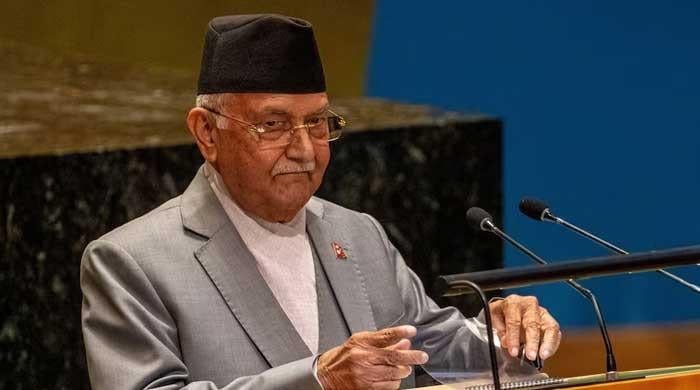
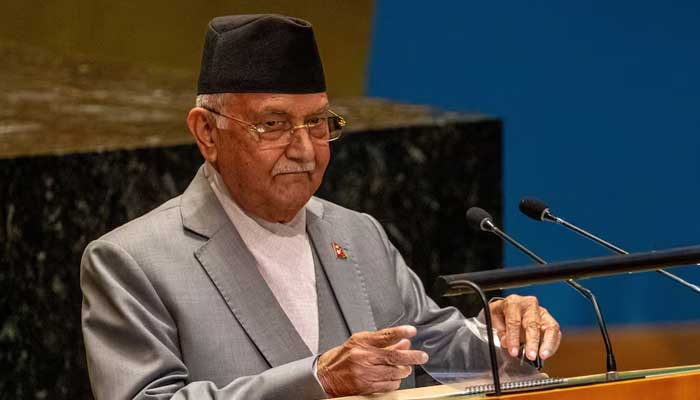
- Nepal rocked with deadly protests against social media ban.
- Country reports 19 fatalities in violence-marred demonstrations.
- Govt lifts social media ban; fresh turmoil after PM’s resignation.
KHATMANDU: Nepal Prime Minister KP Sharma Oli resigned on Tuesday, his aide said, as anti-corruption demonstrators defied an indefinite curfew and clashed with police, a day after 19 people died in violent protests triggered by a social media ban.
Oli’s government lifted the social media ban after protests turned violent, killing 19 and injuring more than a 100 after police fired tear gas and rubber bullets at protesters trying to storm parliament on Monday.
The unrest is the worst in decades in the poor Himalayan country that is wedged between India and China and has struggled with political instability and economic uncertainty since protests led to the abolition of its monarchy in 2008.
“The PM has quit,” Oli’s aide Prakash Silwal told Reuters, a move that plunges the country into fresh political uncertainty.
Earlier on Tuesday, Oli had called a meeting of all political parties, saying violence is not in the interest of the nation and “we have to resort to peaceful dialogue to find solutions to any problem”.
But anger against the government showed no signs of abating, as protesters gathered in front of parliament and other places in the capital Kathmandu, in defiance of an indefinite curfew imposed by authorities.
The protesters set fire to tyres on some roads, threw stones at police personnel in riot gear and chased them through narrow streets, while some looked on and shot videos of the clashes on their mobile phones as thick black smoke rose to the sky.
Hundreds of people from some towns located near the India-Nepal border had started marching towards Kathmandu to support the protesters, one of the protesters told Reuters by phone.
Witnesses also said that protesters were setting fire to the homes of some politicians in Kathmandu, and local media reported that some ministers were plucked to safety by military helicopters.
Reuters could not immediately verify the information.
“We are still standing here for our future [….] We want this country corruption-free so that everyone can easily access education, hospitals, medical (facilities) […] and for a bright future,” protester Robin Sreshtha told Reuters TV.
Arrival of planes from the southern side at Kathmandu airport, Nepal’s main international gateway, was closed because of poor visibility due to the smoke from fires set by protesters in areas nearby, aviation authority official Gyanendra Bhul said.
Organisers of the protests, which spread to other cities in the Himalayan country, have called them “demonstrations by Gen Z”, driven by young people’s widespread frustration with the government’s perceived lack of action to tackle corruption and boost economic opportunities.
- 45-day ceasefire proposal under active discussion.
- Massive strikes plan remains ready, sources say.
- Iran maintains hardline stance after Trump’s threat.
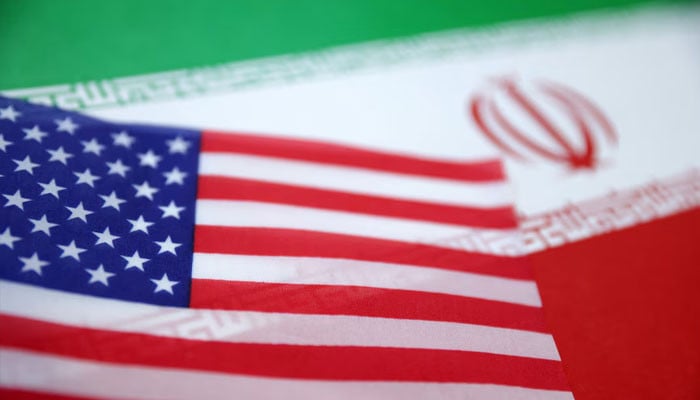
Pakistan, along with other regional mediators, is engaged in intense diplomatic efforts to broker a potential 45-day ceasefire between Iran and the United States that could lead to a permanent end to the war, Axios reported, citing four US, Israeli and regional sources.
However, the sources cautioned that chances of reaching even a partial agreement within the next 48 hours remain slim, describing the current push as the only opportunity to avert a major escalation that could involve large-scale strikes on Iranian civilian infrastructure and retaliatory attacks on energy and water facilities in Gulf states, according to the report.
US President Donald Trump had earlier set a 10-day deadline for Iran, which was due to expire Monday evening. However, he told the Wall Street Journal on Sunday his deadline for Iran to open the Strait of Hormuz or face attacks on critical infrastructure is Tuesday evening.
“There is a good chance, but if they don’t make a deal, I am blowing up everything over there,” he said, reiterating threats to target infrastructure vital to Iranian civilians.
The US and Israel have pounded Iran with missiles and airstrikes for more than five weeks to destroy what they said was an imminent threat from the country’s nuclear weapon development programme, ballistic missile arsenal and support for regional proxy militias.
Tehran has effectively closed the Hormuz waterway, a conduit for around a fifth of the world’s oil and natural gas supply, and attacked US military bases and other targets around the Gulf.
Two sources told Axios that operational plans for a large-scale US-Israeli bombing campaign targeting Iran’s energy facilities are ready, but stressed the extension of Trump’s deadline was aimed at giving a last chance to reach a deal.
Four sources with knowledge of the diplomatic efforts said the negotiations are taking place through Pakistani, Egyptian and Turkish mediators and also through text messages sent between Trump’s envoy Steve Witkoff and Iran’s Foreign Minister Abbas Araghchi.
Pakistan emerged as a key mediator in one of the region’s worst conflicts, which erupted after joint US-Israeli attacks on Iran on February 28.
According to a US official, Washington has presented several proposals to Tehran in recent days, but none have been accepted so far.
The sources said the mediators are discussing with the parties the terms for two-phased deal; the first phase would a potential 45-day ceasefire during which a permanent end to the war would be negotiated.
The ceasefire could be extended if more time were needed for talks, one of the sources said.
The second phase would be an agreement on ending the war, the report added.
The sources said mediators think that fully reopening the Strait of Hormuz and a solution for Iran’s highly enriched Uranium — either through its removal from the country or dilution — could only be a result of a final deal.
Mediators are also exploring confidence-building measures, including partial steps by Iran on Hormuz access and uranium, while seeking assurances from Washington that any ceasefire would not be temporary.
Iranian officials have conveyed concerns about entering a ceasefire arrangement similar to those in Gaza or Lebanon, where hostilities resumed despite formal agreements.
At the same time, mediators are working on potential US measures to address Iranian demands and build trust between the parties.
Officials involved in the talks warned that any US-Israeli strikes on Iran’s energy infrastructure could trigger a severe Iranian response targeting oil and water facilities across the Gulf region.
Mediators have stressed to Tehran that the next 48 hours represent a critical window to reach a deal and avoid widespread destruction.
Despite this, Iranian officials have maintained a hardline stance publicly, rejecting concessions. The Iranian Revolutionary Guards Corps Navy also warned that conditions in the Strait of Hormuz would “never return” to pre-war norms, particularly for the United States and Israel.
The White House declined to comment on the ongoing negotiations.
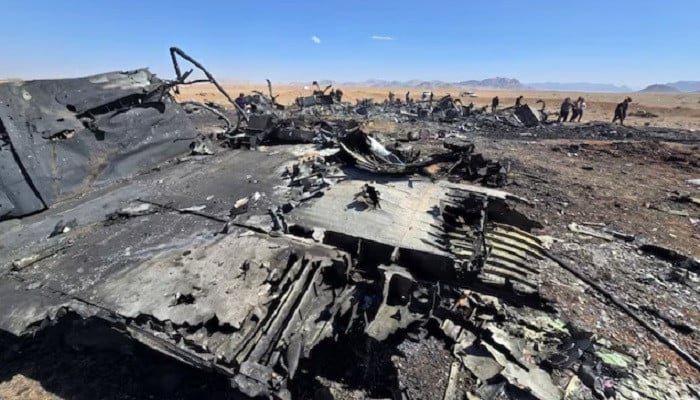
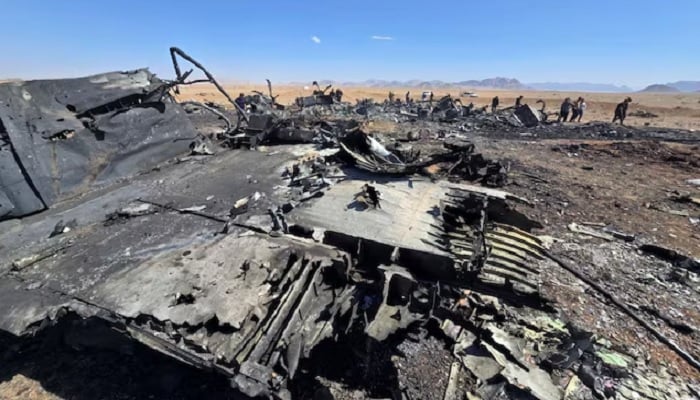
- Mechanical failure forced risky extraction, destruction of US aircraft in Iran.
- CIA ran deception campaign, jammed electronics, bombed roads to aid rescue.
- Airman authenticated his identity to avoid potential Iranian trap for rescuers.
The rescue had unfolded with near‑perfect precision. Under the cover of darkness, US commandos slipped deep into Iran, undetected, scaled a 7,000‑foot ridge and pulled a stranded American weapons specialist to safety, moving him toward a secret rendezvous point before dawn on Sunday.
Then everything stopped.
Two MC-130 aircraft that had ferried some of the roughly 100 special operations forces into rugged terrain south of Tehran suffered a mechanical failure and could not take off, a US official told Reuters, speaking on condition of anonymity.
Suddenly, elite commandos risked being stuck behind enemy lines.
Their commanders made a high-risk decision, ordering additional aircraft to fly into Iran to extract the group in waves — a decision that left the elite commandos waiting for a couple of tense hours.
“If there was a ‘holy shit’ moment, that was it,” said the official, who credited quick decision-making with saving the day. The official, along with others who spoke to Reuters for this story, was granted anonymity in order to speak candidly about the operation.
The gamble worked. The rescue force was pulled out in stages, and US troops destroyed the disabled MC‑130s and four additional helicopters inside Iran rather than risk leaving sensitive equipment behind.
The Pentagon did not immediately respond to a request for comment.
The successful extraction ended one of the most perilous episodes of the five-week-old conflict, averting what could have been a catastrophic loss of American lives and easing a mounting crisis for President Donald Trump as he weighs whether to escalate a war that has already killed thousands.
Downed pilot hit, made contact
The rescued US weapons specialist was the second of two crew members on an F-15E Strike Eagle fighter jet that Iran said on Friday had been hit by its air defences. The US official said the plane was flying over Isfahan province when it was brought down, and the two airmen ejected separately. The pilot was rescued while the second airman remained in Iran.
US air crews are trained in Survival, Evasion, Resistance and Escape (SERE) techniques if downed behind enemy lines, but few are fluent in Persian and face a challenge in staying undetected while seeking rescue.
A US source familiar with some of the operational details said the American officer, whom Trump said held the rank of colonel, sprained his ankle and hid in a crevice on a hilltop.
The official said the airman later established contact with the US military and authenticated himself – a critical step to ensure rescue forces were not walking into a trap.
The CIA had run a deception campaign earlier, hoping to confuse Tehran by planting information inside Iran that US forces had already located the missing airman and were moving him before the operation took place, a senior Trump administration official said.
But the US military took additional steps, jamming electronics and bombing key roads around the location to prevent people from getting close, the US source familiar with the planning said.
The source told Reuters that the aircraft eventually sent to extract the airman and rescue forces were much smaller turboprop aircraft, capable of landing on small airfields and relatively light.
Throughout the operation, the White House, the Pentagon and the US military’s Central Command were uncharacteristically silent. Trump was so relatively quiet that a local reporter went to check if he was at Walter Reed Hospital.
Once the mission was complete, Trump was triumphant.
“Over the past several hours, the United States Military pulled off one of the most daring Search and Rescue Operations in US History,” Trump said in a statement, adding that the airman was injured, but “he will be just fine.”
US aircraft hit
The initial search effort encountered fierce resistance from Iran when it began on Friday, after the F-15 pilot was initially rescued.
Reuters reported on Friday that two Black Hawk helicopters involved in the search were hit by Iranian fire but escaped from Iranian airspace.
In a separate incident, a pilot ejected from an A-10 Warthog fighter aircraft after it was hit over Kuwait and crashed, the officials said, though the extent of crew injuries was unclear.
The conflict has killed 13 US military service members, with more than 300 wounded, the US Central Command says. No US troops have been taken prisoner by Iran.
While Trump has repeatedly sought to portray the Iranian military as being in tatters, its ability to repeatedly hit US aircraft is significant, military experts say.
Iran’s Khatam al-Anbiya joint military command said on Saturday the military used a new air defence system on Friday to target a US fighter jet.
Reuters first reported on US intelligence showing that Iran retains large amounts of missile and drone capability.
Until just over a week ago, the US could only determine with certainty that it had destroyed about one-third of Iran’s missile arsenal.
The status of about another third was less clear, but bombings probably damaged, destroyed or buried those missiles in underground tunnels and bunkers, Reuters sources said.
Appearing unburdened after the successful rescue, Trump used harsh language on Sunday to threaten Tehran if it did not reopen the Strait of Hormuz for oil flows vital to the world economy.
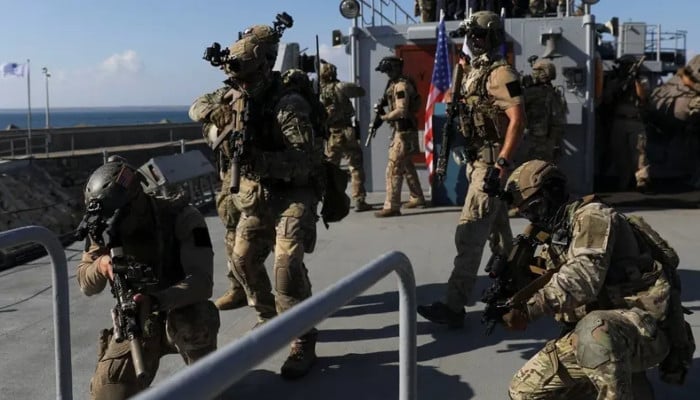
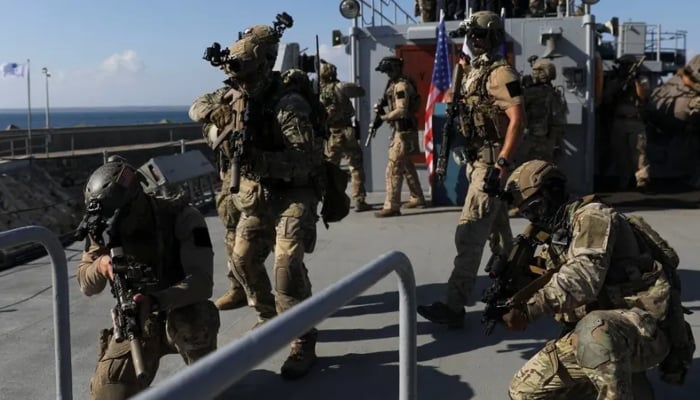
WASHINGTON: American commandos deployed deep into Iranian territory to rescue a downed airman, US news outlets reported on Sunday, hours after President Donald Trump announced that the crew member had been recovered “safe and sound.”
Tehran said this week it had shot down an F-15 warplane, the first US fighter jet to go down inside Iran since the start of the war. Washington has not confirmed the details of how the fighter went down.
Trump said early on Sunday the US military had “pulled off one of the most daring Search and Rescue Operations in U.S. [US] History, for one of our incredible Crew Member Officers, who also happens to be a highly respected Colonel, and who I am thrilled to let you know is now SAFE and SOUND!”
Navy Seal Team 6 commandos were tasked with extracting the airman, while US attack aircraft dropped bombs and opened fire on Iranian convoys to keep them away, the New York Times reported, citing an unidentified official.
The airman, a weapon systems officer, was wounded after the ejection but could still walk, evading capture in the mountains for more than a day, according to news outlet Axios, which cited a US official.
The unidentified airman was equipped with a pistol, a beacon and a secure communications device to coordinate with rescuers, the New York Times reported.
American commandos converging on the officer fired their weapons to keep Iranian forces away from the rescue site, the Times said.
Trump wrote on his Truth Social platform that he had directed the US military to send “dozens of aircraft, armed with the most lethal weapons in the World, to retrieve” him.
“He sustained injuries, but he will be just fine,” Trump wrote.
Two of the planes meant to transport the airman and his rescuers to safety were stuck in a remote base in Iran and had to be destroyed to prevent them from falling into Iranian hands, the New York Times and CBS reported.
US forces then used three other transport planes to carry the airman and his rescuers out of Iran.
The Iranian military said on Sunday the US operation to rescue the airman had used an abandoned airport in southern Isfahan province.
“The so-called US military rescue operation, planned as a deception and escape mission at an abandoned airport in southern Isfahan under the pretext of recovering the pilot of a downed aircraft, was completely foiled,” said Ebrahim Zolfaghari, spokesman for the Iranian military´s central command.
Zolfaghari also said two US “C-130 military transport planes and two Black Hawk helicopters were destroyed”.
The CIA reportedly launched a deception campaign to spread word inside Iran that US forces were moving the airman out of the country on the ground.
In his post, Trump also confirmed the “successful rescue of another brave Pilot, yesterday,” adding it was not disclosed to avoid jeopardising the second rescue mission.
“This is the first time in military memory that two U.S.[US] Pilots have been rescued, separately, deep in Enemy Territory,” he wrote, adding that both operations were concluded “without a SINGLE American killed, or even wounded.”
AFP has contacted the White House and the Pentagon for comment.


US’ Nike’s Q3 earnings dip as DTC weakness offsets wholesale strength

Pakistan, other mediators ‘make last-ditch’ efforts for Iran-US ceasefire: report

The imperium of ego

-

 Sports1 week ago
USMNT handed reality check by Doku, Belgium ahead of World Cup
-

 Sports1 week ago
2026 NCAA men’s hockey tournament: Schedule, results
-
Uncategorized4 days ago
[CinePlex360] Please moderate: “Trump signals p
-
Uncategorized7 days ago
[CinePlex360] Please moderate: “Further tariff
-

 Tech2 days ago
Our Favorite iPad Is $50 Off
-
 Entertainment1 week ago
The Avett Brothers’ bassist explains why he wrote a book about John Quincy Adams
-

 Entertainment3 days ago
Joe Jonas shares candid glimpse into parenthood with Sophie Turner
-

 Sports1 week ago
Man City show why they are worthy WSL title winners as tired United wilt