

Business
Nepal poll results: 'He called his rival a terrorist, refused to debate him & won by a landslide' I Witness















People line up outside of the shuttered Silicon Valley Bank (SVB) headquarters on March 10, 2023 in Santa Clara, California.
Justin Sullivan | Getty Images
Three years ago, JPMorgan Chase executive Doug Petno was at a New York City party celebrating a colleague’s retirement when his boss, Jamie Dimon, called Petno over.
It was March 9, 2023, and the customers of a West Coast lender known for catering to startups had been withdrawing deposits in droves.
“Jamie looks at me and says, ‘Get on this call,'” Petno told CNBC this week in an exclusive interview.
On the line were regulators with an urgent question: Was JPMorgan interested in buying Silicon Valley Bank?
California’s finance regulators seized SVB the next day, completing the sudden collapse of an institution at the heart of the American startup community. Over that weekend, Dimon, Petno and other JPMorgan leaders repeatedly weighed whether they should purchase the bank, which had just lost $42 billion in deposits. They decided against it, in part because thousands of SVB clients were signing up for JPMorgan accounts, anyway, in a flight to safety.
“We had three years’ worth of incoming clients in a weekend,” said Petno, who is co-head of JPMorgan’s commercial and investment bank. “Onboarding teams were opening up accounts around the clock.”
Emboldened by what they were seeing, Petno had an idea: What if JPMorgan could build a true competitor to SVB — as well as startups Brex, Ramp and Mercury — all of whom had carved a profitable niche serving founders and venture capital investors?
“We went to our board and said, ‘there’s a vacuum in the market,'” Petno told CNBC. “At that very moment, everybody saw the opportunity.”
Keeping tabs
For JPMorgan, already a giant in Main Street and Wall Street finance, winning the more specific niche of startup banking from West Coast rivals is about more than gaining deposits. It’s both a key element of the growth strategy for a bank with more than $180 billion in revenue last year, and also a means to help the New York-based lender stay close to technology developments for itself.
JPMorgan, with a tech budget of nearly $20 billion this year, is aiming to not only serve startup clients and VC investors better, but to learn from them. The firm keeps a close eye on Silicon Valley startups for solutions to problems the bank itself faces, from cybersecurity to quantum computing.
In fact, when a JPMorgan client announces a round of artificial intelligence-related cutbacks to jobs and expenses, the firm will often send a team of bankers to investigate how the client is doing it, said Petno.
Typically, the bankers find that implementing new AI agents is only a fraction of the reason for layoffs, while other factors like over-hiring and inefficient processes account for the rest, he said.
Co-CEOs of Commercial & Investment Bank at JPMorganChase, Troy Rohrbaugh and Douglas Petno.
Courtesy: JPMorganChase
JPMorgan began its startup banking business in 2016 as it became aware of its tech-focused rivals during its westward expansion. In the beginning, it only served bigger, more mature startups.
That’s in part because the bank didn’t yet have a digital banking solution that younger founders in particular craved, Petno said. It also didn’t have enough investment bankers at the time to target smaller, riskier startups.
For years, the view on JPMorgan from some in the VC community was that it took too long to open an account, or that resolving issues around payments involved dealing with time-consuming visits to a branch, investors told CNBC.
“They want to go to the website to open an account, and if it’s more than 15 minutes, they’re done,” says Petno.
But in the weeks that followed the SVB collapse, Petno and his team moved quickly, hiring a few key players from SVB, including then-SVB Capital President John China, who today leads JPMorgan’s innovation economy business along with Andrew Kresse.
By late April of 2023, JPMorgan found itself looking at buying another wounded California-based bank. This time, it made the winning bid for First Republic, which also catered to the tech community.
With fresh learnings from SVB and the banking operations of First Republic, JPMorgan doubled its revenue from startup banking in 2023, according to the company.
Despite the digital banking focus, a startup founder will still sometimes walk into a Chase branch to deposit a huge funding check into a regular account. Now, when that happens, JPMorgan’s systems immediately gets that client moved to the startup team, Petno says.
Killer app?
JPMorgan has now quadrupled the number of total clients it has in the business to nearly 12,000, served by 550 bankers on both coasts, according to the lender, all of whom draw resources from different parts of the company.
Founders and VC investors are clients of the private bank, while the startups are covered by the commercial bank and VC funds are separate clients in a business largely acquired from First Republic.
While JPMorgan declined to give specific revenue figures, Petno said the startup business had a “dramatically higher” growth rate than the bank’s main business lines.
And yet, Petno still isn’t satisfied with the firm’s digital banking offerings for startups, describing a project underway that will help them leapfrog competitors.
Besides SVB, which is now owned by First Citizens Bank, and the startups Mercury and Ramp, competitors in the space include Stifel and Customers Bank. In January, Capital One acquired Brex for $5.15 billion.
Since most startups fail, JPMorgan identifies companies that it expects to be winning bets, seeking to develop relationships with them earlier in their life cycle, like SVB did.
That way, it can provide not only core bank accounts, but lucrative investment banking advice along the way.
JPMorgan’s ultimate vision is to become the one-stop shop for founders, serving all their needs, including international expansion, from the seed round to initial public offering and beyond.
“Once you’re onboarded, you can never outgrow JPMorgan, from unicorn all the way to a Magnificent 7,” Petno said.
Business
India reviews US Section 301 investigations on partners; decision to follow detailed assessment: Report – The Times of India
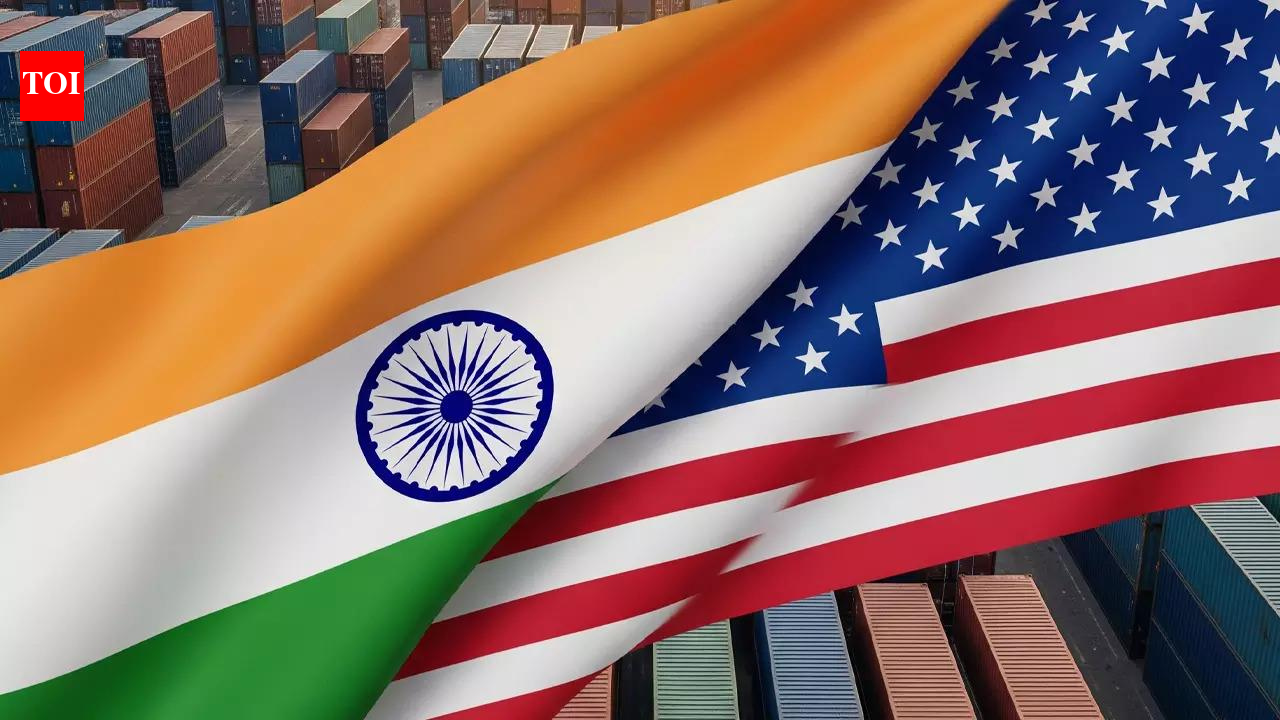
India is examining the United States’ move to initiate Section 301 investigations against a group of 16 trading partners and will take an appropriate position after analysing the legal and economic aspects, PTI reported citing an official on Friday.On March 11, the Office of the United States Trade Representative (USTR) announced probes into countries including India, China, Japan and the European Union to address practices such as forced labour and manufacturing overcapacity that Washington believes are hurting its domestic industry.The investigation spans multiple sectors such as steel, aluminium, automobiles, batteries, electronics, chemicals, machinery, semiconductors and solar modules.The countries and regions under review include China, Singapore, Switzerland, Norway, Indonesia, Malaysia, Cambodia, Thailand, South Korea, Vietnam, Taiwan, Bangladesh, Mexico, Japan, India and the 27-member EU bloc.“We are studying what is there in their note. We are looking at it from all perspectives. Both from the legal perspective as well as the economic angle which is being mentioned there. India is evaluating the documents,” the official said.The development comes after the US Supreme Court ruled against the tariffs imposed earlier during President Donald Trump’s tenure. Following the verdict, Trump had said Washington had other options to reintroduce tariff pressure.In line with that approach, the United States has imposed a 10 per cent tariff on all countries for a period of 150 days from February 24.The Section 301 process will assess whether measures such as industrial subsidies, expansion of state-backed manufacturing, operations of state-owned enterprises, barriers to market access, currency practices or weak domestic demand have contributed to excess global manufacturing capacity affecting US trade.If such practices are established, Washington could consider countermeasures including higher tariffs, quantitative restrictions or other trade curbs.Public consultations on the investigations will begin on March 17, when dockets open for submissions from companies, industry associations and governments.Sources indicated that the probe has a sharper focus on China due to concerns around forced labour and sector-specific overcapacity that could influence global trade flows.

Last Updated:
IndiGo cited a sharp rise in fuel prices caused by the ongoing conflict in West Asia for the implementation of an additional fuel charge on flights.




IndiGo has introduced an additional fuel surcharge for flights. (Representational Image)
The airline said the International Air Transport Association’s (IATA) Jet Fuel Monitor has indicated an increase of more than 85% in fuel prices for the region due to the conflict. “This sudden and steep increase will have a material impact on all airlines’ costs and networks, including IndiGo’s,” it said.
“While offsetting the entire impact of this fuel price surge requires a very substantial adjustment to fares, IndiGo has introduced a relatively smaller amount as a Fuel Charge keeping in mind the consequential burden on customers,” the airline said in the statement.
This came after Air India announced a phased expansion of fuel surcharges across its domestic and international network after a sharp rise in aviation turbine fuel (ATF) prices driven by the ongoing crisis in West Asia.
Changes In Fuel Prices
From March 14, overall prices for all new bookings on IndiGo flights will carry an additional fuel charge per sector, which are as follows:
- Within Domestic India – Rs 425
- Indian Subcontinent – Rs 425
- Middle East – Rs 900
- South East Asia and China – Rs 1,800
- Africa and West Asia – Rs 1,800
- Europe – Rs 2,300
“IndiGo regrets the inconvenience resulting from this additional charge and reiterates that the measure has been driven by a sudden and substantial change in the operating environment. IndiGo will continue to monitor the situation and make relevant adjustments as and when appropriate,” the airline said.
This came as oil prices went up over $100 per barrel after the US-Israeli war against Iran, which resulted in a virtual closure of the Strait of Hormuz that carries 20% of global crude oil and gas supplies. Although oil prices dipped on Friday after an Indian tanker sailed through the strait, they were on track for more disruptions due to the war.
Meanwhile, the US issued a 30-day license for countries to buy Russian oil and petroleum products stranded at sea. US Treasury Secretary Scott Bessent said it was a step to stabilise global energy markets roiled by the ongoing conflict.
March 13, 2026, 20:07 IST
Read More


Millions of Iranians rally on International Quds Day amid US-Israeli strikes
Inside JPMorgan Chase’s push to become the startup world’s new Silicon Valley Bank

Alex Warren reveals unforgettable detail about Chappell Roan at Grammys

-

 Politics6 days ago
India let Iran warship dock the day US sank another off Sri Lanka, say officials
-

 Sports7 days ago
Pakistan set for FIH Pro League debut | The Express Tribune
-
 Business6 days ago
Restaurant group changes name after bid to buys pubs across the UK
-

 Entertainment6 days ago
Harry Styles kicks off new era with ‘One Night Only’ comeback show
-

 Sports7 days ago
Winners and losers of the 2026 NHL trade deadline
-
 Business7 days ago
Home heating oil: ‘Most of my pension has gone on home heating oil’
-
 Business2 days ago
Stock market crash today (March 12, 2026): Nifty50 opens below 23,600; BSE Sensex down over 900 points on continuing US-Iran war – The Times of India
-

 Entertainment7 days ago
Kanye ‘Ye’ West trips during trial: ‘Is he asleep?’