

Politics
New video fuels anger over Minnesota shooting

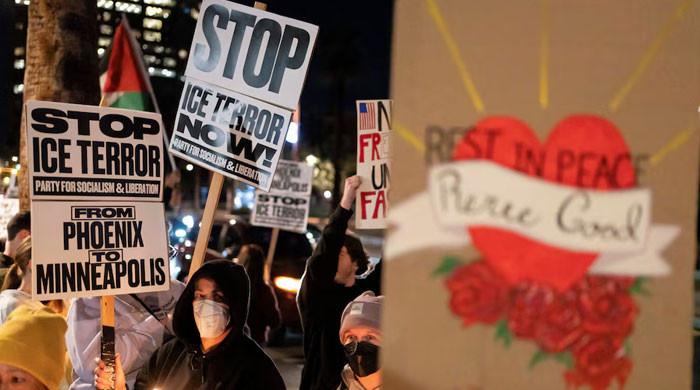
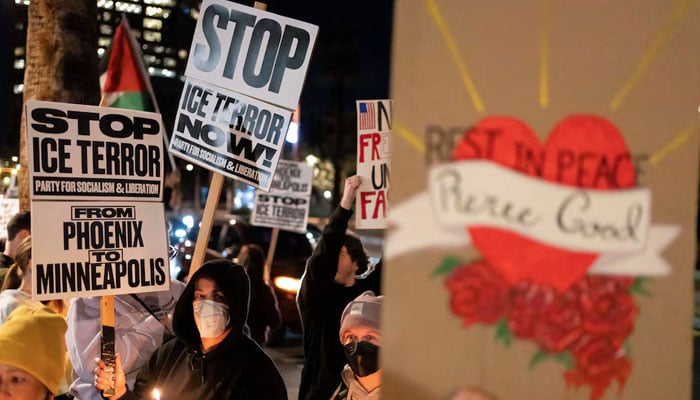
- White House reposts video of shooting of Renee Good in Minnesota.
- Before being killed, woman heard saying, “fine, I’m not mad at you.”
- State officials vow criminal probe, citing lack of FBI cooperation.
MINNEAPOLIS: The White House on Friday reposted on social media a new video taken from the mobile phone of the immigration officer who fatally shot a Minnesota woman in her car this week, adding to the evidence around an incident that has sparked days of nationwide protests.
The 47-second video shows 37-year-old Renee Good telling the officer, “That’s fine, dude, I’m not mad at you,” moments before he opens fire after Good puts the car in gear in an apparent effort to pull back into the street.
The new clip is likely to further inflame tensions between state officials and officials in President Donald Trump’s administration, who have offered sharply different accounts of the shooting. Minnesota authorities on Friday said they were opening their own criminal investigation, after some state leaders said the FBI was refusing to co-operate with state investigators.
The video, obtained by the website Alpha News and verified by Reuters, begins as the Immigration and Customs Enforcement officer, Jonathan Ross, exits his car and approaches Good’s Honda SUV, which is partially blocking traffic. A black dog is visible through an open rear window.
As he circles around the front of the car, Good reverses farther out into the street before speaking to him through her open window. Ross then continues around the vehicle’s rear, where he films the vehicle’s licence plate and encounters Good’s wife, Becca Good, in the street. She tells him, “We don’t change our plates every morning, just so you know. It’ll be the same plate when you come talk to us later. That’s fine. US citizen.”
Becca Good, who was filming the ICE agent with her own phone, then adds: “You want to come at us? I say go get yourself some lunch, big boy.”
At that point, another ICE agent approaches Renee Good in the vehicle and orders her to get out of the car. She can be seen reversing briefly, then putting the car into gear and turning the steering wheel, apparently trying to drive away.
As the car moves forward, Ross shouts “Whoa!” Shots can be heard, and the car briefly disappears from the frame of the video as the officer’s hand holding the phone appears to flail about.
The video then shows the car careering down the street, while someone can be heard muttering, “Fucking bitch.”
Vice President JD Vance, who has accused Good of deliberately using her car as a weapon, reposted the video, saying it showed the officer’s life was endangered.
Other videos of the shooting show Good turning her wheels away from Ross as she drives forward, while he fires three shots while jumping backwards from the front of the car. The final two shots appear to be aimed through the driver’s side window, after the car’s front bumper has already passed by the officer’s legs.
It is unclear whether Ross made any contact with the car, but videos show he stayed on his feet and walked calmly towards the car after the shooting.
Officials from the Republican Trump administration have defended the shooting as self-defence and accused Good of an act of “domestic terrorism” – a narrative described by Democratic Minneapolis Mayor Jacob Frey as “garbage” based on the video footage.
Good was a mother of three, including a 6-year-old son. Becca Good issued a statement to Minnesota Public Radio on Friday, saying the two had “stopped to support our neighbours”.
“We had whistles,” she wrote. “They had guns.”
She also described her late wife as someone who had “sparkles coming out of her pores”.
“Renee lived by an overarching belief: there is kindness in the world and we need to do everything we can to find it where it resides and nurture it where it needs to grow,” she said. “Renee was a Christian who knew that all religions teach the same essential truth: we are here to love each other, care for each other, and keep each other safe and whole.”
Separate investigations
Mary Moriarty, the top prosecutor for Minneapolis’ Hennepin County, and the state’s Democratic attorney general, Keith Ellison, said on Friday they were opening their own probe into the shooting.
The announcement came one day after the state’s lead investigative agency, the Bureau of Criminal Apprehension, said the FBI had reversed its initial co-operation and blocked the BCA from scene evidence, witness interviews and other material.
The decision could set up separate, parallel probes into the shooting.
US officials, including Vance, have dismissed the idea that a federal officer could face state criminal charges. But Moriarty said the decision was hers to make.
“To be sure, there are complex legal issues involved when a federal law enforcement officer is involved. But the law is clear: we do have jurisdiction to make this decision,” she said.
The announcement underscored how the Trump administration’s immigration crackdown in Democratic-run cities has frayed trust between local and federal officials.
Earlier in the day, Frey accused the Trump administration of trying to predetermine the investigation’s outcome by cutting out state authorities.
“This is a time to follow the law,” Frey said. “This is not a time to hide from the facts.”
In Portland, Oregon, on Thursday afternoon, a US Border Patrol agent shot and wounded a man and woman in their car after an attempted vehicle stop. As in Minnesota, the Department of Homeland Security said the driver “weaponised” the car in an effort to run over the agent, who fired in self-defence.
Portland Mayor Keith Wilson, echoing Frey, said he could not be sure the government’s account was grounded in fact without an independent investigation.
The two shootings have drawn thousands of protesters in Minneapolis, Portland and other US cities, with more demonstrations expected over the weekend.
In both cases, Democratic mayors and governors have called on the Trump administration to pull federal officers out, arguing that their presence is sowing chaos and needlessly creating tensions on the streets.
While the operation is part of Trump’s broader immigration crackdown, the president has for months aimed political attacks at the state, particularly its large Somali-American community.
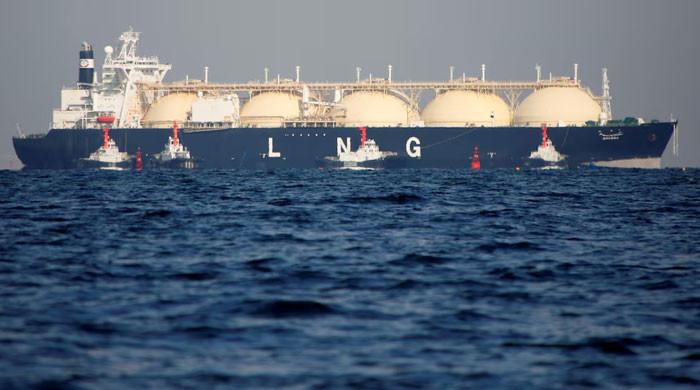

- Qatar produces LNG about 20% of global supply.
- If war continue, it will impact world’s GPD: minister.
- Minister forecasts crude prices may hit $150 per barrel.
Qatar expects all Gulf energy producers to shut down exports within weeks if the Iran conflict continues and drives oil to $150 a barrel, the country’s Energy Minister Saad al-Kaabi told the Financial Times in an interview published on Friday.
Qatar halted its production of liquefied natural gas (LNG) on Monday, as Iran continued to strike Gulf countries in retaliation for Israeli and US attacks.
The country’s LNG production is equivalent to about 20% of global supply and plays a major role in balancing both Asian and European markets’ demand for the fuel.
“Everybody that has not called for force majeure we expect will do so in the next few days that this continues. All exporters in the Gulf region will have to call force majeure,” Kaabi told the FT.
“If this war continues for a few weeks, GDP growth around the world will be impacted,” he said.
“Everybody’s energy price is going to go higher. There will be shortages of some products and there will be a chain reaction of factories that cannot supply,” Kaabi said.
Kaabi said even if the war ended immediately it would take Qatar “weeks to months” to return to a normal cycle of deliveries.
Analysts and economists have highlighted the potential impact of the war on economies globally.
Kaabi, who is also the CEO of Qatar Energy, one of the world’s biggest liquefied natural gas producers, told FT that the company’s North Field expansion project would delay first production.
“It will delay all our expansion plans for sure,” Kaabi said. “If we come back in a week, perhaps the effect is minimal, if it’s a month or two, it is different.”
The project was scheduled to begin production in mid-2026.
He forecast that crude prices could hit $150 a barrel O/R in two to three weeks if ships and tankers were unable to pass through the Strait of Hormuz, which is the world’s most vital oil export route, connecting the biggest Gulf oil producers with the Gulf of Oman and the Arabian Sea.
Kaabi also expects gas prices to rise to $40 per million British thermal units.
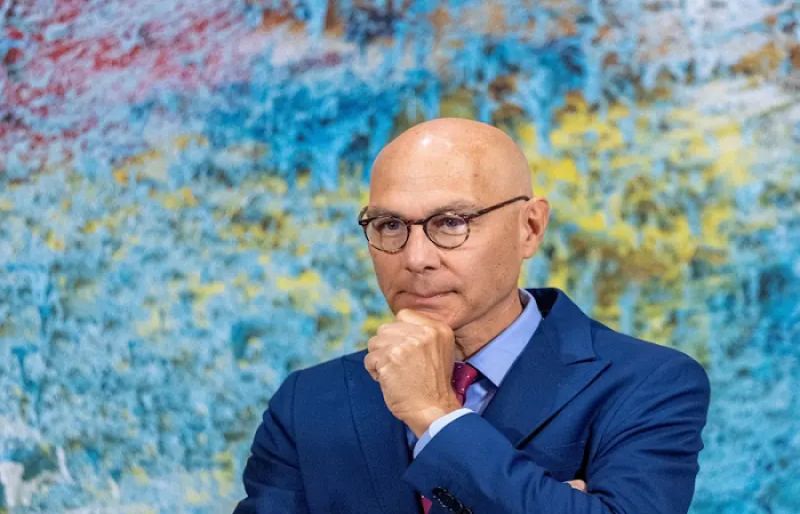

GENEVA: The United Nations High Commissioner for Human Rights Volker Turk has said that killings such as the reported death of Ali Khamenei raise serious concerns under international human rights law.
Speaking to reporters, Turk said that from a human rights perspective, any form of killing is unacceptable.
“From a human rights perspective, any killing of anyone is not in the interest of international human rights law,” he said.
Strike on Girls’ School Raises Concern
Turk also addressed reports of a strike on a girls’ school in Minab, a city in southern Iran, during the first day of US and Israeli attacks.
Iran’s ambassador to the UN in Geneva, Ali Bahreini, claimed that the attack killed around 150 students, although the figure has not been independently verified.
The UN rights chief stressed that schools are civilian institutions and should never be targeted during armed conflicts.
Call for Independent Investigation
Turk called for an impartial investigation into the incident to determine the circumstances surrounding the strike, including the type of weapon used and the timing of the attack.
He said responsibility now lies with those who carried out the strikes to ensure a transparent inquiry.
Meanwhile, US officials told media that military investigators are examining the possibility that American forces were responsible, though the investigation has not yet reached a final conclusion.
The incident has intensified international concern about civilian casualties and humanitarian law violations as the conflict in the region continues to escalate.

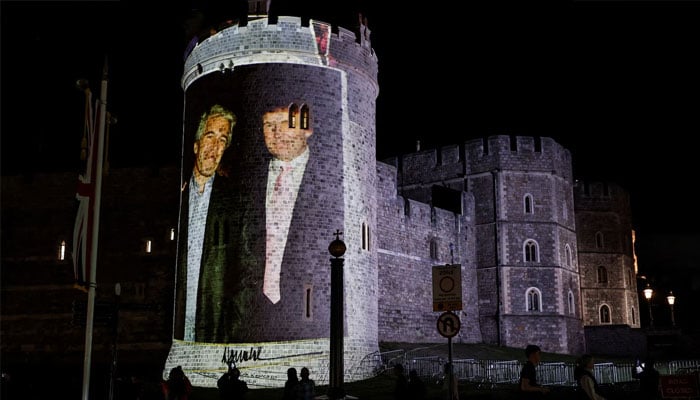
WASHINGTON: The US Justice Department published additional FBI documents describing interviews with a woman who said President Donald Trump sexually assaulted her after she was introduced to him by Jeffrey Epstein.
The documents had not been made public under previous congressionally-mandated file releases related to the late convicted sex offender because they were mistakenly marked “duplicative,” the department said.
Democrats are investigating the Trump administration’s handling of the Epstein files.
The documents released include descriptions of multiple 2019 interviews the FBI held with the woman, who alleged she was assaulted by both Epstein and Trump while she was between 13 and 15 years old.
In one interview, the woman said Epstein took her to “either New York or New Jersey” and introduced her to Trump.
The woman said she and people close to her received threatening calls over the years demanding she keep quiet that she believed were related to Epstein.
Trump has denied any wrongdoing related to the Epstein allegations, and the Justice Department previously said some of the documents it has released “contain untrue and sensationalist claims against President Trump.”
Democrats have accused the Trump administration of covering up details of the Epstein investigation that could negatively impact Trump.
On Wednesday, a House committee voted to subpoena Attorney General Pam Bondi to answer questions about the Justice Department´s handling of the documents.


Maharashtra’s Rs 7.69-Lakh-Crore Budget: Who Gains? Who Pays More?

Stock market today: Which are the top losers and gainers on March 6- check list – The Times of India

Bangladesh road map aims at raising tax-to-GDP ratio to 15% by 2035

Attock Cement’s acquisition approved | The Express Tribune

India Us Trade Deal: Fresh look at India-US trade deal? May be ‘rebalanced’ if circumstances change, says Piyush Goyal – The Times of India

Policy easing drives Argentina’s garment import surge in 2025

-
Business1 week ago
Attock Cement’s acquisition approved | The Express Tribune
-
Business1 week ago
India Us Trade Deal: Fresh look at India-US trade deal? May be ‘rebalanced’ if circumstances change, says Piyush Goyal – The Times of India
-
 Fashion1 week ago
Policy easing drives Argentina’s garment import surge in 2025
-

 Politics1 week ago
What are Iran’s ballistic missile capabilities?
-

 Politics1 week ago
US arrests ex-Air Force pilot for ‘training’ Chinese military
-

 Sports7 days ago
LPGA legend shares her feelings about US women’s Olympic wins: ‘Gets me really emotional’
-
 Business7 days ago
Greggs to reveal trading amid pressure from cost of living and weight loss drugs
-

 Sports1 week ago
Sri Lanka’s Shanaka says constant criticism has affected players’ mental health