

Business
Noel Tata’s son Neville, Bhaskar Bhat inducted by Tata Trusts to board of Sir Dorabji Tata Trust: Report – The Times of India

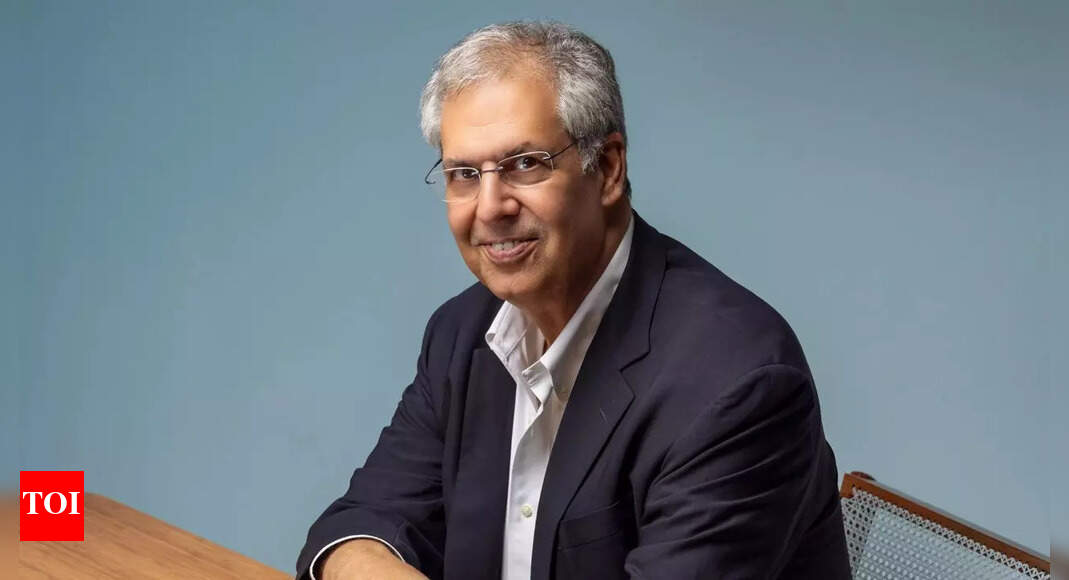
Neville Tata has been appointed by Tata Trusts to the board of Sir Dorabji Tata Trust (SDTT). Neville Tata is the son of Tata Trusts chairman Noel Tata. Group veteran Bhaskar Bhat has also been inducted.This appointment strengthens Noel Tata’s position whilst elevating Neville, aged 32, to one of the most significant roles within the Tata organisation, positioning him for a substantial future career in the family enterprise, according to an ET report.During Tuesday’s meeting, the trustees amended Venu Srinivasan’s position from lifetime to a three-year term, adhering to new Maharashtra government regulations that limit lifetime trustee appointments, directly affecting Tata Trusts’ established governance structure.
Who are Neville Tata and Bhaskar Bhat?
Following his graduation from Bayes Business School, Neville commenced his career at Trent in 2016 in the packaged foods and beverages division. Subsequently, he took charge of Zudio, a value fashion retailer that has emerged as one of India’s rapidly expanding clothing retail chains.Neville currently serves on the boards of JRD Tata Trust, Tata Social Welfare Trust and RD Tata Trust. Sources indicate he might join Sir Ratan Tata Trust (SRTT), another significant trust that, alongside SDTT, controls over 51% of shares in Tata Sons, the group’s primary holding entity.Bhat, aged 71, graduated from IIT Madras and IIM Ahmedabad, and started his professional journey in 1978 at Godrej & Boyce as a management trainee, before transitioning to the Tata Watch Project, which subsequently evolved into Titan.Throughout his tenure as managing director from 2002 to 2019, spanning 17 years, he guided Titan’s diversification from watches into multiple segments including eyewear, jewellery, fragrances, accessories and sarees. Under his leadership, the company’s market value grew to approximately $13 billion, positioning it as the second-largest listed company in the Tata Group at that time.





A Nike logo is displayed at a Nike store in Austin, Texas, Feb. 5, 2026.
Brandon Bell | Getty Images
Shares of Nike fell in extended trading Tuesday after the retailer warned sales will fall for the rest of the calendar year, led by an expected 20% decline in its key China market during the current quarter.
Chief Financial Officer Matt Friend said during the company’s earnings call that Nike expects sales for its current fiscal fourth quarter to drop between 2% and 4%, compared with Wall Street estimates of a 1.9% increase, according to LSEG.
For the duration of the calendar year, Friend said, the company expects sales to fall by a low single-digit percentage, led by growth in North America and offset by declines in China. That outlook wasn’t comparable to estimates.
Nike beat expectations across the business on both the top and bottom lines for its fiscal third quarter, but its guidance left investors with more questions about how long its turnaround will take. Friend also cautioned that Nike’s guidance was based off of where the global economic picture stands today — and it could change given recent geopolitical volatility.
“We also recognize that the environment around us has become increasingly dynamic, and we could experience unplanned volatility due to the disruption in the Middle East, rising oil prices and other factors that could impact either input costs or consumer behavior,” said Friend. “We are focused on what we can control.”
Shares fell more than 8% in extended trading.
Here’s how the world’s largest sneaker company did for its fiscal third quarter, compared with estimates from analysts polled by LSEG:
- Earnings per share: 35 cents vs. 28 cents expected
- Revenue: $11.28 billion vs. $11.24 billion expected
The company’s reported net income for the three-month period that ended Feb. 28 was $520 million, or 35 cents per share. That’s a 35% decline from $794 million, or 54 cents per share, a year earlier. That plunge came as Nike’s gross profit margin slid 1.3 percentage points to 40.2%, “primarily due to higher tariffs in North America,” the company said.
Sales were flat at $11.28 billion, compared to $11.27 billion last year.
While Nike beat expectations on the top and bottom lines, it posted a mixed picture regionally. Nike’s largest market of North America continued to show steady growth, as revenue climbed 3% to $5.03 billion, but that was just shy of Wall Street’s expectations of $5.04 billion, according to StreetAccount.
Meanwhile, Nike’s Greater China market continued to shrink, with revenue down 7% to $1.62 billion during the quarter. Still, that total beat analyst estimates of $1.50 billion, according to StreetAccount.
Nike is continuing to work through a colossal turnaround under CEO Elliott Hill. About a year and a half into his tenure, Hill has made strides in repairing parts of the business, but has been clear that it’ll take time for the entire company to improve given the retailer’s scale and complexity.
He reiterated that expectation on Tuesday, saying in a news release that “the pace of progress is different across the portfolio.”
“The areas we prioritized first continue to drive momentum,” Hill said. “The work is not finished, but the direction is clear, our teams are moving with focus and urgency, and our foundation is getting even stronger to build the future of NIKE.”
Friend said Nike’s turnaround efforts “will continue to impact results over the balance of the calendar year.”
Nike’s recovery was already coming at a tough time as a global trade war dented its efforts to improve profitability and drive sales from inflation-weary shoppers. But now the athletic company will have to contend with a new war in the Middle East that’s already led to rising gas prices and is expected to send consumer prices even higher, which could push shoppers to cut back on nice-to-haves like new clothes and shoes to save money elsewhere.
“We continue to be encouraged by the momentum in North America. We’ve got a strong order book for summer,” Friend said. “We’re seeing positive signs and sell through. We’re not seeing a consumer reaction to what’s going on in the Middle East at this point in time, in North America.”
Hill has focused in part on revitalizing Nike’s business with wholesale partners as opposed to direct sales on its website and in stores. Wholesale revenue climbed 5% to $6.5 billion.
Meanwhile, direct sales slid 4% to $4.5 billion.
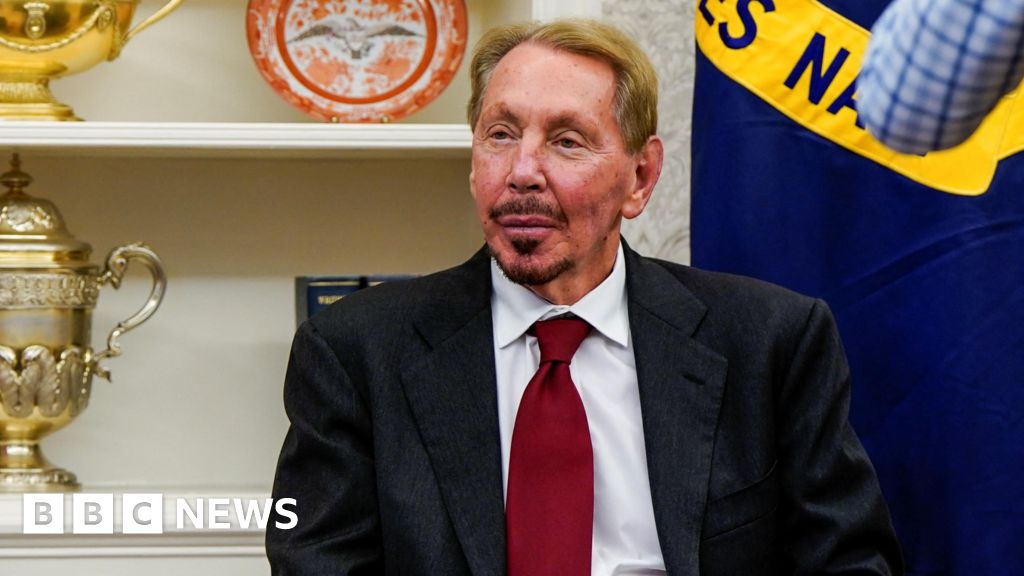
It is thought that thousands of people may have lost their jobs at Oracle, one of the world’s largest tech companies.
Source link
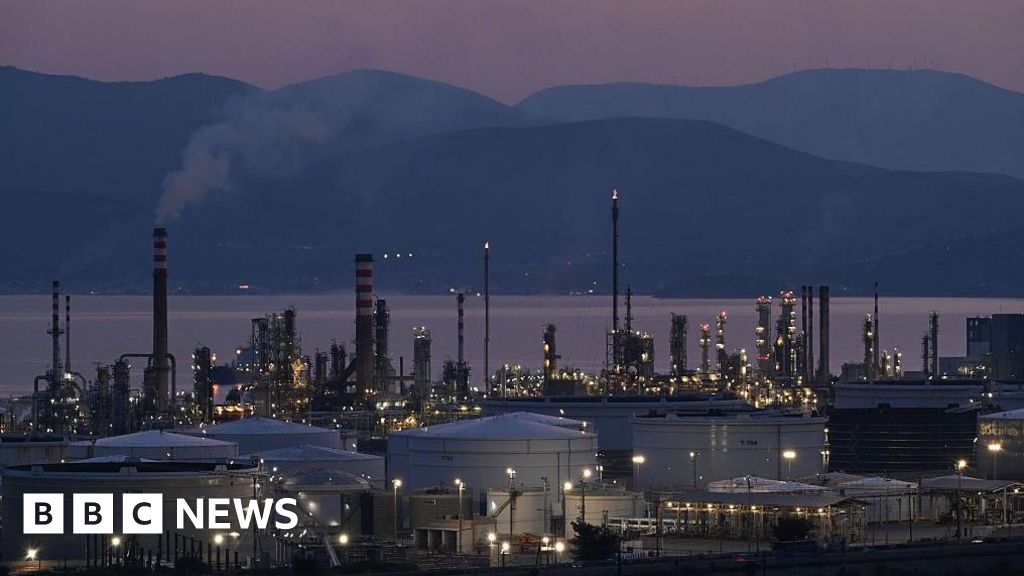
The US-Israel Iran war has halted almost all traffic in a key waterway and the price Brent crude has surged.
Source link

Nike shares fall 9% on weak outlook, expected 20% sales decline in China

Prince Harry surprises crowd by calling attendees his source of hope

Wrigley Field to host Big Ten/SEC volleyball doubleheader

-

 Politics1 week ago
Afghanistan announces release of detained US citizen
-

 Sports1 week ago
Broadcast industry CEO says consolidation is ‘essential’ to compete for NFL soaring media rights prices
-

 Tech1 week ago
Can a Home Appliance Fix the Problem of Soft-Plastic Waste?
-

 Entertainment1 week ago
UN warns migratory freshwater fish numbers are spiralling
-
 Business1 week ago
Property Play: Home flippers see smallest profits since the Great Recession, real estate data firm says
-
 Business1 week ago
Gold prices soar in Pakistan – SUCH TV
-

 Fashion1 week ago
ICE cotton slips on weaker crude, profit booking
-
 Business1 week ago
More women are entering wealth management, but few are in advisory roles, study finds