

Business
North Tyneside GP says debt stress causing mental health issues


A GP says patients are presenting with mental health problems because of stress they feel over their levels of personal debt.
According to Citizens Advice, north-east England has the second highest number of people who require professional assistance with debt problems – only London is higher.
Debt charity StepChange said in 2024 the highest concentration of their clients were in the North East, with 37 clients per 10,000 adults.
Dr Kamlesh Sreekissoon, who works as a GP in North Tyneside, said people were juggling “three or four jobs” in the build up to Christmas in order to manage and subsequently struggling with their mental health.
The most common reason for personal debt as reported by Stepchange’s North East clients is a rise in the cost of living (19.3%) and a lack of control over finances (19%).
Both these statistics outstrip the UK figures of 17.7% and 17.9% respectively.
Citizens Advice said thousands of people were falling deeper into debt to meet the cost of basic essentials such as food and fuel, rather than luxuries, but that people also felt under pressure to provide for Christmas.
Dr Sreekissoon said the stress caused by the debt people faced was compounded by issues relating to their family situations.
“At this time of year you will see people juggling three or four jobs, also after caring for elderly relatives, parents, [they’re] stressed out and unfortunately struggling with their mental health,” said Dr Sreekissoon.
He said the debt his patients described was not caused by buying unnecessary things, but by simply struggling to make ends meet.
“It’s more the basics,” he said. “I see people taking on working long hours, doing two or three jobs, and just being kind of stretched out, not being able to see their kids, and that just burns people out which is really sad to see”.

The logo for the Food and Drug Administration is seen ahead of a news conference at the Health and Human Services Headquarters in Washington, April 22, 2025.
Nathan Posner | Anadolu | Getty Images
A key U.S. Food and Drug Administration official who oversees vaccines and biotech treatments will step down from the agency following multiple decisions that raised concerns within the industry.
Vinay Prasad, director of the Center for Biologics Evaluation and Research, will leave the FDA at the end of April, an agency spokesperson confirmed on Friday. It is his second departure from the position: He briefly left the post in July following backlash over his regulatory decisions, and returned only two weeks later in August.
In a post on X, FDA Commissioner Marty Makary said the FDA will appoint a successor before Prasad returns next month to the University of California San Francisco, where he taught before taking the FDA position last year. Makary said Prasad “got a tremendous amount accomplished” during his tenure at the agency.
Prasad’s decision to step down comes after criticism of the FDA mounted within the biotech and pharmaceutical industry and among former health officials. In the past year, the agency has denied or discouraged the approval applications of at least eight drugs, according to RTW Investments, after taking issue with data the companies used to support their applications. The FDA also initially refused to review Moderna’s flu shot before it later reversed course.
All of those companies accused the FDA of reversing previous guidance about the evidence they could use to back their applications, sparking criticism within the industry that an unreliable regulatory process could stifle development of drugs for hard-to-treat diseases.
A former FDA official who spoke to CNBC on the condition of anonymity to speak freely on the issue called the reversals the worst kind of regulatory uncertainty because companies say they are being told one thing and then experience another.
In a statement earlier Friday, an FDA spokesperson said there was “no regulatory uncertainty,” adding the agency “makes decisions based on the evidence, but does not make assurances about outcomes.” The spokesperson said the FDA is “conducting rigorous, independent reviews and not rubber-stamping approvals.”
The most recent controversy came after the FDA discouraged UniQure from applying for expedited approval of its experimental treatment for Huntington’s disease.
The agency, which underwent staff cuts and an overhaul under Health and Human Services Secretary Robert F. Kennedy Jr., has faced broader backlash for its drug and vaccine approvals process. Critics have worried the agency could stifle the development of new treatments and risk the safety of patients.
The Wall Street Journal earlier reported Prasad’s departure.
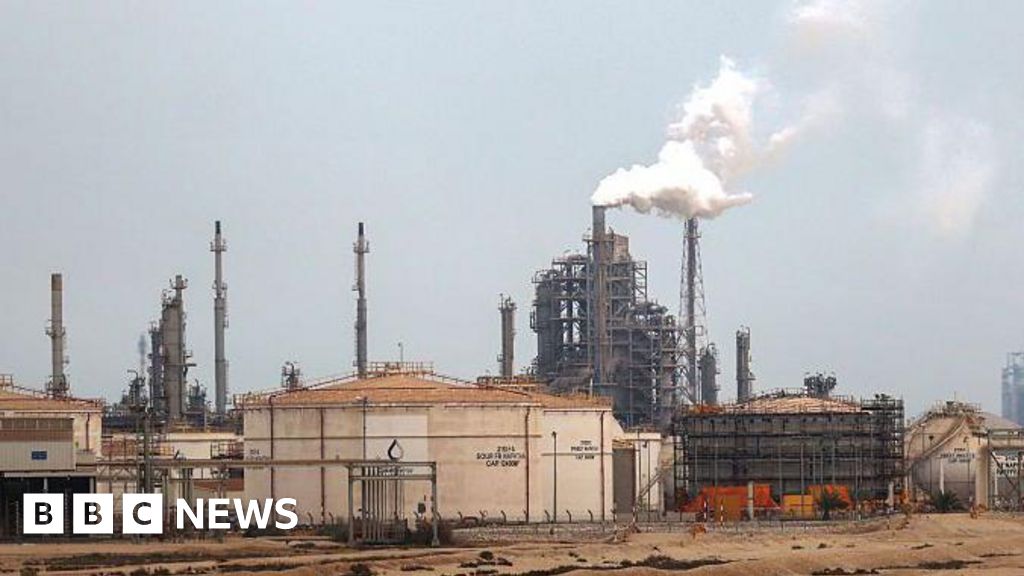
Energy Minister Saad al-Kaabi says oil could hit $150 a barrel if the Iran conflict continues over the coming weeks.
Source link
Business
Us India Oil Waiver: ‘Releases the pressure on other refineries’: US says India’s Russian oil waiver is a short-term step to stabilise global prices – The Times of India

The United States has said its decision to grant India a temporary waiver to purchase certain Russian oil supplies is a short-term move aimed at stabilising global crude prices amid supply disruptions linked to tensions in the Middle East.US energy secretary Chris Wright said the measure is intended to quickly bring oil stored in floating reserves into the global market and ease immediate supply constraints.
Speaking to ABC News Live, Wright said large volumes of Russian crude are currently stored in tankers around southern Asia and that Washington had encouraged India to buy these cargoes.“We need to get oil on the market in the short term. In the long term, supplies are abundant. There’s no worry there,” Wright said, adding that the temporary step was necessary as oil prices were rising due to constraints in shipments passing through the Strait of Hormuz.“As oil gets bid up a little bit because of those constraints coming out of the Straits of Hormuz, we’re taking a short-term action to say all this floating Russian oil storage that’s around southern Asia,” he said.Wright said the US had asked India to absorb those cargoes. “We’ve reached out to our friends in India and said, ‘Buy that oil. Bring it into your refineries.’ That pulls stored oil immediately into Indian refineries and releases the pressure on other refineries around the world,” he added.He stressed that the waiver does not represent a shift in Washington’s stance toward Moscow. “This is no change in policy towards Russia. This is a very brief change in policy just to keep oil prices down a little bit better than we could otherwise,” Wright said.Earlier in the day, US treasury secretary Scott Bessent announced a 30-day waiver allowing Indian refiners to purchase Russian oil cargoes stranded at sea.“To enable oil to keep flowing into the global market, the treasury department is issuing a temporary 30-day waiver to allow Indian refiners to purchase Russian oil,” Bessent said in a post on X.
Indian refiners step up purchases
Following the waiver, Indian refiners have begun purchasing large volumes of Russian oil floating in Asian waters, reported news agency PTI, citing sources.The companies have snapped up around 20 million barrels of crude, mostly from non-sanctioned entities, though they are seeking legal clarity on whether the exemption also allows purchases from sanctioned firms.The US Treasury’s Office of Foreign Assets Control has issued a licence permitting the delivery and offloading of Russian crude loaded on vessels before March 5, 2026, with transactions allowed until April 4, 2026.The move comes as the widening West Asia conflict disrupts energy shipments through the Strait of Hormuz, through which nearly 40–50 per cent of India’s crude imports typically pass.India, which holds reserves covering roughly 25 days of crude demand, has turned to Russian cargoes at sea to ensure domestic fuel supplies remain stable. Indian refiners had already been importing about one million barrels of Russian oil per day in recent months.Industry estimates cited by PTI suggest around 15 million barrels of Russian crude are currently floating in the Arabian Sea and the Bay of Bengal, while additional cargoes are waiting near Singapore and other routes that could reach Indian ports within weeks.Analysts say the waiver provides short-term relief for India’s energy security, though competition from other buyers, particularly China, may limit the volume of additional Russian oil available.


Spain, France lead World Cup 2026 Power Rankings, 100 days out

This Jammer Wants to Block Always-Listening AI Wearables. It Probably Won’t Work
FDA vaccine head will step down in April after string of controversial decisions

Attock Cement’s acquisition approved | The Express Tribune

India Us Trade Deal: Fresh look at India-US trade deal? May be ‘rebalanced’ if circumstances change, says Piyush Goyal – The Times of India

Policy easing drives Argentina’s garment import surge in 2025

-
Business1 week ago
Attock Cement’s acquisition approved | The Express Tribune
-
Business1 week ago
India Us Trade Deal: Fresh look at India-US trade deal? May be ‘rebalanced’ if circumstances change, says Piyush Goyal – The Times of India
-
 Fashion1 week ago
Policy easing drives Argentina’s garment import surge in 2025
-

 Politics1 week ago
What are Iran’s ballistic missile capabilities?
-

 Politics1 week ago
US arrests ex-Air Force pilot for ‘training’ Chinese military
-

 Sports1 week ago
LPGA legend shares her feelings about US women’s Olympic wins: ‘Gets me really emotional’
-

 Sports1 week ago
Sri Lanka’s Shanaka says constant criticism has affected players’ mental health
-

 Fashion7 days ago
South Korea’s Misto Holdings completes planned leadership transition