

Sports
NWSL GM survey: Is the salary cap a problem? Are teams still breaking rules?


The NWSL has been one of the leaders in the women’s sports boom, but as great as the commercial gains have been, there are more challenges than ever facing the league in a rapidly evolving global market. How well positioned is the NWSL to handle the competition? And what are the biggest problems facing the league in the near future?
ESPN sought answers from general managers (or the equivalent highest-ranking soccer executives on each team) across the league in our second annual anonymous GM survey. These highest-ranking technical staff members from 15 of the 16 teams in the league (one had scheduling conflicts) participated in one-on-one surveys either over video calls or in person.
GMs were granted anonymity in order to speak freely about sensitive topics ranging from rule-breaking and their concerns with the salary cap, to grading league leadership and discussing the league’s relationship with the U.S. Soccer Federation. While there was widespread agreement on some topics, their reasons for optimism and worry are wide-ranging.
1. “The salary cap — $3.5m per club for the 2025 season — is now set through 2030. Do you worry the cap will hold the league back from competing with European teams as those teams can pay players without such limits?”
The NWSL imposes a hard salary cap on each of its teams, in stark contrast with top European leagues such as those in England, France and Spain. NWSL GMs are loud and clear here: The salary cap, even with built-in risers over the coming years, is a problem for the league.
This year, GMs were so emphatic about the cap issue that 10 of the 15 GMs interviewed named the salary cap as the rule they would change, and a combined 10 of 15 named talent retention and global competition — all relating back to the cap — as the biggest challenges the league is facing. Two even said it needs to be abolished entirely.
Competition from abroad, the GMs surveyed said, is currently only from a handful of teams, led by Chelsea and OL Lyonnes. One GM summarized that group as the perennial UEFA Champions League quarterfinalists. But the recent losses of USWNT stalwarts Naomi Girma and Alyssa Thompson to Chelsea furthered their concerns. “I’m worried that more dominoes will fall,” one general manager said.
The next domino might be falling sooner than expected, too, as Trinity Rodman‘s contract expires next month with the Washington Spirit, and interest from European clubs is at an all-time high. Rodman told ESPN’s Futbol W earlier this year that she “always thought about playing overseas at some point in my career,” and “it’s just a matter of when.” Yet negotiations with the Spirit have stalled because of cap restraints.
“Right now, top talent is going only one way,” another GM said. “We’re not seeing that the other way around. We’re not seeing players that are in top clubs in their prime coming this way. Yes, for now, it’s only a handful of players that have left, but if that becomes a trend, then that will be an issue.”
League leaders have long defended the salary cap as the reason for the league’s success, but one GM pushed back: “Why is parity the best? If you look at other American sports, sure, you see that. If you look at the global game of football, that is not what you see. If you want to be the best league in the world, anybody who knows soccer would say that’s the English Premier League in the men’s game — there’s no parity.”
One GM who expressed concern that the salary cap could hold the league back also worried that abolishing it would create “a bubble that could be dangerous for all of us.” This GM did note that the NWSL must compete better “against that handful of teams in Europe that right now could pretty much pick any player they want and offer an amount that it would be crazy for us to offer.”
Another GM said, “we risk the game imploding” if spending grows too quickly, noting that European teams’ “cost versus revenue is way out of balance.” Two GMs defended the salary cap and said the NWSL would become one of the European leagues that NWSL execs criticize — but “with not even an interest because there’s no relegation,” one said. That GM added that it would be “impossible” to reverse the decision if the salary cap were abolished. “The gap will widen far quicker in this country” between the “haves and have-nots,” the other GM said.
The natural question is: How does the NWSL solve this problem, when the salary cap is written into a binding CBA? One GM said the league needs to “find a solution to paying top talent with the least amount of damage to the rest of the ecosystem,” potentially a version of the designated player rule in Major League Soccer that allows teams to pay top players outside of the cap.
“I’m not in favor of abolishing it,” another GM said, adding that instead, there should be regular reevaluation of the cap every 18-24 months. “It shouldn’t be knee-jerk reactions — every time a player leaves we say we have to look at the cap.”
2. “Now that players must consent to trades, how much has it changed the way deals work and in what ways?”
For much of the league’s history NWSL teams could — and, in plenty of cases, did — trade players within the league without consent. The NWSL’s new CBA ratified last year changed that: It brought full free agency to the league and required all trades to be approved by the players involved.
“I actually think it’s better. It’s healthier for everybody,” one GM said. Several GMs also pointed out that it brings the NWSL in line with the global norm where players approve transfers. “I think any human should have a voice on where they’re going to play and live,” another GM said.
“It’s the way it should have been a long time ago,” added another. The flip side is, a different GM said, is that “We also get forced as GMs to move players who are under contract on our team. That, I think, is more prevalent now.” That same GM noted that if a player wants out, the club is frequently in a bind. “That has been a factor on multiple occasions in multiple deals,” they said.
Clubs are further hamstrung in those situations, a different GM said, because “We’ve lost a lot of trade capital. No draft picks available, allocation money phasing out — when you have fewer things to trade, all of that impacts the ability to make these deals.” The result is more traditional transfers for cash within the league.
Another GM said teams now must better educate players on why they won’t make a transfer. “We want to honor that as much as possible if a player doesn’t want to be in that environment anymore — for whatever reason. But there have been situations where it’s almost the players are confused about not just allowing them to leave when it doesn’t make sense from the club’s perspective.”
3. “In last year’s NWSL GM survey, almost every GM said that not every team follows the rules. The league said it would start cracking down on rule-breaking, fining Angel City $200,000 and docking the team points — the most severe punishment in league history — because the team violated the league’s salary cap rules. So, do you think teams are still breaking the rules?”
Four GMs said that teams are not breaking rules — up from just one saying it last year. The majority still said that the practice continues. As one GM put it: “Would I bet my annual salary that no one is breaking the rules? Not at all.”
One pointed out an issue we heard last year about how much confusion there is about what the rules actually prohibit: “I think rules are changing quickly, and I think not everybody knows what the rules are — and that goes for the clubs and the league.”
Another GM said rule-breaking can be relatively minor: “The league has a couple rules where you say, why does it matter? They still have a lot of those types of rules where they say you need to disclose that [small amount of money] and it goes on the salary cap. Those are the types of rules where we know factually people are breaking the rules and it doesn’t sound right, but I’m not going to turn a club in because they are buying dinner for people.”
Others, however, claim more egregious rule-breaking is happening. One GM added “there’s a lot of questions around how some teams are bringing in the players that they have or are bringing in.”
“I speak to agents trying to sign players. I can’t sign them because clubs are willing to break the rules and I’m not,” a different GM said.
Still some GMs noted better compliance, with one adding: “The league’s interventions have been helpful. Before, I was very convinced that people were actively cheating. I feel like that has decreased significantly or potentially kind of gone away for the most part. I can’t say 100%.”
4. “On a scale of 1 to 5 stars, with 1 being very unhappy and 5 being extremely happy, how satisfied are you with NWSL commissioner Jessica Berman’s leadership? Why?”
Jessica Berman became NWSL commissioner in early 2022, taking over in the wake of the league’s abuse scandal. Under Berman’s leadership, valuations of NWSL clubs have gone up from $35m to over $250m, and the league signed a $240 million media rights deal (which includes ESPN). The league also ratified a new, long-term CBA last year ahead of schedule.
The league’s upward trajectory commercially is undeniable, and many of the sweeping reforms that followed the league’s abuse scandal were implemented during Berman’s tenure.
“I think that she’s navigated a very challenging time in the league’s history for a variety of reasons,” one GM said. “Emerging league, the behavior of some leaders in the league years ago. I think that as well as a CBA plus a modification of the CBA, all of that has positioned the league in a positive way.”
On the field, however, the NWSL faces increasing global competition and in the opinion of one general manager, is “really slow to react” to the rapidly changing landscape. That business vs. sporting dichotomy led to wide-ranging opinions in our survey.
“There is a tremendous amount of focus on the commercial side and less focus on the sporting side,” one GM said. “If we want the commercial piece to continue to excel, we need the best product on the field.”
Another GM said Berman’s “intention and motivation and ambition for the league is absolutely right,” but that they want to see more of “her openness and willingness to look at the league a little different from a sporting aspect.” A different GM wants to see more collaborative decision-making.
One general manager acknowledged the growth of the league’s front office but still wanted to see more employees hired around Berman, including on the sporting side. The NWSL’s front office lost multiple executives this year, including the departure of chief sporting director Tatjana Haenni and chief marketing and commercial officer Julie Haddon.
However, the reality of the commissioner’s job in any league is that the person reports to and works on behalf of the league’s owners. Berman was hired — and recently rehired, with a new contract — by those owners, who are ultimately the bosses of the GMs. And arguably the most important part of Berman’s job is aligning a historically divided boardroom rather than making unilateral decisions.
One GM complimented Berman’s “unique insight and ability to coalesce a group of owners to move the league forward.” Another said that Berman is simply the front-facing person for decisions made in the boardroom and this GM “tries to detach all things NWSL challenges from one person, although it’s easy to fire shots at the leader.”
A different GM complimented Berman’s tenure, comparing the job of commissioner to that of a goalkeeper: People only talk about them when something goes wrong. “Sometimes we should look 10 years backward and see how much has been done,” they said.
5. “Do you agree with Berman’s stated goal to expand the NWSL from 16 teams to 32 teams at some point, and if not, what’s the best number of teams to have?”
Berman said repeatedly throughout this year that the NWSL can, one day, be as big as the NFL, which has 32 teams. She recently softened that stance, saying that she wasn’t “intending to state we’re going to have 32 teams by some date.”
GMs are split on this issue. Most said that they could not provide an ideal number of teams due to the uncertainty around other factors like player development pipelines. The most common answer, listed by three GMs, was 20 teams.
“Thirty-two is such an American thing,” one GM said. “Find other ways to maximize revenue. It doesn’t need to be 32 just because all the men’s sports are. Other countries have shown that 20 teams with a 38-game season makes all the sense in the world.”
A prevailing concern is that rapid expansion without a higher salary cap will lead to mediocrity — “a lot of OK teams,” as one GM said. Others cited the addition of the USL Super League and Canada’s Northern Super League, and how it is getting more difficult to fill out rosters.
People on both sides of the debate brought up the need for geographically divided conferences to reduce travel. One general manager said travel in such a large country, from chartered flights to better hotels and meals, needs to improve to attract top players.
6. “Which city should the NWSL expand to next?”
GMs were surveyed long before Atlanta was announced as the NWSL’s 17th team, set to begin play in 2028, and it makes sense given that many of those polled have always been fond of the market’s potential.
“It’s a soccer city, and they’ve got everything facility-wise,” one GM said. Another said, “preferably someone that has a grass field,” while a colleague said, “the league needs to stress warm weather locations to be able to consider refining the competition calendar to align with the FIFA calendar.”
Cincinnati, which was one of three finalists for the 2026 expansion slot that ultimately went to Denver, was the next most common answer. One GM said that “they should move Louisville to Cincinnati.” A second GM also proposed relocating Louisville because of its commercial struggles as a small market.
One GM who voted for Cincinnati stressed the increasing importance of facilities. “This venue equation is huge,” they said. “Look at San Diego. They were at the top in so many of these metrics a couple years ago, but being the third or fourth tenant [Snapdragon Stadium also hosts MLS side San Diego FC, college football’s San Diego State Aztecs and other big events], I think that’s the root of some of their challenges.”
7. “In last year’s survey, many GMs felt that coaches and staff were too vulnerable to player accusations and lacked the protections to do their jobs. Do you feel the league has adequately addressed those concerns?”
Last year, there was a prevailing feeling among GMs that player power had “gone too far,” to the point that staff couldn’t properly do their jobs. This year, six general managers believe that those concerns were at least partly heard by the NWSL, although some “yes” answers were couched as “slightly.”
Two GMs specifically pushed back that teams need to take responsibility: “I think how that’s managed internally is the most important thing,” one said.
A different GM disagreed that the league office should be absolved of the issue: “No, I don’t think the league properly recognizes the issue at hand. I think the league feels that if we have higher level or better staff, that that will mitigate the issue. I don’t think it does.
“We’re at a point right now where somebody can anonymously report something and they could say whatever they want, make whatever accusation. … If it’s accurate, it needs to be investigated and it’s a safety mechanism. If it’s just unfounded and aimed at ill will, there’s nothing that happens to the player.”
The most common complaint centers around the NWSL’s semiannual player surveys, which have always existed in the league and ask players to anonymously score their satisfaction with all aspects of their clubs. Those results might impact staffing decisions within clubs when it comes to the feedback received from players about coaching and/or team personnel.
Several GMs said that the language of those surveys has been misleading in the past, but that improvements were made this year. One GM was particularly frustrated that similar language was initially used this year before further complaints led to change. Another said that the surveys are “sent at a time when if people are not being re-signed or playing a lot, it’s easy to point the finger. Timing, wording could be different.”
Overall, however, feelings around the topic were far more restrained this year. A different GM also made a point to say that they disagreed with last year’s prevailing frustrations from GMs, noting that players had endured horrible treatment in certain environments in the past, and “there’s a reason” that such measures are in place.
8. “Of the NWSL’s 14 active teams, which is the flagship team that is elevating the league most?”
The ambitions of NWSL teams vary greatly, creating a wide range of investment in infrastructure, staffing and players. The Kansas City Current built the league’s first primary-tenant stadium as part of a $1 billion new business district. “You step into their stadium and you feel like you are in KC,” one GM said.
Another GM added that Kansas City’s marketing and investment could be a blueprint for other markets: “They vomited teal everywhere and you just can’t get away from it.”
Gotham FC also received plaudits for its smart executives and “not allowing [money] to be a crutch” in the country’s most expensive market. Forthcoming expansion side Denver was name-dropped by one GM who was impressed with their plans to build a stadium and training facility. Angel City was named by one GM purely based on being “this commercial beast.”
9. “Which of the NWSL’s 14 active teams is holding the league back?”
Chicago Stars FC was the most common answer. “The ones at the bottom of the standings are there for a reason,” one GM said, adding that poor facilities “bleed into a lot of things,” including revenue. (Chicago is changing home venues in 2026.)
But one GM took aim at recent expansion sides Utah Royals and Bay FC, who they say wasted a clean slate and major advantages like extra cash when they joined in 2024: “When you see the amount of money they spent on transfer fees and players, and what I call an advantage from their start, a fresh start, I wouldn’t have bet that they would be in those positions in the standings.”
Racing Louisville FC‘s attendance struggles were brought up by the two GMs that chose them, with one saying “it’s just a tough, tough market” to attract top players. The team averaged just over 5,000 fans per game this season, second worst in the league.
10. “Do you think the NWSL’s plan to launch a second-division league is a good idea?”
The NWSL announced earlier this year that it plans to launch a second division to improve player development. Exactly what that league will look like, which teams will participate, or even when it will launch — Berman confirmed recently that 2026 is off the table — remains unclear.
Almost every GM that we polled was supportive of the concept of a second division, with caveats. One GM gave an emphatic “a thousand percent” yes to the need, because “the gap’s massive” now between college players and pro-ready players. However, “the devil’s always in the details of what it looks like,” a colleague said. Others pointed out that the league has failed to provide meaningful details, making it hard to judge.
“I question the order of priorities,” said one GM who still voted “yes.” Another GM is “concerned that things weren’t thought through,” and the NWSL needs to “focus on what our actual product is” first.
“Who pays for it is the big question,” said a different GM, who suggested that an outside equity group could be a solution.
Support of the idea largely centers around the need to develop players further down teams’ rosters. “If players don’t play on a Saturday or Sunday for a couple weeks, where are they getting that game time?” according to another GM who said “We need more meaningful competitions” like cup games.
Another GM was supportive of the idea of getting current players more minutes, but “dead against” a second division being created just to pull players out of college. As a colleague who agreed asked, “Who’s going to play in it? I couldn’t name five players who would want to play in it.”
11. “With the elimination of the college draft, is there still a long-term place for the college pipeline in the NWSL?”
Almost unanimously, those surveyed see the college game as a continued necessity for the development of professional players despite the elimination of the college draft system and the ongoing changes to NCAA athletics.
“A hundred percent,” one GM said. “It’s the unique thing about the United States and we shouldn’t ignore that. Some of the best coaches coach in the collegiate game; some of our best players have come from the collegiate game; some of our best overall people have come from the collegiate game. It’s just a big part of our culture here. To ignore it would be a catastrophe.”
Another GM said there needs to be “a cohesive plan” between the NCAA and NWSL. A colleague said the elimination of the draft has led to increased spending on scouting, while a different GM said teams initially paid “a ton of money to get kids out of college” without knowing how they would play as pros.
One GM, however, felt that the elimination of the college draft would have major consequences. “The draft gave college players the opportunity to become a professional athlete. Taking that away has just restricted that. I think teams now will just go and get players from elsewhere that are probably at the level instead of taking the time [to develop].”
12. “Now that the USL Super League has played a full season as a first-division league, do you view it as a partner, competitor or something else?”
Several GMs clarified that they want the new first-division USL Super League to be a partner or that “it should be a partner,” with many GMs citing the number of NWSL players who have been loaned to Super League teams.
“I wouldn’t use the word partner,” one GM said when pressed to label what sounded like that description. “It’s a great development league for us to loan players to.”
Their biggest issue with creating a partnership is that they have found that Super League teams are not always willing to cover the entire salary of a player the NWSL team wants to loan out, which leaves the NWSL team with a salary cap hit and doesn’t help them financially.
“Managing the budgets and some of the inabilities that they have, has hindered some of the movement we could have seen,” a different GM added.
Those who viewed it as a competitor cited that term more literally, since the Super League is also sanctioned as a first division. “They’re positioning themselves that way,” one GM said. “I don’t view it that way at all. I don’t think the coaches or the players feel that way.”
Another GM wants to see actual competition between the leagues: “We should have some kind of cup competition with them. Everyone’s on their own different page.”
13. “On a scale of 1 to 5 stars, with 1 being very unhappy and 5 being extremely happy, how would you rate the job USWNT head coach Emma Hayes has done to collaborate with NWSL teams?”
The NWSL and U.S. Soccer have been tethered since the league’s launch in 2013. U.S. Soccer was the founding managing partner of the NWSL, and that remained the case until 2021, which makes Emma Hayes the first U.S. women’s national team coach to operate entirely in an era of an independent NWSL.
In the old relationship, U.S. Soccer paid USWNT players both for their international play and for the NWSL. The federation would pull players from their clubs even outside of FIFA international windows — including several weeks in advance of major tournaments. Those dynamics caused regular tension with NWSL teams, but the strategy paid off with the U.S. winning World Cup titles in 2015 and 2019. However, “the script has flipped,” as one GM said, because NWSL teams are now paying the USWNT stars directly.
“Now, we’re making real investment in players where we as clubs feel protective over our players’ health, loading, all these things. If it’s not completely aligned, it’s a lot more stressful than in the past. … The landscape has changed to put more pressure on the relationship.”
Half the grades issued in our survey were 4 or higher, indicating general satisfaction with how Hayes and her USWNT staff worked with NWSL clubs. The USWNT’s staff travels to NWSL markets throughout the year to meet with players and their club’s leadership to communicate and align goals.
“They are doing a tremendous job by trying to meet with everyone,” one general manager said. “I try to connect with every national team, even where we don’t have players, and I can tell you that sometimes we have to be more proactive. With the USWNT, they are really taking responsibility; they are helping us. It’s a win-win situation.”
A different person said that Hayes has helped the NWSL by “encouraging people to know that your club play matters,” referencing the high volume of first-time call-ups.
“Four and trending upwards,” another GM said, noting that Hayes started right before an Olympics and won it while also trying to plan the program’s future. “I think when people judge things, they always look at what’s happening right this second. What they’re doing is strategic.”
Still, others felt there was room for improvement. Two general managers said the USWNT staff deserves high marks for intent, but they felt execution could be better, including more direct contact with Hayes.
A handful of GMs also expressed concerns about the trend of top USWNT players going to Europe, with one GM saying that “continuing to really advocate for our players’ development within our league is something I’d really love to see from our USWNT coach.” Hayes said recently that players make individual choices and that her role is to ask the right questions rather than steer a player in any direction.
ESPN previously reported that Hayes delivered that message to NWSL owners at a board meeting.
14. “Do you feel the NWSL has enough star power to break into the mainstream, and which player should the league build around as the face of the NWSL?”
Three GMs pointed out that the recent retirements of Alex Morgan and Megan Rapinoe have left a void in stardom in the NWSL. “They were really the needle-movers,” one person said. “I think there’s a massive gap right now. We’re in between eras. Historically, it’s been those national team players that get the most attention. We say you can be soccer-famous and famous-famous. I don’t know if we have any famous NWSLers right now. I think we have soccer-famous people.”
USWNT forward Alyssa Thompson just left the league. Sophia Wilson and Mallory Swanson have also been on maternity leave.
The one candidate to become a megastar, five GMs said, is Rodman. But Rodman is out of contract with the Spirit at the end of this year, and she has publicly talked about playing in Europe one day. She could well be the next to head overseas.
A common complaint among general managers is that the league and its clubs fail at storytelling. Three GMs pointed to how much better the WNBA has been at storytelling and building a media presence. “What the WNBA has done — I don’t watch basketball and names are flooding my world,” one said. “The growth of the WNBA has been exactly what we need, this coverage and storytelling of our elite athletes and elite personalities,” another person added.
Having a star as the face of the league was a premise rejected by several GMs. “This is about us, not I, and while I believe that marquee players are instrumental in growth, I think we also have to be mindful of the pressure that that puts on an athlete,” one GM said.
Two others also said that player-driven fandom is unsustainable. “I believe that clubs should be the face of the league, because players will always come and go,” one GM said, noting that player-driven fandom might provide a short boost but not “long-term, sustainable growth.”
15. “Are you worried about more USWNT players opting to play overseas?”
The NWSL was founded by U.S. Soccer in late 2012 to provide USWNT players with a strong domestic league. The gamble paid off with World Cup titles in 2015 and 2019, though recent moves by Thompson and Girma to Chelsea reignited questions about USWNT players leaving the NWSL.
In contrast with the concern around the salary cap, there were a surprising number of GMs unfazed by the potential of more USWNT players leaving for Europe in the future.
“I’m not worried about it,” one person said. “If they want to, go for it. I think we spend a lot of time talking about it. If someone wants to play in Europe to try it, they’re gonna go play in Europe to try it. Good for them. I don’t think it’s great for our league, but I don’t think it’s something that we should spend so much time fighting against. If they can make more money, if there’s a huge transfer fee paid for them that drives our game forward, it is what it is.”
A different GM said they are not worried, pointing out that the migration of players to Europe is often cyclical and happens during this gap between the Olympics and World Cup. They cited examples like Lindsey Heaps, Morgan and Tobin Heath all going overseas at different points of previous eras.
But one GM is worried that “it’s not going to stop” — they felt the salary cap is part of the issue and that “we’re at a crossroads” with the push and pull of Europe.
A different GM is worried because “If we want to be the best league in the world, then those players should stay.” What many GMs want to see is top players from Europe joining the NWSL — and that isn’t happening frequently enough for them.
“We were talking to a top, top player from Europe who was willing to take a pay cut in this last window, and the pay cut would have had to have been so significant that she couldn’t justify it,” one GM said. “Players are even willing to take a little less salary [to play here], but we’re talking about taking a third off their salary.”
16. “How would you rank the following leagues from best to worst?”
The NWSL and England’s WSL each claim to be the best in the world, and every GM agreed that those two leagues are tiers above the rest. So, we asked them to order these eight leagues — which we chose as a small sampling of global competitions — from best to worst, and we let them interpret that as they saw fit.
A first-place vote was worth eight points, second place worth seven points, and so on. Three clear tiers emerged, with a 34-point gap between England’s WSL and Germany’s Frauen-Bundesliga, and a 32-point gap between France’s Première Ligue and Mexico’s Liga MX Femenil.
The NWSL received 11 first-place votes, and the WSL received the other four. “We have a grass is greener situation” where players in one league want to try the other but might realize it isn’t any better, one GM said. Another added that the NWSL has better marketing, but England is “further ahead on the sporting side.”
Added another general manager, who also voted for the WSL: “We can’t just keep saying we’re the best. What are we doing to make sure we continue to be?”
Spain, France and Germany were also interchangeable for many GMs, with common and familiar complaints of top-heavy leagues. One person said France and Spain are “heading in the wrong direction,” while someone else said they’ve seen “no growth” from those leagues. “I see Lyonnes win 8-1 and they played their second team,” a third GM said. “They can’t be at the top. All these leagues have that.”
Multiple GMs praised Mexico for its investments in growth and visibility. “In terms of marketing, if I picked which league has done the best job in the last 10 years [outside the NWSL], it’s probably Mexico,” one GM said.
While Japan finished last in these rankings, several GMs said that they might have the best administration of any league, and they complimented the WE League’s player development. “That’s why their transfer fees are going to be so high,” one GM said, while another rated Japan fifth and said there is a lack of appreciation for the style of play there.
17. “Which player not in the NWSL would you most want to see play in the league?”
The desire for top Spanish players continued this year, although answers to this question were far more diverse than they were in 2024. Alexia Putellas, two-time Ballon d’Or and FIFA Best winner, was not named by anyone this year. Nor was OL Lyonnes forward Tabitha Chawinga. Both those players tied for first last year with four mentions apiece.
Now, “Everyone wants to see [Aitana] Bonmatí here,” one GM said. “She’s so smart, talented and creative,” another added. “She just makes every single person around her better. So, I’d like her on my team in the league, but I’d like her in the league.”
18. “If you were building a team from scratch and had first dibs on any NWSL player right now — imagine current contracts are torn up — who would you sign?”
It’s no surprise that reigning MVP and Golden Boot winner Temwa Chawinga (who might win both awards again) is top of mind.
“This is tough, because I want to say Chawinga, but I actually think that Chawinga changes the way her teams play, and I wouldn’t want my team to do that — but it’s so enticing,” said one GM, who thought out the hypothetical scenario aloud in real time. A few GMs reasoned not to take Chawinga because of that concern, but this GM came around in their own thought process. “I guess I could build the team around her, though? Yeah, I can’t not say Chawinga. I want to win the games.”
USWNT forward Sophia Wilson, who recently gave birth to her first child and is an impending free agent, tied Chawinga atop the list. “Soph has all of those things [of a Chawinga] and then she can take you off the dribble,” one general manager said.
Another would build their team younger, saying Ally Sentnor is “a player with a lot to grow but still a very good player, and will be for many years.”
And then there is the GM who also voted for Sam Coffey: “I think Sam Coffey should be in the top five in the Ballon d’Or. If Sam Coffey was Spanish, she would have been. For some reason — Spanish player or not — we all have our culture and we expect that from a player in that country. But she’s a player that probably can even offer more than what she’s offering, and she’s already offering a lot.”
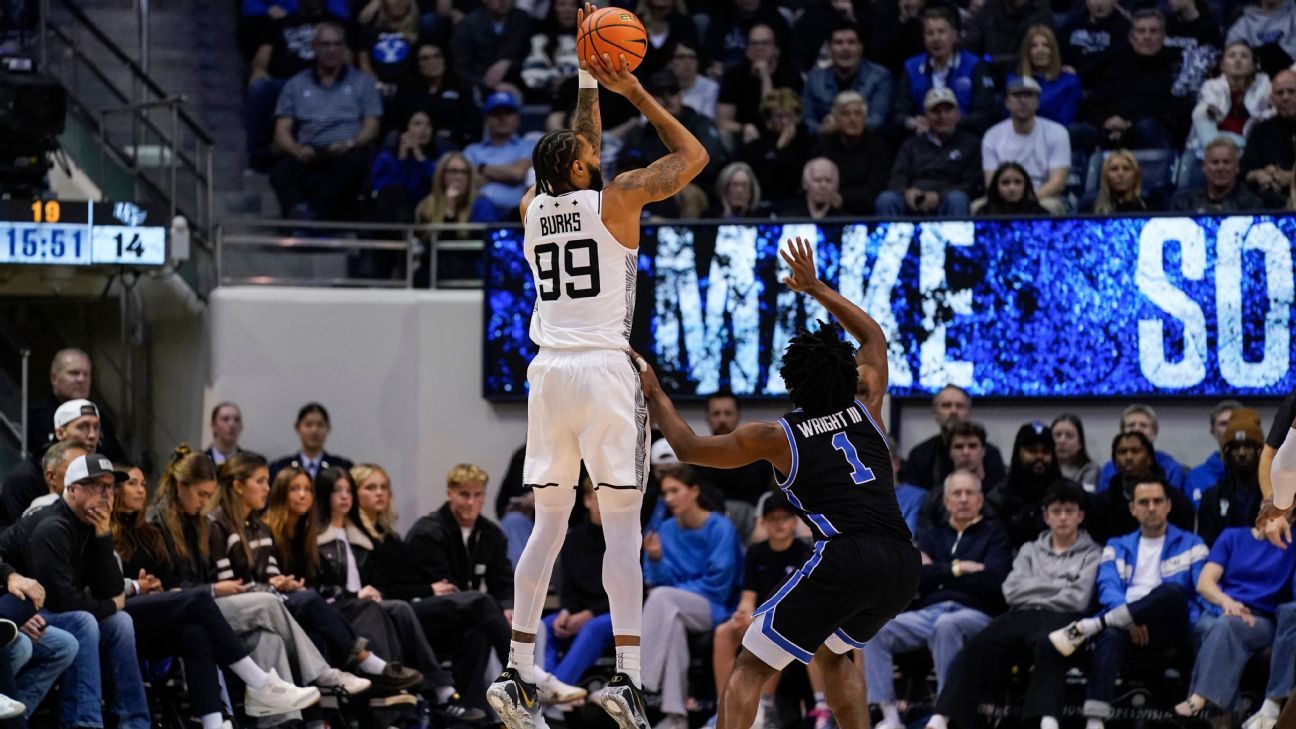
PROVO, Utah — Themus Fulks had 24 points and 11 assists, Jordan Burks also scored a career-high 24 and UCF shot 14-of-24 from 3-point range to run away from No. 19 BYU for a 97-84 upset Tuesday night.
Jamichael Stillwell added 12 points, 12 rebounds and six assists as the Knights (20-7, 9-6 Big 12) earned their first victory over the Cougars by outscoring them 44-34 in the paint and shooting 56% from the field — including 58% on 3s.
UCF’s 13-point margin of victory was its largest on the road over an AP-ranked team in program history, and third-largest in any game vs. an AP-ranked team.
AJ Dybantsa led BYU with 29 points and eight rebounds, his 21st game scoring at least 20 points, most among Division I freshmen this season. Robert Wright III had 20 points on 7-of-21 shooting, and Aleksej Kostic scored 14 off the bench. The Cougars (20-8, 8-7) shot 41% from the floor and trailed the entire way.
UCF got off to a blistering start on offense and didn’t let up. The Knights went 11-of-16 from 3-point territory and shot 57% from the field overall before halftime.
Burks drained three corner 3s over four possessions to cap an 18-4 run that put UCF ahead 23-8. Four of the Knights’ first nine field goals were transition baskets, including two of Burks’ long-distance buckets, and they started 9-of-11 from the floor overall.
It didn’t get much better for BYU as the first half progressed. UCF outscored the Cougars 25-10 over the final 9:21 of the period to go up 52-28 at halftime. Fulks made four baskets over a three-minute stretch to cap the surge, helping the Knights set a season high for points in a half.
Fulks became the fifth different player in Big 12 history to have 20 points and 10 assists in a win over an AP-ranked opponent.
UCF opened the second with a 12-0 spurt powered by three straight baskets from John Bol to take its largest lead at 64-28.
The Knights’ 97 points were their most in a game against an AP-ranked team in program history. They improved to 3-3 against ranked teams this season.
ESPN Research and The Associated Press contributed to this report.
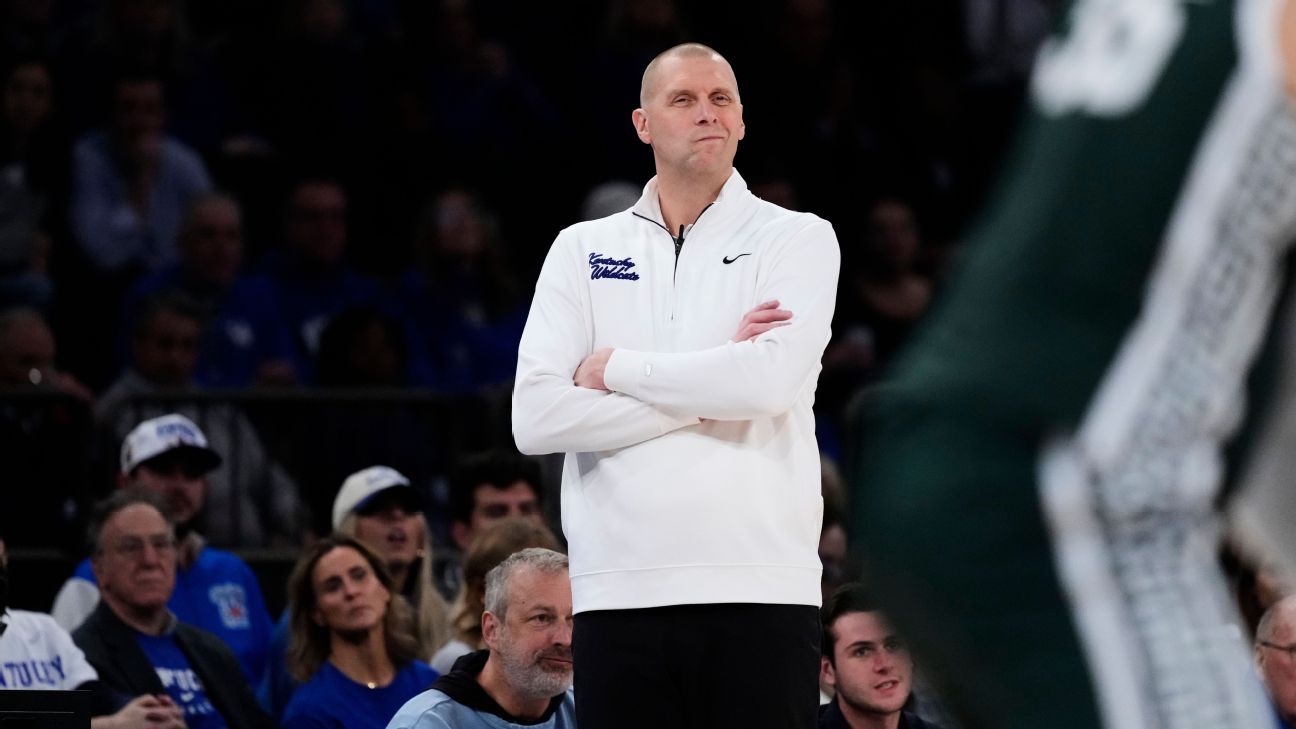
The SEC has fined Kentucky coach Mark Pope $25,000 for his “post-game conduct and comments” following his team’s 75-74 loss at Auburn on Saturday, the league announced.
Auburn won the game on Elyjah Freeman‘s tip-in with 1.1 seconds to go. That play followed a controversial offensive foul call against Collin Chandler that set up Auburn’s game winner.
“Mitch, if those mother F’ers try to fine me, screw ’em because I did not say a word about how they cheated us,” Pope said to Kentucky athletic director Mitch Barnhart as he left the postgame podium.
The league said Pope violated SEC rules after the game.
“University of Kentucky men’s basketball coach Mark Pope has been issued a public reprimand and fined $25,000 by the Southeastern Conference for post-game conduct and comments related to officiating following the Wildcats’ game at Auburn University on February 21,” the SEC said in its statement on Tuesday. “The comments violated SEC Bylaw 10.5.3 (Sportsmanship) and the SEC Commissioner’s Regulation regarding Public Criticism of Officials, which prohibit coaches, student-athletes and institutional staff from publicly criticizing officials or disclosing officiating-related communications.”
Saturday’s game was the third consecutive loss for Kentucky, which reportedly spent more than $20 million on its current roster, and the team’s fourth loss in seven games just weeks before Selection Sunday. Late in Saturday’s game, Chandler was whistled for pushing off an Auburn player on the inbounds with nearly 14 seconds to go in the game. On the next possession, Auburn sealed the win on Freeman’s putback.
After the game, Pope said his team had to stay focused even if things were “personal.”
“We refuse to give control to people that are outside of our program. Refuse,” Pope said after the loss. “Regardless of how personal it might get or how bad it might get, we refuse to give control to fans, to give control to anybody else associated with this game. Regardless of how blatantly people are trying to make this not happen, we refuse to give them our power. … We don’t make excuses. We don’t do that. Regardless of what is happening. Regardless of how disgraceful things are, we don’t give away our power. Regardless of how embarrassing, personal, awful, unacceptable things are, we refuse to give away our power.”
NEWYou can now listen to Fox News articles!
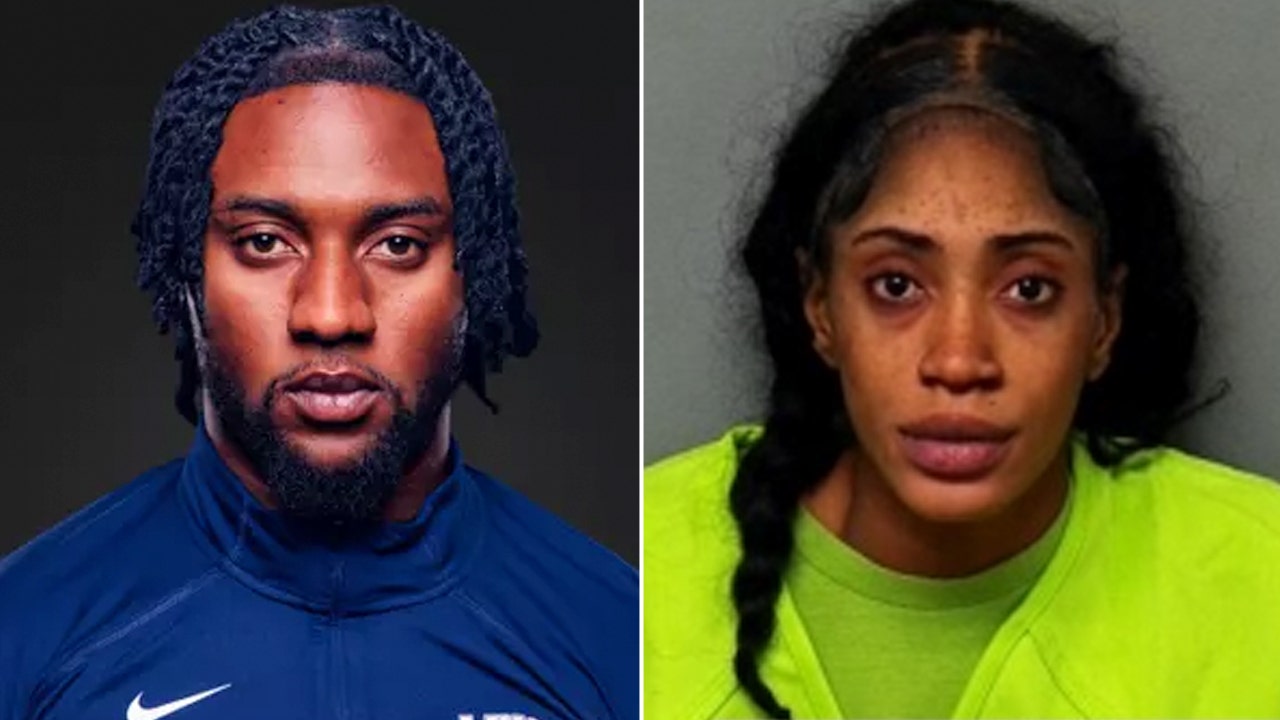
The girlfriend of a college track and field athlete was arrested for allegedly stabbing her boyfriend to death.
Kevaughn Goldson, a senior sprinter from Jamaica, was killed in a stabbing off Lincoln University’s campus in Jefferson City, Missouri.
Goldson, 23, was found after police were called to a house on Monday morning with stab wounds in his back and chest. He died from his injuries after being taken to the hospital.
CLICK HERE FOR MORE SPORTS COVERAGE ON FOXNEWS.COM
Denita Jackson, 27, has been charged with the murder of her boyfriend, Kevaughn Goldson, 23, after an incident at Lincoln University. (Lincoln University/Cole County Sheriff’s Office)
“Our thoughts are with family, friends, faculty, staff and all who have been impacted by this tragic situation,” Lincoln University told KRCG in a press release regarding Goldson’s death.
“The well-being of our University community is our greatest priority. Students and employees are reminded of counseling and other support services for those who need them.”
Goldson’s girlfriend, Denita Jackson, was charged by Cole County prosecutors with second-degree murder and armed criminal action.
While in a romantic relationship, KMIZ in Missouri reported that there were past issues of domestic violence between the two. Jackson, 27, also ran track and field at Lincoln University.
Investigators questioned Jackson, who allegedly told them she believed Goldson was having an affair with one of her roommates, saying she found him in bed with her, both individuals being clothed, after returning home.

General view of starting blocks and baton at the 120th Penn Relays at Franklin Field. (Kirby Lee-USA TODAY Sports)
Jackson opened her roommate’s locked door with a hairclip after hearing her roommate talking with someone in her room, according to court documents. The docs said that Jackson jumped on her roommate’s bed and grabbed Goldson by the shirt, as well as a bottle of cologne that had allegedly been missing, leading to a fight.
Goldson, then, allegedly started to choke Jackson while on top of her, leading to the latter grabbing a knife from under the bed and stabbing the former.
Jackson was allegedly the one to call police regarding the incident, while authorities initially took Goldson to Capital Regional Emergency Room. He was, then, airlifted to University Hospital, where he eventually died during surgery.

General view of hurdles at a Track & Field event. (C. Morgan Engel/NCAA Photos via Getty Images)
CLICK HERE TO GET THE FOX NEWS APP
Goldson, who stood six-foot, 160 pounds, was a middle distance runner with the Blue Tigers earlier in his college career before moving into a sprinter role with the program.
Follow Fox News Digital’s sports coverage on X and subscribe to the Fox News Sports Huddle newsletter.
Related Article



US’ New Balance expands manufacturing amid record sales

UCF drains 14 3-pointers, runs away from No. 19 BYU in upset win

‘Father Knows Best’ youngest actor’s actual life

-

 Entertainment1 week ago
Queen Camilla reveals her sister’s connection to Princess Diana
-

 Tech1 week ago
Rakuten Mobile proposal selected for Jaxa space strategy | Computer Weekly
-

 Politics1 week ago
Ramadan moon sighted in Saudi Arabia, other Gulf countries
-

 Entertainment1 week ago
Robert Duvall, known for his roles in "The Godfather" and "Apocalypse Now," dies at 95
-

 Politics1 week ago
Tarique Rahman Takes Oath as Bangladesh’s Prime Minister Following Decisive BNP Triumph
-
 Business1 week ago
Tax Saving FD: This Simple Investment Can Help You Earn And Save More
-

 Sports1 week ago
Usman Tariq backs Babar and Shaheen ahead of do-or-die Namibia clash
-

 Fashion1 week ago
Australia’s GDP projected to grow 2.1% in 2026: IMF