

Business
OBR head’s resignation leaves potential landmines for Reeves

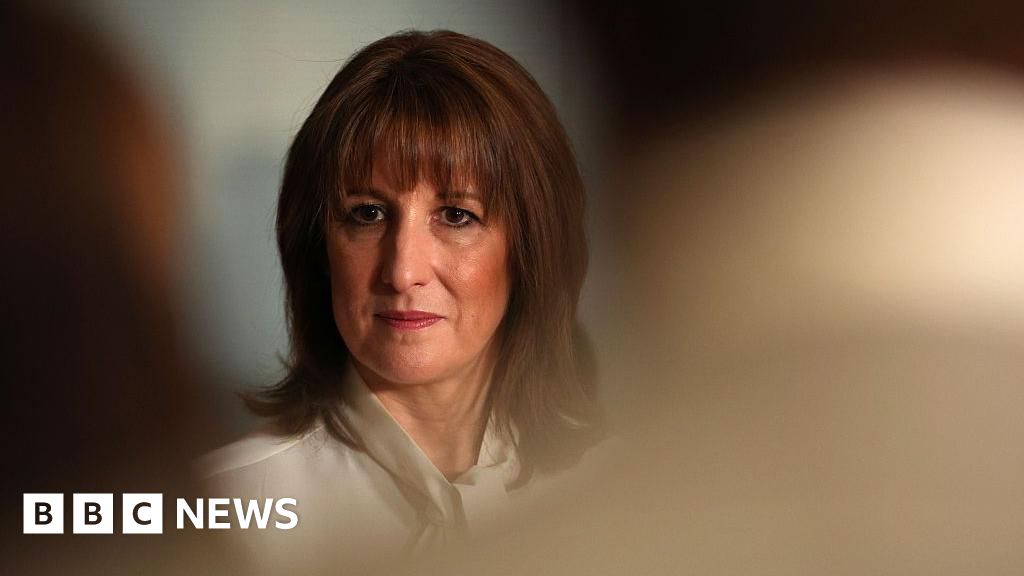
The shock resignation came for a very specific reason, but the OBR saga will continue with a series of decisions the chancellor will have to make over Richard Hughes’ replacement.
Firstly the Chancellor will have to find a respected and credible economist to run the OBR.
There are several candidates, who might fit the mould of fiercely independent bean counters.
The list will be carefully watched by the markets for any departure from the normal model. The problem is that there is some political pressure to do just that.
One of the points of tension was the refusal of Richard Hughes to give credit to the Government for “pro growth” policies.
Mr Hughes had said he would not score any policy unless it was material in its impact on the economy. In the event, none reached the 0.1% of national income threshold.
It is a careful balancing act, however.
Any perceived interference with the OBRs independence could impact market credibility too, and, for example raise UK government borrowing costs.
When I saw the now-departing chairman on the evening of the Budget last week, he was clearly mortified by the responsibility of his organisation for the early release of Budget information.
While it is no surprise to me that Mr Hughes took the honourable decision to resign for an error identified as the fault of a junior member of staff, it was not the only issue vexing him.
He was a fierce defender of the independence of his organisation from political and ministerial pressure – from right and left. That was seen during the Liz Truss mini budget episode, and in recent weeks too.
There had been a drumbeat of noise from the right, and the left and now from the centre too about the restrictions the OBR system placed on the freedoms of elected Governments.
The OBR was in some corners seen as an arm of a “woke deep state”, and by others as an “agent of austerity”.
There had, however, been tension over the Budget.
Changes had already been planned. The Chancellor had also announced that it would only respond to the OBR’s forecasts once a year.
Mr Hughes told me: “We’ll still be producing two full economic and fiscal forecasts looking five years out, twice a year, now and in the spring.
“But with this change of legislation, the government doesn’t feel obliged to respond to those forecasts with policy in the spring. It’ll be more like a health check on the economy and the public finances.
“There’ll be no loss of transparency from the forecast documentation that we’ll produce.”
The precise design of the new approach to the OBR’s forecast will matter. If there is a marked improvement in the public finances in spring, will the chancellor really avoid spending any “surplus” ahead of crucial local elections?
The OBR did around the Budget score an improvement to the UK economy as a deployment of AI by the end of the decade. The OBR also used new powers to initiate a tricky costing for the ballooning cost of special educational needs in England, inviting a backlash from some Cabinet ministers.
For some this underscores its ability like no campaign or Cabinet minister initiative, to focus Government priorities. Hughes denied the 35-member forecasting group was too powerful.
“The powers given to us are those given to us by Parliament in an Act of Parliament, and that’s to produce a forecast. Chancellors set their own targets. They set their own policies. Chancellors are in charge of £1.5 trillion worth of revenue and £1.5 trillion worth of spending.
“If they don’t want to meet their targets, they can change them, which we’ve seen chancellors do in the past as well. All we do is produce a baseline forecast, cost government policies when they give them to us, and we give them an assessment about whether we’re up there, in line and on track to meet those targets,” he told me.
In terms of the Government’s difficulties over the run up to this Budget, Mr Hughes may also take some important details of the timing of various claims around the state of the public finances to his gardening leave.
He had been due to address the Treasury Select Committee this morning, that has now been cancelled. He recognised the publication of his clarification table on Friday of the evolution of the forecasts was unusual.
Over five years at the OBR Richard Hughes faced five chancellors, and his relationship with all of them was designed to help promote UK economic stability.
The new relationship with a different OBR is an opportunity for the Government, but a big risk too.
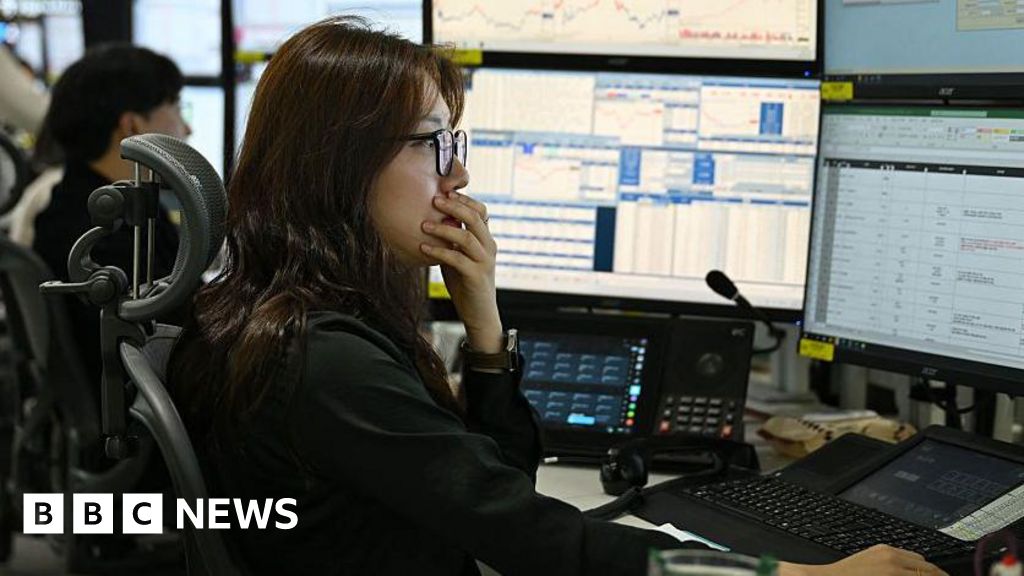
The conflict in the Middle East has rattled financial markets and global energy prices have soared.
Source link

Last Updated:
Petrol, Diesel Price On March 4: Check City-Wise Rates Across India Including In Delhi, Mumbai and Chennai.




Petrol, Diesel Prices On March 4.
Petrol and Diesel Prices on March 4, 2026: OMCs update petrol and diesel prices daily at 6 AM, aligning them with fluctuations in global crude oil prices and currency exchange rates. This daily revision promotes transparency and ensures consumers have access to the most up-to-date and accurate fuel prices.
Petrol Diesel Price Today In India
Check city-wise petrol and diesel prices on March 4:
| City | Petrol (₹/L) | Diesel (₹/L) |
|---|---|---|
| New Delhi | 94.72 | 87.62 |
| Mumbai | 104.21 | 92.15 |
| Kolkata | 103.94 | 90.76 |
| Chennai | 100.75 | 92.34 |
| Ahmedabad | 94.49 | 90.17 |
| Bengaluru | 102.92 | 89.02 |
| Hyderabad | 107.46 | 95.70 |
| Jaipur | 104.72 | 90.21 |
| Lucknow | 94.69 | 87.80 |
| Pune | 104.04 | 90.57 |
| Chandigarh | 94.30 | 82.45 |
| Indore | 106.48 | 91.88 |
| Patna | 105.58 | 93.80 |
| Surat | 95.00 | 89.00 |
| Nashik | 95.50 | 89.50 |
Key Factors Behind Petrol and Diesel Rates
Petrol and diesel prices in India have remained unchanged since May 2022, following tax reductions by the central and several state governments.
Oil Marketing Companies (OMCs) update fuel prices daily at 6 am, adjusting for fluctuations in global crude oil markets. While these rates are technically market-linked, they are also influenced by regulatory measures such as excise duties, base pricing frameworks, and informal price caps.
Key Factors Influencing Fuel Prices in India
-
Crude Oil Prices: Global crude oil prices are a primary driver of fuel prices, as crude is the main input in petrol and diesel production.
-
Exchange Rate: Since India relies heavily on crude oil imports, the value of the Indian rupee against the US dollar significantly affects fuel costs. A weaker rupee typically translates to higher prices.
-
Taxes: Central and state-level taxes constitute a major portion of retail fuel prices. Tax rates vary across states, leading to regional price differences.
-
Refining Costs: The cost of processing crude oil into usable fuel impacts retail prices. These costs can fluctuate depending on crude quality and refinery efficiency.
-
Demand-Supply Dynamics: Market demand also influences fuel pricing. Higher demand can push prices up as supply adjusts to consumption trends.
How to Check Petrol and Diesel Prices via SMS
You can easily check the latest petrol and diesel prices in your city through SMS. For Indian Oil customers, text the city code followed by “RSP” to 9224992249. BPCL customers can send “RSP” to 9223112222, and HPCL customers can text “HP Price” to 9222201122 to receive the current fuel prices.
 Click here to add News18 as your preferred news source on Google.
Follow News18 on Google. Join the fun, play games on News18. Stay updated with all the latest business news, including market trends, stock updates, tax, IPO, banking finance, real estate, savings and investments. To Get in-depth analysis, expert opinions, and real-time updates. Also Download the News18 App to stay updated.
March 04, 2026, 07:33 IST
Read More

Gold slumped more than 5%, ending a four-day rally on Tuesday. The metal was weighed down by a stronger dollar and fading prospects of an interest rate cut as inflation concerns intensified against the backdrop of a potentially prolonged conflict in West Asia. Spot gold was down 5.6% at $5,029.59 an ounce whereas prices had hit an over four-week high in the previous session. US gold futures lost 5.1% to $5,041.50.The US dollar, a competing safe-haven asset, rose to an over one-month peak, making dollar-priced bullion less affordable for holders of other currencies. US Treasury yields rose for a second consecutive session.Indian bullion traders and associations are speculating that gold could attain Rs 2 lakh per 10 gm and silver may well scale Rs 3.5 lakh per kg if the conflict does not abate swiftly.Spot silver fell 11.2% to $79.42 an ounce after climbing to a more than four-week high on Monday. As the Iran conflict entered its fourth day, crude oil benchmarks jumped over 8% in response.


Trump, Rubio offer conflicting reasons for US entry into Iran war

European Commission, Switzerland sign broad package of agreements

Barcelona disappointed, proud as Copa rally vs. Atleti falls short

-

 Politics6 days ago
What are Iran’s ballistic missile capabilities?
-

 Politics6 days ago
US arrests ex-Air Force pilot for ‘training’ Chinese military
-
 Business1 week ago
Households set for lower energy bills amid price cap shake-up
-
 Business5 days ago
Attock Cement’s acquisition approved | The Express Tribune
-

 Fashion5 days ago
Policy easing drives Argentina’s garment import surge in 2025
-

 Sports1 week ago
Top 50 USMNT players of 2026, ranked by club form: USMNT Player Performance Index returns
-

 Sports6 days ago
Sri Lanka’s Shanaka says constant criticism has affected players’ mental health
-
 Business1 week ago
Lucid widely misses earnings expectations, forecasts continued EV growth in 2026