Business
Ofwat investigation opened into Kent and Sussex water issues


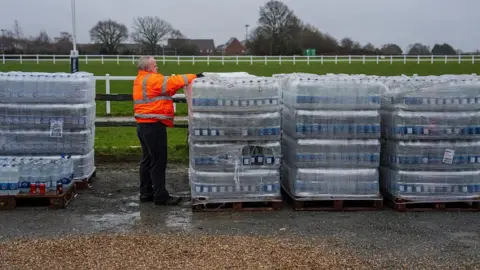
Regulator Ofwat has opened an investigation into South East Water (SEW) after repeated loss of water supplies across Kent and Sussex.
The investigation will consider whether the company has complied with its licence condition to provide high standards of customer service and support.
Ofwat said it was the first investigation it had launched into customer-focused licence conditions.
SEW said: “The company will always fully co-operate with any investigation by our regulators and provide any information required.”
As of Wednesday night, 10,000 properties continued to have no water supply.
Lynn Parker, Ofwat’s senior director for enforcement, said: “The last six weeks have been miserable for businesses and households across Kent and Sussex with repeated supply problems.
“We know that this has had a huge impact on all parts of daily life and hurt businesses, particularly in the run up to the festive period.
“That is why we need to investigate and to determine whether the company has breached its licence condition.”
The investigation was started after the prime minister said the situation, which affected 30,000 customers at its height, was “clearly totally unacceptable” and asked Ofwat to review the company’s licence.
SEW said some customers might not see supplies return until Friday after issues first began on Saturday in the wake of Storm Goretti and a power cut at a pumping station.
The company said it would be using 26 tankers to pump water directly into its network while working “around the clock” to fix leaks and bursts.
Ofwat already has an open investigation into SEW’s supply resilience to determine whether it has failed to develop and maintain an efficient water supply system.
As of 17:30 GMT on Wednesday, SEW said it had implemented a new recovery plan for Tunbridge Wells that involved keeping local booster pumps switched off for a further 36 hours.
The aim was that customers would wake up to a consistent supply by Friday morning.
SEW said its local drinking water storage tanks had not refilled at the speed required, so it had to extend the “outage” to allow it to recover fully.