

Business
Oil dives below $100, stocks jump after two-week ceasefire agreed | The Express Tribune

US crude falls 15% to $96.31, Brent down 13% to $94.71 after market reacts to US-Iran ceasefire news
Oil prices slid, stocks and bonds surged, while the safe-haven dollar was knocked back on Wednesday, as a two-week Middle East ceasefire brought some relief to markets on hopes for a resumption of oil and gas flows through the Strait of Hormuz.
The news capped weeks of market volatility and geopolitical upheaval after US and Israeli strikes on Iran at the end of February pushed tensions to the brink, with Tehran effectively choking off the strategic waterway that typically carries about 20% of the world’s energy supplies.
US President Donald Trump on Tuesday agreed to the ceasefire less than two hours before his deadline for Iran to reopen the strait or face devastating attacks on its civilian infrastructure.
Market reaction was swift and dramatic, with US crude futures down around 15% to $96.31 a barrel, while Brent futures also slid 13% to $94.71 per barrel.
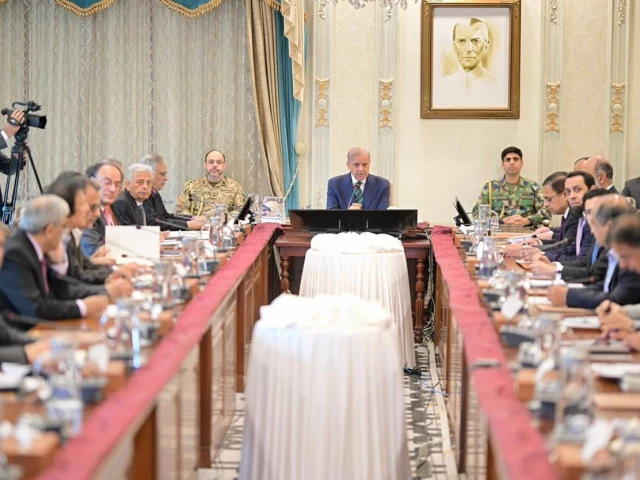
Also Read: US and Iran agree to Pakistan’s two-week ceasefire framework
S&P 500 futures rose 2.5%, while European futures leapt more than 5%. US Treasuries rallied while futures for German Bunds and French OATs surged.
The US dollar fell broadly, having been the haven of choice during the tumult.
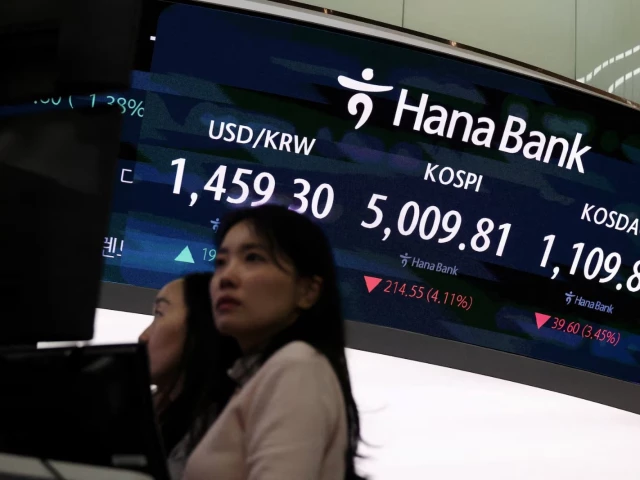
In Asia, Japan’s Nikkei jumped about 5% while South Korea’s KOSPI vaulted 6%, triggering a brief halt in trading. That left the MSCI’s broadest index of Asia-Pacific shares outside Japan up 4%.
“When you factor in that the two-week delay is longer than the original 10-day window set for the initial attack, it seems plausible that the worst of the conflict may now be behind us,” said Matt Simpson, a senior market analyst at StoneX.
“Markets can worry about the complexities later. For now, they’ve been given the green light to rally.”
Two weeks of relief
The six-week conflict had sent oil prices soaring, reignited inflation fears and thrown the global rates outlook into disarray, forcing governments and companies to scramble for cover against a sudden energy shock.
Trump’s social media announcement on the ceasefire marked an abrupt reversal from hours earlier, when he issued an extraordinary warning that “a whole civilisation will die tonight” unless his demands were met.
Beyond the immediate relief, investors remain keen to see whether the ceasefire leads to a broader resolution before placing major bets.
“Does it mean people are going to take new risks? No, it doesn’t,” said Martin Whetton, head of financial markets strategy at Westpac. “It would have to actually be a lasting peace (to change things). People aren’t actually taking risks.”
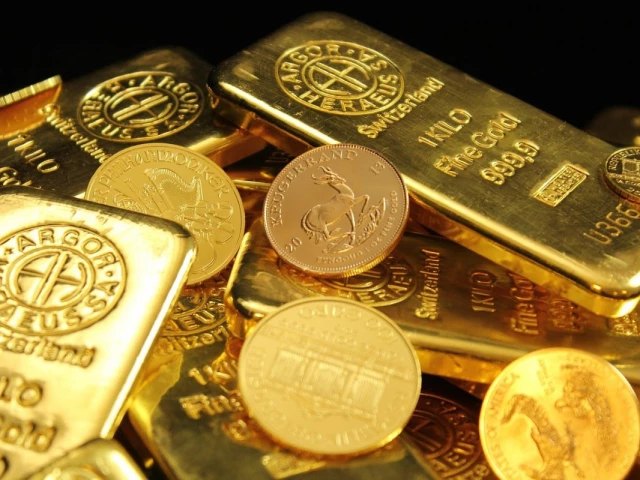
Gold prices climbed 2.5% to $4,820 per ounce.
Meanwhile, New Zealand’s central bank kept its policy rate unchanged, as expected, buying time to assess the fallout from the war but signalling it would act decisively if inflation heats up.
The comments underscore the challenge facing global central banks as the energy price and supply chain shocks from the war take time to normalise, leaving price pressures intact.
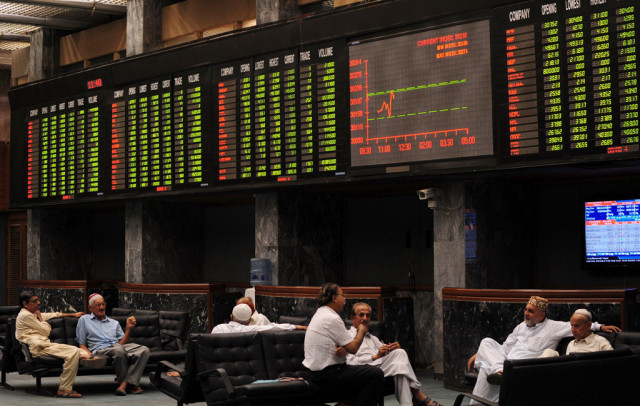
Read More: PSX surges over 12,000 points after Pakistan‑brokered US‑Iran ceasefire
Some analysts are also sceptical that the ceasefire will translate into lasting peace, warning of likely twists and turns ahead.
Carol Kong, a currency strategist at Commonwealth Bank of Australia, said the conflict’s root causes remain unresolved, keeping the risk of re‑escalation firmly intact. “We maintain our view that the war will run into June. The implication is dollar losses may prove short-lived.”
US Treasuries surged after the announcement, with traders putting the prospect of rate cuts from the Federal Reserve later in the year back on the table, although doubts about whether oil prices will go back to pre-war levels kept enthusiasm in check.
The yield on the benchmark US 10-year Treasury note dropped 10 basis points to 4.241%, the lowest since mid-March. The yield on monetary policy-sensitive US 2-year Treasury notes sank 10.7 bps to 3.725%.






The cost of crude plunged on Wednesday after a deal was announced that includes the opening of the Strait of Hormuz.
Source link
Business
Strait of Hormuz open or close? Only a ‘trickle’ of oil leaving right now despite ceasefire – The Times of India
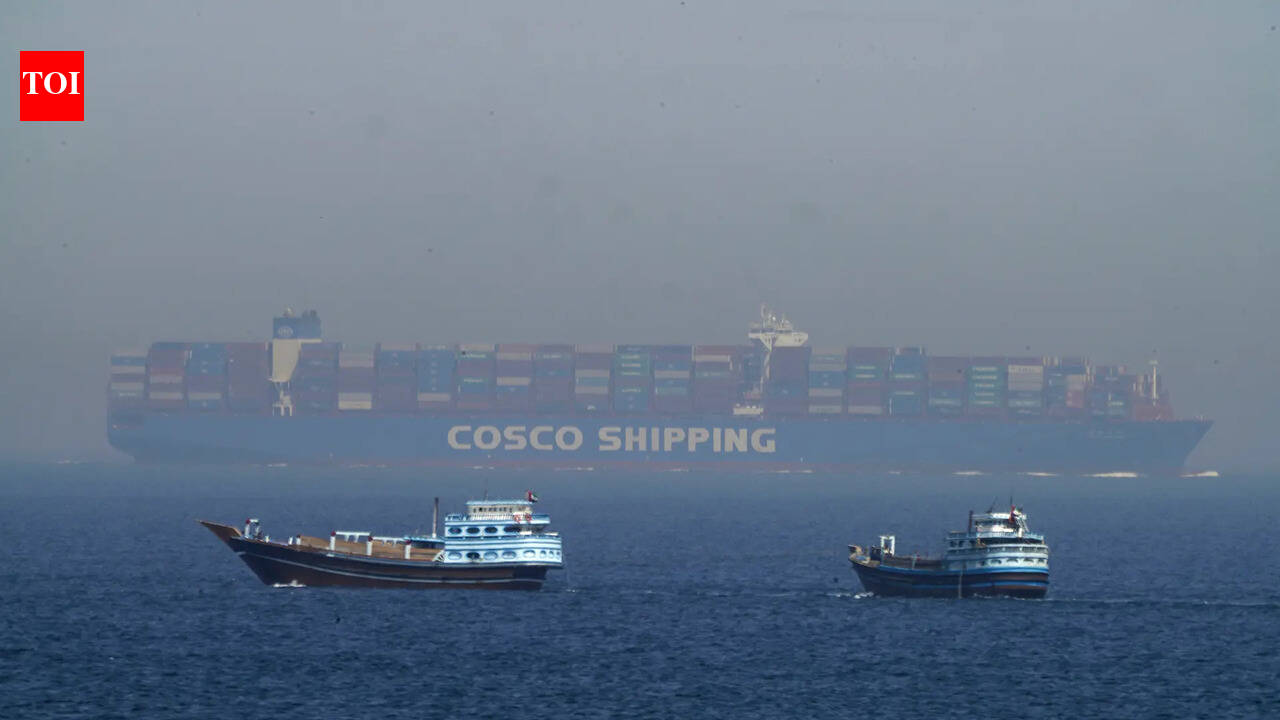
The tussle over the opening of the Strait of Hormuz continues as the Middle East crisis intensifies, with oil shipments yet to return to normal levels. According to a senior Gulf Oil adviser, any impact on fuel prices in the United States is likely to take time.Tom Kloza, the company’s chief energy adviser, told CNN that he is still “not seeing the evidence of more crude oil departing” the strait, even though reopening the route was reportedly part of the two-week ceasefire agreed on Tuesday night.Iran’s Islamic Revolutionary Guard Corps (IRGC) claimed that traffic through the strait slowed sharply and then stopped, blaming what it described as a violation of the ceasefire by Israel in Lebanon.Kloza said the situation remains uncertain and progress has been slow. “I would emphasize these are really baby steps right now. There’s no indication that the strait is going to reopen, and it seems like a flimsy ceasefire, to say what’s obvious,” he told CNN’s Jake Tapper.He added that only “a trickle” amount of oil is currently leaving the region. Because of the fragile ceasefire, companies are likely to be cautious about sending oil through the route.“It looks as though we’re weeks away from any restoration of even 50% or 70% of the Strait of Hormuz traffic that we depend on,” Kloza said.The situation could escalate further after US President Donald Trump on Thursday issued a fresh warning to Iran over the Strait of Hormuz. Posting on the social media platform Truth Social, he said American military forces and weapons would remain in place until the two sides reach a “real agreement”.“If for any reason it is not, which is highly unlikely, then the “Shootin’ Starts,” bigger, and better, and stronger than anyone has ever seen before. It was agreed, a long time ago, and despite all of the fake rhetoric to the contrary – NO NUCLEAR WEAPONS and, the Strait of Hormuz WILL BE OPEN & SAFE. In the meantime our great Military is Loading Up and Resting, looking forward, actually, to its next Conquest. AMERICA IS BACK!”Global energy supplies continue to face pressure as Iran restricts movement through the Strait of Hormuz, a vital route that carries around 20% of the world’s oil. The conflict has now stretched beyond a month, following strikes on Iran by the United States and Israel on February 28.Meanwhile, oil prices edged up on Thursday after recording their sharpest single-day drop since April 2020, as ongoing tensions in the Middle East and uncertainty over the Strait of Hormuz kept markets unsettled. Brent crude climbed back towards $97 a barrel after a 13% fall on Wednesday, while West Texas Intermediate hovered near similar levels.

Maintenance loans are paid to students in instalments to cover living costs, such as accommodation and food. Loans are means-tested, based on household income. And whereas student tuition loans, to cover course costs, are paid directly to universities, maintenance loans are paid directly to the student.


UN attempt to open Strait of Hormuz fails at Security Council vote
Iran war: Oil prices rise as traders eye fragile ceasefire deal
[CinePlex360] Please moderate: “Sensex gains fo

-
Uncategorized7 days ago
[CinePlex360] Please moderate: “Trump signals p
-
 Business7 days ago
Jaguar Land Rover sees sales recover after cyber attack
-

 Entertainment6 days ago
Joe Jonas shares candid glimpse into parenthood with Sophie Turner
-

 Tech5 days ago
Our Favorite iPad Is $50 Off
-

 Fashion1 week ago
China’s Anta Sports posts record $11.62 bn revenue in 2025
-
 Politics6 days ago
Iran can sustain Strait of Hormuz closure for years, will cut US military logistics: Official
-

 Sports5 days ago
UConn Final Four run could trigger a $50M furniture giveaway for Massachusetts-based Jordan’s Furniture
-
 Business6 days ago
Video: Why Is the Labor Market Stuck?