

Business
Pakistan sees remarkable growth in solar energy, net metering output surges – SUCH TV


Pakistan’s shift towards renewable energy is picking up pace, with rooftop solar steadily making its mark on the national power supply.
The growth is not just yearly. Compared to August, net metering output jumped 28 percent in September, signalling that more households and businesses are installing solar systems to cut costs and rely less on the grid. Its share in total electricity generation has also grown, climbing from 0.6 percent last September to 1.1 percent this year.
“Net metering’s rise reflects the increasing adoption of solar and a move away from full dependence on the grid,” said AHL. The sector’s peak came in April 2025, when rooftop solar contributed 307.8 GWh, nearly 3 percent of total electricity.
While solar adoption grows, the government is reviewing the rules that govern net metering. Prime Minister Shahbaz Sharif recently asked the Power Division to speed up its review of proposed changes to buyback rates, in consultation with the National Electric Power Regulatory Authority. The plan is to cut the rate from Rs22 per unit to about Rs11.30 per unit, citing the financial burden the current rate places on other consumers.
The prime minister also asked officials to check whether existing contracts under the Net Metering Rules 2015 allow such changes. The outcome could influence future solar installations, as any shift in rates affects the appeal of rooftop systems.
The rise of net metering shows that Pakistanis are increasingly looking for ways to take control of their energy, and rooftop solar is slowly but steadily carving a space in the country’s power landscape.







The City regulator says 12.1 million mis-sold motor finance deals will be eligible for redress.
Source link

The NFL shield logo on the field during a preseason game between the Los Angeles Rams and the Houston Texans at NRG Stadium in Houston on Aug. 24, 2024.
Ric Tapia | Getty Images Sport | Getty Images
The NFL is asking prediction market operators to keep specific event contracts that the league deems “objectionable bets” off of their platforms.
In a letter obtained by CNBC, the league outlines examples of event contracts that would be easily manipulable by a single person, inherently objectionable, related to officiating and knowable in advance — and asks that operators refrain from offering such trades.
The NFL declined to comment on which companies received the letter, but said it was sent to operators that are registered with the Commodity Futures Trading Commission and that offer NFL trades.
Prediction platforms Kalshi and Polymarket have dominated the burgeoning predictions industry in recent months, spurring sports betting incumbents like FanDuel and DraftKings to enter the predictions space, as well.
“Sports prediction markets are not effectively regulated currently,” NFL executive vice president Jeff Miller said in a statement. “We will continue to engage with the CFTC in pursuit of the necessary guardrails to protect both the integrity of the game and consumers participating in these rapidly evolving markets.”
While some leagues such as the NHL, MLB and MLS have embraced prediction markets, signing operators as partners, the NFL has been more cautious.
“There is no greater priority for the NFL than protecting the integrity of our games and the welfare of our players,” the letter stated.
In the letter, signed by NFL Chief Compliance Officer Sabrina Perel, she says it is encouraging that the CTFC recognizes that sports-related prediction markets should be regulated differently than other futures contracts.
The examples provided in the letter of events that could be easily manipulated by a single person included whether a kicker would miss a field goal, a quarterback’s first pass being incomplete, or a receiver missing their first target.
The list also included non-game related event contracts, such as broadcast mentions, or appearances by fans or celebrities at the games. During the Super Bowl, these types of wagers were extremely popular, such as whether Jeff Bezos would be in attendance.
Kalshi CEO Tarek Mansour told CNBC after the February championship game that the prediction platform saw more than $100 million in trading volume alone on a question of what halftime performer Bad Bunny’s first song would be.
The league also took issue with “inherently objectionable” wagers such as play injuries, fan safety and play misconduct.
The letter concludes by saying the NFL would be happy to meet to discuss “our views on sports prediction markets in greater detail, including prohibited bettors, information sharing with leagues and responsible betting measures.”
Disclosure: CNBC and Kalshi have a commercial relationship that includes a CNBC minority investment.
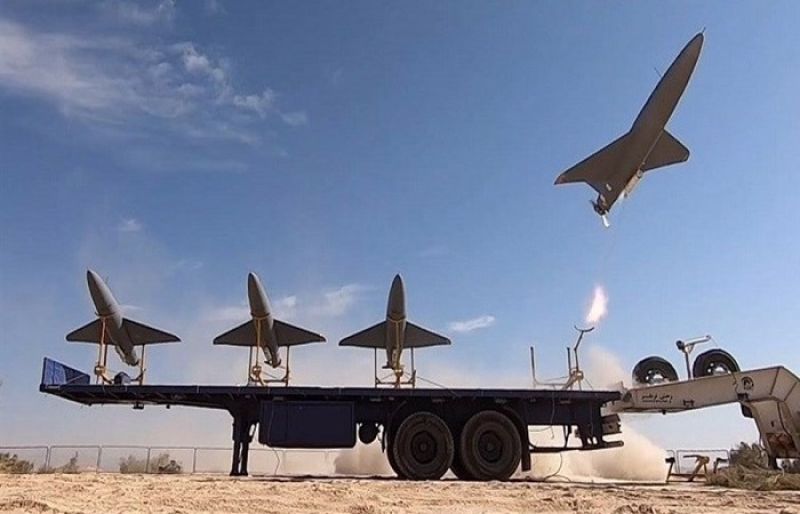
Iran’s Army says it has targeted the US radar stations and a site for the deployment of American military forces in the United Arab Emirates with invading drones, amid an ongoing unprovoked war of aggression by a US-Israeli military coalition against the Islamic Republic.
In a statement on Monday, the Army said its invading drones carried out strikes overnight targeting the enemy’s radar stations in the UAE, responsible for detecting and tracking Iran’s missiles and combat drones.
In its latest wave of retaliatory strikes against American military assets in the region, the Army’s explosive drones also hit US troop positions in the Emirates.
Since the United States and the Israeli regime started unprovoked military aggression against Iran on February 28, Iranian ballistic missiles and drones have repeatedly hit US facilities in the Persian Gulf countries and the Israeli-occupied territories.
The Islamic Revolution Guards Corps said on Sunday that it hit and destroyed a Boeing E3 Sentry surveillance aircraft belonging to the US Air Force in a retaliatory attack against a US-run military installation in Saudi Arabia.
Images circulated on social media platforms show that an Iranian projectile has hit the most important and sensitive section of the aircraft near its tail, where the expensive AN/APY2 reconnaissance radar is lifted.
This came after the IRGC said a warehouse storing Ukrainian anti-drone systems was destroyed in a missile operation in Dubai, the UAE.


Colts’ Carlie Irsay-Gordon open to private equity help, but not now

How much will PS6 cost? $1000 price tag predicted for 2028 launch

New York Times accuses Pentagon of flouting judge’s order blocking its press access policy

-

 Politics6 days ago
Afghanistan announces release of detained US citizen
-

 Entertainment6 days ago
UN warns migratory freshwater fish numbers are spiralling
-

 Sports6 days ago
Broadcast industry CEO says consolidation is ‘essential’ to compete for NFL soaring media rights prices
-
 Business6 days ago
Property Play: Home flippers see smallest profits since the Great Recession, real estate data firm says
-

 Tech6 days ago
Can a Home Appliance Fix the Problem of Soft-Plastic Waste?
-

 Fashion6 days ago
ICE cotton slips on weaker crude, profit booking
-
 Business6 days ago
Centre plans to cut broken rice share in PDS, boost ethanol feedstock supply – The Times of India
-
 Business6 days ago
Gold prices soar in Pakistan – SUCH TV