

Business
Pakistan’s manufacturing sector slump: Private investment plunges 46%; experts warn of long-term industrial decay – The Times of India

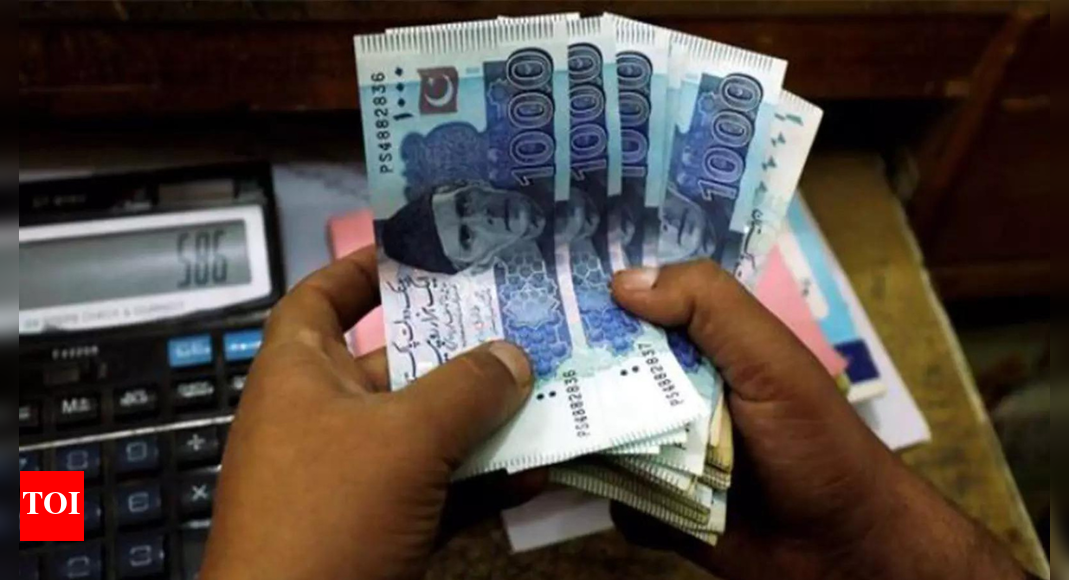
Pakistan’s manufacturing industry, once considered a key driver of economic growth and employment, is undergoing one of its worst downturns in recent history. The sector has seen a steep 46 per cent fall in private investment over the past six years, raising fears of long-term stagnation among economists and industrial experts.According to The Express Tribune report cited by news agency ANI, private investment in manufacturing dropped from PKR 706 billion in FY2018–19 to just PKR 377 billion in FY2024–25, marking the weakest phase of industrial growth in more than a decade. Ali Imran Asif, Senior Executive Committee Member of the Lahore Chamber of Commerce and Industry (LCCI), warned that the current level of investment was “not enough to even replace depreciating machinery,” suggesting a deep erosion of Pakistan’s industrial foundation.“We are not dealing with a short-term dip; we are watching our industrial base disintegrate,” Asif said, as per The Express Tribune. He stressed that without structural reforms focused on productivity, innovation, and competitiveness, the country could face prolonged industrial paralysis.The combined contribution of the manufacturing and mining sectors to Pakistan’s GDP has remained stagnant at around 13.2 per cent over the past six years. Frequent policy changes, high energy costs, and volatile currency movements have severely affected export-oriented sectors such as textiles, leather, and engineering goods. Large-scale manufacturing output fell 1.5 per cent in FY25, reversing the 0.92 per cent growth recorded in FY24.In contrast, neighbouring economies like India and Bangladesh have maintained strong industrial growth supported by stable policies and export diversification. Economist Shahid Saleem noted that Pakistan’s slump is not merely the result of high interest rates but also reflects policy inconsistency and eroding investor confidence. Import restrictions and weak domestic demand have forced many factories to run below capacity, he added.Experts, as cited by ANI, warned that unless Pakistan swiftly formulates a credible industrial revival plan and ensures policy stability, the manufacturing sector’s decline will deepen further, undermining exports, employment and broader economic resilience.


Panic selling returned to the Pakistan Stock Exchange (PSX) on Thursday as President Donald Trump said the United States would continue to attack Iran, with the benchmark KSE-100 Index sinking by about 5,500 points during the opening minutes of business.
At 9:35am, the benchmark index was hovering at 150,022, down by 5,489 points or 3.45%.
However, by 11:00 the equities recovered some losses and the index was trading at 151,621.26 points down by 3,890.30 or 2.57 percent.
Experts opined that the jubilation of yesterday’s market halt has been completely wiped out as the ‘ceasefire rally’ crashed into a harsh geopolitical reality.
Offloading was observed in key sectors, including automobile assemblers, cement, commercial banks, oil and gas exploration companies, OMCs and power generation.
Index-heavy stocks, including MARI, OGDC, POL, PPL, MCB, MEBL, NBP and UBL, traded in the red.
On Wednesday, the PSX had staged a powerful rally with the benchmark KSE-100 Index surging past the key psychological barrier of 150,000 points as improving investor sentiment.
The KSE-100 Index closed at 155,511.57 points, registering a sharp gain of 6,768.25 points or 4.55%.
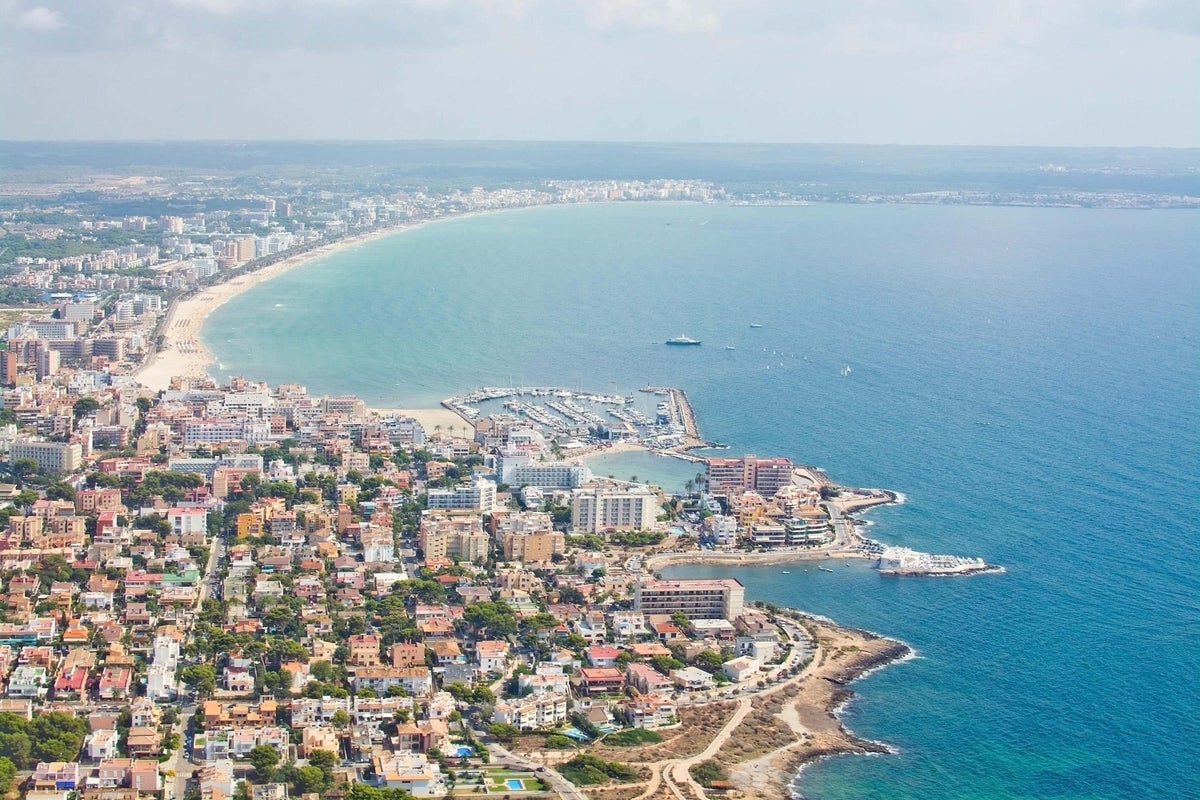
Travel agent Lastminute.com said war in the Middle East has impacted some 17,000 bookings, while holidaymakers are shifting towards alternative destinations like the Canary Islands and Sardinia.
The website, which offers holiday packages to destinations including Dubai and Abu Dhabi, said it was having to “adapt quickly” to travellers changing their preferences in light of the conflict.
The US-Israeli war with Iran, which escalated at the end of February, led to disruption and cancellations of some flights to Gulf states including the United Arab Emirates, Saudi Arabia and Qatar.
The airspace closures, coupled with consumer sentiment when it comes to travel taking a hit, affected approximately 17,000 bookings, Lastminute revealed.
It said the total volume of affected travel around the region is currently the equivalent of about a day and a half of its normal daily operations.
Despite the conflict influencing where and when people choose to book trips, the “overall intent to travel remains high”, according to Lastminute.
Consumers have been seeking reassurance and flexibility, and early booking patters indicate a shift in the preferences of travellers.
It noted increased demand toward alternative destinations such as Spanish archipelagos the Canary and Balearic Islands, Italian islands Sicily and Sardinia, and other European city breaks.
Lastminute’s chief executive Alessandro Petazzi said: “We continue to closely monitor the evolving situation in the Middle East, with supporting our customers remaining our top priority.
“At the same time, Lastminute.com’s flexible, pan-European model enables us to adapt quickly as travel patterns evolve, with demand naturally rebalancing across destinations.”
The Netherlands-based company reported a 15% jump in revenues to 361 million euro (£315 million) for the 2025 financial year, compared with the year before.
Adjusted earnings before tax and other costs increased by a third to 55 million euro (48 million).
The company said it was remaining “vigilant” against the geopolitical situation in the Middle East, but added that it was sticking to forecasts of a roughly 10% increase in revenues and profits in the year ahead.

Oven Pride household goods group McBride has revealed “temporary” price hikes to cover increased costs from the Iran war and warned it was seeing the first signs of supply shortages caused by the conflict.
The group, which makes branded and white label household and cleaning products for the likes of Tesco and Sainsbury’s, said until now it had only seen a small impact from higher haulage costs due to fuel price rises, but said “these conditions have now started to change”.
It said the “most heavily impacted” chemical and packaging suppliers are pushing through price increases as they face rising costs for petrochemical-derived feedstocks and higher energy costs in chemical and packaging production.
“The first signs of possible shortages in supply chains around the world are beginning to emerge,” it added.
McBride said its costs are increasing this month and will rise further due to the war, and is set to lift prices to offset the hit.
“The group has already informed all customers about temporary price adjustments, or surcharges to current pricing, to recover these higher, beyond our control, cost impacts from the Middle East conflict,” McBride said.
The warnings come amid mounting worries over the impact of the conflict on supply and costs, having sent oil prices surging above 100 US dollars a barrel and causing widespread disruption to global shipping.
Supermarkets met with Chancellor Rachel Reeves and Energy Secretary Ed Miliband at No 11 on Wednesday to look at issues caused by the war and agreed to explore together how to ease the cost-of-living impact for consumers.
McBride’s comments came in an update as it also announced a £34.5 million deal to buy Eurotab – a French-based specialist in cleaning tablets, such as for dishwashers.


Cardinals’ Masyn Winn involved in car crash after delivering game-winning hit vs Mets

China-Kenya trade corridor relaunched to boost SME participation

Meghan Markle receives glam support after shocking live blast

-

 Entertainment1 week ago
UN warns migratory freshwater fish numbers are spiralling
-

 Politics1 week ago
Afghanistan announces release of detained US citizen
-

 Sports1 week ago
Broadcast industry CEO says consolidation is ‘essential’ to compete for NFL soaring media rights prices
-
 Business1 week ago
Property Play: Home flippers see smallest profits since the Great Recession, real estate data firm says
-
 Business1 week ago
More women are entering wealth management, but few are in advisory roles, study finds
-

 Fashion1 week ago
ICE cotton slips on weaker crude, profit booking
-

 Fashion1 week ago
Ho Chi Minh City bizs adjust production plans, seek new supply chains
-

 Entertainment1 week ago
Prince William shares message as Meghan tests future King’s patience